




BY DR. MAXINE NICOLE BACAREZA
WHEN WE began working on Koobo in July 2022, we envisioned a platform that would connect travelers with local businesses and make planning a holiday easier and safer. Travelers could book accommodation, rentals, and activities all in one place with greater confidence in who they were booking with. We often heard the same questions from friends coming to visit us: Where can we stay? What can we do? Where should we eat?
Finding answers often meant searching social media and exchanging messages with several businesses, sometimes unsure whether the accommodation would look anything like the photos or whether the page even belonged to a real business at all. We kept seeing accounts of travelers being scammed by fake business pages. What began as an idea for a more convenient way to book became a response to a need we could no longer ignore.
What we did not yet understand was how much we would have to build to make that vision work. We started out on WordPress but quickly began to see the limits of what we could achieve with our initial setup. Building a platform comparable to international online travel agencies would require more than we had anticipated. Gradually, we realized that this would take more time, a dedicated technical team, and technology we would need to build ourselves.
Four years later, in July 2026, Koobo officially launched in Siargao.
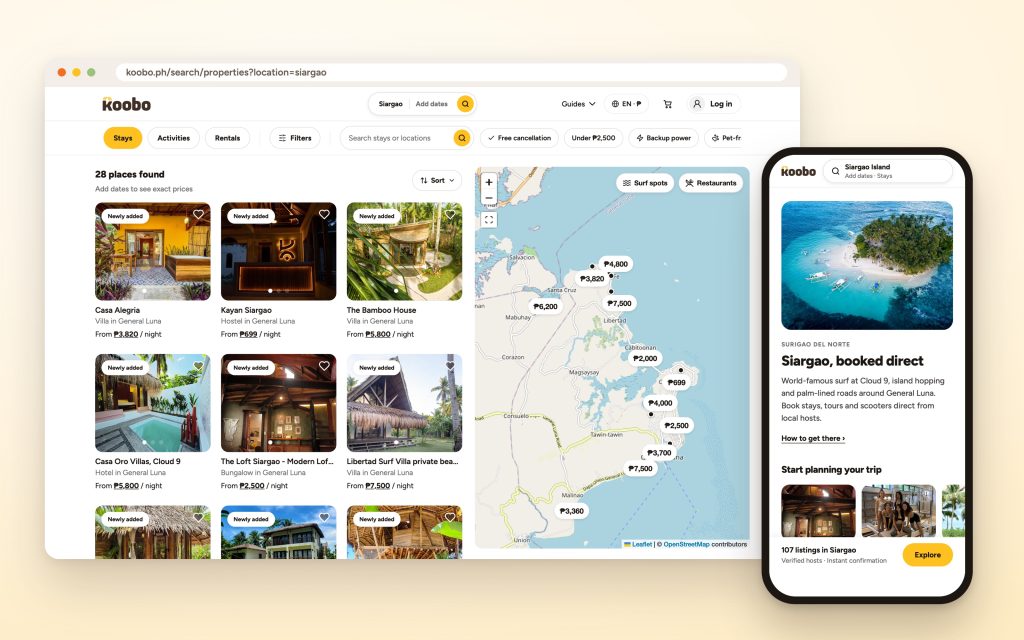
Behind it is a small team of ordinary Filipinos who have experienced the same frustrations as the travelers we hope to serve. We did not come into this as seasoned business people but as people who had struggled to plan holidays ourselves and believed there had to be an easier, safer way. We started with a problem we understood firsthand, and we were determined to find a solution.
Helping travelers make the most of every island
A big part of building Koobo was creating the kind of guide we would want when visiting an island ourselves. Where should we eat? Which places should we make time for? What should we know before heading out for the day?
We wanted to bring together the must-see spots, the lesser-known gems, and the practical details that help a trip go smoothly. Through destination guides, restaurant recommendations, surf information, and travel tips, we aim to help travelers decide what is worth their time and money.
For us, that means helping people find experiences that suit their interests and budget, whether they are planning ahead or already on the island wondering what to do next. We want Koobo to be useful throughout that journey—from the first search for ideas to making the most of each day of their stay.
Understanding both sides of a booking
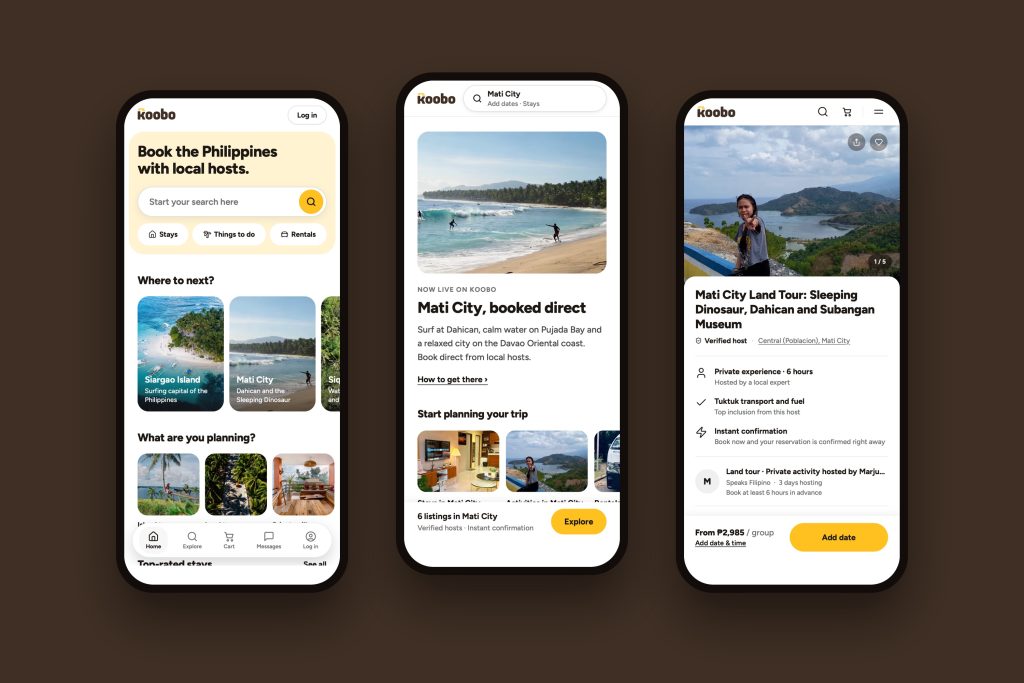
But as we worked on Koobo, we began to understand that our experiences as travelers were only half the story. Behind back-and-forth messages were business owners juggling reservations, answering inquiries, checking calendars, and arranging payments. Smaller operators often relied on Facebook, spreadsheets, and manual processes to keep everything moving.
While international booking platforms offered access to a wider market, commissions and listing requirements could present challenges for smaller businesses. Tour operators and vehicle rental businesses also had different booking needs, with fewer options that let them manage schedules, availability, and payments in one place.
Trust mattered to these businesses too. Fraudulent pages impersonating legitimate operators put travelers at risk while exploiting the names and reputations that business owners had worked hard to build.
Understanding both sides shaped what we wanted Koobo to become: the go-to place where travelers could find and book local services with greater confidence and where business owners could access practical tools to make those bookings easier to manage.
Building around local needs
Turning our idea into a working platform required a dedicated technical team. Chief Technology Officer John Madrigal and development lead Ramil Kaharian jointly led the engineering effort, working through a challenge we had initially underestimated: a room, a tour, and a vehicle cannot all be booked in the same way. Bringing them together meant building booking processes that reflected how each business actually operated, while keeping the experience simple for travelers.
Much of our four-year development journey went into working through these details. Alongside the booking system, the team built a host dashboard where business owners could manage their listings, availability, reservations, guest messages, and payments in one place.
Making these tools accessible mattered to us. Businesses can list on Koobo without setup or monthly fees, with commissions charged on bookings. They can also continue selling through other platforms. Our partnership with Bakuun provides connectivity to channel management systems, helping participating accommodation providers synchronize availability across booking channels.
For travelers, Koobo brings verified host listings and direct host communication together with payments in Philippine pesos through our payment partner, Xendit. Guests can pay using cards or GCash, without additional traveler booking fees.
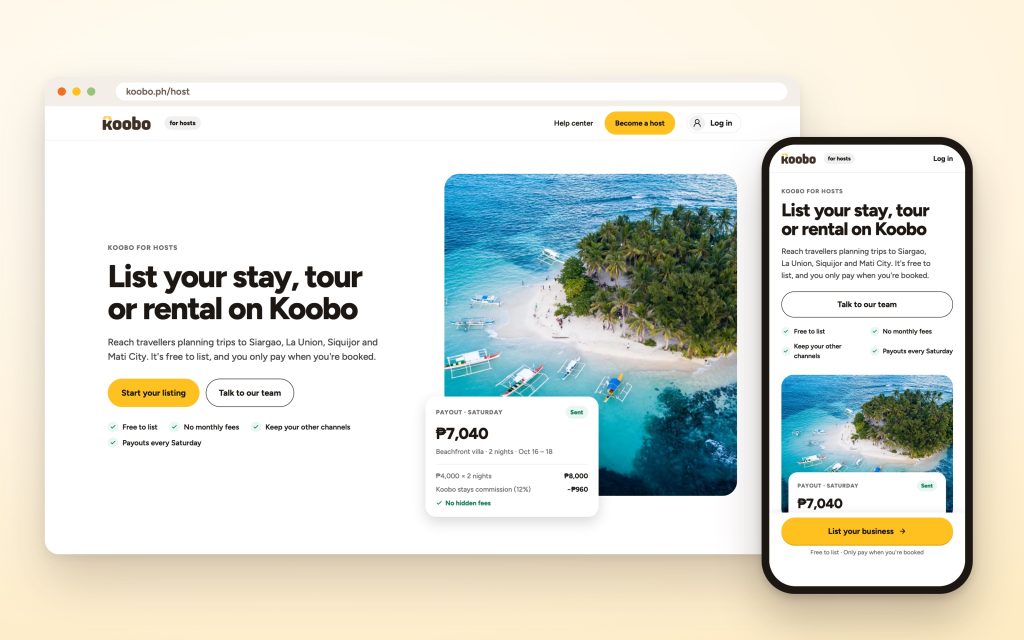
Each part grew from the same intention: to make planning a holiday easier while giving the local businesses behind those experiences practical tools to manage their work.
Building a community through lasting partnerships
As Koobo grows, we want to build relationships that grow with it. Our vision brings together local businesses, travelers, and organizations that share an interest in helping Philippine tourism benefit the communities welcoming its visitors.
Our collaboration with Sunlight Air aims to connect passengers with local experiences at their destinations, creating opportunities for travelers to discover the businesses around them. We are also working with Lokal Lab on a community contribution initiative, with the intention of directing a portion of eligible booking proceeds toward local community projects.
These partnerships reflect how we hope to grow: by working with people who know their destinations and building relationships that can be sustained over time. As we enter more islands, we hope to collaborate with other local organizations and understand where we can make a useful contribution.
That ambition has a personal connection for me in Mati City, my hometown and the location of our company’s office. Bringing Mati onto Koobo means helping visitors discover the places and experiences close to home, while giving local businesses a better way to reach them.
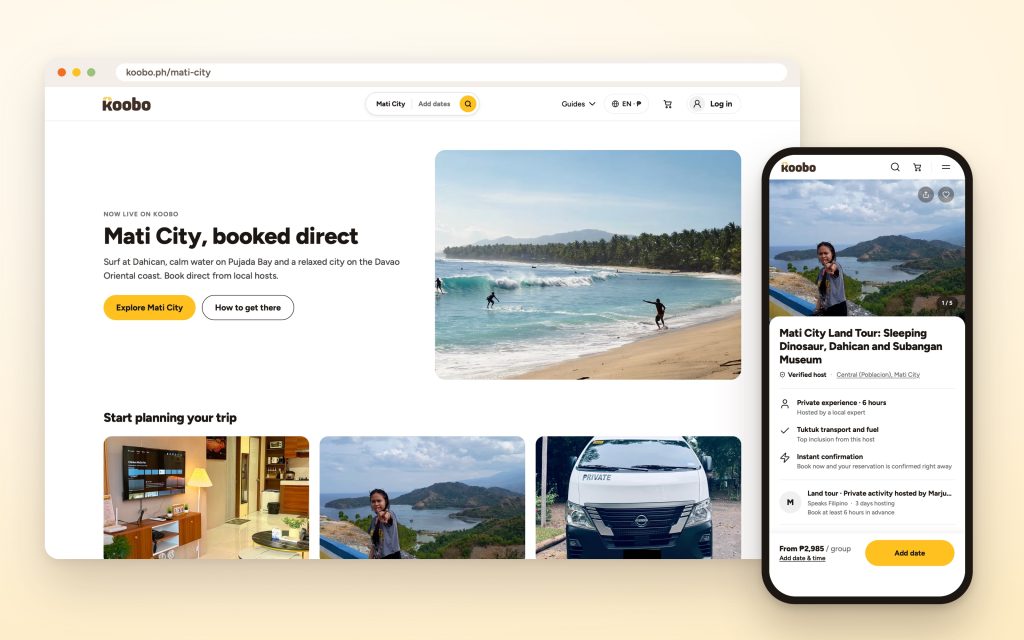
From our beginnings in Siargao to our launches in Mati and Siquijor and preparations for La Union, we are still building that community. We want each new destination to become a place where we establish lasting connections, listen to local businesses, and help more of the value of tourism reach the people who make it possible.
Feel at home on every island
The questions that started Koobo were simple: Where can we stay? What can we do? Where should we eat? Four years of building taught us how much goes into answering them well—and how many local livelihoods are connected to those answers.
We still have much to learn and improve. But we remain the same people who saw a problem in our own travels and decided to work on it. Our hope is that what we build helps more people explore the Philippines with confidence while creating opportunities for the businesses and communities welcoming them. That is what “feel at home on every island” means to us.
