

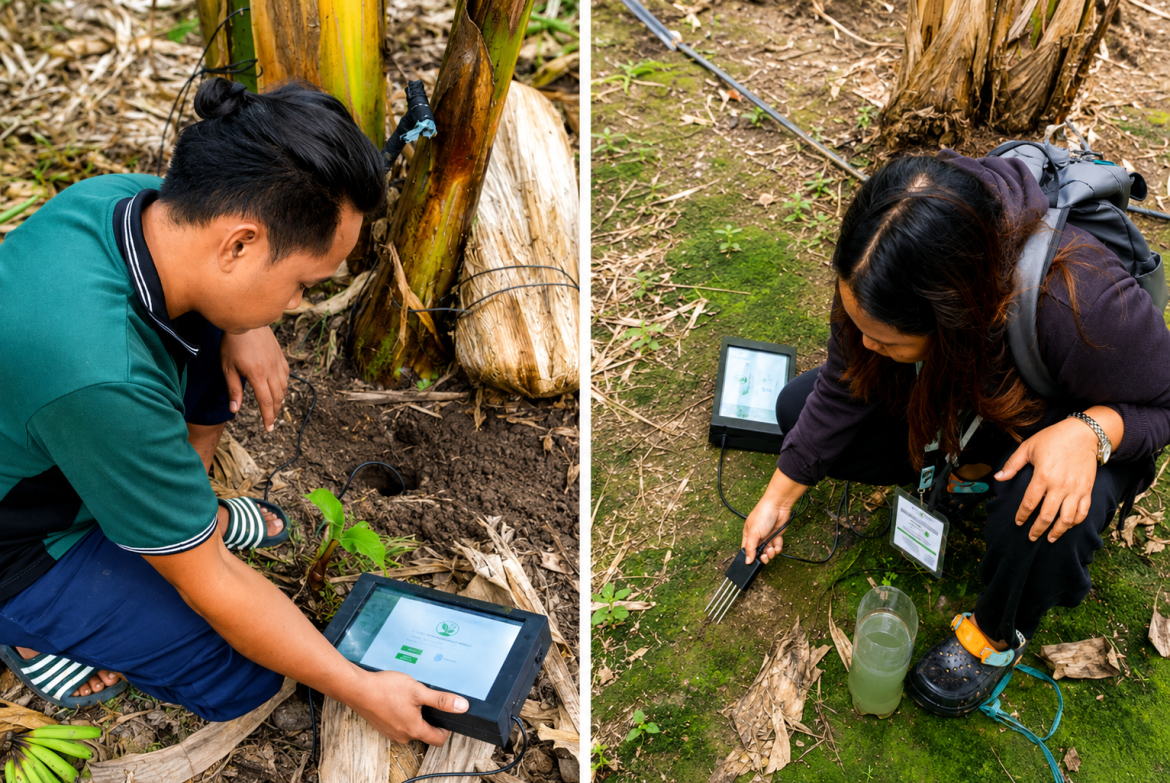
MARINA Tan-Du kneels beside one of her nearly 1000 fruit-bearing trees in Davao City, waiting as she pushes a soil probe into the ground.
Seven minutes later, the tool prints a slip with a list of recommendations that informs her at a glance what years of guesswork never could: exactly what her soil needs and what it does not.
“I already have almost 1,000 fruit-bearing trees, but I have been doing application through guessing, kung mag-green, kung mag-yellow (if it turns green, if it turns yellow),” Marina admitted she has been deciding by feel and by the color of the leaves.
“Years of investment, and the soil had nothing to show for it,” she stressed.
Marina is among the farmers whose fertilizer application was assumption-based and applied by habit, through guesswork.
The stakes are national. The Philippines’ banana industry alone is a billion-dollar industry, with an export value of 1.68 billion USD in 2025 according to the Philippine Statistics Authority. Yet fewer than one in 200 Filipino farmers has ever had soil tested- a gap that GreenVisions PH’s innovation, AI-Driven Farm Management, is trying to close with a 7-minute soil diagnostic device that works like a “hospital for farms”: diagnose, treat, monitor.
GreenVisions PH is a social enterprise led by founder and CEO Engr. Lorilyn Pablo Daquioag is bringing AI-powered farm management, soil testing, and monitoring systems for farmers to make diagnostic-based decisions.
Farming by guesswork is costly, inefficient
According to GreenVisions PH research, about 99.5% of Philippine farmers apply fertilizer on guesswork and without soil data.
In an industry as large as Philippine banana production, worth close to ₱68 billion annually, around 65 percent of farmers’ income disappears into farm management costs.
“Much of it is fertilizer wasted, applied by feel rather than by fact,” Daquioag said in an exclusive Zoom interview with TIMES.
The challenge, she stressed, is that farmers use these inputs without diagnosis of what the soil actually needs.
Alarmingly, only 0.05% of farmers conduct soil testing, which is roughly one in every 200 farmers.
GreenVisions Ph’s data from the farms it has assessed shows that excessive fertilizer use is present on about 95% of the farms.
The reason is simple: farmers have to wait for weeks or months before the results are out. But they cannot wait. One day late is one harvest season compromised.
“They cannot use this to decide what they will do in their farm, because the data comes out late. That’s why they do guesswork,” she stressed.
Marina also accounted that waiting for soil testing results is “tedious” as it takes 3–6 months.
“Yun ang hindi ko ginawa, kasi parang it’s very tedious for me. I have to collect the sample of soil, ipa-uga, dalhin pa nako sa Agdao [Davao City] sa Department of Agriculture, and it will take three to six months to get the result, matagal. So, in short, hindi ko ‘yun nagawa,” Marina stressed.
The Department of Agriculture-Regional Soils Laboratory XI, in Agdao, Davao City, requires soil samples for analysis to be air-dried, pounded using a mallet or large stone, and sieved using a plastic net, garden net, or a fish net.
Farmers are also required to quarter the air-dried sample, safely pack it in a paper bag, and properly label it before submission.
Hospital for farms: Precision, sustainable farming
For Daquioag, smart farm management is knowing what it means to be sick, and what it means to be treated properly.
“A plant is just like a human when it gets sick. Isn’t the proper way to get checked?” Daquioag said.
A sick plant, she explained, is treated the same haphazard way many Filipinos once treated illness: first assumption, then remedy.
A yellowing leaf gets diagnosed as a nutrient problem the way an unexplained fever might once have been blamed on superstitious beliefs, prompting a folk cure instead of an actual checkup.
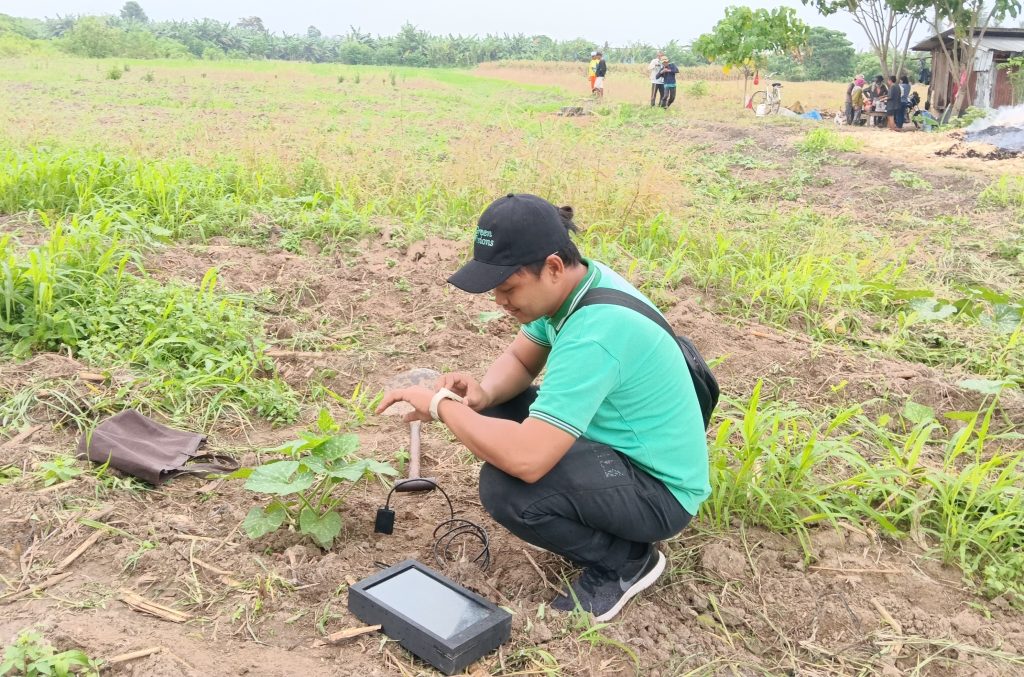
That’s the logic behind GreenVisions PH’s three-part system, which it calls “hospital for farms.”
Rather than waiting for weeks or months for lab results, farmers can use the device directly in their field, place it in their soil, and receive recommendations in minutes.
At its center is a device called AI- Driven Farm Management Module (AID-FMM), which analyzes soil composition using sensors to measure key soil indicators: nitrogen, phosphorus, potassium, temperature, moisture, and pH.
Daquioag said the device delivers recommendations in less than a minute, while the full reading process takes seven minutes.
The results are then immediately printed in an easy-to-understand report, allowing farmers to make smarter decisions directly in the field, guiding farmers exactly what to apply, how much, and how frequently.
“The device provides automatic recommendations on the specific soil, and also what the crops are, so it is already there: what are the crops, what is the stage, are they vegetative and fruiting, and the status of the crops,” Daquioag stressed.
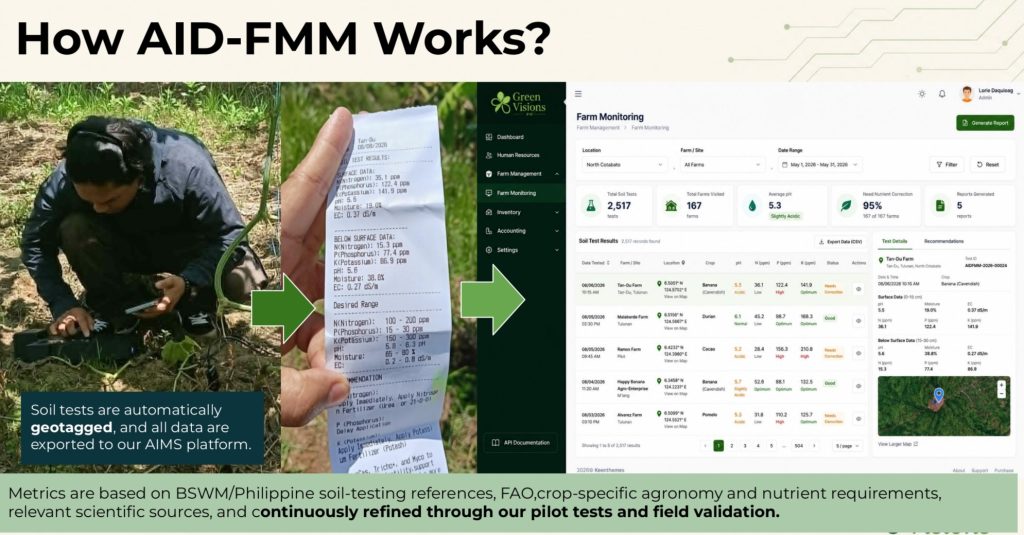
The metrics are based on Bureau of Soil and Water Management, Philippine soil-testing references, Food and Agriculture Organization, crop-specific agronomy and nutrient requirements, and other relevant scientific resources, but are continuously refined through their pilot tests and field validation.
Data-based treatments for the soil
For Daquiaog, farming smarter is through a combination of precision farming and data-backed treatment with microbial technology.
GreenVisions PH also incorporates two microbial treatments: e-CAS and Tricho+, beneficial bacteria and fungi designed to restore soil biology.
Enhanced Compost Activator Solution, or e-CAS, contains beneficial microorganisms that promote soil quality, eliminate bad odor, improve crop nutrient absorption, and boost crop immunity and quality.
While Tricho+ or Trichoderma is a beneficial soil fungus that controls plant diseases and promotes healthy plant growth by enhancing root development and soil fertility.
Daquioag said this helps crops actually absorb the nutrients already present in the ground and reduces chemical use, rather than simply adding more fertilizer on top.
“Based on our two years’ pilot, we improve not only the microbial presence, but also the crops, but also the pH. Usually, when we enter, 4.3, after 3 months, naging 5.8 na,” she said.
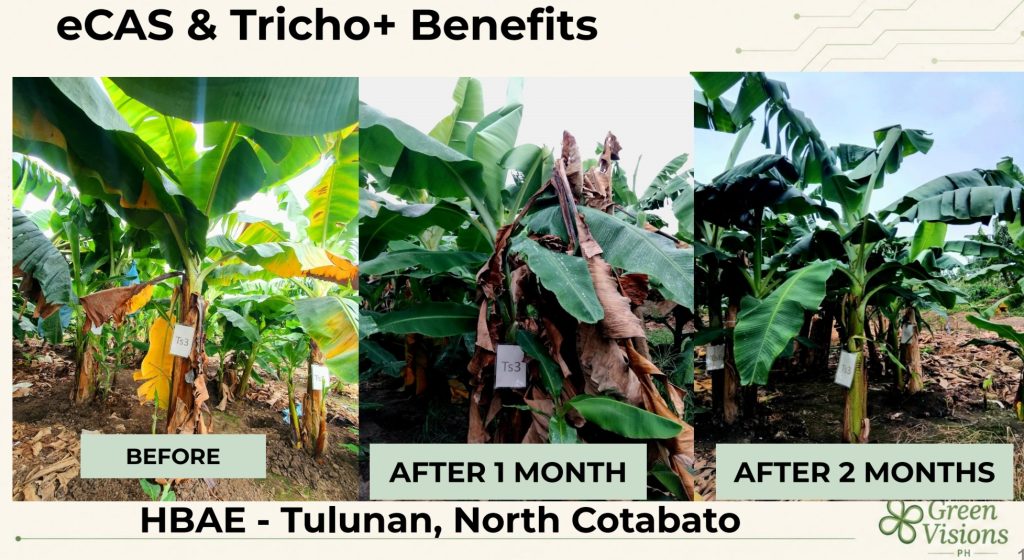
The e-CAS and Tricho+ help lower farm costs by up to P4.1 million saved annually on a 20-hectare banana farm.
Daquioag emphasized a 97% recovery from Panama disease, 52% larger and healthier yields, and 25% faster growth, figures from the company’s own two-year pilot.
Fertilizer use also reduced by at least 30% during their pilot year.
GreenVisions PH also saw the need for a monitoring platform, as large farms or even small-scale farms record their farm data manually, on a calendar, if at all. While this works, she said that it leads to missing records and delayed reporting.
Their monitoring platform, Agricultural Intelligence & Monitoring System (AIMS), tracks farm conditions on an ongoing basis through real-time monitoring and operations tools.
AIMS enables data-driven farm management, allowing farms to easily generate and record data from field activities to input applications, providing clear insights for smarter decision-making.
“So we work as a hospital for farms in that approach,” Daquioag said. “We diagnose, we treat, and we provide monitoring.”
What the data actually showed: cost savings for farmers, balanced soil nutrients
The diagnosis, in case after case, revealed the same pattern: farmers weren’t necessarily under-fertilizing or over-fertilizing. They were often fertilizing blind.
Daquioag described the case of banana farmers in the Green Visions PH area who had been applying a routine mix of 16-16-16, potassium, urea, and a branded fertilizer at a cost of roughly ₱7,000 per application.
When GreenVisions tested the soil, it came back highly acidic, with fertilizer residue already built up around the roots. The plants weren’t absorbing the nutrients because the soil chemistry wouldn’t allow it.
“Ngano dili mudako ang iyahang bunga sa saging, because acidic na ang soil and then walay proper absorption sa fertilizer na iyahang gina-apply (Why isn’t the banana fruit growing larger? It is because the soil has become acidic, preventing proper absorption of the fertilizer being applied),” Daquioag said.
Once the data showed the excess, the farmer cut back to only the fertilizer his soil actually needed, and his cost dropped from ₱7,000 to about ₱2,400 per application.
For Marina’s case, her soil wasn’t acidic in the same way, but simply wasn’t releasing the nutrients it already held.
“My plant only needs N, the nitrogen. But I was applying the three, the NPK, the phosphorus and potassium, which hindi pala kailangan pala ng aking tanim. Kasi andoon na pala sya, available pala sa lupa,” Marina said.
GreenVisions recommended she stop applying additional NPK fertilizer altogether and instead apply the microbial treatments, E-CAST and Trichoderma, to unlock what was already in the ground.
“I applied what they instructed: the ICAS, the Trichoderma, the Myco, and then also put in only nitrogen,” Marina said.
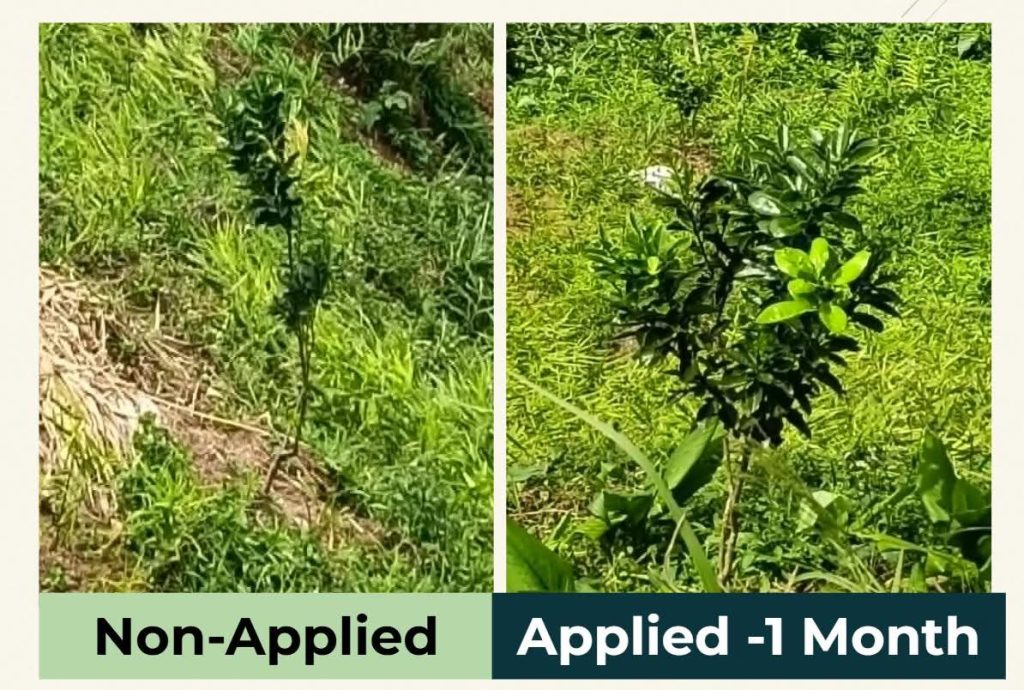
Within a month, her second soil reading came back markedly different; it was found that the soil does not need phosphorus and potassium.
By her rough estimate, her fertilizer cost per hectare fell from around ₱3,000 to ₱1,000.
What convinced her wasn’t the savings alone, but how her crops responded. Marina reported new growth, new leaves, visible within weeks of the first application.
For a durian farm that won’t bear fruit for another five years, that early flush of growth is, for now, her evidence that the approach is working.
From space to soils
Daquioag’s path to founding Green Visions PH began nowhere near a farm.
She holds a master’s degree in electrical engineering and was a member of the pioneering team of scholars under the STeP-UP graduate track at the University of the Philippines Diliman Electrical and Electronics Engineering Institute, selected to help develop the country’s first locally built nanosatellites in 2019: the Maya-3 and Maya-4, which launched to the International Space Station (ISS) on August 29, 2021.
Maya-3 and Maya-4 are the first Philippine university-built satellites, as the previous four: Diwata-1 and Diwata-2 launched in March 2016 and October 2018, were developed and built in Japan in partnership with Tohoku and Hokkaido University.
Meanwhile, the smaller nanosatellites Maya-1 and Maya-2 launched in June 2018 and February 2021, were developed in Japan in partnership with the Kyushu Institute of Technology.
The idea for what eventually became GreenVisions PH started earlier, in 2018, when she entered a competition to design a mobile app for sustainable agriculture, which was a tool to help farmers treat nutrient deficiencies without synthetic chemicals.
Researching the app, she came across a statistic that changed her direction entirely: 52 percent of the Philippines’ biodegradable waste never gets converted into usable fertilizer.
“While digging, I saw that there’s no engineer really solving the root cause. They only make, like, technology on a surface level, to detect this, to record this, to monitor this, but there’s no root cause that they are solving,” she said.
That realization led to her first venture, Waste for Good in 2021, which focused on converting biodegradable waste into bio-fertilizer. But after deploying early versions of the product to urban households and small gardens, she found limited traction.
The pivot toward banana farmers was when she saw the method of planting bananas was “terribly harsh.”
She recalled wanting to create a technology like remote sensing, satellite mapping, and imaging. However, while talking to the farmers, she realized that’s not what they need, but precision soil testing.
“Soil testing is the most important thing before you plant. I checked current technologies in the Philippines, and there really was no technology for precision or guidance,” she said, noting that while there may be, it was “unreliable and tedious.”
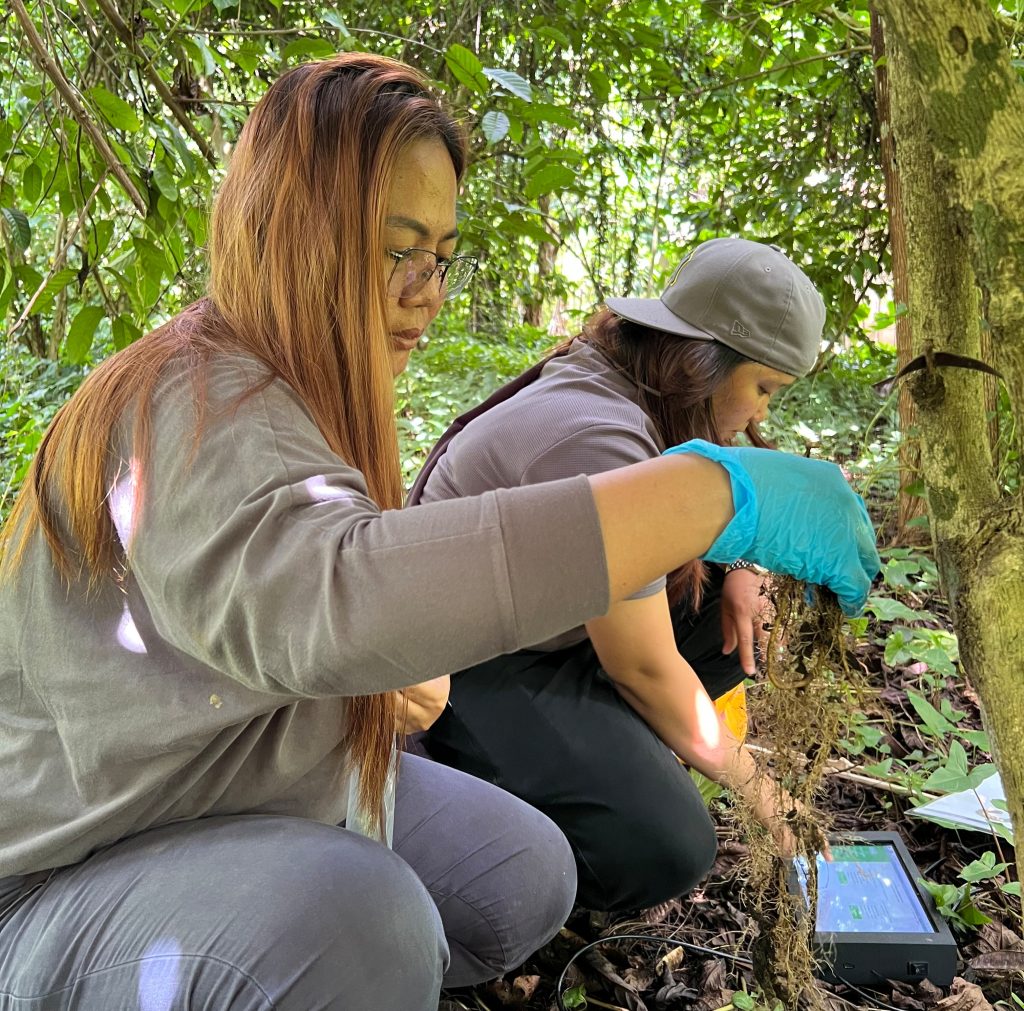
Eventually, precision soil diagnostics followed with the research and development into the soil-testing technology beginning in 2024, with the current brand GreenVisions PH.
Farming, she says, was never far from her own background, as born to a family of farmers, but her inspiration to do engineering in agriculture is her son.
“I want to create innovations aligned with environmental sustainability, particularly sustainable agriculture. So, in GreenVisions, we focused on creating innovations for precision and sustainable agriculture while empowering communities, protecting our planet,” she said.
From starting up with P2,000, and with the help of UP Diliman and the Department of Science and Technology Technology Application and Promotion Institute (DOST- TAPI).
In its commercialization journey, Green Visions PH was supported by DOST-TAPI’s Expanded Venture Financing Program (EVFP) and promotion and marketing through its Science and Technology Promotion for International Contest and Exhibit (SPICE) Program.
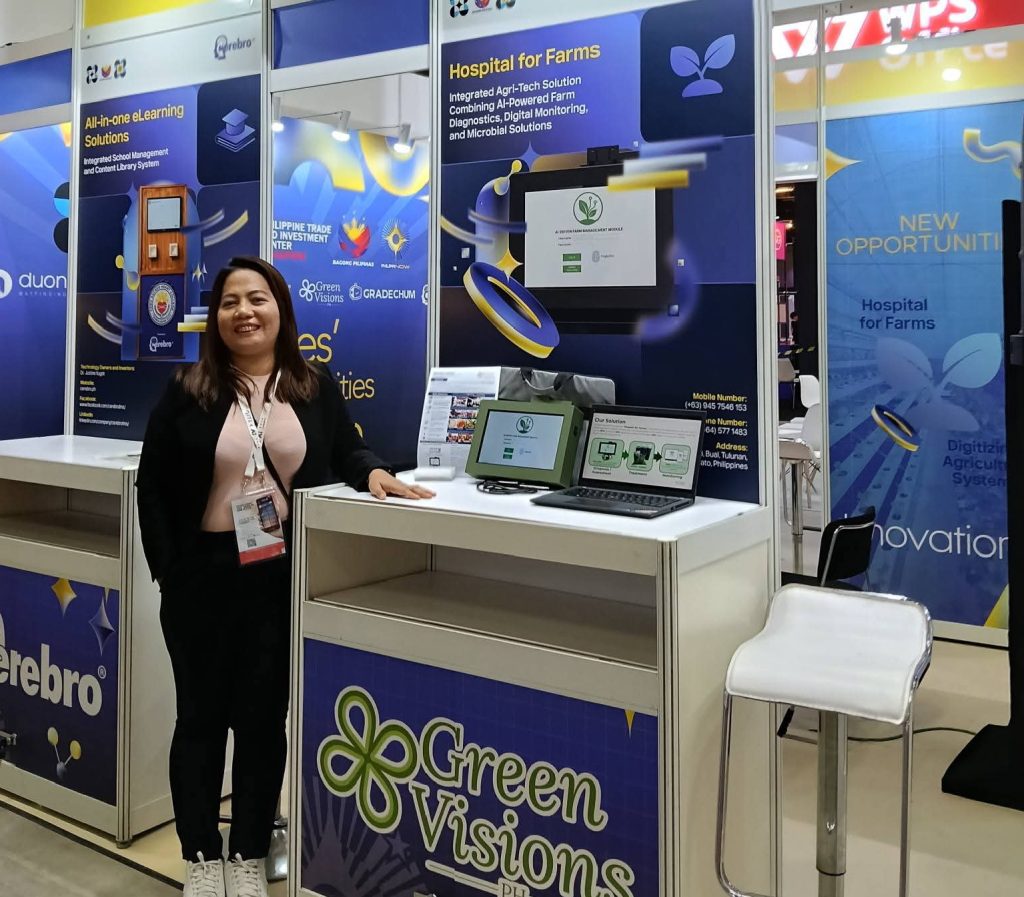
The program paved the way for its participation in GITEX AI Asia 2026, where Daquioag represented Filipino women in technology on an international stage.
Her team is now composed of people from diverse fields, including engineering, microbiology, and agriculture, and currently has its own engineering lab, a microbiology lab, a 1-hectare demonstration farm in North Cotabato, and a satellite office in Davao.
As of 2026, they reached over 9,000 communities nationwide, promoting climate action, sustainable agriculture, and precision farming.
Government answer to the same problem
The Department of Agriculture recognized that one of the main challenges the farmers face is guidance on fertilizer use management.
As a response, the department launched the Bureau of Soils and Water Management (DA-BSWM) FertMap (Fertilizer Map) just last June 2026.
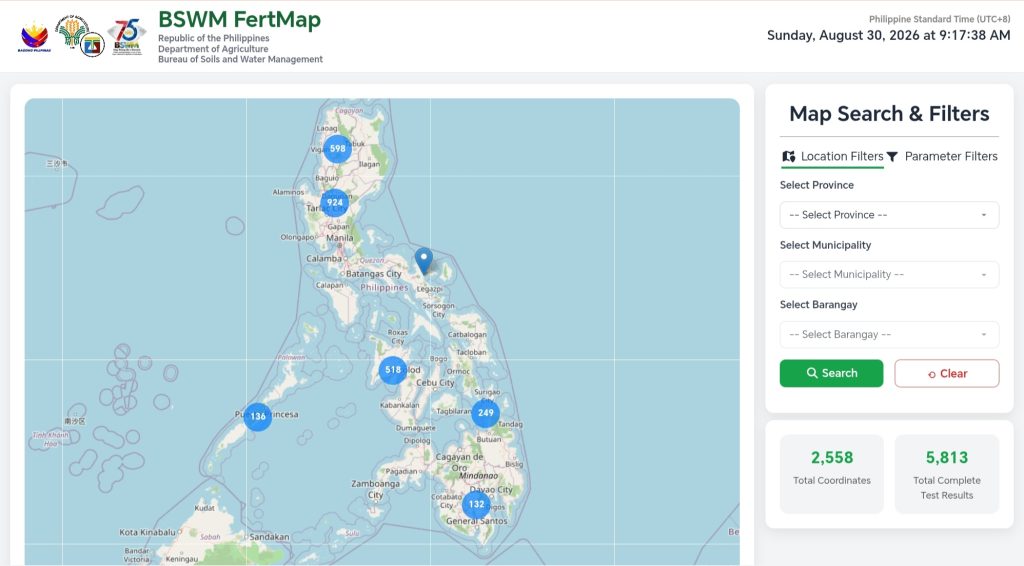
FertMap works off a georeferenced map of the country where farmers filter by province, municipality, and barangay to find existing soil test records in their area, then view pH, nitrogen, phosphorus, and potassium readings tied to that plot.
From there, they select their target crop along with variety, maturity, planting date, and landscape type, and the system generates a fertilizer schedule: the right type, right amount, right timing.
Reports can be downloaded as PDFs, and users can filter further by soil pH or nutrient parameters to narrow results.
By selecting the farm location, farmers can view the available soil data and generate fertilizer recommendations based on the crop they intend to grow.
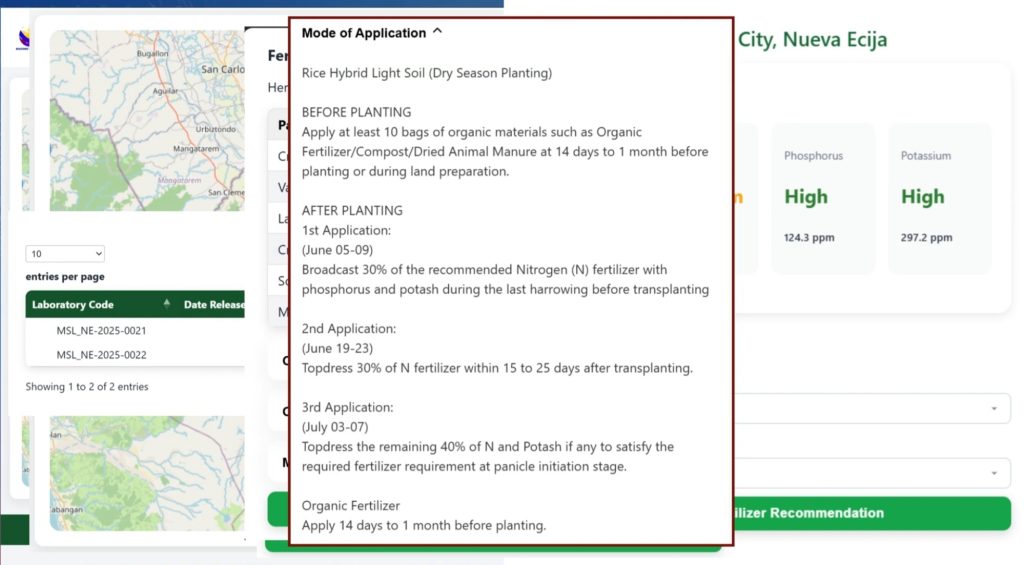
While GreenVisions PH offers an on-site 7-minute device, the FertMap relies on existing lab records through combined soil analysis results from BSWM soil laboratories and mobile soil laboratories under the National Soil Health Program (NSHP), which means its usefulness in a given area still depends on whether that area already has soil data on file.
To note, the DA-BSWM launched the first-ever operation of the Mobile Soil Laboratory (MSL) just last January 2025, where Tarlac province was the pioneering site and the first to experience the state-of-the-art, 10-wheeler truck capable of analyzing 42 soil parameters.
Farming with science and technology, AI
For Daquioag, the harder problem was never the science and technology but the trust in AI, so adaptation requires time and patience.
Farmers, she said, are wary, and AI is not a word that means much to someone deciding whether to spend money on fertilizer or farming in general.
“Farmers don’t care about AI, or about the technology, or whatsoever features. They care how you can help them to save, how you can help them grow their crops healthier,” she said.
GreenVisions PH doesn’t lead with the pitch of AI, but is grounded in the truth of the soil. The enterprise conducts gatherings called Kapehan and Tsokolate sessions rather than direct sales presentations.
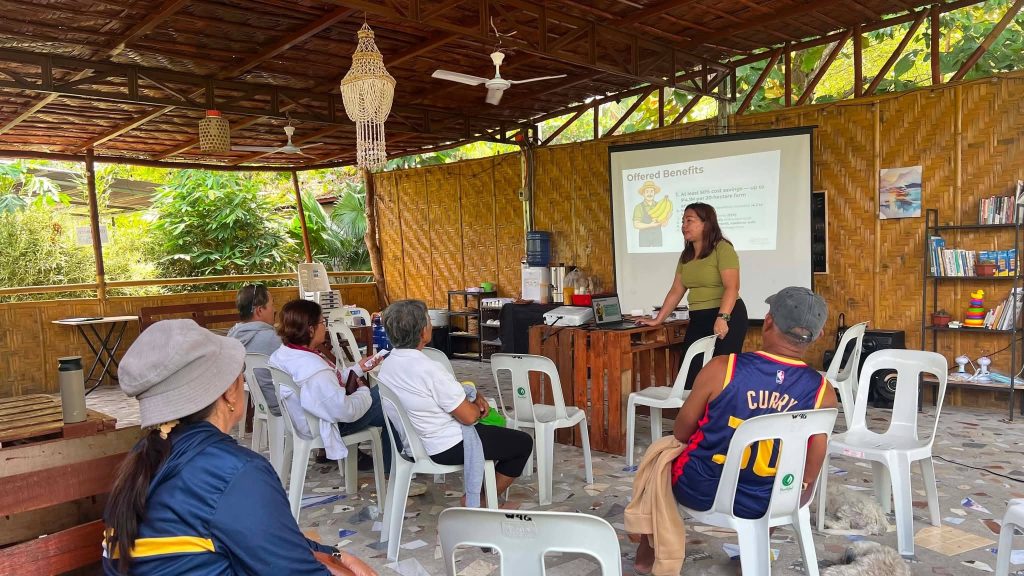
The sessions are run in partnership with agencies including the Department of Agriculture’s Bureau of Soils and Water Management and its regional field offices.
It also invites farmers to bring in soil samples for free testing before any product is ever discussed.
“We provide free soil testing and discuss how essential soil health is for the farm’s resiliency. At the same time, we offer technologies and awareness on how to be a smart farmer and not assumption-based,” Daquioag said.
A Target: From 0.5 to 30 percent
Daquioag, however, is candid about how small GreenVisions PH has made against the scale of the problem it describes.
By their own figures, only about one in 200 Filipino farmers currently undergoes any form of soil testing, and the data those farmers do have is often years out of date.
She stated the goal of GreenVisions PH for the next five years is to move that adoption rate from roughly 0.5 percent to 30 percent of Filipino farmers nationwide.
She framed the number as ambitious but said it is achievable, as long as farmers are given tools that fit into how they already work rather than tools that ask them to think like engineers.
“With our guidance and technologies, we want to empower farming smarter, growing greener; that means, we want to make farmers here in the Philippines smarter, more sensible in handling their farm when it comes to diseases, soil, farm management, expenses, and others,” she said.
Farmers’ resiliency, she stressed, depends on how resilient and how healthy their soil is.
“Mas healthier ang approach sa lupa, mas healthier ang tanim, mas malaki ang ani, without spending too much,” she stressed.
For Marina, three months into her own trial, the appeal is simpler.
It’s the difference between waiting six months for a lab result that may already be outdated by the time it arrives, and knowing, in minutes, what her soil actually needs.
“The knowledge or the guidance itself is very important to truly understand the condition of my land. So, knowing that the soil is suitable for plant development gives me great confidence that my crops will indeed bear fruit,” she stressed.
For Marina, farming smarter means listening when the soil has something to say and, for once, getting the diagnosis before the harvest, and not after.