



BY JULA MAE E. BESEOS, PhD in Agricultural Engineering/ Central Mindanao University faculty
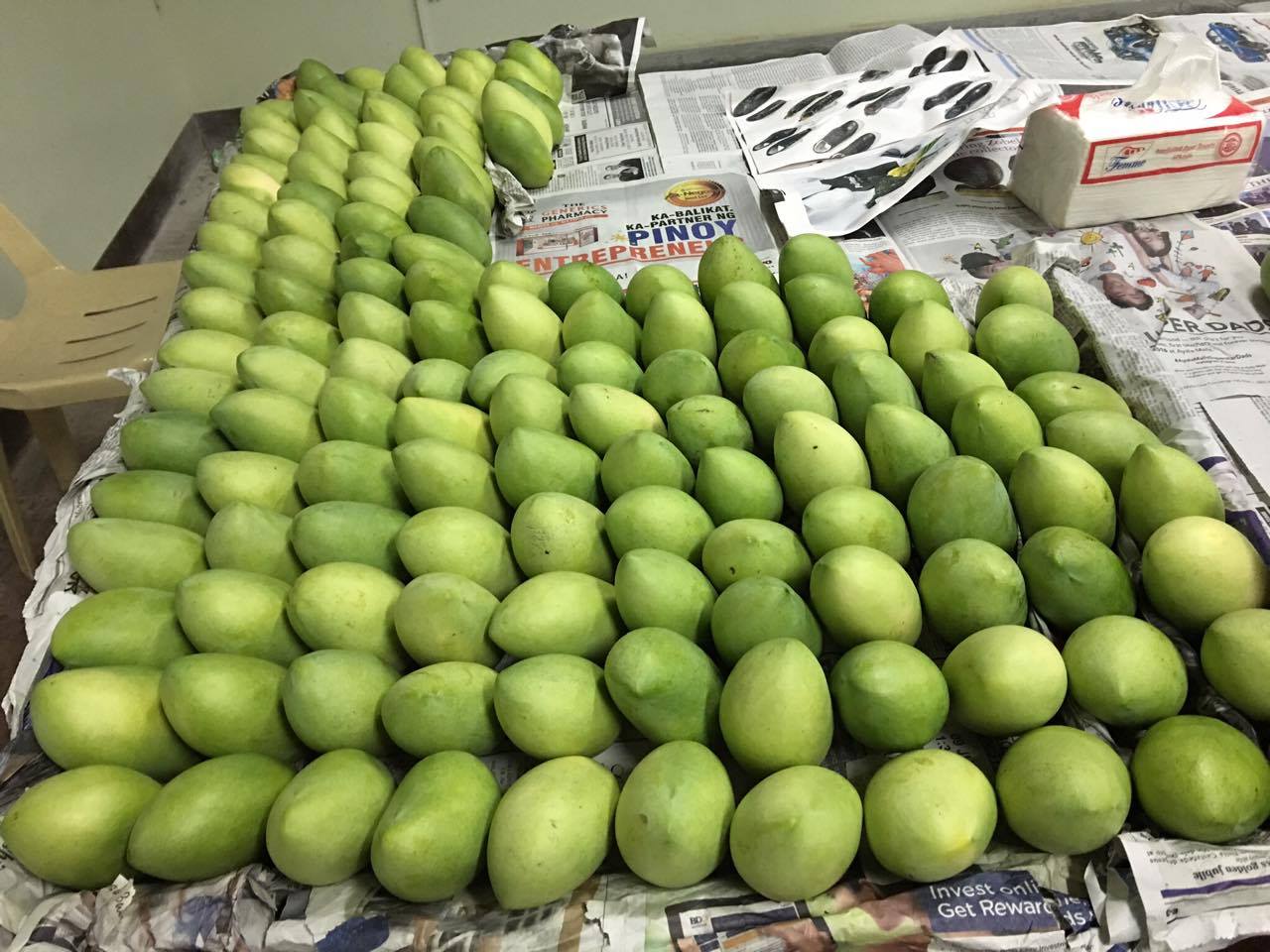
FOOD SAFETY remains one of the most pressing concerns in modern agriculture, particularly for fruits intended for fresh consumption and export. The Philippines is globally recognized for producing the highly prized Carabao mango. However, increasing demand in domestic and international markets has encouraged intensive farming practices that rely on pesticides to protect crops from pests and diseases.
While these chemicals contribute to higher yields, they also raise concerns regarding pesticide residues that may remain on fruit surfaces, potentially posing health risks to consumers if maximum residue limits are exceeded.
This emphasizes that ensuring food safety has become increasingly important as export markets, particularly Japan and other Asian countries, enforce strict standards for pesticide residues.
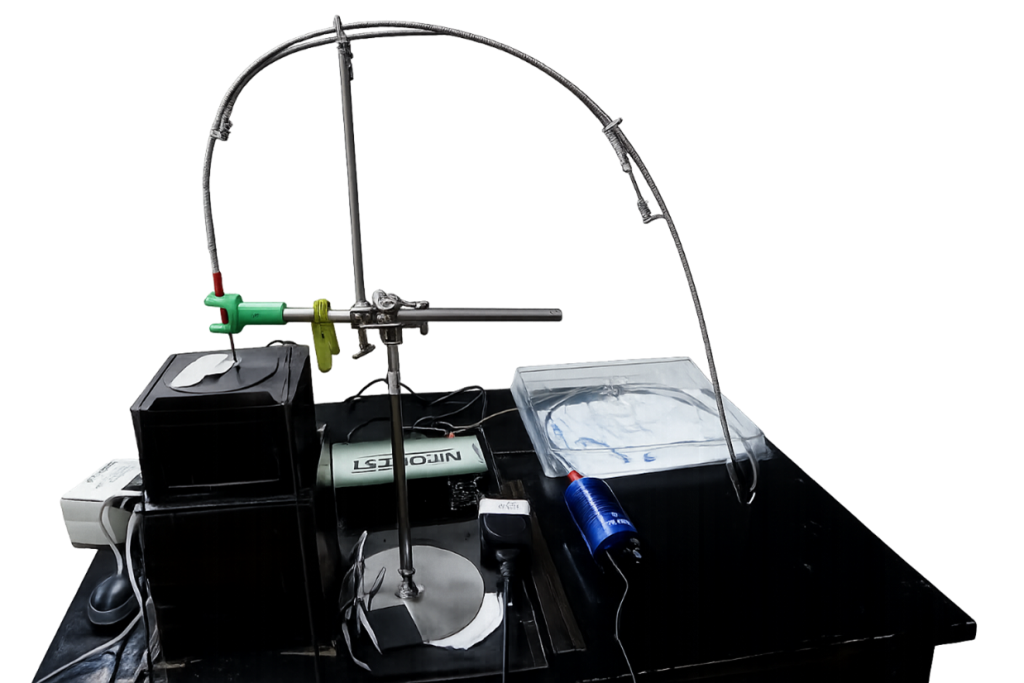
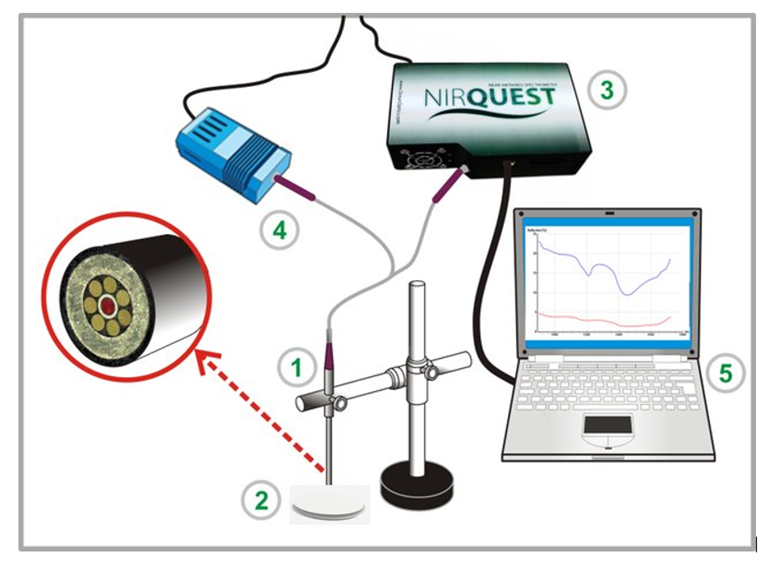
We had evaluated the potential of the Dry Extract System Involving Near-Infrared Spectroscopy (DESIR) as a rapid, non-destructive method for detecting pesticide residues on fresh Carabao mango (Mangifera indica L. cv. Carabao).
The increasing use of pesticides in mango production to meet domestic and export demands raises concerns about pesticide residues that may exceed the maximum residue limits (MRLs) established for food safety.
Conventional analytical techniques such as gas chromatography (GC) and high-performance liquid chromatography (HPLC) are accurate but expensive, destructive, and time-consuming. Therefore, this research investigated whether DESIR coupled with near-infrared (NIR) spectroscopy could provide a faster and more practical alternative for screening pesticide contamination.
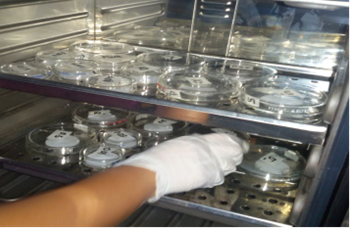
Three commonly used insecticides containing the active ingredients chlorpyrifos, cypermethrin, and profenopos were prepared at different concentrations. Dry extracts of aqueous pesticide solutions and wash extracts recovered from pesticide-treated fresh Carabao mangoes were scanned using NIR reflectance spectroscopy. Partial Least Squares Regression (PLSR) was employed to develop calibration and prediction models, while Principal Component Analysis (PCA) and Linear Discriminant Analysis (LDA) were used to classify samples according to pesticide concentration levels.
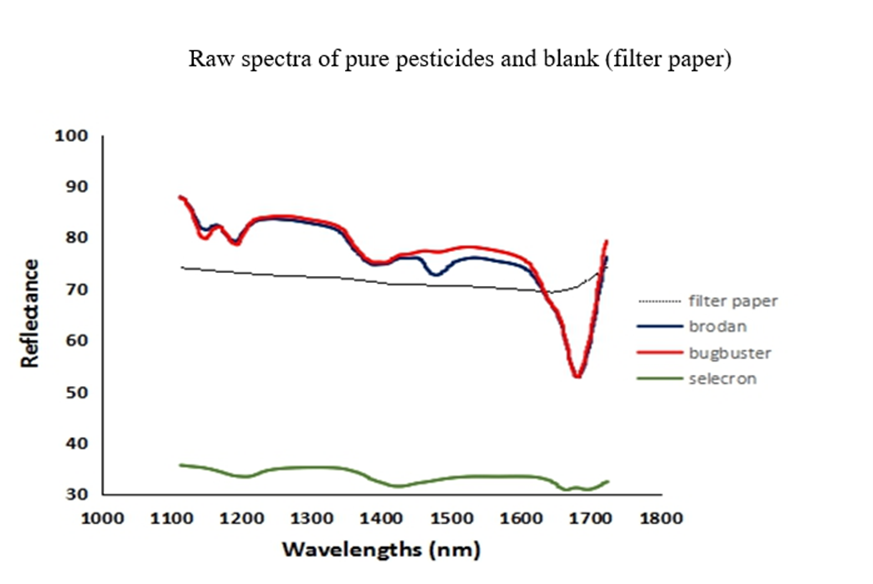
The spectral analysis identified significant absorption wavelengths associated with C–H and O–H molecular bonds, particularly within the 1112–1640 nm range, demonstrating that NIR spectroscopy could distinguish the three pesticides based on their spectral characteristics. The developed PLSR calibration models for pure aqueous pesticide solutions achieved coefficients of determination (R²) ranging from approximately 0.84 to 0.89, indicating satisfactory model performance for research applications and rough screening.
Models developed from pesticide residues recovered from mango fruit also showed acceptable predictive capability, with cross-validation R² values generally ranging from 0.70 to 0.81, suggesting the suitability of DESIR for rapid screening of pesticide residues on fruit surfaces.
Classification analysis further demonstrated that the method could distinguish samples above and below the recommended application threshold, with classification accuracies reaching 85% for profenopos and calibration accuracies exceeding 90% for chlorpyrifos.
Detection limit analysis indicated that DESIR was capable of detecting profenopos concentrations below established maximum residue limits. Validation using gas chromatography conducted by the Bureau of Plant Industry–National Pesticide Analytical Laboratory confirmed the presence of pesticide residues, supporting the reliability of the NIR-based approach.
Overall, the study concluded that DESIR, combined with NIR spectroscopy, is a promising, rapid, and low-cost screening tool for detecting pesticide residues on fresh Carabao mangoes. Although it cannot yet fully replace conventional chromatographic methods, it provides an effective preliminary screening technique that enables immediate decision-making, with only suspected samples requiring confirmatory analysis using gas chromatography.

