

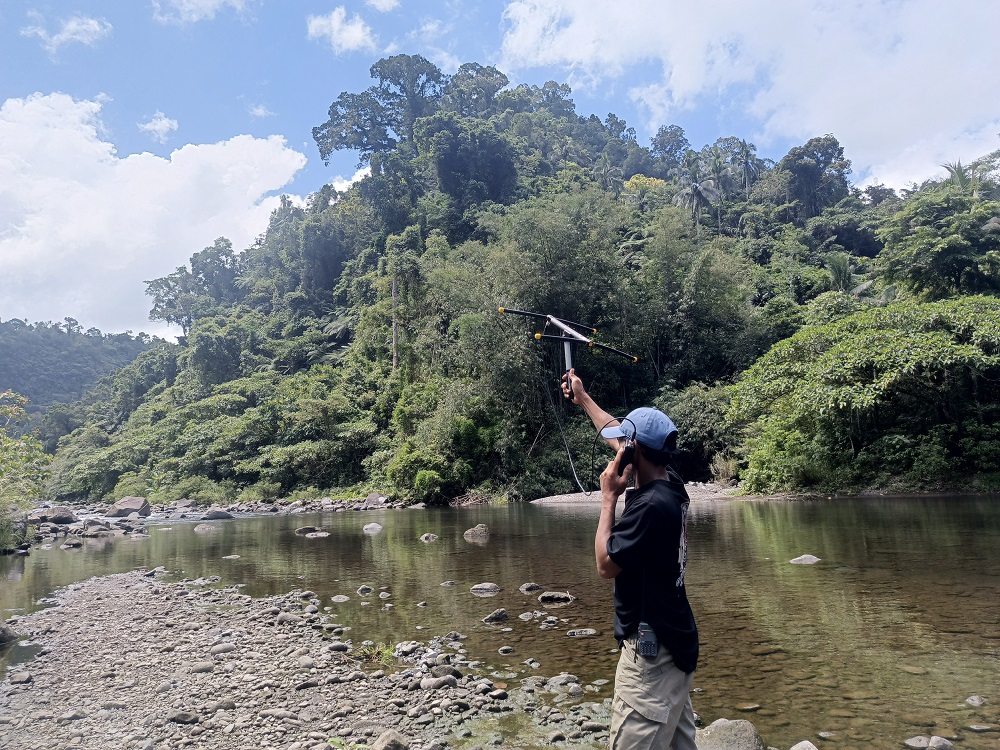
EIGHT months after Philippine Eagle “Lakpue” was released in Kagbana, Burauen, Leyte, he was found thriving, perched on a branch of a Hagimit tree inside the Marabong Watershed and along the riverine forests of the Pangalaw-an River, a tributary of the larger Marabong River.
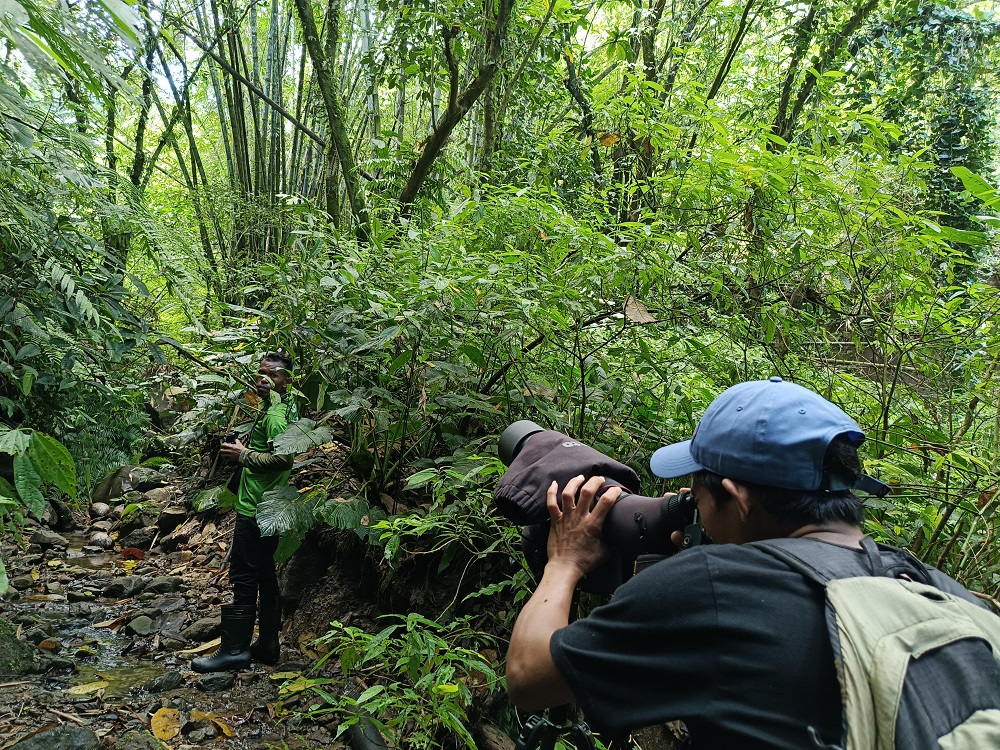
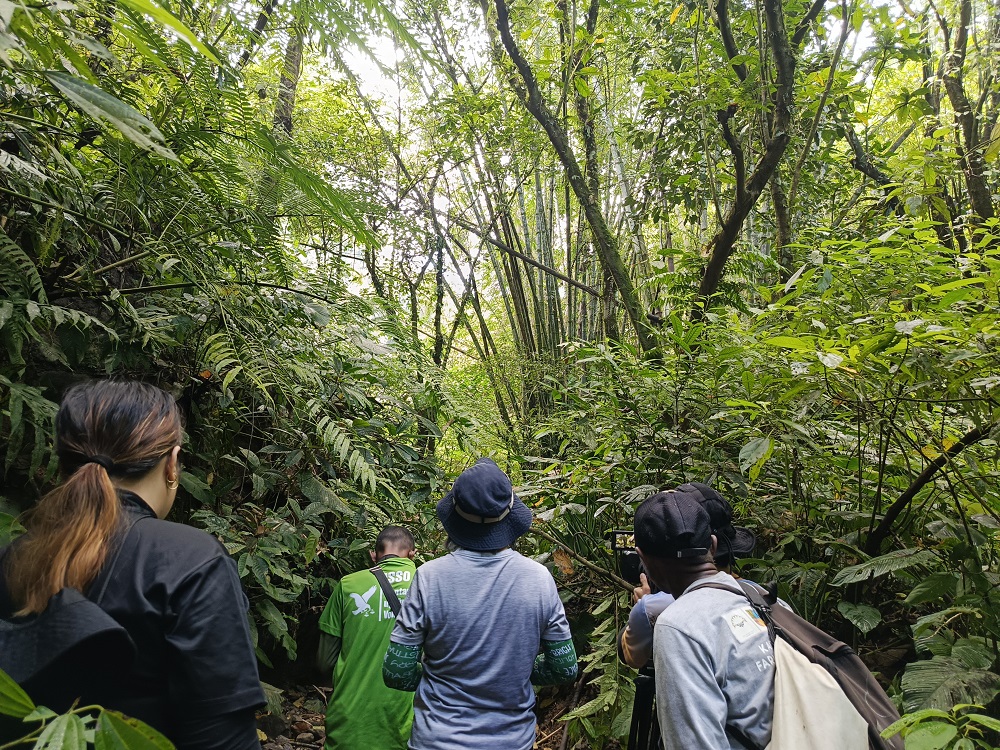
Lakpue was released on Sept. 30, 2025, sighted in Mahagnao, Burauen, Leyte on Sunday, May 17, 2026, during the media documentation activity with Philippine Eagle Foundation field technicians and forest guards from Mahagnao.
This was a year after Lakpue was translocated in Leyte along with Philippine eagles, Lyra Sinabadan, and Kalatungan I last March 21, 2025.
Behaving like a free-living wild Philippine eagle
Dr. Jayson Ibañez, PEF director for operations, said Lakpue is behaving like a free-living wild Philippine eagle following the media documentation activity.
The kind of forested river corridor where Lakpue is found is a typical habitat for a free-living Philippine Eagle.
“The fact that he is not staying close to houses or roads, and is instead using the forest interior, tells us that he is behaving like a wild eagle,” Ibañez told TIMES.
During the documentation, he was observed preening before gliding 20 meters to another branch, which Ibañez described as behavior that shows general health and confidence.
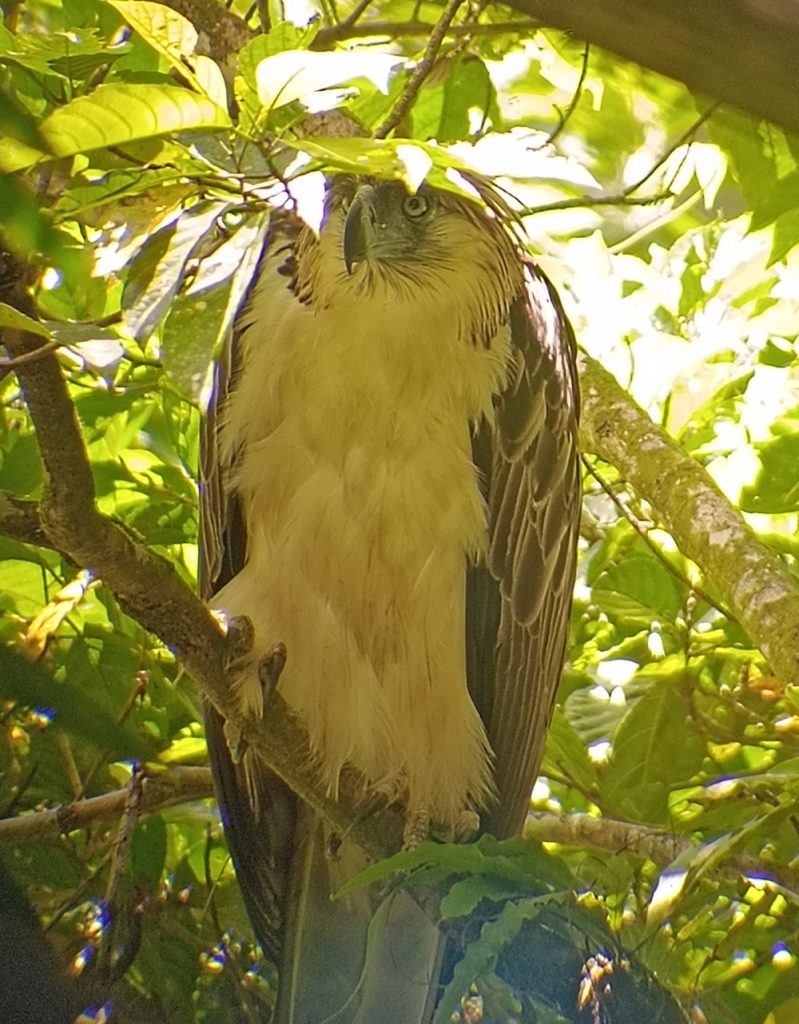
General health, according to him, includes regular preening, resting calmly, standing on one leg while resting or sleeping, hiding inside thick foliage, walking along riverbanks and the forest floor while hunting, and flying from tree to tree in search of prey.
“His behavior during the sighting also suggests that he is calm and settling into the area,” he stressed.
Preening means he is maintaining his feathers, which is important for flight and overall health, while gliding and moving normally through the forest shows that he is using the landscape with confidence.
The riverine forest where Lakpue is found is also important because it can serve as both a “travel route and a hunting area”.
“It likely gives him better visibility of prey, and his observed prey so far – monitor lizards, sailfin lizards, and palm civets – are animals that can be found in or near forested river systems,” Ibañez said.
Field technicians track several signs of adjustment, such as hunting success, as Lakpue has been seen hunting on his own, including monitor lizards, sailfin lizards, and palm civets.
Lakpue is also staying well inside the forest and rarely goes near houses or roads, which could mean that he is using the right habitat and is not actively seeking people.
Beyond hunting, a composed response to harassment, Ibañez noted, is a sign of growing confidence.
“If he remains calm and is not overly stressed, that is another sign that he is becoming more confident in the wild,” he said.
Lessons from the past release
Ibañez said that Lakpue’s success is not luck alone but hard lessons accumulated across previous releases, with some of which ended in tragedy.
Among the most painful was the death of Uswag, a male Philippine eagle released along with Carlito, a female Philippine eagle, in 2024, when the reintroduction program started in 2024.
Uswag tragically drowned at sea just a month after its release in Kagbana, Burauen. Its carcass was found floating off the Camotes Islands in Cebu.
“Uswag’s death reminded us that translocation always carries risk, especially when released eagles disperse into dangerous areas. Since then, the team has strengthened risk reduction measures,” he said.
In response, PEF overhauled its protocol, including daily monitoring, the use of satellite and radio transmitters, supplemental feeding when needed, wider community education, and stronger coordination with local government, DENR, and the Philippine National Police, which helps discourage hunting and trapping and supports gun-ban enforcement in the area.
“Education campaigns were also conducted in sitios and communities within a six-kilometer radius of Lakpue’s location, so people are aware of his presence and know how to help protect him,” he added.
Ibañez said that another important lesson is prey orientation, as Lakpue was introduced to natural prey animals such as monitor lizards, palm civets, and sailfin lizards while still under managed care and during supplemental feeding.
“The biggest lesson is that release is not just about opening a cage. The bird needs time to adjust to the release site before full freedom,” he said.
Lakpue benefited from a longer stay in a hack cage before release, giving him time to grow familiar with the sounds, weather, and prey of his new environment, and he was introduced to local prey animals before he ever had to find them himself.
While Lakpue arrived in Leyte in March 2025, he was later released in September 2025.
Pairing with Carlito: a major turning point for Leyte program
Ibañez recognized that there is no guarantee that Lakpue and Carlito will pair up, even if both birds are already sexually mature, but what the foundation can do is create the best conditions for natural pairing.
“That means releasing healthy, sexually mature birds in suitable forest habitat, reducing threats around them, monitoring their movements, and allowing them to behave as wild eagles,” he said.
Carlito’s adaptation since its release in 2024 was considered successful because she stayed active, used forest habitat, and hunted well during the period when she was being tracked.
Ibañez said she was last seen on November 6, 2025, but for about one year of monitoring, she showed that she could survive and function as a free-living eagle in Leyte.
While her transmitter lost power earlier than expected, PEF trusts that she is safe, and continued monitoring may eventually detect her again.
Ibañez said Lakpue and Carlito pair and breed in the wild; it would be a major turning point for the Leyte program.
“It would show that released eagles can not only survive, but also form a pair and begin rebuilding a natural population,” he said.
Their chicks could also have strong genetic value because Lakpue came from Mt. Busa in Southern Mindanao, while Carlito came from Mt. Pasian in Agusan del Sur in Northeastern Mindanao.
With these mountain ranges being far apart, the two birds may represent different bloodlines, and their offspring could carry a mix of two distinct genetic lines, which would help strengthen the long-term genetic health of the Leyte population.
With the breeding season starting around July, Ibañez is hopeful that courtship and mating behaviors may begin, and if they encounter each other, attraction and pair bonding may follow, which must happen through natural behavior.
What recovery actually looks like
A fully restored Philippine Eagle population in the Mt. Anonang-Lobi Range, where Leyte’s reintroduced eagles are being established, would mean approximately six breeding pairs, each defending its own territory, with younger birds maturing in the landscape to eventually replace older adults or occupy new areas.
According to the PEF’s current assessment, the Mt. Anonang-Lobi Range can support the release of about 16 Philippine Eagles.
“Some mortality is expected, as it also happens in the wild. If about 25 percent do not survive, that would leave enough birds to form around six pairs,” Ibañez said.
With five released so far, the program is still in its early rebuilding stages.
“A strong Leyte population would also need gene flow over time,” he said.
Ideally, at least one eagle from Samar or Mindanao should naturally disperse to Leyte, or be moved through carefully managed human-assisted translocation, at least once every several years or decades to keep the Leyte population “genetically healthy.”
Moving forward in the repopulation program
While there are encouraging signs from birds like Carlito, Sinabadan, and Lakpue, Ibañez said Leyte will only be considered truly restored once released eagles survive, settle, pair, breed, and produce young in the wild.
The current target is to release the remaining 11 eagles within the next three to four years, but he said this will depend on whether young eagles can be safely sourced from the wild in Mindanao for translocation.
The process must secure proper consent and clearances from the concerned communities, LGUs, and DENR, before any eagle is moved.
The next release site and timing will depend on several factors, including the availability of suitable forest habitat, enough natural prey, low risk of shooting or trapping, support from host LGUs and communities, DENR permits, field security, and the team’s ability to monitor the bird after release.
The health, age, sex, origin, and genetic value of the candidate eagle will also be considered.
“The goal is not only to release more birds, but to release the right birds in the right places, with enough support on the ground to help them survive, pair, and eventually breed,” he stressed.