

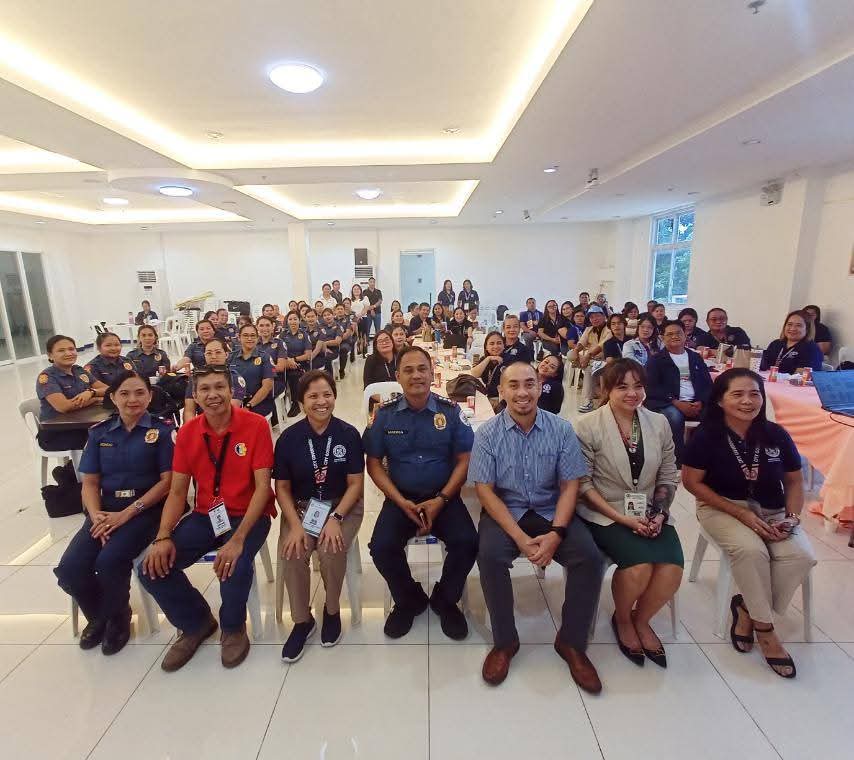
TOP OFFICIALS from the local judiciary, public defense, and social welfare sectors gathered at the Davao City Police Office (DCPO) headquarters on Wednesday morning, May 20, to craft a unified legal and operational framework on children in conflict with the law (CICL) and youth-at-risk.
The consultative stakeholders dialogue, held at the DCPO’s Presidential Hall at 10 a.m., brought together key pillars of the local juvenile justice system to address institutional gaps in child protection and rehabilitation.
The closed-door information exchange marked a rare, simultaneous strategy session between law enforcement and the city’s primary legal and social institutions, led
The meeting was led by Col. Peter Bauzon Madria, DCPO director, and attended by Julie P. Dayaday, officer-in-charge of the City Social Welfare and Development Office; Fiscal Armand Tirol, City Prosecutor; Atty. Genevive Belen of the Public Attorney’s Office (PAO), and Jerome Gumbao representing the Regional Juvenile Justice and Welfare Committee.
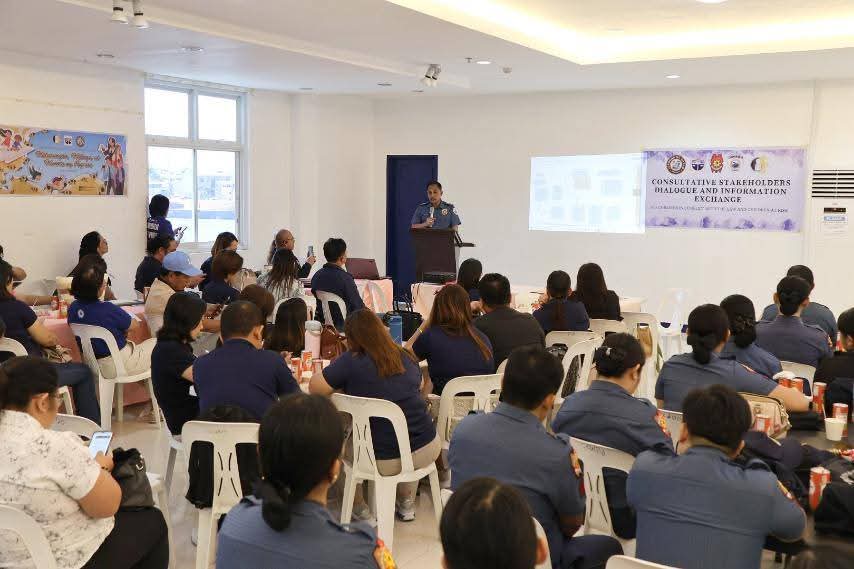
During the dialogue, Madria emphasized that addressing juvenile delinquency requires a departure from traditional law enforcement methods, advocating instead for an aggressive, multi-agency intervention template.
“We cannot solve the issues of vulnerable children or youth criminality through policing alone,” Madria stated, expressing credit to the CSWDO for engineering the multi-sectoral summit.
He reaffirmed that the DCPO is aligning its field operations with community-led rehabilitation and protection initiatives rather than relying solely on punitive detentions.
The dialogue integrated local grassroots leadership, drawing active participation from barangay kagawads representing various districts across Davao City, as well as frontline DCPO family juvenile gender sensitivity officers.
Local barangay officials are often the first responders to disturbances involving neighborhood youth.
Authorities noted that providing these local councils with a direct line to the City Prosecutor, PAO, and CSWDO ensures that diversion programs for minor offenders can be executed rapidly at the village level, preventing at-risk youth from entering the formal criminal justice system.