



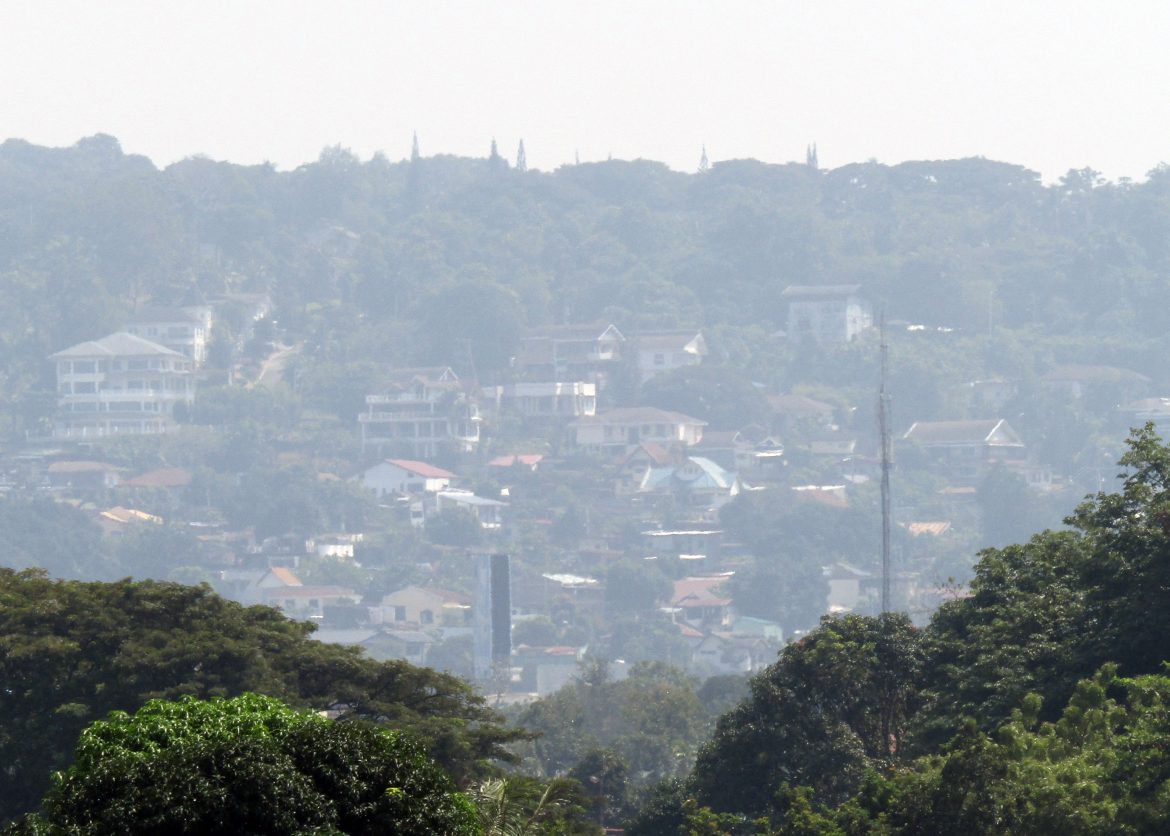
DESPITE the transboundary haze from Indonesia that continues to blanket the city, the Department of Health (DOH) XI has recorded no respiratory-related cases in various hospitals and emergency clinics.
During the Habi at Kape media forum on Wednesday, Sept. 9, Dr. Kris Trangia, DOH XI Health Emergency Management Section head, said the agency is actively strengthening its surveillance system to monitor and respond to any respiratory diseases.
“As of now, for Davao Region, wala pa naman tayong nare-report na untoward events in relation to haze,” Trangia said.
She said haze can irritate the eyes, nose, and respiratory system of vulnerable individuals.
Residents experiencing symptoms, which can include chest tightness, difficulty breathing, or worsening asthma symptoms, must seek medical consultation immediately.
She stressed that vulnerable groups, including pregnant women, children, senior citizens, and individuals with existing lung and heart conditions, need to take extra precautions.
“While we have recorded zero cases so far, we strongly advise the public to remain cautious and give extra care to their overall health, especially those under “very unhealthy,” Trangia said.
The official advised limiting time outdoors, staying indoors as much as possible, and wearing an N95 mask, a double mask, or using alternatives such as a damp cloth or cloth mask when going outside is unavoidable.
She added to rinse the eyes with clean water or saline solution to relieve irritation and avoid rubbing the eyes, stay hydrated, and drink water frequently to replenish body fluids and clear irritants from the throat caused by smoke.
While the air quality is fluctuating, there is no recommendation for mandatory wearing of face masks beyond the sensitive groups, but it is encouraged to protect oneself.
Air quality across the Davao Region showed mixed conditions as of the EMB Davao Region’s September 9, 2026 (12:00 nn) advisory.
The Calinan Station in Davao City recorded a “Fair” PM10 reading of 84.1 but a “Very Unhealthy” PM2.5 level of 173.75, continuing a run of very unhealthy PM2.5 readings from Sept. 7- 8.
EMB reported this is a deviation from the station’s usual “Fair” pattern.
The Digos Station in Davao del Sur posted a “Fair” PM10 value of 56.9, while its PM2.5 reading was unavailable due to equipment maintenance, but prior days showed PM2.5 ranging from “Unhealthy for Sensitive Groups” (112.45 on Sept 8, 116 on Sept 6) to “Very Unhealthy” (166.15 on Sept 7).
The Tagum Station in Davao del Norte, which only monitors PM2.5, stayed within “Fair” territory throughout the period, registering 72.5 on September 9 after readings of 76.05, 97.29, and 85.21 on Sept. 6-8.
The Malita Station in Davao Occidental posted the cleanest air of the four, with a “Good” PM10 reading of 44.5 and “Fair” PM2.5 of 91.79, though its PM2.5 briefly spiked to “Unhealthy for Sensitive Groups” (134.81) on September 7 before recovering.
EMB health advisory urged the public with heart or respiratory conditions, such as asthma, to stay indoors, rest, limit unnecessary travel, and reduce vehicle use to help ease pollution and traffic congestion.
Particulate matter (PM) is the term for a mixture of solid particles and liquid droplets found in the air.
Some particles, such as dust, dirt, soot, or smoke, are large or dark enough to be seen with the naked eye.
Microscopic solid and liquid particles bypass the body’s natural defenses to damage human health and the environment.
PM10 (Coarse Particles) are tiny airborne particles 10 pm or smaller, such as dust, pollen, and mold, while PM2.5 (Fine Particles) are tiny particles <2,5 pm, mainly from vehicle exhaust, smoke, and burning.

