

A PROJECT that aimed to help 14 indigenous communities in the Davao and Caraga regions embed Philippine Eagle conservation into their ancestral domain development plans was officially launched on Tuesday, September 1.
The project, called “ADSDPP Enhancement and Community Conservation Planning” of the Department of Environment and Natural Resources (DENR), the National Commission on Indigenous Peoples (NCIP), and the Eastern Mindanao Biodiversity Corridor (EMBC) Program.
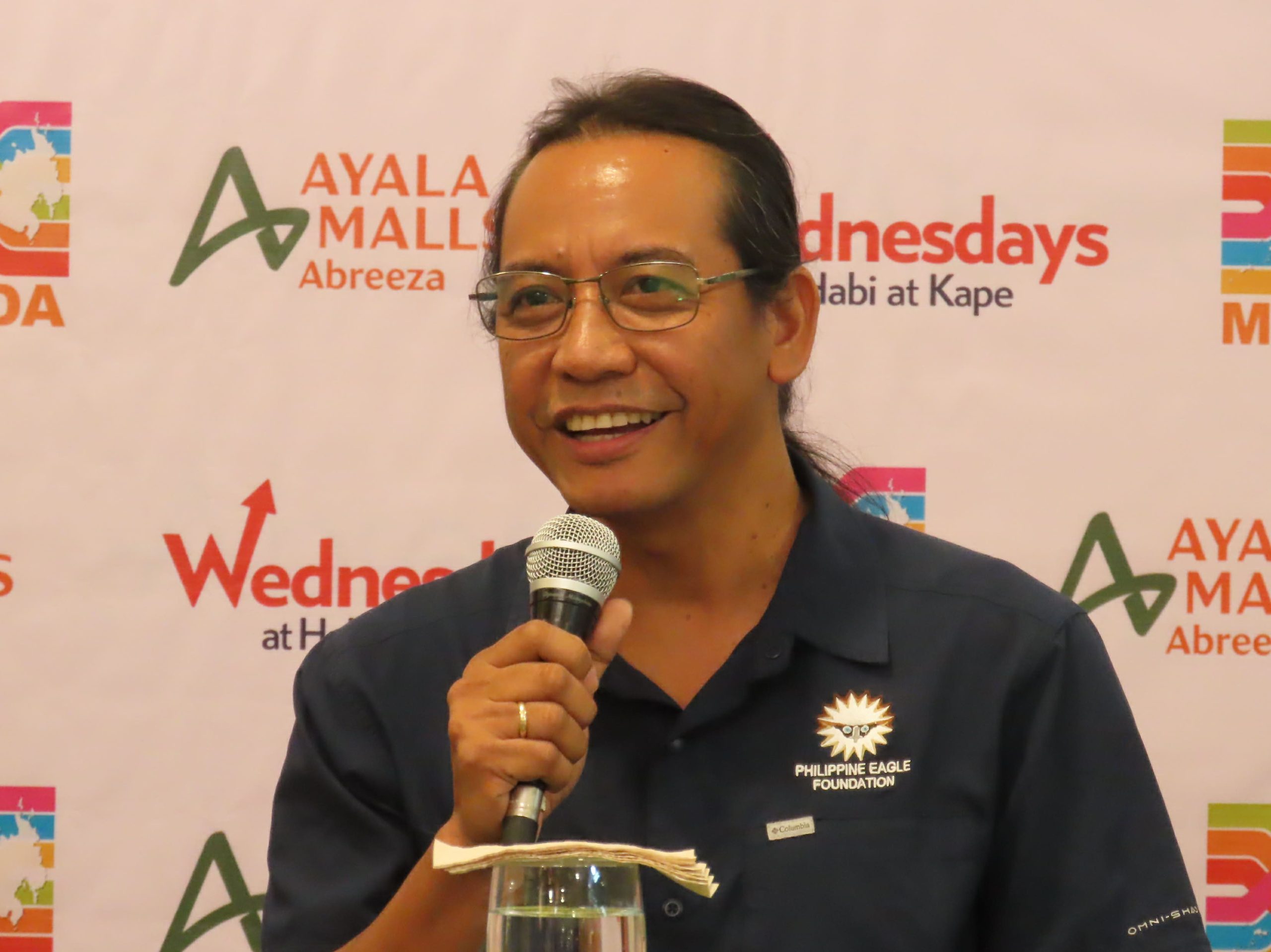
Jayson Ibañez, Philippine Eagle Foundation director for operations, said the project aims to address continuing threats to the country’s national bird.
He cited the 2024 killing of a young eagle named Mangayon, who was shot with a marble gun in Compostela, and other cases of eagles getting shot and trapped within ancestral domains.
Under the initiative, participating communities will update their Ancestral Domain Sustainable Development and Protection Plans (ADSDPPs) and prepare Community Conservation Plans that integrate the Philippine Eagle as a flagship species, while its forest habitat will serve as a flagship ecosystem.
“We have 14 pilot partners for this initiative, and the main objective is to help the indigenous peoples articulate in these plans their own version of conserving biodiversity, including the Philippine Eagle, that capitalizes on their indigenous knowledge systems and their own customary governance,” Ibañez said.
Seven of the pilot ancestral domains are in the Davao Region belonging to the Mandaya, Mansaka, and Dibabawon indigenous groups, covering Compostela, Baganga, Cateel, Boston, Lupon, and Mabini.
The other seven, involving the Mamanwa and Manobo groups, are in the Caraga Region, including San Francisco, Agusan del Sur.
Ibanez said the project will kick off in Compostela, Davao de Oro, the first to undergo the process, which combines steps drawn from NCIP’s ADSDPP guidelines.
Along with the ADSDPP procedure is the community conservation plan, which will be conducted with community-specific protocols such as mandatory rituals.
A day-long “ancestral domain walk” involving elders and youth will be done to assess environmental threats, such as landslides, and designate priority restoration zones.
“All members walking the ancestral domain, understanding ano’ng kinahinatnan niya ngayon, kung ano’ng status, identify ‘yung mga issues and threats, and then decide on solutions to address those threats,” he said.
Once completed, the plans are expected to include GIS-based maps of community-identified protected areas, drawing on tools such as camera traps and bioacoustic recorders operated by trained indigenous forest guards.
“Putting scientific information and tools and techniques in their hands, and using that in their own way of managing and caring for their ancestral domain,” he said.
The organization said they intend to help integrate the plans into the mainstream development plans of local government units and the provincial government to help secure funding and support.
Working with recognized indigenous leaders and elders who enforce customary rules offers a stronger, longer-term response to shooting and trapping within ancestral domains than exclusionary approaches to conservation.
“If we work closely with the indigenous leaders and mga elders who are respected within the community, they make the rules, they implement customary rules, and they’re respected by the individuals in the community, we have a higher chance of addressing itong mga issues ng shooting and hunting,” he stressed.
A community working group with members of the community is eyed to help with indigenous planning and monitoring biodiversity within their ancestral domains.
The PEF is piloting “cultural keystones,” which are flora and fauna that are important for biodiversity and ecosystems, but also have cultural values.
“Mas mataas ‘yong motivation ng indigenous community to monitor and know the status of these animals if these are also recognized as culturally important,” he said.
The Eastern Mindanao Biodiversity Corridor, stretching from Surigao del Norte to Davao Oriental, is estimated to host 43 of the roughly 233 Philippine Eagle pairs in Mindanao, about a fifth of the population.
This makes it one of the highest concentrations of high-quality eagle habitat in the country.
Of those 43 pairs, project data show 20 nesting sites have been identified so far: 13 in Davao Oriental, one in Davao de Oro, and about six in the Caraga Region.
Nationwide, the Philippine Eagle Foundation estimates there are 392 eagle pairs remaining.
The project, kicked off at the Philippine Eagle Center in Malagos, Davao City, was attended by DENR Secretary Juan Miguel T. Cuna, DENR Regions XI and XIII/Caraga, the NCIP, the PEF, and indigenous leaders from both regions.
The 10-month project is funded by the Global Environment Facility through the United Nations Development Programme, implemented by the DENR.