



MINDANAO’S mining industry can move beyond mere resource extraction toward domestic smelting and refining and manufacturing of high-value components and batteries to integrate into global clean-technology supply chains, a Department of Environment and Natural Resources (DENR) official said.
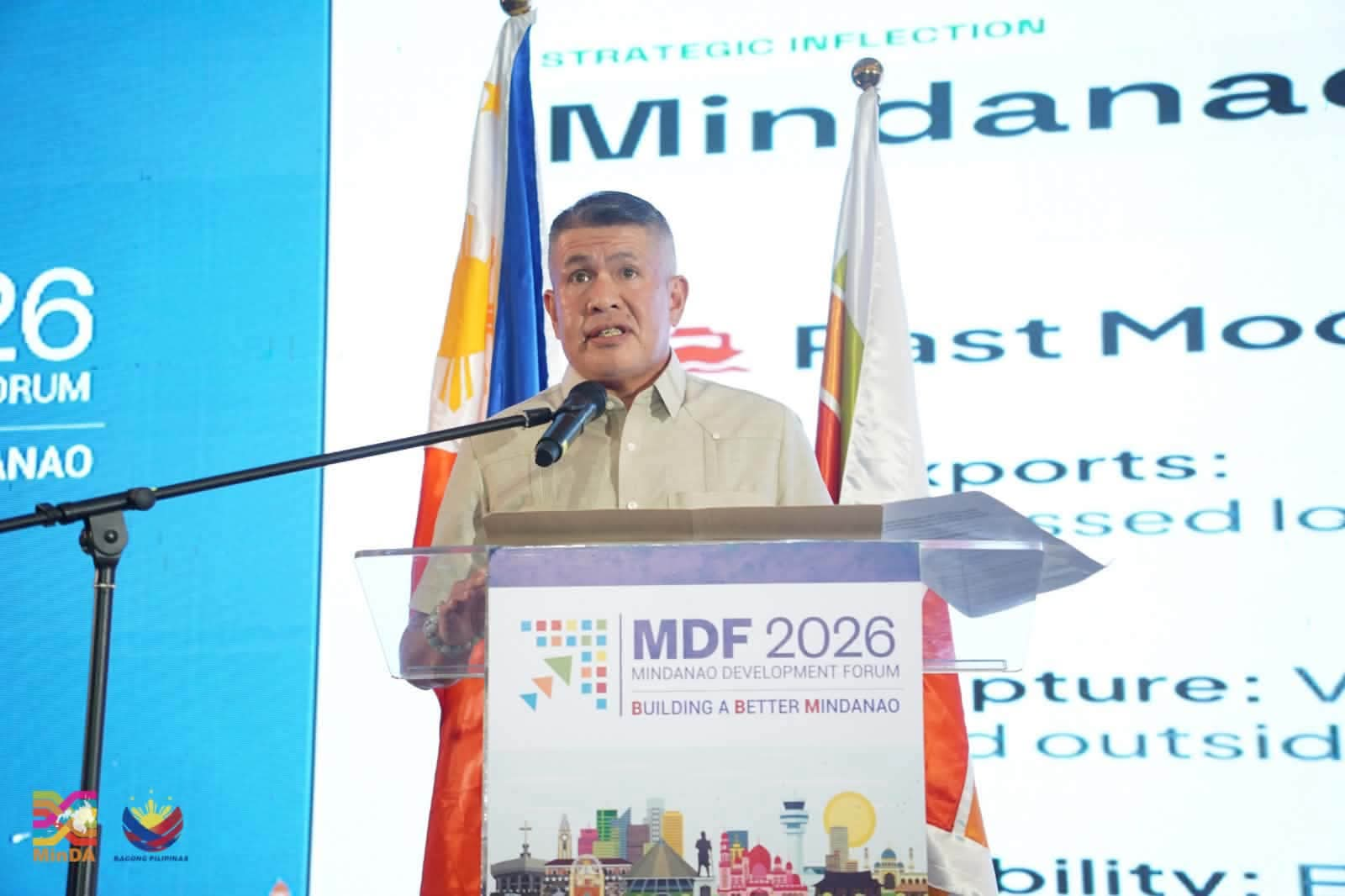
Undersecretary Joselin Marcus E. Fragada presented the potential on Oct. 28 at Plenary Day 2 of the Mindanao Development Forum 2026 at the Dusit Thani Davao, citing Executive Order No. 122 as the policy anchor.
Fragada said EO 122 designates critical mineral processing as a national priority.
“For the longest time, Mindanao has had the largest share of mining activities,” Fragada said.
More than half of the mineral production sharing agreements were issued by the department; more than half of them are located in Mindanao, particularly concentrated in Davao Region and Caraga.
“The whole objective of the department is to actually try to encourage people to come in and continue to develop and utilize the natural resources that are still present and have not been utilized so far,” he said.
The designation comes with contract sanctity, regulatory consistency, and incentive packages from the Department of Trade and Industry-Board of Investments.
Fragada pointed to the Caraga laterite basin for nickel, cobalt, and scandium. He said production there can expand from raw ore exports into high-pressure acid leach (HPAL) processing, with the end goal of precursor cathode active materials for electric vehicle batteries.
For copper and molybdenum from porphyry deposits, the target is domestic smelting, refined copper rod, and clean grid infrastructure.
He presented that Philippine copper output in 2025 reached 231,885 dry metric tons, valued at P26.63 billion. Iron, silica, and limestone are used for solar panel glass, high-strength alloys, and green construction.
The DENR identified four structural bottlenecks in Mindanao and its proposed response.
He stressed the need to unlock 132,895 hectares of forest land for solar and wind projects to supply clean power to mineral zones.
For logistics and ports, he stressed mobilizing blended finance, official development assistance (ODA), and public-private partnerships (PPPs) to build dedicated mineral transport corridors.
He also added that the Mining Industry Coordinating Council (MICC) will enforce environmental, social, and governance standards; ensure compliance with free, prior, and informed consent (FPIC), and mandate that wealth creation directly fund local Sustainable Development Goal programs.
He said the government must leverage EO 122 bilateral agreements to attract foreign direct investment and technology transfer.
The department listed cooperation under EO 122 with five countries: the United States, Japan, South Korea, the United Kingdom, and Canada.
The United States is through a critical minerals memorandum of understanding on domestic processing and supply chains.
Japan, through METI and JOGMEC, is focused on mine rehabilitation and environmental monitoring technology, while South Korea, through KOMIR, on deep exploration and clean mineral processing.
The United Kingdom, through the British Geological Survey, is on ESG standards and a Responsible Nickel Roadmap, while Canada is on AI-driven critical mineral mapping, tailings storage facilities, and digital mining governance.

