

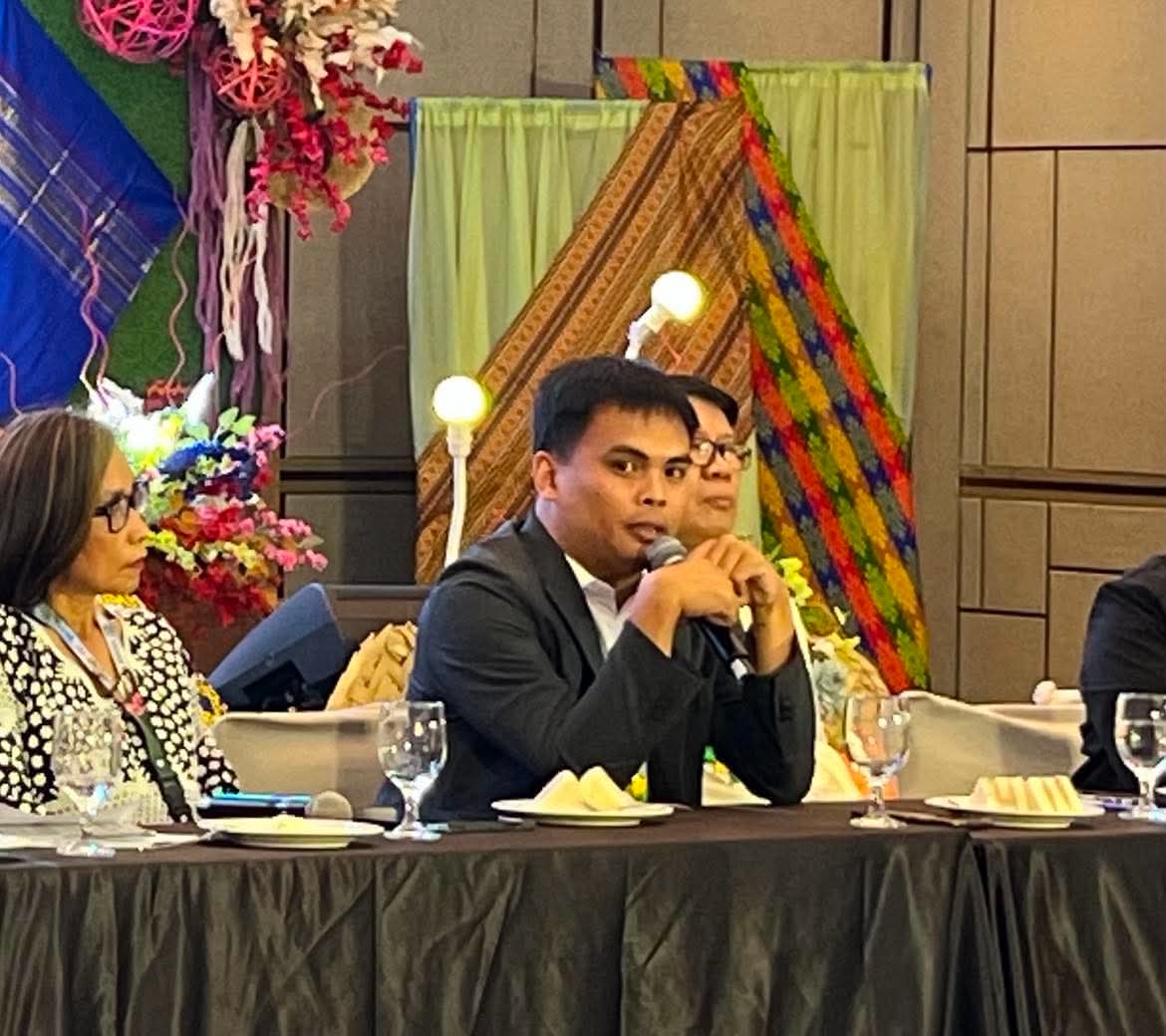
AROUND 40 percent of households in Davao City, or approximately 195,000 families, currently do not own both their home and lot, an official from the City Planning and Development Office (CPDO) reported Friday.
Speaking at the 2026 Regional Housing Conference hosted by the Chamber of Real Estate and Builders’ Associations Inc. (CREBA) last Friday, July 24, CPDO technical assistant Charles Tumalip pointed to a growing demand for socialized housing.
Tumalip revealed that based on the 2024–2025 Community-Based Monitoring System (CBMS) census, Davao City currently has about 485,000 total households.
While 60% (around 290,000 households) enjoy secured tenure owning both their house and lot, the remaining 40 percent either rent, own only the structure, or reside in informal arrangements without property titles.
“So, these households (40%), they either only own the house, or rent the house or the lot, or occupy their dwelling rent-free or without the consent of the owner,” he said.
He added such arrangements indicate varying levels of housing tenure and security and might potentially benefit from future housing programs or formal housing opportunities.
CPDO projects that the local potential market for housing will expand to 245,000 households in 10 years (2034), 300,000 by 2044, and reach 370,000 households within 30 years.
“In terms of distribution among the city’s administrative districts, we are looking at Talomo as our priority project to have the largest potential housing market,” he said.
To address the current backlog and future growth, Talomo District, spanning Matina to Dumoy and Baliok and Bago, has been identified as a priority area, followed by the Buhangin and Poblacion districts for medium- to high-rise developments.
Tumalip also outlined several ongoing interventions to address transport connectivity concerns, economic profiles, and post-turnover maintenance. He stressed that the city is aligning its future housing sites with the routes of the High Priority Bus System (HPBS) to ensure high commuting expenses do not displace low-income residents.
“That is actually one of the plans as to how the Davao City High Priority Bus System (HPBS) is being implemented in such a way that it reaches the housing projects that are being implemented in the next year or two as far as Calinan, Tibuloy, Toril,” he said, noting the importance of public transport available to the housing projects.
He noted that one of the development thrusts for housing is more of a rental-style for Tibuloy and Calinan, but at minimum rates.
“Because we are expecting that at minimum rates of rental, then they can save up for their own properties, still in Davao City. So that is the goal or the development thrust for housing in the next around 2 to 3 years,” he said.
Key housing projects slated for the next two to three years include housing units in Tibuloy; Balai Calinan, and the upcoming Balai Pag-babago in Lasang.
Tumalip urged property developers and private sector stakeholders to participate in the upcoming review of Davao City’s Comprehensive Land Use Plan (CLUP).
He reported that workshops to update the city’s zoning maps, zoning ordinances, and Disaster Risk Assessment will begin this August.
“If you can wait long-term, then position papers as preferences for larger portions of properties that would want to have their zoning classifications changed, so that we can pay attention to such position papers when we update by 2028,” he said.
The drafting essentially starts this year, ahead of its scheduled implementation for 2028 through 2040, an expanded 12-year development framework.
The CPDO is currently open to receiving applications for property reclassification and rezoning, as well as position papers from landowners seeking layout alignment with the city’s long-term master plan.