



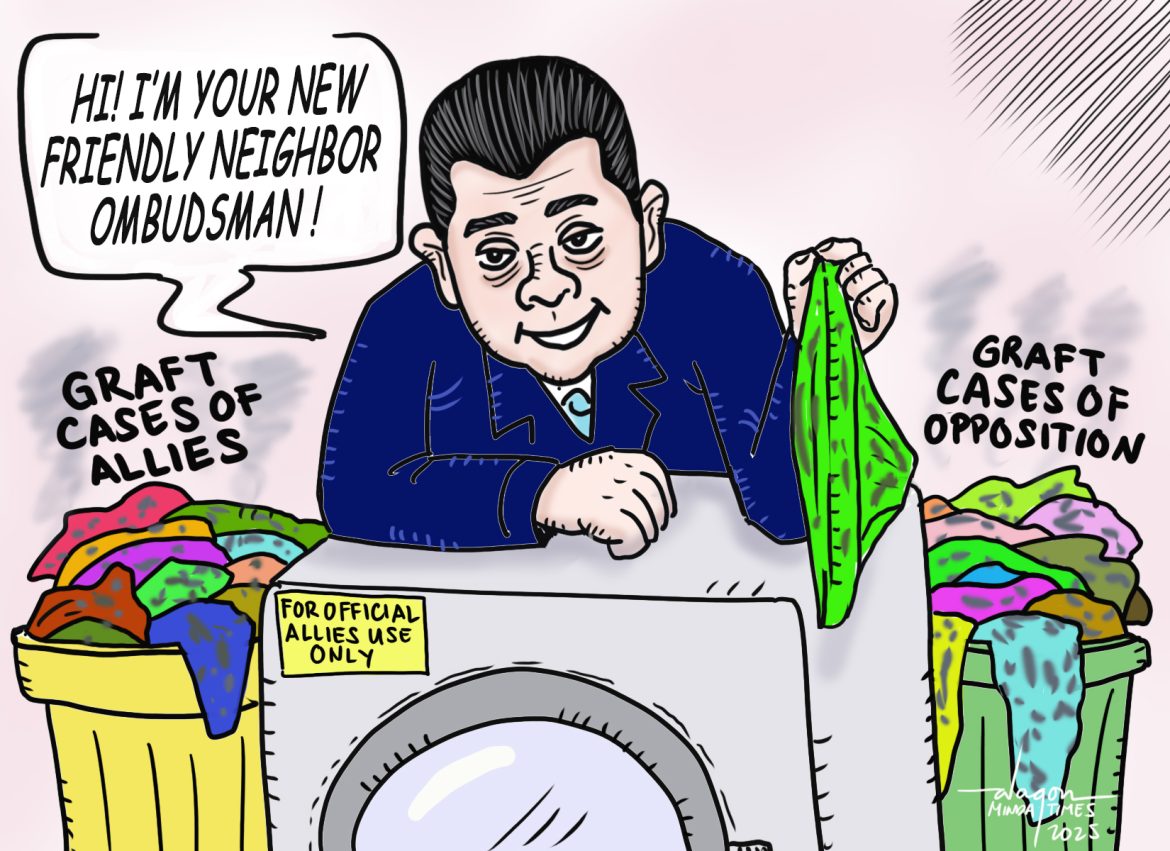
BY ALEX ALAGON


BY ALEX ALAGON

THE 10TH Infantry Division (ID) has recovered 220 firearms from a total of 668 Communist Terrorist Group (CTG) personalities—including those who surrendered, were captured, or killed—since the start of the year.
The 10th ID officially declared its entire operational area, which includes territories covered by the Navy and Air Force under Joint Task Force Agila, as free of active NPA several months ago.
This achievement marks a sustained period of peace, though the military continues its efforts to facilitate the formal surrender of remaining former rebels.
Major Ruben Gadut, chief of the 10th ID Public Affairs Office, confirmed the status during the recent Davao Peace and Security Press briefing held at The Royal Mandaya Hotel.
He noted that the area has maintained a “zero active NPA” standing following the successful apprehension of the remnants of the Southern Mindanao Regional Committee (SMRC) last June 13, 2025.
Sustained gains and integration efforts
While active combat operations have ceased, Gadut highlighted the ongoing efforts to address former rebels who have yet to formally surrender under the government’s Enhanced Comprehensive Local Integration Program (E-CLIP).
“However, we still have persistent activities related to former rebels who have not yet surfaced,” Gadut stated. He explained that these individuals are still being catered to and facilitated to formally surrender under the E-CLIP, a program that has been in place since 2016.
The division’s cumulative accomplishments include the 668 CTG personalities neutralized (surrendered, captured, or killed) and the recovery of 220 firearms.
The most recent major recovery occurred on Sept. 27, 2025, in Makilala, North Cotabato, where an arms cache containing two (2) M16 rifles was discovered.
2025 combat scoreboard
Reviewing the combat scoreboard for the year, the 10th ID recorded key actions that contributed to the current peaceful environment:
Gadut concluded by emphasizing that maintaining peace and order remains the division’s primary mandate, sustained not only through military operations but also through continuous Civil-Military Operations (CMO) and engagement with other government agencies.
“Again, the joint operational area of the 10th ID is generally peaceful,” he reiterated. “We have not monitored any significant recovery efforts coming from the Communist Terrorist Groups.”
Photo courtesy of Rhoda Grace B Saron
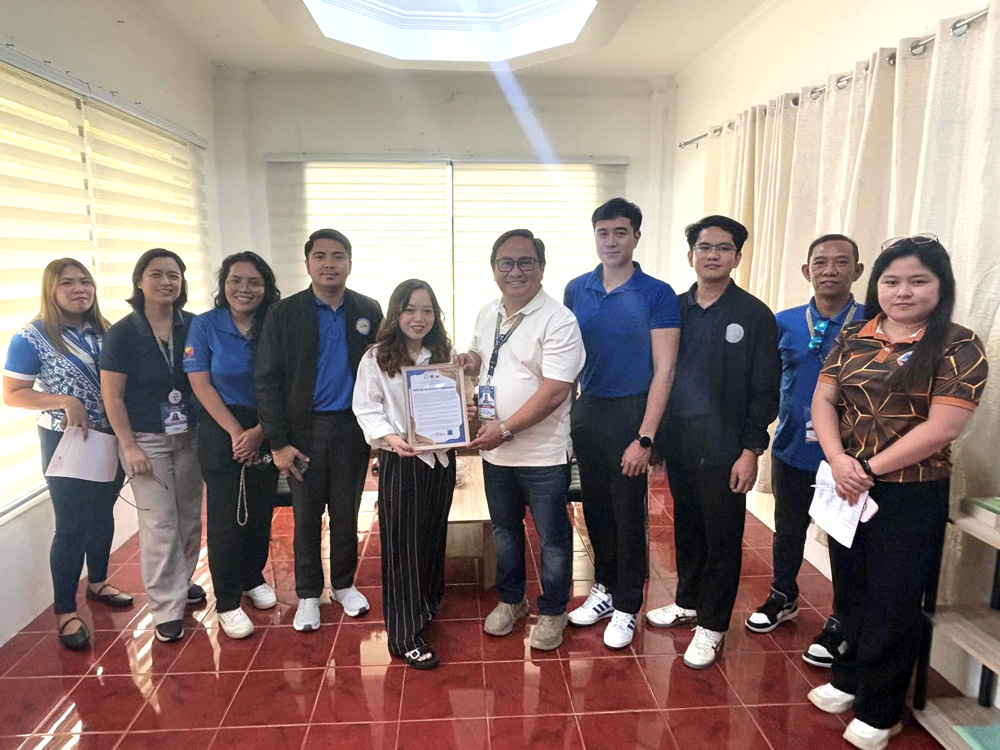
Davao Oriental- Fast-tracking its way towards technically and viably sound and commuter-centric Local Public Transport Route Plans (LPTRP) in different parts of Region XI, the LTFRB XI gives out three (3) Notices of Compliance in a series of awarding events on October 7 and 8, 2025.
Visiting three Municipal Mayor’s Offices in Davao Oriental are members of the PTMP (Public Transport Modernization Program) team led by LTFRB XI Regional Director Nonito A. Llanos III. “𝘞𝘪𝘵𝘩 𝘵𝘩𝘦 𝘩𝘢𝘯𝘥𝘴-𝘰𝘯 𝘨𝘶𝘪𝘥𝘢𝘯𝘤𝘦 𝘰𝘧 𝘰𝘶𝘳 𝘓𝘛𝘍𝘙𝘉 𝘊𝘩𝘢𝘪𝘳 𝘛𝘦𝘰𝘧𝘪𝘭𝘰 𝘎𝘶𝘢𝘥𝘪𝘻 𝘐𝘐𝘐, 𝘸𝘦 𝘢𝘳𝘦 𝘪𝘯𝘵𝘦𝘯𝘴𝘪𝘧𝘺𝘪𝘯𝘨 𝘰𝘶𝘳 𝘦𝘧𝘧𝘰𝘳𝘵𝘴 𝘢𝘯𝘥 𝘴𝘵𝘳𝘦𝘯𝘨𝘵𝘩𝘦𝘯𝘪𝘯𝘨 𝘳𝘦𝘭𝘢𝘵𝘪𝘰𝘯𝘴𝘩𝘪𝘱𝘴 𝘪𝘯 𝘤𝘳𝘦𝘢𝘵𝘪𝘯𝘨 𝘦𝘮𝘱𝘰𝘸𝘦𝘳𝘦𝘥 𝘢𝘯𝘥 𝘴𝘶𝘴𝘵𝘢𝘪𝘯𝘢𝘣𝘭𝘦 𝘵𝘳𝘢𝘯𝘴𝘱𝘰𝘳𝘵 𝘴𝘺𝘴𝘵𝘦𝘮𝘴. 𝘛𝘩𝘦𝘴𝘦 𝘢𝘳𝘦 𝘪𝘯𝘪𝘵𝘪𝘢𝘵𝘪𝘷𝘦𝘴 𝘧𝘰𝘭𝘭𝘰𝘸𝘪𝘯𝘨 𝘵𝘩𝘦 𝘥𝘪𝘳𝘦𝘤𝘵𝘪𝘷𝘦𝘴 𝘰𝘧 𝘗𝘳𝘦𝘴𝘪𝘥𝘦𝘯𝘵 𝘍𝘦𝘳𝘥𝘪𝘯𝘢𝘯𝘥 𝘙. 𝘔𝘢𝘳𝘤𝘰𝘴 𝘑𝘳, 𝘵𝘩𝘳𝘰𝘶𝘨𝘩 𝘚𝘦𝘤. 𝘎𝘪𝘰𝘷𝘢𝘯𝘯𝘪 𝘓𝘰𝘱𝘦𝘻 𝘰𝘯 𝘢 𝘮𝘰𝘥𝘦𝘳𝘯𝘪𝘻𝘢𝘵𝘪𝘰𝘯 𝘱𝘳𝘰𝘨𝘳𝘢𝘮 𝘵𝘩𝘢𝘵 𝘪𝘴 𝘯𝘰𝘵 𝘰𝘯𝘭𝘺 𝘵𝘳𝘢𝘯𝘴𝘧𝘰𝘳𝘮𝘢𝘵𝘪𝘷𝘦 𝘣𝘶𝘵 𝘮𝘰𝘳𝘦𝘴𝘰 𝘱𝘢𝘴𝘴𝘦𝘯𝘨𝘦𝘳-𝘤𝘦𝘯𝘵𝘦𝘳𝘦𝘥 𝘢𝘯𝘥 𝘪𝘯𝘤𝘭𝘶𝘴𝘪𝘷𝘦”, says Regional Director Llanos.
First in this activity-series to receive a Notice of Compliance is Mayor Juanito Inojales of the Municipality of Governor Generoso. Mayor Inojales expressed his appreciation for the assistance of the LTFRB XI – PTMP Team and the efforts of the Municipal Planning and Development Office led by OIC-MPDC Apol Jun Burbano and Engr. Desiderio Sumampong. “Natutuwa ako dahil finally maisaayos na naming ang planong rota na bubuksan mula Poblacion hanggang sa Parola, Lavigan.”
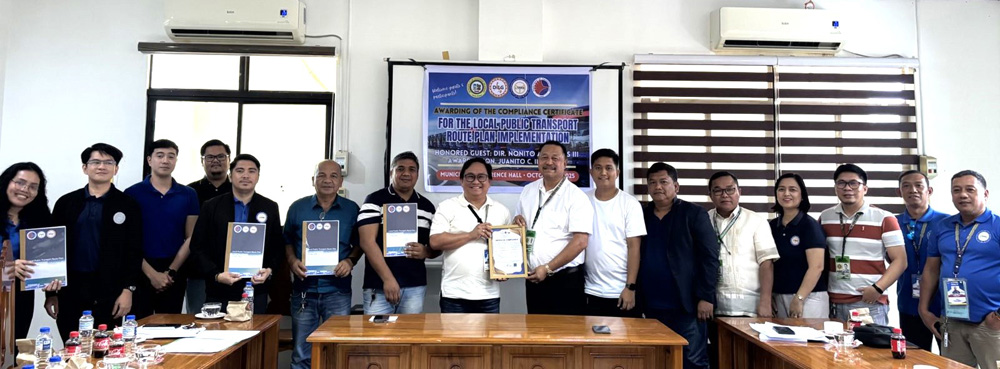
In San Isidro, Davao Oriental, Mayor Maria Angelica Go- Dayanghirang received the Special Notice of Compliance in a special courtesy meeting. The awarding event was also attended by Vice Mayor Sherlyn Marcojos who expressed the local government’s gratitude for the recognition of San Isidro. “Tutukan nato ni, especially we are very proud diri sa San Isidro na naorganize na nato ang atong mga TODA”. The Vice Mayor also lauded the efforts of the Municipal Planning and Development Office led by MPDC Joel R. Orbuda, EnP. The Municipal Planning and Development Office noted the LTFRB- PTMP team’s speedy and comprehensive assistance which resulted to a relatively fast approval of the route plan.
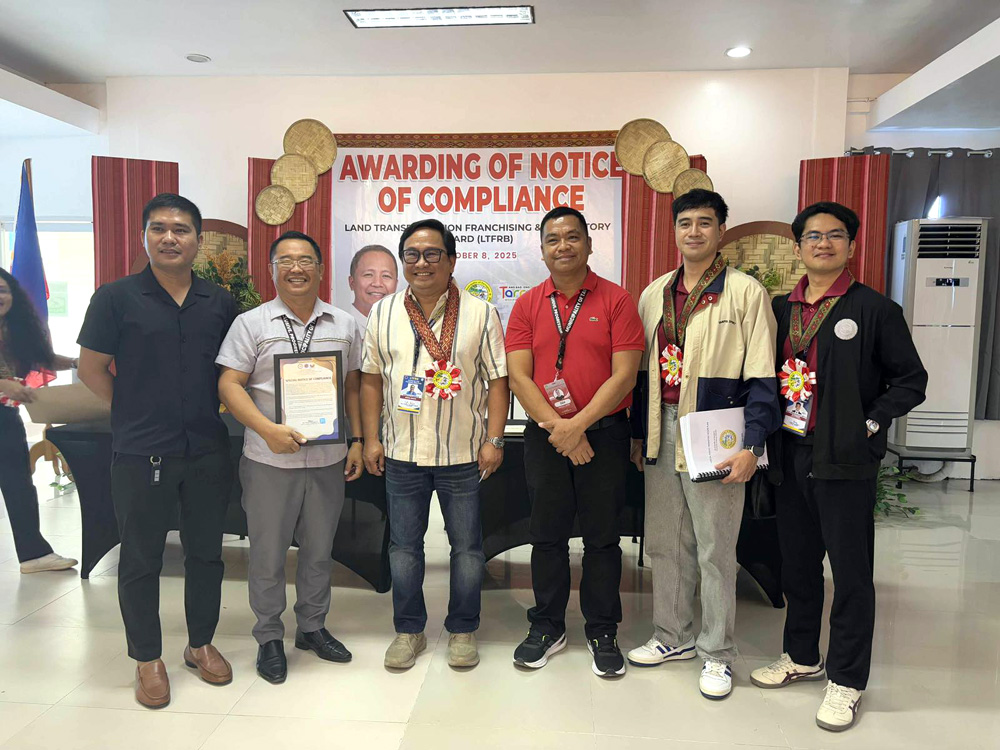
For the final leg of the series, a Special Notice of Compliance was awarded to the Municipality of Tarragona, Davao Oriental. Engr. Tyrone Kim Mapaa, Councilor and focal person for the Committee on Transportation together with Councilor Maureen Malintad- Castro, Transportation Committee Chair received the award on behalf of Mayor Art Benjie Bulaong. EnP Vivencio Anislag, the MPDC of San Isidro reiterated their appreciation of the importance of the LPTRP, emphasizing that the LPTRP is a national program but with a localized formulation, which reflects the spirit of devolution. EnP Anislag recognized the effort of the entire Municipal Planning and Development Office of San Isidro for this accomplishment.
The PTMP XI team, led by Engr. Mark Renz Baldevieso with guidance of Chief Transportation Development Officer Atty. Ernest Benz Davila, shall continue its commitment to render technical assistance to different LGUs towards the completion of their respective LPTRPs.

Transmission services across the Visayas Grid are under normal operations after NGCP completed its key restoration efforts following the magnitude 6.9 earthquake in Cebu.
As of 9:38 AM of 03 October (Friday), NGCP successfully energized the Daanbantayan–Tabango 230kV Line 2, the submarine cable linking Cebu and Leyte.
The company deployed over 60 personnel to work on restoration activities following the earthquake, which also damaged NGCP’s facilities at its Daanbantayan Substation, near the epicenter of the earthquake.
Power transmission services in the Visayas were normalized as early as Wednesday, 01 October, even while repairs on other transmission lines were still ongoing.
Meanwhile, the Compostela-Daanbantayan 230kV Line 1 was energized on 07 October at 2:18AM and is now operating in parallel with the earlier restored Line 2. Restoration works are ongoing for the remaining line on outage, the Daanbantayan-Tabango 230kV Line 1.
These lines provide n-1 contingency to the backbone transmission corridor already restored and do not affect any power customers.
“NGCP is working round the clock to ensure the stability and normal grid operations in Visayas following the magnitude 6.9 earthquake. Our teams on the ground continue their restoration and repair works to bolster the reliability of the transmission network,” the company said. NGCP advised the public to coordinate with their respective distribution utilities and electric cooperatives for localized power interruptions. It will continue to monitor the situation and remains on alert with aftershocks still being recorded.
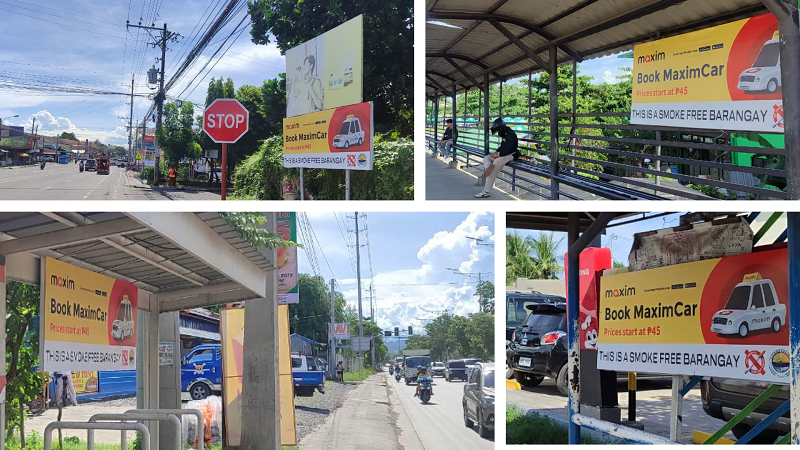
MAXIM Rides & Food Delivery, continuing its social initiatives, has launched a campaign aimed at combating smoking and drug use and nurturing a healthy lifestyle mindset in Talisay, Cebu.
As part of the campaign, the company is placing impactful posters in public spaces to encourage people to give up harmful habits for better health and the future. These places include busy streets and venues where the banners will be seen by as many people as possible.
“Our goal is not only to remind people of the damage that smoking and drug use inflict on their minds and bodies, but also to inspire them to change for the sake of their own well-being and the peace of mind of their loved ones. We believe that it is small steps like these that pave the long way to a healthier society,” said Poliran Christopher Landong, the head of Maxim Cebu.
To bring this project to life, the Maxim team engages with barangay leaders and sends them official letters that explain and outline the goals of this social campaign. Many districts have supported the initiative and given their permission for free placement of the visual materials.
Thanks to this, social cause banners promoting sports and fighting drug use are put on display in key city areas, where they are visible to many passers-by. Maxim is planning to expand this social project to other cities where the company operates in order to spread awareness about the benefits of healthy habits (such as regular exercise) and the dangers of narcotics.
“We are always trying to be more than just a ride-hailing and delivery service: for us, it is crucial to be a part of the community, help address social issues, and improve the lives of the people. So, we want to make the streets of our cities healthier and safer places,” emphasized the company’s spokesperson.
Maxim launched in the Philippines in 2020, with Cebu being its first city of operation. Now its services are available to residents and guests of 18 more Philippine cities. In addition to providing delivery services, the service is a licensed Transport Network Company authorized to pre-arrange transportation of passengers by car. In Metro Manila and Cagayan de Oro, the company has been included in a pilot project to transport passengers on motorcycles.
The company develops innovative technology for ordering transport and other services, making it more modern, accessible, and safe. The service has created a system that makes it possible to connect an unlimited number of clients and drivers and process millions of orders. The Maxim app for ordering services and the Taxsee Driver app for fulfilling orders are among the world’s top apps with millions of users.
BY ALEX ALAGON
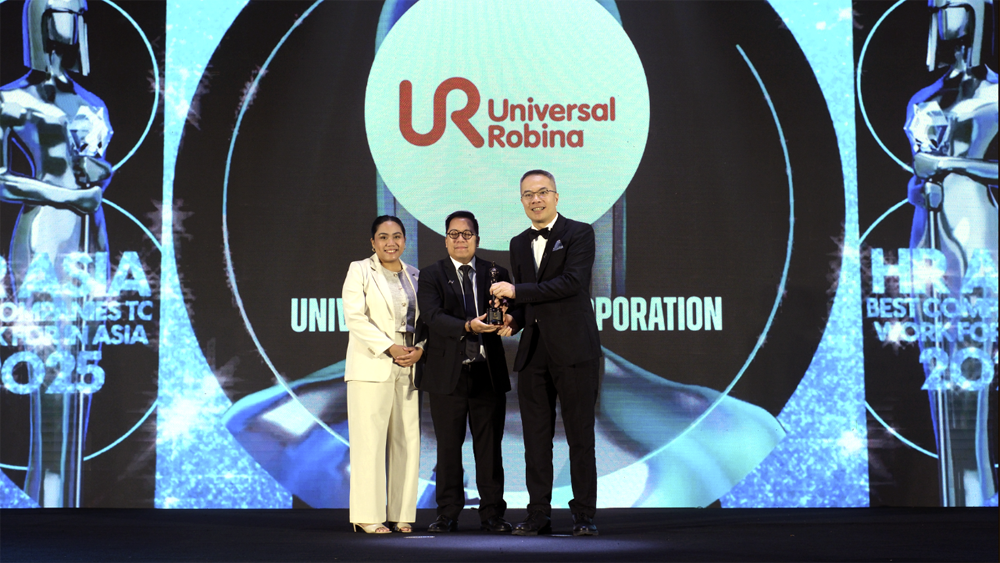
Universal Robina Corp. (URC) has clinched a string of awards for its hiring, employee growth and management programs that have made it still among Asia’s top workplaces.
The company – one of the Philippines’ largest – was named one of Asia’s Best Companies to Work for by HR Asia for a third straight year.

It also received top marks from an Asia-based talent and employer branding firm for its recruitment program, and was honored with two more awards for its use of technology and artificial intelligence in human resources management at the HR Excellence Awards Philippines 2025.
URC’s President & CEO Irwin Lee said that these awards “affirm our dedication to fostering an environment where our people feel valued, empowered and connected to a shared purpose”.
In being recognized as one of the best companies in Asia to work for, URC was lauded for its leadership programs that focus on equipping managers with skills to inspire teams, encourage collaboration and adopt agile ways of working.
The company was also cited for supporting employee growth through learning opportunities, innovation initiatives and cross-functional collaboration, alongside its recognition programs designed to celebrate initiative and engagement.
Lee said this recognition reflects the commitment and passion of its workforce and its goal to continue building a workplace “where people are inspired to lead, empowered to grow, and united by a common purpose.”
URC was, meanwhile, handed the Best Recruitment Innovation for Young Talents award by TalentView.
This award recognizes organizations that set benchmarks in attracting, engaging and developing future-ready professionals.
Lee said the honor highlights URC’s efforts to rethink recruitment by focusing on authenticity, purpose and growth for early-career hires.
“Today’s generation of graduates want more than job security. They want opportunities to learn, grow and make an impact. This award is a reflection of how URC is meeting that challenge head-on.”
URC has rolled out initiatives such as its Comprehensive High-Impact Internship Program, which immerses students in projects guided by mentors, and the NextGen Leaders Program, a management trainee track designed to prepare high-potential graduates for leadership roles.
It also launched #GrowBeyondURDegree and #LaunchURCareer, campaigns that use social media, school partnerships and campus activations to showcase the company’s workplace culture.

BELLE’S Refreshing Juices, operated by Shechem Marketing, was recognized as a National Finalist under the Industry Sector – Small Enterprise Category during the 2025 Productivity Olympics National Awarding Ceremony held on Oct. 1, 2025, in Taguig City.
Belle’s Refreshing Juice is a family-owned business that started in 2015. As vegetarians, fruit and vegetable juicing has been part of their daily regimen. In hopes of promoting a healthier beverage option to Davaoeños, they launched this business.
From just two flavors (mango and pineapple) in 2015, they have expanded to more than 12 flavors of fruit juices. Not only that, they have also expanded their products to include fruit vinegar, virgin coconut oil, coco seasoning, and coco coffee.
Prior to being awarded as a National Finalist, Belle’s Refreshing Juice was chosen as the regional winner of the 2025 Productivity Olympics for Region XI. After a grueling national selection and judging process, they then became one of the 30 National Finalists that were awarded in Taguig City.
Belle’s Refreshing Juice was represented by its owner, Fretchen Belle Juanite, during the awarding ceremony. They received a cash price, a plaque of recognition, and priority endorsement to DOLE and NWPC trainings.
After the ceremony, Ms. Juanite expressed her heartfelt thanks to RTWPB-XI and hopes to collaborate again with the agency in the future. The Productivity Olympics, started in 2008, is a flagship advocacy program of the National Wages and Productivity Commission and the Regional Tripartite Wages and Productivity Boards to promote productivity and quality, as well as to showcase the best productivity improvement programs and practices of micro, small, and medium (MSMEs) nationwide. Kenneth Paul Recaña/RTWPB XI
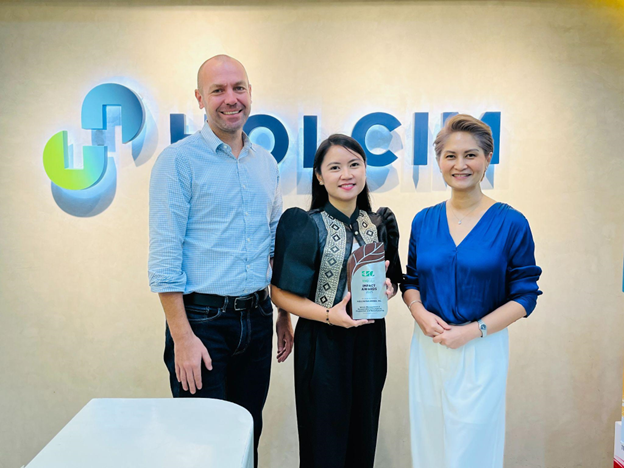
Holcim Philippines, Inc. proudly announced that its Circular Explorer has won the Silver Prize in Waste Management & Responsible Consumption, Production and Manufacturing under the Environment category at the inaugural Inquirer ESG Edge Impact Awards 2025.
The Inquirer ESG Edge Impact Awards, organized by the Inquirer Group of Companies (IGC), celebrates exemplary projects that advance Environmental, Social, and Governance (ESG) practices among Philippine organizations. Held at the Inquirer Media Resource Plaza in Makati, the awards highlighted initiatives that are not only impactful but also integral to building a sustainable future.
The recognition underscores the significant role of the Circular Explorer, Holcim’s pioneering solar-powered catamaran that champions circularity and sustainability. Designed to recover marine plastic waste while raising awareness about responsible consumption, the vessel operates as a platform for collaboration among industry, government, and communities.
Beyond clean-up operations, the Circular Explorer inspires systemic change by advancing education, innovation, and circular solutions for lasting environmental impact.
“We are honored to receive this recognition from the Inquirer Group. The Circular Explorer embodies Holcim’s commitment to sustainability, and this award motivates us to continue accelerating solutions for a greener, more circular Philippines,”said Nathalie Inductivo, OIC-Sustainability Manager and Project Coordinator of Circular Explorer.
The Inquirer ESG Edge Impact Awards are part of IGC’s broader advocacy under the Asia ESG Positive Impact Consortium (A-EPIC), which it co-founded with Malaysia’s Star Media Group and Indonesia’s KG Media. Together, these organizations advance sustainability through education, engagement, and community-building across Southeast Asia.
“We thank the Inquirer ESG Edge Impact Awards for shining a spotlight on initiatives that drive meaningful change. With the Circular Explorer, we aim to show that collective action can protect marine ecosystems and inspire communities to adopt sustainable practices,”added Jill Iris Ramos, Chief Sustainability Officer.
Holcim’s recognition affirms the company’s role in driving transformative solutions that contribute to the Philippines’ sustainability agenda while encouraging more organizations to embrace circular practices for a better future.

MANILA, Philippines — Oona Insurance, one of the Philippines’ fastest-growing general insurers, has launched two flagship health products: Global Shield, an international plan with worldwide coverage of up to USD 2 million for globally mobile Filipinos and Purple Shield, a premier peso-based plan with up to ₱5 million in local coverage for families seeking exceptional care close to home.
The launch took place on October 1 at the Manila Marriott Hotel in Pasay City, attended by media, partners and industry leaders. The event featured a talk by award-winning actress and wellness advocate Jodi Sta. Maria, who spoke on “Wellness: The Investment You Can’t Ignore,” highlighting the growing importance of prevention and holistic care, which is in line with Oona’s mission to support both treatment and wellness.
Meeting evolving needs with global shield and purple shield
With medical costs rising faster than incomes and families demanding better private care, Oona’s new plans provide meaningful choice:
Together, these plans move beyond the one-size-fits-all model of traditional insurance. By offering both international and local options, Oona ensures Filipinos can access protection that is flexible, relevant, and comprehensive.
Last year, Oona entered health protection with critical illness insurance. The launch of Global Shield and Purple Shield expands its spectrum of health products and reinforces its commitment to long-term, comprehensive protection for Filipino families.
Digital-first, customer-first
What sets Oona apart is not only coverage, but its customer experience. Its digital-first platform makes every step faster and simpler through:
This end-to-end ecosystem delivers faster, clearer, and more convenient protection, which sets a new benchmark for health insurance in the Philippines.
Leadership perspectives
“The Philippines is ready for a new standard in health protection. Rising medical costs and changing lifestyles demand solutions that go beyond the basics, offering quality, choice, and confidence,” said Abhishek Bhatia, Founder and Group CEO of Oona Insurance. “With Global Shield and Purple Shield, we are reimagining healthcare for Filipinos and delivering world-class coverage, seamless digital access and peace of mind, whether at home or anywhere in the world.”
“For Filipinos, protection isn’t just about covering hospital bills. It’s about staying healthy and caring for the whole family,” said Ninoy Rollan, CEO of Oona Philippines. “That’s why we go beyond treatment to include preventive and wellness benefits like check-ups, vaccinations, mental health support, and telemedicine. Health protection must be holistic in order to provide everyday peace of mind for Filipino families.”
Accessible Care, Anytime, Anywhere
Through partnerships with MediLink and Doctor Anywhere, Oona members enjoy cashless transactions across 650+ hospitals and clinics nationwide, 24/7 access to 750+ doctors online, and the freedom to consult their preferred international health practitioners.
Global Shield and Purple Shield reflect Oona’s vision to make health protection accessible, digital, and family-first, giving Filipinos the confidence that with the right shield, nothing holds them back.
They are now available through Oona Philippines and its network of insurance advisors and partners. For more information, visit myoona.ph
