

BY ALEX ALAGOn


BY ALEX ALAGOn

GLOBE’S long-term competitiveness has always been anchored on its Customer-First approach. This means that customer experience is not a support function but the very essence of its strategy, which underpins Globe’s broader growth trajectory and sustained momentum, as seen in the last two quarters.
One of the things that would accelerate this Customer-First transformation is Globe’s recently announced cloud modernization initiative with Amazon Web Services. This initiative strengthens its capability to deliver more responsive, intelligent, and scalable digital services.
By leveraging AWS advanced cloud capabilities, Globe is enhancing its use of AI-driven innovation, analytics, and modernized applications, enabling more proactive customer support, faster rollout of service enhancements, and deeper personalization of interactions across its entire customer base.
Globe is working with AWS to expand its cloud infrastructure, modernize its B2B and digital platforms, and deploy AI-driven tools that enhance personalization and customer support. This includes upgrading its network management system, improving SIM activation processes, and developing advanced CX innovations.
Omnichannel strategy
Another pillar of this strategy is Globe’s reinvestment in physical touchpoints nationwide. After a period of selective consolidation, the company is doing a strategic expansion of its retail footprint to meet customers where they prefer to engage, whether online or face-to-face. This includes refreshed full-service stores in major malls such as Robinsons Manila, alongside new micro-format touchpoints in communities such as Vigan, Sorsogon City, Boracay, and Bohol. These stores have been redesigned to serve not just as sales hubs but as experience centers where customers can receive personalized assistance, explore lifestyle-driven broadband and mobile solutions, and access support with the warmth and responsiveness of Globe’s frontline teams.
Globe president and CEO Carl Cruz emphasized that the company’s omnichannel service model is anchored on empathy and responsiveness. “Whether they are online or offline, we will be there for them. We will continue to study where our customers truly need us for face-to-face interaction, and we’ll meet them there,” he said.
Intelligent service platforms
This strong physical presence is matched by significant investments in intelligent service platforms. Globe continues to deploy AI-enabled customer tools to personalized enterprise support at scale. Conversational AI capabilities are being advanced to be more responsive, understand local language and cultural nuances, which improves interactions and makes digital support more intuitive for Filipino users.
The company’s customer experience push extends across its broader ecosystem. Through this unified physical-digital framework, Globe ensures that improvements are consistently being made to provide more consistent and seamless engagement across channels. Retail agents are enabled to guide customers across channels using the GoBenta app and other digital platforms, while stores include self-service zones and community activation spaces that allow customers to transact at their own pace. At the same time, Globe has leveled up its hyper-personalized offers across channels, including GlobeOne and GCash, to provide customers with the offers that fit them best depending on their profile, leveraging AI. Meanwhile, broadband hypercare communities on channels like Viber provide highly responsive localized support.
This heightened focus on experience aligns closely with Globe’s performance momentum. As disclosed, mobile data revenues reached Php29.1 billion in the third quarter of 2025, while the company’s mobile subscriber base grew to 63.1 million, which are clear indicators of rising engagement and trust. Globe’s network investments, including expanded 5G and fiber deployment, have underpinned this growth by providing faster, more consistent, and more reliable connectivity. The customer-centric focus on network investments enabled Globe to be the most consistent mobile network in the country in the last four years, according to Ookla®.
Building value, building relationships
For Globe, the strategy is straightforward: building value means building relationships. Customer experience is not merely transactional but the backbone of loyalty, the catalyst for digital inclusion, and its true differentiator, especially relevant during these times that Filipinos are more economically challenged and they need a partner to tide them through.
By combining the strength of its brands, network, and distribution footprint, the intelligence of its AI-driven platforms, and now the accelerated innovation enabled by AWS, Globe is positioning itself to grow with purpose, anchored on care and elevated by technology, towards uplifting the lives of every Filipino.

BY ALEX ALAGON

Cebu Pacific marks the anniversary of a major milestone with the release of a brand film that features the story of its 250 millionth passenger—Singapore-based overseas Filipino worker Russel Capaniarihan.
The film, now available for viewing on CEB’s Facebook and YouTube channels, was released one year since Capaniarihan returned to the Philippines via Flight 5J 814 Singapore to Manila. Originally from Bacolod, Capaniarihan returned to the Philippines after 11 years abroad to spend the holidays with her family—a homecoming she had long hoped for.
To celebrate reaching 250 million passengers flown, CEB awarded Capaniarihan PHP 250,000 in cash and 25 free round-trip flights to any destination within the airline’s network across the Philippines, Asia, Australia, and the Middle East.
Instead of using the flights for herself, Capaniarihan chose to bring her family on their first vacation together—to Puerto Princesa, a place she once only imagined visiting. It was also their family’s first time in Palawan, and for some, their first time ever riding a plane, making the experience even more meaningful.
“Our story as an airline is built on the journeys of the people we fly,” said Candice Iyog, CEB Chief Marketing and Customer Experience Officer. “Russel’s experience reflects what matters most to our travelers—coming home, reconnecting, and making plans they’ve waited years to fulfill. For 250 million moments and counting, we’ll keep flying you home.”

THE UNION of Peoples’ Lawyers in Mindanao (UPLM) marks International Human Rights Day with a profound condemnation of the deepening systemic crisis in the Philippines, where gross human rights violations are intrinsically linked to wanton plunder of public coffers and a fascist government response to people’s resistance.
We stand in unyielding solidarity with all human rights defenders and the marginalized sectors, particularly our Lumad sisters and brothers, in the struggle against a corrupt and oppressive system.
The massive and continuing corruption by government officials—the wanton plunder of state coffers—is not a mere side issue; it is a direct cause of human rights deprivation.
• Deprivation of Social Services: Billions of pesos stolen by corrupt officials are funds intended for basic social services—healthcare, education, and social safety nets. This grand theft results in overcrowded classrooms, dilapidated hospitals, and the lack of essential aid for the poor, effectively denying the people their economic and social rights.
• Fueling Violence: This systemic corruption drives the government’s pursuit of anti-people development like large-scale mining and monocrop plantations. The stolen wealth is intertwined with the profits promised by these destructive projects, making the violent subjugation of local communities, especially Lumad, a necessary act to secure corporate plunder. The human rights violations are, therefore, a military defense of corruption-driven greed.
The government’s brutal counterinsurgency campaigns and its push for development aggression continue to trample upon the rights of the people, most severely impacting the Lumad communities in Mindanao:
• Attacks on Lumad Ancestral Domain: Military operations and the use of paramilitary forces are tools to forcibly clear land for corporate exploitation, systematically destroying the Lumad’s right to their ancestral domain, livelihood, and culture.
• Criminalization and Red-Tagging: Lumad leaders, farmers, and advocates who defend their lands and expose corruption are summarily red-tagged as ‘terrorists’ and subjected to extrajudicial killings, illegal arrests, and forced displacement.
The people’s growing outrage against this prevailing corrupt system—against the theft of public funds and the violence in their communities—is met with an increasingly fascist response by the state:
• Weaponization of the Law: Laws and state machinery are aggressively used not to curb corruption but to silence legitimate dissent. Critics and human rights defenders are subjected to trumped-up charges.
• Impunity and State Terror: The pervasive impunity enjoyed by state forces and corrupt officials, particularly in extrajudicial killings and massive theft, shows that the government’s priority is not justice but the preservation of a system rooted in corruption and violence. This naked, authoritarian force is an attempt to crush the collective will of the people for genuine change.
On this International Human Rights Day, the UPLM declares that there can be no peace or development where corruption reigns and human rights are violated with impunity.
We demand that the government:
• Stop the Fascist Repression: Immediately cease all forms of political persecution, illegal arrests, red-tagging, and killings against activists, journalists, and legitimate dissenters.
• Prosecute the Corrupt: Launch genuine and decisive efforts to prosecute corrupt high-ranking officials and recover the plundered public funds, ensuring that these resources are instead allocated for essential social services.
• Respect Indigenous Rights: Withdraw all military presence from Lumad ancestral domains and revoke permits for destructive mining and monocrop plantations.
• Uphold Accountability: Dismantle the system of impunity and ensure all perpetrators of human rights abuses are brought to justice.
The UPLM remains steadfast in our commitment to utilize the power of the law alongside the power of the people to resist a corrupt, fascistic system and struggle for a society where every Filipino’s right to life, liberty, and dignified living is upheld.
Makatarungang Mundo, Ipaglaban!
References:
Atty. Antonio C. Azarcon
UPLM Chair
Contact: +639199124767
Atty. Arvin Dexter M. Lopoz
UPLM Public Information Officer and Spokesperson
Contact: +639260583543
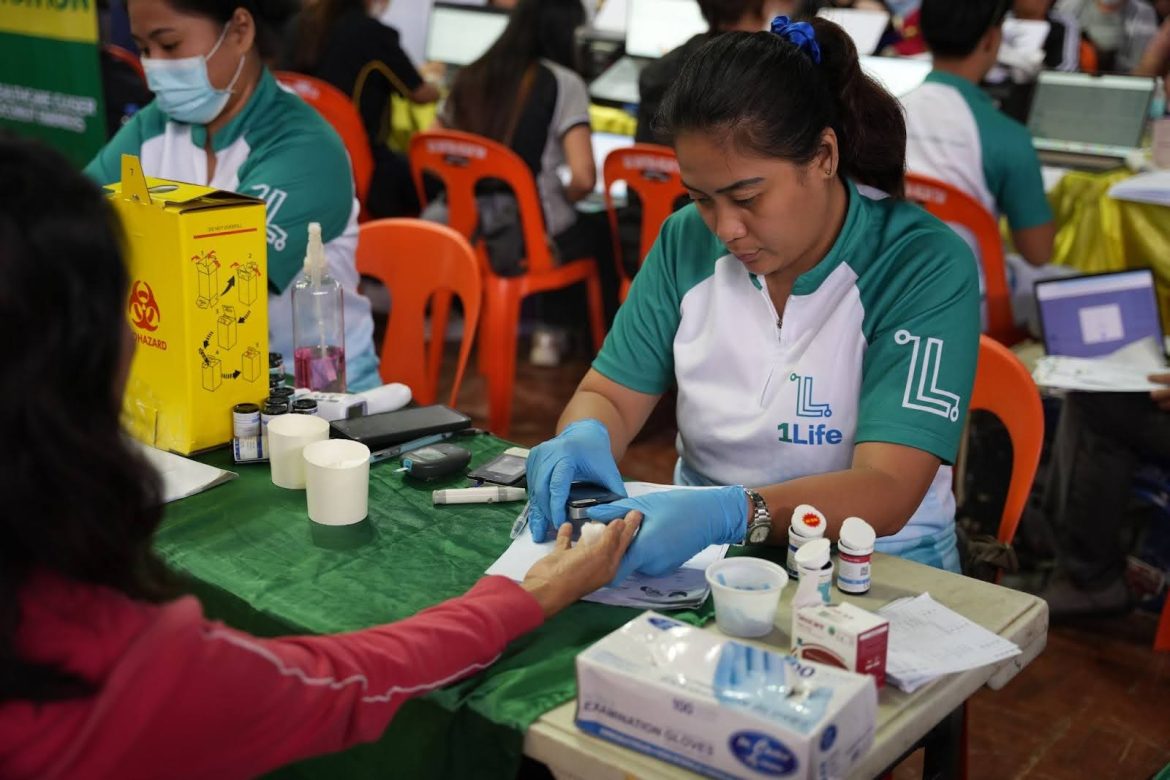
MANILA – 1Life, Inc., a Filipino healthcare tech company committed to social impact, has served one million patients through two years of field hospital services and nationwide deployment of its tech-enabled model for primary care. The milestone underscores 1Life’s mission to improve health outcomes and protect Filipinos from preventable illnesses through early detection and timely intervention.
By bringing healthcare directly to local communities, the company delivered fast, connected healthcare across more than 1,261 municipalities and 80 provinces, demonstrating that advanced diagnostics and AI-supported care can operate reliably at scale, even in remote and low-resource settings.
1Life’s integrated healthcare system brings diagnostics, consultations, and medicines together in a single community visit. By combining portable devices, cloud-based patient records, and AI-assisted workflows, the company has shortened what is usually a four-day primary care journey to about one hour. This shift has been especially impactful in rural and geographically isolated areas where access to diagnostic services has traditionally been limited.
Much of the one-million-patient count comes from community medical runs where residents receive essential diagnostics such as CBC, X-ray, ultrasound, ECG, urinalysis, and blood chemistry, followed by physician consultations and appropriate medicines. Patients also come from 1Life Primary Care Facilities, partner clinics using the 1Life Digital Community Healthcare System, and school and workplace health programs supported by local government units and national partners. In 2024 alone, the company served more than half a million Filipinos, with daily deployments of multiple medical teams that used AI tools to manage higher patient volumes without compromising quality.
At the core of these operations is the 1Life Digital Community Healthcare System, which links field missions, clinics, hospitals, pharmacies, and laboratories through a unified digital platform. This ecosystem is strengthened by DocMate AI, trained on hundreds of thousands of Filipino patient records, and the newly launched 1Life Health App, which gives users personal access to medical records, medicine reminders, and accurate health education. These tools generate real-time insights for partners and enable communities to shift from reactive, hospital-centric care to proactive early detection, a central goal of the country’s healthcare reforms.
The milestone also aligns with the Philippines’ goal of strengthening universal health coverage. As an accredited partner of DOH, PhilHealth, LGUs, and the DepEd YAKAP program, 1Life supports efforts to decongest hospitals by bringing early detection and primary care to the community level. Local leaders in remote and conflict-affected areas have reported greater participation in health programs and improved trust among residents who experienced, for the first time, fast and respectful care.
Niño Namoco, president of 1Life, Inc., highlighted the company’s mission to provide access to quality healthcare, leveraging innovative technology to prevent complications and streamline health processes for Filipinos, reflecting 1Life’s broader social impact:
“Reaching one million patients is a reminder that accessible healthcare can change lives when delivered with consistency, compassion, and the right technology. Every person we serve represents a family and a story, and we carry that responsibility with humility.”
He added, “Our goal remains simple. 1Life is dedicated to making quality primary healthcare accessible to all, particularly the underserved communities. Central to our program is the early detection and prevention of diseases, which has enabled us to reach a million patients and further the pursuit of universal health equity. We are grateful to our partners and our team on the ground for making this possible. This milestone is only the beginning.”
1Life’s track record strengthens its position in the Philippine healthtech sector. The success of DocMate AI, the 1Life Health App, and the nationwide field deployments demonstrates that technology-supported primary care can operate reliably in diverse conditions across the country. This establishes 1Life as a trusted partner for groups seeking measurable and scalable healthcare solutions.
To learn more about 1Life, Inc., visit 1life.ph and facebook.com/1life.ph, or download the 1Life Health App on Google Play or the App Store.
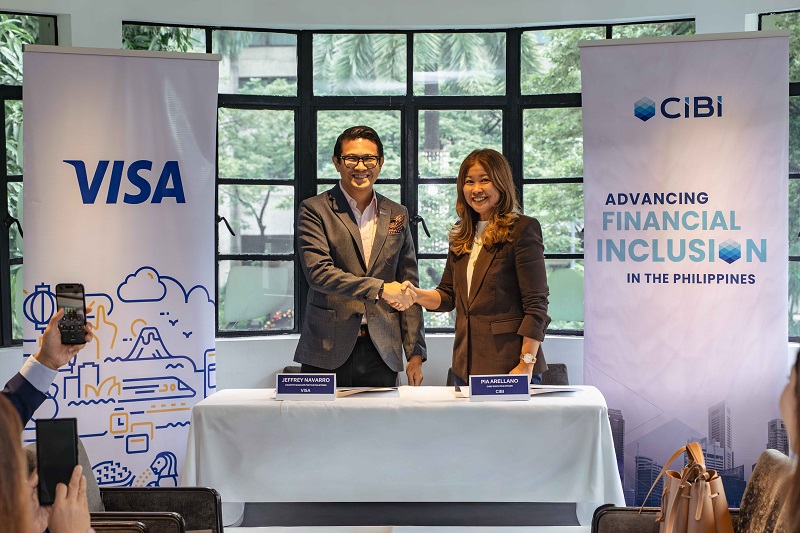
MAKATI CITY – Visa (NYSE: V), a global leader in digital payments, and CIBI Information, Inc. (CIBI) have signed a Memorandum of Understanding (MOU) to jointly explore and pilot innovative, data-driven credit solutions aimed at expanding responsible access to credit for underserved Filipinos, particularly “thin-file” consumers.
Through this exclusive partnership, Visa brings its global payments technology and Credit Lab expertise together with CIBI’s position as the country’s pioneering credit bureau. Credit Lab is Visa’s end-to-end solution combining fraud detection management with alternative data enrichment (using telco, utilities, device, and other behavioral consumer data) to aid clients in credit decisioning.
While many Filipinos—including gig workers, BPO employees, and OFWs—remain underserved due to limited credit histories, the partnership also addresses a growing need among banks, digital lenders, and issuers to expand acquisition responsibly and manage risk with deeper intelligence.
Unlocking new advantages for Philippine financial institutions
Visa and CIBI will jointly develop solutions that enable B2B partners to:
These outcomes reinforce the shared vision of Visa and CIBI: to strengthen the financial ecosystem through analytics-driven innovation and trusted data, while empowering institutions to grow responsibly.
A partnership rooted in inclusion, innovation, and trust
“Credit scoring has long been a key gap in our industry, with many Filipinos remaining ‘thin-file’ despite their active participation in the economy,” said Jeffrey Navarro, country manager of Visa Philippines. “Through this partnership, we look forward to complementing Visa’s Credit Lab with CIBI’s leadership as a credit bureau to innovate solutions that expand access to credit and set new industry benchmarks. This collaboration reflects our shared commitment to inclusive growth and strengthening the digital economy.”
For CIBI, the partnership reinforces its role as a nation-building partner through trusted data, with a continued focus on empowering individuals and small businesses through responsible credit and financial literacy.
“At CIBI, we believe that trusted data has the power to unlock opportunity,” said Pia Arellano, President and CEO of CIBI Information, Inc. “This partnership with Visa is deeply aligned with our purpose of building a more inclusive, transparent, and trusted financial ecosystem through data. When individuals and small businesses gain responsible access to credit, they gain the power to grow, to recover, and to contribute more meaningfully to the economy.”
“Access to credit must also come with empowerment,” she added. “Today, we do not simply sign an agreement—we affirm our shared responsibility to use data wisely, to enable inclusion, and to build a stronger financial future for the Philippines.”
What to look forward to
Over the next 12 months, Visa and CIBI will explore new credit use cases, develop industry insights on emerging credit behaviors, and support financial literacy initiatives nationwide.
“Our success will ultimately be measured by how many Filipinos we are able to include—securely, responsibly, and sustainably,” Arellano added.
Both organizations expressed strong optimism about the partnership’s impact.
“We look forward to the impact this collaboration will bring over the next 12 months—and beyond,” Navarro said.
The Visa–CIBI partnership reflects a shared commitment to inclusive growth, innovation, and trust in data, positioning both organizations at the forefront of advancing responsible credit access in the Philippines.
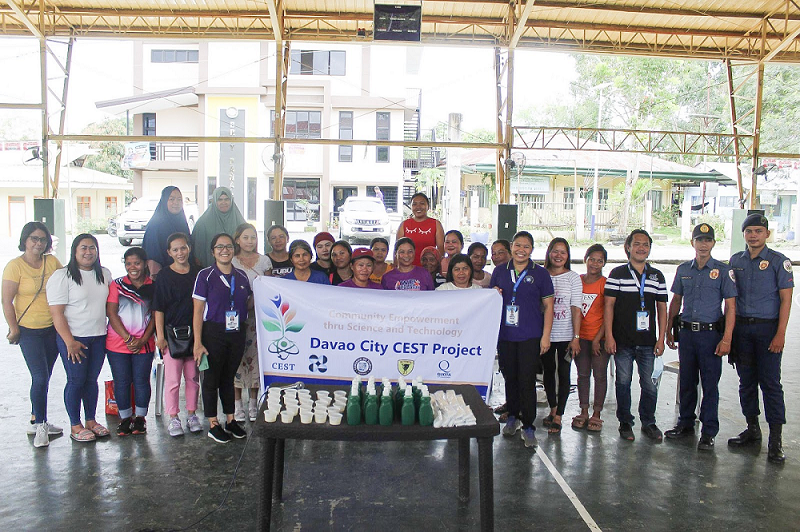
In a recognition that affirms more than a decade of patient groundwork in some of the Region’s most underserved localities, the Department of Science and Technology (DOST) Community Empowerment through the flagship Science and Technology (CEST) Program, was named Best Government Non-Infrastructure Project in the 2024 Search for Project Implementation and Monitoring Excellence (DavPrIME).
CEST has been implemented in the region since 2013. It continues to reach communities that have limited access to health services, livelihood opportunities, education resources, and science-based technologies. These include Indigenous Peoples communities, women’s groups, conflict-affected areas, and the most remote barangays across Davao City, Davao Oriental, Davao del Norte, Davao del Sur, and Davao Occidental. In total, sixty four communities have benefited from the program.
The DavPrIME evaluators highlighted how CEST interventions are tailored to the specific needs of each locality. In Davao del Sur, a nutrition project that used DOST-developed food products helped reduce the number of wasted schoolchildren within one year. In Davao Occidental, women’s associations that trained under CEST continue to manage weaving, pottery, and food processing activities that strengthen their household incomes. In Davao de Oro, the program helped boost the local jewelry sector and encouraged other agencies to support artisans through additional training opportunities.
In Davao City and Davao del Norte, CEST expanded access to digital science resources through installations of digital libraries in remote schools. The program also provided environmental protection technologies such as solar lamps and waste processing tools that supported barangay initiatives in off-grid and underserved sitios.
In Davao Oriental, communities received support in environmental conservation, disaster preparedness, and education. These included the deployment of science-based information tools in schools, livelihood training for coastal associations, and equipment for environmental protection activities in areas that had long needed support for both economic resilience and climate readiness.
The program’s monitoring mechanisms were also cited as a major strength. DOST Davao conducted consistent field visits, follow-up consultations, and equipment inspections to ensure that interventions remained functional and relevant. This approach allowed the program to maintain progress even when faced with disruptions, including delays during the pandemic period.
DOST Davao Regional Director Dr. Anthony C. Sales, CESO III, said the award affirms the value of science-based interventions at the grassroots level.
“The CEST Program succeeds because it grows with the communities. We listen, we collaborate, and we make sure people are able to use the technologies confidently and sustainably. This recognition belongs to our partners who continue to show that science can uplift communities in practical and meaningful ways,” he said.
DavPrIME is an annual assessment of government initiatives by the Regional Development Council XI, which evaluates programs based on planning, execution, monitoring, and measurable community benefits.

The Philippines welcomes its first-ever AC Hotels by Marriott as the AC Hotel by Marriott Manila brings its perfectly precise experience to the Philippines. Rooted in the signature Marriott service, the brand’s Spanish heritage, and Filipino-inspired hospitality, the hotel blends form and function to create a stay thoughtfully tailored to every guest.
Opening this December 2025, at GLAS Tower, corner Ruby and Opal road, Ortigas Center, Pasig City, AC Hotel by Marriott Manila is every essentialist’s modern, effortless escape for the holidays.
Get a first look at intuitively designed guest rooms and a lounge, along with a library, executive rooms, a rooftop bar, and more—each space carefully edited with purpose and crafted for clarity and comfort.





The architectural foundation of GLAS is led by Architect Andrew Cerwin Yu, director of design at ASYA Design—an advocate of ESG (Environmental, Social, and Governance) principles, ensuring that each structure is environmentally responsible, socially relevant, and governed with integrity.
This is further fortified by Aaron Cedric Yu, design director, who led the philosophy of “Flight to Quality” in the hotel’s design, following his commitment to creating enduring value in design.


Finally, the hotel’s sophistication was touched by the design expertise of Clarice Anne Yu-Sy, interior design director. Her concept—inspired by the hourglass—explores time through timelessness, authenticity, contrast, and transformation.
Guests can also expect seamless service under general manager Melvyn Angeles. He brings over 30 years of experience in the hospitality industry, with 15 years of experience in Marriott operations, most recently serving as Resident Manager of the Marriott Manila at Newport World Resorts.
He shared, “Our approach is to respect the DNA of the AC Hotels while making it feel naturally at home in our market. We aim to introduce a new kind of stay that elevates the essentials, bringing a refreshing and modern perspective to hospitality—all of which will be delivered with the genuine warmth of the Filipino culture.”

MANILA – Agrilever, a pioneering agritech firm empowering smallholder rice farmers in the Philippines, has partnered with global weather intelligence leader Tomorrow.io to bring hyperlocal, AI-powered forecasting solutions to the country’s agricultural sector. The partnership aims to help farmers better manage climate risks and improve productivity amid increasingly variable weather conditions.
The Philippines is among the countries most vulnerable to climate change. GermanWatch’s latest Climate Risk Index ranked the Philippines as the 7th most affected country by climate-related extreme weather events over the past 30 years (1995–2024). During that period, the country experienced 371 extreme weather events, causing 27,500 fatalities and over $35 billion in economic losses. In November 2025 alone, the Department of Agriculture (DA) estimated P743.8 million in agricultural damage caused by Typhoons Tino and Uwan, highlighting the urgent need for climate-resilient practices and effective forecasting tools.
As the local partner bringing Tomorrow.io’s technology to Philippine agriculture, Agrilever supported government agencies with real-time weather intelligence during recent typhoons. Through its collaboration with Agrilever, Tomorrow.io developed localized weather intelligence reports for the Department of Agriculture and the National Irrigation Administration (NIA), which were subsequently distributed to other affected government agencies. In recent months, Tomorrow.io also monitored and generated detailed reports on other major weather disturbances, including typhoons Nando, Opong, Paolo, Rami, Salome, Tino, and Uwan.
Agencies using Tomorrow.io’s localized app received early warnings on rainfall, wind speed, and flood risks, enabling faster responses, better asset protection, and more informed decisions before, during, and after severe weather events.
During Typhoon Uwan, Agrilever and Tomorrow.io provided weather reports covering all affected provinces in Luzon and the Visayas. The Rice Irrigation System (RIS), part of NIA’s project, has been integrated into NIA’s operations, allowing regional units to anticipate field conditions affecting planting and water management. Additionally, Agrilever delivered twenty automated daily reports through Tomorrow.io’s platform during Typhoon Nando, covering key points of interest across Regions 1, 2, and CAR, which were forecasted to be severely impacted.
Through Agrilever’s integration of Tomorrow.io data into the National Food Authority (NFA) system, the NFA can now monitor 331 warehouses nationwide with insight-based weather tracking, including daily weather risk assessments for 30 strategic warehouses. Similarly, the Bureau of Soils and Water Management (BSWM) receives 17 automated reports for priority locations, supporting more than 600 active users—mostly farmers accessing hyperlocal forecasts via mobile devices.
These partnerships allow national and local agencies, as well as their constituents, to benefit from daily weather intelligence across all regions, anticipate disruptions earlier, and plan field operations with greater accuracy. Local governments are also using Agrilever’s localized weather system for on-the-ground planning. In Madalag, Aklan, the barangay disseminated forecasted rainfall and wind speed from Tomorrow.io and the Tigbawan Diversion Dam AgroClimatic Weather Station ahead of November 3–4, helping farmers make timely preparations before heavy rain and strong winds arrived.
A rice farmer from Madalag shared how access to accurate forecasts has transformed daily routines and farming decisions.
“We used to just guess the weather by looking at the clouds, but with Agrilever and Tomorrow.io’s accurate forecasts on our devices, we can now monitor conditions properly, prepare for rain, and take better care of our crops. During typhoons, we can prepare earlier and avoid losses because we receive real-time weather updates right away,” the farmer said.
Agrilever’s integrated farmer platform provides real-time, hyperlocal insights powered by Tomorrow.io’s forecasting system. The platform consolidates digital crop protocols, weather intelligence, and access to financing tools, giving farmers the information and support they need to make timely field decisions.
“Our partnership with Tomorrow.io strengthens our commitment to protecting Filipino farmers, especially when typhoons and sudden weather shifts threaten their livelihoods,” said Ruel Amparo, president of Agrilever, representing both companies. “By integrating advanced, hyperlocal weather intelligence into Agrilever’s platform, we are giving farmers the ability to prepare earlier, make faster and more informed decisions, and safeguard their crops even during extreme conditions. When farmers have timely and reliable information, they are better equipped to withstand disasters and recover faster. That is the kind of progress this collaboration makes possible for our communities.”
The Agrilever–Tomorrow.io partnership is part of a broader effort to integrate climate-adaptive technologies into Philippine agriculture. As more farmers gain access to real-time, location-specific weather intelligence, stakeholders anticipate more resilient harvests, reduced losses, and improved long-term planning across vulnerable farming communities.