

BY ALEX ALAGON


BY ALEX ALAGON

MANILA, Philippines — When it comes to unwinding after a long day of taping and guest appearances or just simply savoring a little me-time, Tanduay Calendar Girl 2026 Andrea Brillantes keeps it simple and refined. She doesn’t like fussing about when it comes to de-stressing, and it helps that she has a well-stocked bar of her favorite Tanduay products to indulge in.
“After a busy day at work, I just want to slow down and do low-key activities that can help me relax like mixing cocktails using Tanduay rums. It helps me reset and turn my ordinary evenings into something special, whether I’m on my own or chilling with friends,” she shared.
One of the Tanduay products that the talented actress and budding entrepreneur loves to experiment with is Tanduay 5 Years, an extra special blend of rums that has a lush shade of mahogany and a sweet and slightly smoky, lasting aroma of dark sugar and oak.
“It’s a good rum to make cocktails with,” Andrea said.

Below are the recipes of some of the cocktails that the TV5 star loves to make at home using Tanduay 5 Years.
Daring Duo
Easy to make, this cocktail is Andrea’s go-to for nights when she wants to chill with her close circle of friends.
Ingredients:
Ice cubes
0.5 oz lime juice
4 oz ginger beer
2.5 oz Tanduay 5 Years
Lemon for garnish
Procedure:
Put ice in a tall glass. Pour in the lime juice, ginger beer, and Tanduay 5 Years. Garnish with a slice of lemon.
Fiesta Paradise
When she is in the mood for something fun and vibrant, Andrea goes for this cocktail. It reminds her of a day at the beach with its tropical flavors and colorful vibe.
Ingredients:
Ice cubes
1 oz Tanduay 5 Years
2 oz passion fruit juice
1 oz orange juice
0.5 oz grenadine syrup
0.5 oz lemonade soda
1 oz coconut cream
Mint leaf for garnish
Procedure:
Golden Sunset Fizz
For evenings that call for something a little more elevated, Andrea loves serving this cocktail to friends. She sees it as the perfect drink to impress her guests.
Ingredients:
0.8 oz orange juice
0.5 oz lime juice
0.8 oz honey syrup
0.5 oz egg white
2 oz Tanduay 5 Years
Ice cubes
Wedge of lemon for garnish
Procedure
Sunburst Sour
This colorful cocktail combines bright citrus with the unexpected sweetness of carrot juice, creating a refreshing balanced drink that Andrea loves to have when she wants to enjoy something a little different.
Ingredients:
Ice cubes
2 oz Tanduay 5 Years
1 oz triple sec
1 oz lime juice
2 oz carrot juice
1 oz orange juice
Mint leaves for garnish
Procedure:
For Andrea, the best thing about these cocktails is their simplicity.
“You don’t need to learn complicated techniques, just Tanduay 5 Years, quality ingredients, and the right vibe. With these cocktails, staying in is just as fun as going out,” she said.
Tanduay 5 Years and other Tanduay products are available at www.shots.ph and through leading supermarkets and liquor stores nationwide.

Philippines – HUAWEI unveiled its latest innovations at the recent “Now is Your Run” global product launch event in Madrid, Spain. Among the powerful lineup, the brand announced the return of the HUAWEI Mate 80 Pro, reaffirming the tech giant’s commitment to delivering cutting-edge innovation and performance to consumers worldwide. The brand also introduced the HUAWEI WATCH GT Runner 2, which represents five years of technological development and redefining the professional running watch category.
Both products are set to launch in the Philippines this April, giving Filipino consumers the chance to experience the HUAWEI Mate 80 Pro’s advanced technology and the HUAWEI WATCH GT Runner 2’s professional-grade running features.
HUAWEI Mate 80 Pro: The Legendary Mate Series Returns to Redefine the Flagship Era
HUAWEI marks a pivotal moment with the announcement of the return of the Mate Series. For years, the flagship line has showcased the company’s technological prowess and has consistently raised the bar for smartphone excellence. The HUAWEI Mate 80 Pro, representing HUAWEI’s cutting-edge innovation, features an AI-powered True-to-Color Camera for lifelike color accuracy across various and complex lighting conditions and mixed color temperatures.
Its iconic Dual Space Ring design, which embodies the spirit of infinite exploration, blends elegance with modern sophistication. Reinforced by 2nd Gen Kunlun Glass and IP68/IP69 water and dust resistance, the HUAWEI Mate 80 Pro combines durability with premium craftsmanship. While the industry-first SuperCool Dual Phase Change Heat Dissipation system ensures sustained peak performance without thermal throttling.
With cutting-edge AI, performance innovations, and ultra-durable design, the HUAWEI Mate 80 Pro continues the powerful Mate legacy, delivering a flagship experience built for users worldwide.


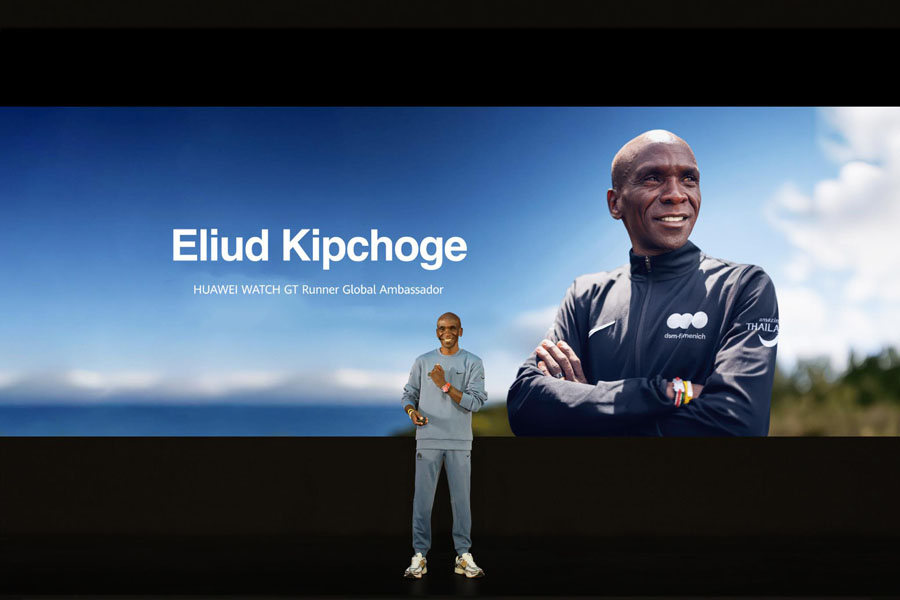

HUAWEI WATCH GT Runner 2: Five Years of Accumulation, Redefining Professional Running Watches
HUAWEI WATCH GT Runner 2 is equipped with a new 3D floating antenna architecture, engineered to deliver unparalleled positioning precision. Equipped for the first time with an intelligent positioning algorithm, it continues to calculate the runner’s trajectory and distance even during signal interruptions, ensuring uninterrupted positioning.
The new intelligent marathon mode offers one-stop race management, acting as a personal coach on your wrist throughout the journey. Not only does the HUAWEI WATCH GT Runner 2 help professional athletes boost their performance, but it also brings a smart and professional running experience to amateur runners.
Two-time Olympic athlete and WATCH GT Runner global ambassador Eliud Kipchoge shared his experience of co-creating products with Huawei at the event, stating, “I am passionate to share my opinions and perspectives to improve the smartwatch experience not just for elite athletes but for runners all around the world.”
Experience the Next Level of Innovation with HUAWEI This April
The HUAWEI Mate 80 Pro is launching in the Philippines this April, marking the long-awaited return of the flagship Mate series after two years. It’s designed to elevate the premium smartphone experience with cutting-edge camera innovation, powerful AI capabilities, and a refined, premium design.
Also making a comeback is the HUAWEI WATCH GT Runner — its last version launched in 2021. The new WATCH GT Runner 2 continues the series’ focus on precision, performance insights, and intelligent training support, built by runners for runners.
Stay tuned for updates as HUAWEI brings the latest in smartphone innovation and professional running technology to local consumers. For more information about HUAWEI’s latest innovations, visit HUAWEI’s official website or social media accounts (Facebook | Instagram).

In response to the evolving situation in the Middle East, Globe is extending targeted roaming support measures to help Filipino customers stay connected with loved ones and access essential services while abroad.
Globe’s Middle East relief initiative includes complimentary roaming services in select countries and support credit/bill relief where needed.
Globe is offering a complimentary roaming package to eligible customers identified in the following countries:
This roaming relief package includes 1GB of all-access data, 15 minutes of calls, and 15 SMS credits valid for seven days, to support critical communication needs. The offer will be automatically provided to eligible Globe Prepaid, TM, and Postpaid customers in these markets with no registration required, and recipients will receive confirmation messaging once the service is active and ready for use.
Eligible customers must ensure they are connected to one of Globe’s preferred roaming partners in each country to enjoy the benefit. Globe’s global roaming partner directories list these networks as the primary operators for roaming services in the Middle East.
For customers in Iran, Globe is providing load support or bill adjustments to help offset connectivity costs during this period. Assistance will be administered through account credit adjustments tied to usage patterns while connected to roaming partners such as MTN Irancell.
“We recognize the importance of connection especially when circumstances are unpredictable. These measures represent Globe’s commitment to supporting our customers abroad, keeping them reliably linked to family and critical communication even in challenging contexts,” said Paula Rivera-Castillo, Head of Globe International Business.
Globe continues to monitor conditions in the region and collaborate with international partners to ensure seamless connectivity and timely support for subscribers affected.
For more information on Globe’s roaming services and partner networks, visit https://www.globe.com.ph/international/roaming

CONGRESS has allocated ₱41 billion this year to cover the tuition fees of underprivileged students who are compelled to attend private high schools in areas where public schools are either unavailable or severely overcrowded, House Minority Leader and 4Ps party-list Rep. Marcelino “Nonoy” Libanan said on Monday.
“This allocation will enable an estimated 2.58 million students from low-income households, as well as those in overcrowded public schools, to pursue and complete their secondary education in private schools,” Libanan said.
“The funding will help ensure that more students stay in school, especially at a time when many families are under significant economic pressure, and students face a heightened risk of dropping out to seek immediate gainful employment,” he added.
Libanan said the ₱41 billion allocation for high school education subsidies is distributed as follows:
· ₱12.3 billion for the Junior High School Educational Service Contracting Program (JHSESC);
· ₱26.5 billion for the Senior High School Voucher Program (SHSVP); and
· ₱2.2 billion for the Joint Delivery Voucher Program (JDVP).
Data from the Second Congressional Commission on Education indicate that a substantial number of senior high school students drop out.
For example, in the school year 2024-2025, a total of 2,041,601 students were enrolled in Grade 11. Of these, 169,836 students—representing 8.3 percent—dropped out and did not advance to Grade 12.
“Keeping more students in school is not just an education policy — it is an economic safeguard for our families and our future workforce,” Libanan said.
“When we support students through financial hardship, we give them a real chance to finish their studies and break the cycle of poverty,” he added.
The JHSESC allows grantees — primarily graduates of public elementary schools — to enroll in Grades 7 to 10 in private high schools contracted by the Department of Education (DepEd).
The SHSVP provides tuition grants to enable qualified Grade 10 completers, as determined by the DepEd, to enroll in Grades 11 and 12 in participating private high schools.
The JDVP extends tuition grants to senior high school students in the technical-vocational-livelihood track, enabling them to enroll in private institutions or non-DepEd schools offering specialized courses.
The DepEd and the Private Education Assistance Committee jointly manage the SHSVP and the JHSESC, while DepEd solely administers the JDVP.

LAST Friday, the International Criminal Court concluded the confirmation of charges hearing in the case against Rodrigo Duterte. Now, we wait. Sixty days. Sixty long days for a decision that will not only shape a legal outcome but also stir the emotional landscape of a nation deeply divided.
When I listened to Atty. Nicholas Kaufman’s closing statement, I felt something crack open inside me:
“And we hope that when you conclude your deliberations, your honors, and you will dismiss these grievously misplaced and politically motivated charges, we ask you to send Rodrigo Duterte back to his family, and we will ask you to give back to the Filipino people their Tatay Digong.”
I had to pause the video.
Not because I am blind to the gravity of the accusations. Not because I dismiss the rule of law. But because of the weight of memory. Because of the spaces in my heart that speak.
For many of his supporters, he is not just a former president. He is Tatay Digong — the father-figure leader who spoke in rough edges but carried what they believed was fierce love for the country. The language was raw. The tone was unfiltered. The policies were controversial. But for millions, he represented decisive action in a country long tired of paralysis.
And now, to see him in a courtroom far from home, elderly, silent, under international scrutiny, evokes a different image than the one burned into the memory of his supporters. The strongman persona is replaced by something more fragile: a man waiting for judgment.
I am not writing this to argue jurisprudence. Lawyers will do that. Judges will deliberate. International law will take its course. The International Criminal Court exists precisely for moments like this, to determine whether charges meet the threshold for confirmation, whether evidence sustains allegations, and whether a trial should proceed.
But beyond legal thresholds are emotional ones.
For supporters, this moment feels like a loss. It feels like humiliation on the world stage. It feels like a father being questioned before strangers. That is the language they use — and language matters. I know, because I have written poems before about him. I have written about the iron in his voice, the weary tenderness hidden in harsh rhetoric, the paradox of strength and vulnerability.
When Atty. Kaufman said, “Give back to the Filipino people their Tatay Digong,” It was not merely a legal plea. It was a symbolic appeal. It acknowledged that beyond the docket numbers and procedural motions lies a constituency that feels personally wounded.
Yet this is also a moment for reflection.
Leadership invites loyalty. It also invites accountability. A democracy — even a flawed one — must be mature enough to hold both truths at the same time. We can feel pain while respecting the process. We can grieve while acknowledging that institutions exist to examine allegations, not to persecute blindly nor to absolve sentimentally.
The waiting will be difficult. Sixty days can stretch into an eternity when emotions are involved. Every headline will reopen wounds. Every commentary will polarize timelines. Every social media thread will divide families and friendships.
But perhaps this is also a space that speaks to who we are becoming as a nation.
Are we capable of allowing due process to unfold without tearing each other apart? Can we hold empathy for supporters without dismissing the voices of victims? Can we sit with discomfort instead of weaponizing it?
I do not pretend neutrality of emotion. I feel the ache that many supporters feel. I feel the heaviness of uncertainty. I feel the memory of poems once written in conviction. And I feel the trembling hope embedded in that courtroom plea, that history will be kinder, that deliberations will be fair, that whatever decision comes will not fracture us beyond repair.
In the end, the decision will arrive.
Either the charges will move forward to trial, or they will not. Either way, the Philippines will continue. What remains to be seen is whether we emerge smaller in bitterness or larger in maturity.
For now, we wait.
And in the quiet of waiting, the spaces speak.
Kethelle I. Sajonia is a college instructor at the University of Southeastern Philippines, Mintal Campus. She is currently in the final phase of her Doctor of Communication degree at the University of the Philippines. Her research interests include inclusivity, education, communication, and social development. She actively engages in scholarly research and community-based initiatives that advocate for inclusive and transformative communication practices.

Privilege speech of Councilor Pamela A. Librado-Morata, chairperson: committee on civil, political & human rights, March 2, 2026
Mr. Presiding Officer, esteemed colleagues, friends from the media, and my fellow public servants, maayong hapon sa atong tanan.
I rise today on a matter of collective privilege—not only as a member of this August Body, but as a woman standing in solidarity with the marginalized.
As we celebrate International Women’s Month, we are reminded that the true measure of our work in gender and development lies not only in how we protect and promote the rights of women, but in how many barriers to gender equality we have dismantled.
The Policy Contradiction: Last week, our office officially received a formal request from Ms. Jeanette Laurelo-Ampog, Executive Director of Talikala, Inc. They are urgently calling for the amendment or removal of a specific provision in Section 229, Article 27 of Ordinance No. 0291-17, otherwise known as the 2017 Revenue Code of Davao City—the Occupational Permit requirement for women in prostitution.
This matter, now calendared for First Reading, strikes at the heart of a legal and moral inconsistency in our local governance.
By requiring an occupational permit and collecting fees from prostituted women, we are effectively sanctioning an act that both national and local laws recognize as exploitation.
This requirement directly contradicts our own Women’s Development Code (City Ordinance No. 5004), which strictly prohibits the commodification of women.
More importantly, it stands in opposition to the Anti-Trafficking in Persons Act, which penalizes the procurement and exploitation of persons for sexual purposes.
We are therefore compelled to ask: How can the City Government collect a revenue fee from an exploitative or illegal activity? A fee imposed to regulate an illegal act may itself be considered void.
The Human Cost: Beyond legality, we must confront the human cost.
To secure this permit, a woman—often driven into prostitution by extreme poverty—is required to:
The total expenses can exceed ₱4,000 annually.
As of 2023, approximately 600 women are registered under these permits as Guest Relations Officers (GROs), massage attendants, or “taxi dancers.” These are not mere statistics. These are 600 lives navigating vulnerability, exploitation, and systemic barriers—while paying the government to do so.
From Regulation to Development: On this issue, and pursuant to our international commitments and local mandate, we must shift from regulation to development.
Under Section 16 of the Women’s Development Code, we are mandated to provide socio-economic support to women in the entertainment industry, including those working in nightclubs, bars, and resorts.
This support includes:
Our role is not to tax vulnerability. Our mandate is to create pathways out of exploitation.
A Call to Action: I therefore call upon the Committees on Women, Labor, and Finance to join the Committee on Civil, Political & Human Rights in a concerted effort to revisit this provision. Let us examine it anew through a gender lens. Let us align our local policies with our legal and moral commitments. And let us ensure that we do not continue collecting revenue at the expense of women’s dignity.
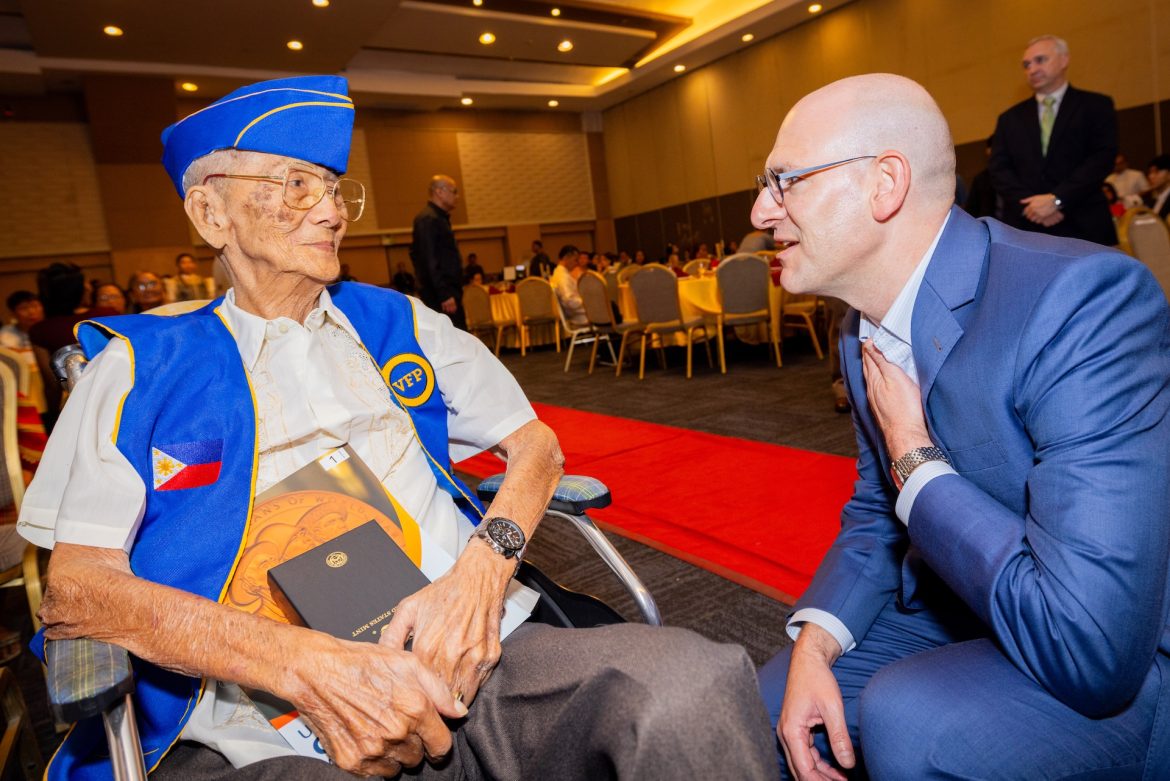
DAVAO CITY – As the United States and the Philippines celebrate 80 years of diplomatic ties, U.S. Embassy Chargé d’Affaires, a.i., Y. Robert Ewing, honored Filipino war veterans at a Congressional Gold Medal awarding ceremony, the first of its kind in Tagum and the second time in Mindanao. In Davao, he deepened economic and people-to-people ties in meetings with public and private sector leaders as well as students.
In Tagum, Chargé d’Affaires Ewing joined Philippine Defense Undersecretary Pablo Lorenzo, Philippine Veterans Affairs Office Administrator Reynaldo Mapagu, and Davao del Norte Governor Edwin Jubahib at the 45th presentation of the Filipino Veterans of World War II Congressional Gold Medal. It is the highest civilian honor conferred by the U.S. Congress.
The awards delivered in Tagum were signed into law with the Filipino Veterans of World War II Congressional Gold Medal Act of 2015. These Congressional Gold Medals recognize the valor and sacrifice of Filipino veterans who fought shoulder-to-shoulder with U.S. forces to turn the tide in the Pacific during World War II. The first-ever Congressional Gold Medal was approved by the Continental Congress in 1776 and awarded to George Washington, a remarkable example of the deeply interwoven history of the United States and the Philippines as we celebrate America’s 250th anniversary in 2026.
“When their nation called, they stepped forward. They answered,” said Chargé d’Affaires Ewing. “And in doing so, they not only shaped the course of history but also forged the enduring friendship between the Philippines and the United States – a relationship built on shared sacrifice, mutual trust, and deeply held values.”
“The number of living Filipino World War II veterans continues to decline with each passing day, but through commemoration activities and recognition such as the awarding of the U.S. Congressional Gold Medal for Filipino World War II veterans, their heroic legacy will live on,” said Undersecretary Mapagu.
In Davao, Chargé d’Affaires Ewing toured the National Museum of the Philippines-Davao in the People’s Park with City Councilors Rachel Zozobrado and Ragde Niño Ibuyan, Davao City Investment Promotion Center Officer in Charge April Marie Dayap, and a group of Philippine alumni of U.S. government exchange programs. The visit was an opportunity to gain a greater understanding of the rich heritage and natural resources of Davao City and Mindanao while also discussing partnership opportunities to promote U.S.-Philippines prosperity. The Davao City officials expressed interest in exploring trade and investment opportunities, education and exchange programs, and revitalizing sister city relationships.
Chargé d’Affaires Ewing also took a moment for a group photo with the City Councilors in front of the iconic Davao City Hall, which celebrates its 100th anniversary, sharing a connection with the U.S. Embassy in Manila, as both buildings were designed by renowned Filipino architect Juan M. Arellano.
At a General Membership Meeting of the Mindanao chapter of the American Chamber of Commerce, Chargé d’Affaires Ewing spoke about efforts to enhance supply chain resilience and expand energy cooperation, and underscored opportunities for two-way trade and investment, including the upcoming SelectUSA Investment Summit, a Trump Administration priority initiative to promote investment into the United States.
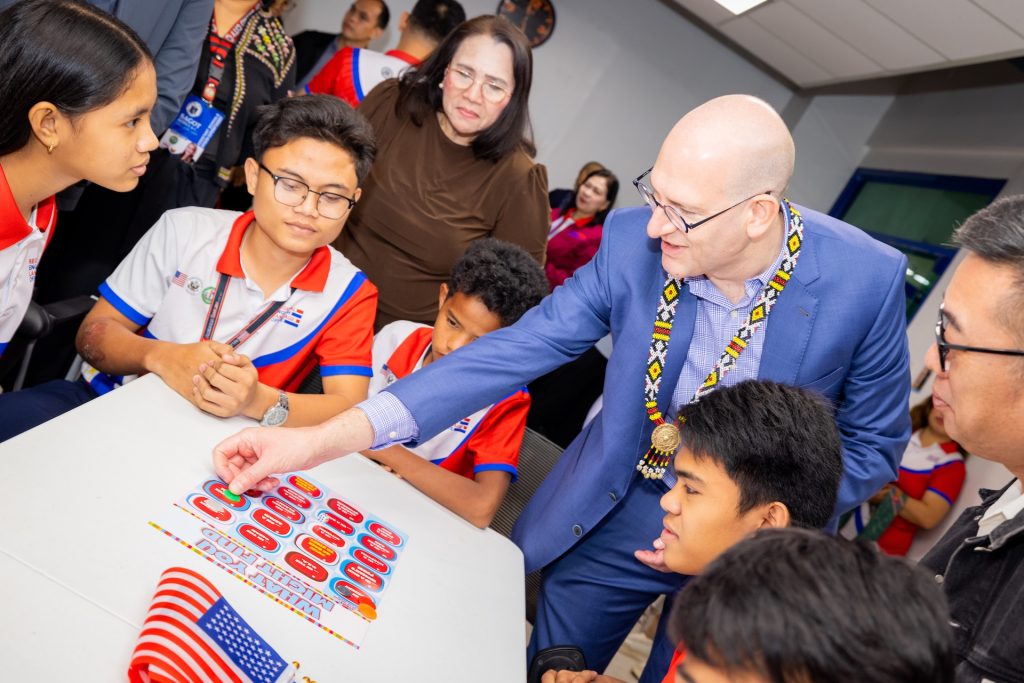
Chargé d’Affaires Ewing placed a spotlight on U.S.-Philippines education partnerships when visiting Filipino participants in the U.S. Embassy’s English Access Scholarship Program, a two-year, intensive after-school program that enhances academic and employment opportunities for public school students aged 13 to 15 through American excellence in English language instruction.
“Chargé d’Affaires Ewing’s visit to the 50 English Access Scholarship Program students highlights the strong commitment to youth development and educational partnership. His presence affirms the scholars’ potential and inspires them to strive for excellence, leaving a lasting impact,” said Davao City Schools Division Superintendent Dr. Reynante Solitario.
“The United States and the Philippines share more than an ironclad Alliance,” said Chargé d’Affaires Ewing. “We share a deep and enduring friendship and a commitment to partnerships that deliver concrete benefits for the American people while strengthening the bonds between our two nations.”

John Y. Palanca, Senior Vice President and Head of Consumer Business – Home
PLDT Home is sharpening its growth strategy around two levers it sees shaping the next phase of the broadband market: expanding portfolio of digital home services and accelerating prepaid fiber to widen the addressable base while maintaining capital discipline and deliver clear, everyday value to Filipino households.
The fixed broadband unit of PLDT Inc. is leaning more aggressively into digital services as households spend a larger share of time and wallet on streaming, smart-home tools, and gaming. PLDT Home reports continued uptake in bundled plans that integrate Netflix, Cignal, and HBO Max—products that strengthen customer loyalty and support higher-value subscriptions. Under its Home Life lineup, mesh WiFi and home security kits are being positioned as practical add‑ons that convert basic connectivity into smarter, safer living. Meanwhile, IGV Game Pass—providing access to over 200 PC games—is expanding monetization opportunities in gaming-heavy households.
At the same time, PLDT Home Fiber Prepaid has emerged as a strategic response to a price-sensitive market and a key driver of subscriber expansion without compromising premium service positioning. Built on PLDT Home’s fiber network standards, Fiber Prepaid offers a reliable experience for value-seeking households that prefer pay-as-you-go flexibility, while postpaid plans continue to serve higher-usage households looking for bundled services and added features. PLDT Home expects the prepaid segment to deliver meaningful growth in 2026, supported by positive unit economics and returns aligned with business thresholds.
“Our direction is clear: convert network investments into everyday value through richer digital services and accessible prepaid options,” said John Y. Palanca, Senior Vice President and Head of Consumer Business – Home. “Prepaid fiber is essential in today’s environment. It gives more families a pathway to reliable fiber, at a price that fits their needs—while ensuring the economics remain disciplined and sustainable.”
As of end‑December 2025, the PLDT Group’s fiber network spanned ~1.25 million cable kilometers across domestic and international routes. PLDT Home posted ₱61.0 billion in 2025 service revenues (+3% YoY); Fiber revenues grew 6% to ₱59.4 billion, now 98% of the segment. Fiber net adds reached 392,000, taking total Fiber subscribers to 3.76 million.

DIGOS CITY, DAVAO DEL SUR – In pursuit of strengthening data-driven environmental governance toward a cleaner air in the province, AboitizPower subsidiary Therma South, Inc. (TSI), in partnership with Department of Environment and Natural Resources (DENR) Region XI and Davao del Sur Provincial Environment Natural Resources Office (PENRO DavSur), has formalized the upcoming installation of a Continuous Ambient Air Quality Monitoring Station (CAAMS) at the Capitol Compound in Digos City, Davao del Sur.
Once installed, the station, housed in a container-van-type structure, will be equipped with advanced technology capable of capturing and monitoring air quality through particulate measurements across the province on a real-time, 24/7 basis. TSI funded the establishment of the Continuous Ambient Air Monitoring System, while DENR-EMB XI and PENRO Davao del Sur will oversee monitoring operations and ensure that the data generated are integrated into regulatory compliance frameworks and public information systems.
“It helps us in shaping our informed-decisions in policy making and public awareness. It also assists us in the compliance to air quality standards and regulations” said Department of Environment and Natural Resources-Environmental Management Bureau XI, Regional Director Alnulfo Alvarez.

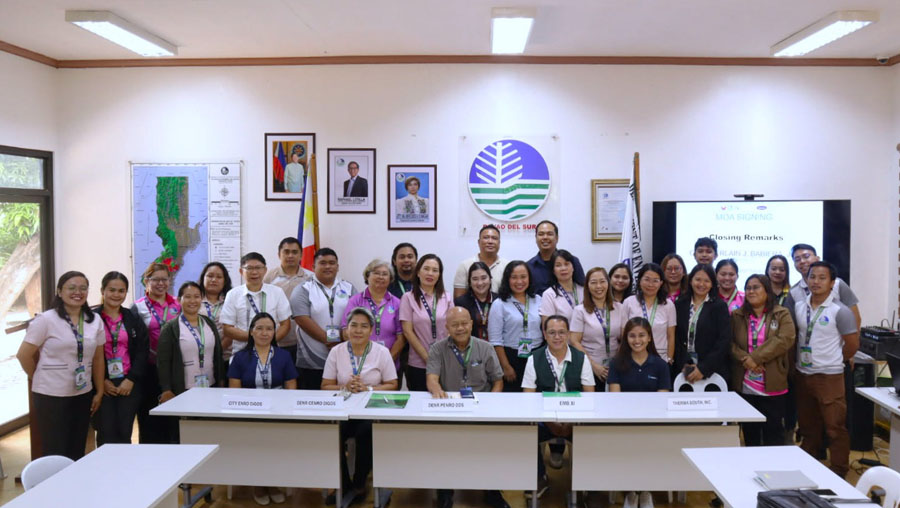
“Through our strong partnerships with DENR-EMB XI, and PENRO Davao del Sur, we are reinforcing real-time air quality monitoring and supporting data-driven environmental governance. Together, we are advancing sustainable growth and responsible stewardship for our communities” Atty. Alona Ruyeras-Borromeo, Assistant Vice President for Corporate Services, said.
Air Monitoring Staff Engr. Glene Joriza explained that air particulates are carefully examined inside the station to evaluate air quality, which will help the growing and industrializing province of Davao del Sur mitigate factors affecting responsible development.
Under the Adopt-an-Ambient Air Quality Monitoring Station Program, the installation is set to commence this year, adding to the existing CAAMS unit situated in Davao City, Tagum City in Davao del Norte and Malita in Davao Occidental.