
BY ALEX ALAGON
Contributor
Davao City eyes becoming the first UCCN recognized creative city in Mindanao
JERRY NIEL M. LORA & DWIGHT GUMAHIN/DNSC Interns
THE DAVAO City Office for Culture and the Arts is gearing up to become the first to receive the Creative City entitlement in Mindanao.
Office head Oscar Casaysay affirmed the city’s efforts in carving its name in the roster of creative cities in the country.
The city’s cultural advocates and performing artists are strengthening preparations for a possible bid to join the UNESCO Creative Cities Network and become a future Creative City of Crafts and Folk Arts.
Casayasay said their community is preparing for the upcoming UNESCO application period, which will create chances for cities to receive global recognition.
“We are preparing for next year, which would be the year for UNESCO to open for new Creative Cities. That’s why I want us to be prepared right now because we have a lot of performing artists here in Davao City, so we are bidding for folk arts,” Casaysay said.
Local governments that want to become members of the UNESCO Creative Cities Network must complete an international application process before they can start their membership application.
Davao’s strong community of performing artists, indigenous traditions, and cultural festivals could support a potential bid under the folk arts category.
The Philippines currently has five cities recognized under the UNESCO Creative Cities Network, including Baguio City for Crafts and Folk Art (2017), Cebu City for Design (2019), Iloilo City for Gastronomy (2023), Quezon City for Film (2025), and Dumaguete City for Literature (2025).
Economic history matters: Untold stories of Philippine–China trade relations
Whenever Philippine–China relations turn tense, familiar calls resurface urging the Philippines to distance itself economically from China and look elsewhere for trade partners. These appeals often lean heavily on trade figures—especially the country’s persistent trade deficit with China—to argue that disengagement is not only possible but overdue.
This pattern is not new. During the Aquino administration, at the height of tensions in the West Philippine Sea, some local officials openly floated calls to boycott Chinese-made products. Similar arguments have returned under the Marcos administration, now reinforced by comparisons between Philippine exports to China and Chinese exports to the Philippines. Today’s “word war” between the Chinese embassy and Philippine officials has once again brought these claims to the fore.
While these concerns are understandable, they are ultimately grounded in a surface-level reading of trade statistics. It is true that the Philippines imports more from China than it exports. Yet treating this imbalance as a stand-alone verdict on the relationship misses the bigger picture. Trade figures do not exist in a vacuum. They are shaped by decades of policy choices, development paths, and the very different ways states manage their economies.
As a political economist and international relations analyst, I argue that a more meaningful assessment of Philippine–China trade must proceed in the following steps. It begins by revisiting how both countries opened their economies in the late 1970s—and how those choices still shape what we trade, and with whom, today.
Same timelines, different directions
China’s rise as a major trade power in the global economy is widely attributed to the series of policy reforms introduced in the late 1970s. In 1978, the Chinese government embarked on what has often been described as a strategy of “selective liberalization.” Rather than pursuing wholesale market opening, Beijing allowed limited and carefully managed forms of privatization, foreign ownership, deregulation, and decentralization, while maintaining state control over sectors deemed strategic or closely linked to national security. These sectors largely remained under the supervision of state-owned enterprises (SOEs).
The cumulative effect of these reforms was transformative—not only for the Chinese economy but also for the Chinese state itself. One of the most visible outcomes was the rapid development of China’s southeastern provinces, which became major recipients of foreign direct investment from firms based in Taiwan, Hong Kong, the United States, and Western Europe.
As China consolidated its manufacturing base through these reforms, it earned the label of the “factory of the world.” The country emerged as a key supplier of intermediate and manufactured goods, embedding itself deeply within global supply chains. Consequently, the transformation of the Chinese economy not only involves participating more fully in international trade through the reduction of tariffs and non-tariff barriers, but also involves shaping global trading regimes. A pivotal milestone in this process was China’s accession to the World Trade Organization in 2001.
The Philippines is no stranger to the economic transformations that propelled China’s rise. During the same decade that China initiated its reform agenda, the Philippines also embarked on liberalization under the administration of Ferdinand Marcos Sr., following policy prescriptions advanced by the United States (US), the World Bank (WB), and the International Monetary Fund (IMF). Unlike China’s selective approach, however, the Philippine government pursued rapid and relatively comprehensive trade liberalization in the hopes of capturing the promised gains of free trade.
This shift was implemented through a combination of executive orders, legislation aimed at reducing tariffs, state support for export-oriented firms, and participation in regional and global trade arrangements. These included the General Agreement on Tariffs and Trade (later the WTO), the Asia-Pacific Economic Cooperation forum, and a range of multilateral and bilateral trade agreements within ASEAN. Collectively, these reforms unfolded from the 1970s through the early 2000s, spanning both the Marcos and post-Marcos Sr. administrations.
Beyond export-import trade volumes
The 1990s marked a consequential decade for both countries as they began to experience the long-term effects of liberalization. In the Philippines, the period coincided with economic recovery under post-authoritarian democratic governments following the ouster of Marcos Sr. It was during the administrations of Corazon Aquino and Fidel Ramos that the Philippines deepened its engagement with the WTO and the ASEAN Free Trade Area.
In China, the 1990s were defined by the leadership of Jiang Zemin, under whom the continuation and expansion of the 1978 reforms became a defining feature of state policy. The resulting economic growth lifted millions out of poverty within two decades—an achievement that many developing economies continue to aspire toward.
Against this background, relying solely on annual export-import figures to judge the Philippine–China trade is misleading. Doing so almost guarantees gloomy conclusions, especially when the focus is on deficits. Worse, this narrow view feeds narratives that turn economic debates into emotional ones, sometimes spilling into outright distrust or Sinophobia.
An alternative way of understanding Philippine-China trade relations is to look for the top 10 exports and imports of the Philippines to and from China and contextualize such data in light of Philippine development policies, particularly with the continuation of the export-oriented industrialization (EOI) strategy implemented because of the Philippines’ decision to engage in trade liberalization since the 1970s. Tables 1 and 2 below present a relevant picture of Philippine-China trade relations. Both tables are divided into eight columns which are significant years in the Philippine economic and political histories. For instance, 2000 is the entrance of the 21st Century and the year before China became a member of the WTO. Meanwhile, the remaining years from 2004 to 2022 span the presidencies of Gloria Macapagal Arroyo, Benigno Aquino III, and Rodrigo Duterte. Examining the Philippines’ top exports to and imports from China reveals patterns shaped by long-standing development strategies, not just recent political moods. (Note: The rankings presented below are derived from descriptive analysis and have not been subjected to peer review. The author welcomes comments, suggestions, and constructive feedback.)


What gets lost in the trade numbers
To understand these patterns, it helps to revisit the Philippines’ development history. From the 1950s to the 1960s, the country followed import-substitution industrialization (ISI), a strategy that protected local industries and limited imports. At the time, the Philippines was seen as one of the more successful cases in the region.
This approach changed in the 1970s, when the Philippines adopted export-oriented industrialization (EOI). The goal was to compete globally by promoting exports, especially manufactured goods. Over time, this divided exporters into two broad groups: traditional exporters, mainly in agriculture and raw materials, and non-traditional exporters, especially in heavy manufacturing and electronics. While both groups remained active, the latter received more policy support and attention from the Philippine government.
In this regard, based on the rankings present in both Tables 1 and 2, the following are five (5) untold stories behind Philippine-China trade relations buried because of the lack of attention given to the economic history of both the Philippines and China. Specifically, these stories affirm the indispensable role of China in Philippine economic development especially that the two Asian partners are no strangers but contemporaries in their quest for mutual prosperity through participation in free trade.
- Philippine-China trade relations affirm the segmentation of Philippine export sector. As presented in both Tables 1 and 2, Philippine exports to China both consist of traditional and non-traditional export goods. Agricultural goods sit alongside electronics and minerals in the country’s top exports to China. This suggests that trade with China supports a wide range of Philippine producers, regardless of who is in Malacañang or how tense diplomatic exchanges become.
- China served as a lifeline for the ailing traditional exporters from the Philippines. For many Filipino development experts, Philippine trade liberalization policies are skewed towards the development of the non-traditional export sector, which primarily consists of firms specializing in electronics and semiconductors. In this regard, debates regarding the preparedness of the Philippines to fully open its economy to embrace globalization took place during the mid- and late 1990s. One of the strong voices that emerged during this period is the anxiety of traditional exporters in the Philippines, especially food producers in Mindanao. However, based on Table 1 ranking, China’s economic liberalization and open-door policy provided a saving grace to Philippine traditional exporters especially agricultural firms specializing in the exportation of high value crops especially bananas, pineapples, sugar and coconut.
- China plays a role in Philippine food security. Development is always uneven and rarely becomes a win-win situation. In this regard, development strategy will always result to “winners and losers” since there will be always be uneven distribution of resources and benefits. In this regard, the Philippine EOI strategy not only resulted to the disadvantage of the agricultural sector. As the Philippines aimed to compete with other states engaged in non-traditional exportation since the 1970s, the Philippine agricultural sector failed to catchup with these rapid developments despite presence of government support, especially through training and technical assistance. As a result, the capacity for food production and supply is affected. In this regard, by looking at Table 2, agricultural and food products frequently land in the top 5 imports of the Philippines from China since 2000. In this regard, it is safe to assume that China also contributes, to a certain extent, to Philippine food security.
- China has become an indispensable destination for sustaining the Philippines’ export-oriented industrialization strategy. Table 1 reveals that, since 2004, Philippine exports to China have shifted from agricultural products to non-traditional export goods, especially electronic parts and minerals. Such changes indicate that the demand from the Chinese market provided additional impetus for the Philippines to sustain its EOI development strategy since the country no longer solely relies on Western markets for its non-traditional exports.
- Imports from China are essential parts of the Philippine domestic supply chain to sustain its EOI development strategy. Per Table 2, both the Philippines and China supply each other with the necessary intermediate goods (e.g. electronic parts, equipment, etc.) in order for both economies to produce their non-traditional exports. While it was established that the Philippines imports more from China and not vice versa and these imports are also those goods belonging to the non-traditional exports, it is wrong to simply assume that the Philippines is suffering from unfair and unequal trading terms with China because of annual negative scores in terms of balance of payments (also known as trade deficit). This is a very simplistic and reductionist assumption. Imports from China indicate that these are also non-traditional export goods, which can be assumed to also support the operations of the Philippine-based non-traditional exporting sector, mostly located within special economic zones (SEZs) across the country. A multiplier study covering the forward and backward linkages of Philippine non-traditional export sectors may confirm this claim.
Conclusion
The renewed exchange of sharp words between Chinese diplomats and Philippine officials has once again pushed trade into the political spotlight. In moments like this, it is tempting to treat trade figures as straightforward proof of dependence or vulnerability.
But trade numbers are not self-explanatory. They reflect long histories of policy choices, development strategies, and economic priorities on both sides. Reading them without that context leads to conclusions that are easy to repeat but hard to defend.
If the Philippines wants a clearer view of its economic relationship with China—especially during periods of diplomatic strain—it must resist the urge to rely on quick comparisons and headline figures. A more careful reading, grounded in history and development experience, offers a steadier basis for debate and for policy decisions in an increasingly complicated regional environment.
Brian U. Doce is a scholar-practitioner with a background in politics and international relations. He lectures at several universities in Metro Manila and has extensive experience in business–government relations, policy advocacy, and diplomacy. He may be reached at scholarbud@gmail.com.
Ayala Land and Alveo Land Reinforce Leadership in Premium Real Estate Through Strategic Expansion
Manila, Philippines — With over 35 years of experience in enhancing land and enriching lives, Ayala Land, Inc. (ALI) has shaped some of the country’s most enduring master-planned estates. ALI developments integrate residential, commercial, institutional, and lifestyle components that create long-term value for communities and investors alike.
In Negros Occidental, Ayala Land’s presence has been instrumental in advancing key developments that support economic growth and improve everyday living. This deep familiarity with the province’s character and potential has laid a strong foundation for thoughtfully planned communities that are both sustainable and responsive to local context.
Alveo Land Corp., the upscale residential arm of Ayala Land, carries forward the Ayala legacy through a refined approach to premium residential development, with its portfolio of over 70 residential and mixed-use communities across 13 key growth centers nationwide. Spanning high-rise condominiums, suburban residential lots, and thoughtfully planned mixed-use developments in prime locations such as Nuvali, Bonifacio Global City, Makati, and Alabang, Alveo’s developments are defined by curated amenities, generous open spaces, and a strong sense of belonging.
Each Alveo community is carefully developed to balance privacy and openness, leisure and functionality—resulting in lifestyle-led, design-driven environments that continue to resonate strongly in the market and support a way of living that evolves with residents over time.
Building on this strong foundation, Alveo Land now expands its footprint in Visayas with the launch of its first residential village in Negros Occidental. Located within Northpoint, Ayala Land’s estate in Talisay City, this new development will reflect Alveo’s hallmark principles of sustainability, design excellence, and community-centric living—carefully attuned to the natural landscape, pace, and character of Negros.
This milestone signals Alveo’s confidence in the province’s long-term potential and its commitment to delivering communities that endure—places where families can grow,
connections can flourish, and a legacy can be built.
More details on the Alveo’s Northpoint residential village will be announced in the coming months.
Ayala Land. Building places people love.
Alveo Land. A life you love.


Jollibee, the Philippines’ no. 1 fast food chain, was named Company of the Year at the 61st Anvil Awards after winning 1 Grand Anvil, 8 Golds, and 6 Silvers, the highest-valued awards given to a single organization this year.
Leading Jollibee’s wins was a Grand Anvil for “Bida Best, Bida Pinoy,” a multi-platform campaign that honored everyday Filipino wins, excellence, and values. The campaign also received three Golds and a Silver across marketing and brand communication, social media, influencer marketing, and experiential categories, showing its wide reach and strong connection with audiences.
“Receiving 16 Anvil Awards, including Company of the Year and the Grand Anvil Award, is a great honor for Jollibee,” said Dorothy Ching, vice president for marketing of Jollibee Philippines. “More than the awards, this recognition shows our commitment to creating work that truly matters. Work that brings joy, makes a positive difference in our customers’ lives, and helps the communities we serve. We share this achievement with our dedicated Jollibee team and our agency partners, whose hard work and teamwork made this possible.”
The brand also earned two Golds and one Silver for Kids Values Meal, highlighting Jollibee’s commitment to teaching positive values to children through advocacy, partnerships, and experiential marketing.


Additional Gold Anvil Awards were given to Project Abulug for corporate social responsibility, Project 1000: 1,000 Kilometers of Joy for partnerships, and Deliver Joy: The All-New Jollibee App for innovation in customer experience and digital engagement.
Several Silver Anvil Awards reflected Jollibee’s creativity and range. These included Bee Earth’s Best Friend, an environment-focused campaign promoting sustainability; The Dessert Museum x Peach Mango Pie collaboration, which won two Silver Anvils; and Serving Joy and Music, an in-store experience that brought together food, music, and community.
Widely regarded as the Oscars of Public Relations in the Philippines, the Anvil Awards are organized by the Public Relations Society of the Philippines (PRSP) and recognize excellence in strategic public relations and communications.
Jollibee’s performance at this year’s Anvil Awards reflects a steady, purpose-driven approach to brand building. As the company continues to grow in the Philippines and beyond, the Company of the Year recognition demonstrates how a Filipino brand, guided by authenticity and purpose, can set high standards in communication and create meaningful impact.
Craving more Jollibee treats and exclusives? Head to www.jollibee.com.ph for the latest updates, order your favorites at https://order.jollibee.com, and follow us on social media for more JOYful surprises!
Metrobank: Inflation within target keeps door open for further rate cuts
With inflation starting the year firmly within the Bangko Sentral ng Pilipinas’ (BSP) target range, Metropolitan Bank & Trust Co. (Metrobank) expects monetary easing to continue this year, supporting economic activity despite emerging price pressures.
Philippine headline inflation accelerated to 2% year-on-year in January, up from 1.8% in December, but still comfortably within the BSP’s 3±1% target band. Core inflation, which strips out volatile food and energy items also picked up to 2.8%, signaling early signs of demand normalization as the economy recovers.
Metrobank noted that the main upward pressure came from housing, water, electricity, gas, and other fuels, driven by annual rental adjustments outside the National Capital Region and higher electricity rates. Meanwhile, food inflation eased to 1.1%, helped by lower prices across most major food items and continued rice deflation, which helped temper overall price growth.
“While inflation is moving higher from recent lows, it remains well-anchored within the central bank’s target,” Metrobank said. “This gives policymakers room to continue supporting growth, even as demand-side pressures gradually build.”
For the full year, Metrobank maintains its 2026 inflation forecast of 3.3%, citing low base effects and recovering demand that may push prices higher in the second half of the year. However, these are expected to be partially offset by softer consumer spending and supply-side factors such as the lifting of the rice import ban.
Given the inflation backdrop, Metrobank expects the BSP to proceed with further monetary easing. The bank forecasts a cumulative 50 basis points of policy rate cuts in 2026, bringing the reverse repurchase (RRP) rate to 4% by year-end, as authorities balance growth support with price stability.
Metrobank added that barring major supply-side shocks, the current inflation environment supports a measured and data-driven policy path, one that allows the economy to gain momentum without reigniting excessive price pressures.
Get valuable research and information from our team of financial experts, visit Wealth Insights (www.wealthinsights.ph) for market updates, portfolio advice, and investment ideas and insights.
IN THE municipality of Maco, Davao de Oro, the steady hum of the washing machines is more than just background music. Without everyone realizing, they have become the residents’ bulletin board. Like clockwork, their sudden silence announces another lingering power outage.
For the owners and employees of Maco’s laundry industry, the Northern Davao Electric Cooperative (Nordeco) has become a pain point: visible only when it comes to collecting the hefty bills, and invisible when the machines need to spin.
Jay-ar’s hustle and struggle
At 21 years old, Jay-ar L. Oro is just starting his life with his 20-year-old wife. While he hasn’t had his degree yet, he has a masterclass in the art of hustling.

By day, he and his wife are the caretakers of the laundry business. By night, he sets up plastic tables and chairs in front of their store to sell balut. Unlike employees who have the luxury of a monthly paycheck, the couple’s income is strictly tied to how much the businesses earn.
If the machines don’t spin and the balut eggs are not sold, they don’t eat.
“We have eight machines and conservatively earn between P500 and 1,000 an hour,” he narrated. “I heard they will have another brownout this weekend for another 12 hours. So, I will just focus on selling the balut.
Typically, he sets up his makeshift stall at dusk. So, he relies on the light to attract passersby like a moth to a flame. He sells about 2,000 fertilized duck eggs at P18.00 apiece for the day. That income is cut in half if there’s a power outage.
“If the brownout extends, we have no income. On average, we have two lengthy brownouts each month. So, we have to check Nordeco’s Facebook page frequently because they don’t tell us,” he said.
They’ve learned to live with the lingering power disruptions and counted their blessings when these power cuts are announced. It’s the lack of notice that’s the problem.
“In a week, we have two to three brownouts. Although they last only minutes, we are worried that the electrical fluctuation will damage our machines,” he said.
There’s also the fact that when electricity dies mid-laundry, the clock restarts. Each washing and drying takes about 40 minutes. If power returns after 10 minutes, for example, the timer begins again at minute 1. “So, what happens is instead of nearly finishing and loading another batch, we have to wait another 40 minutes,” he explained.
“I don’t have a fixed wage. My pay depends on how many loads we finish. If Nordeco cuts the power for twelve hours, that’s twelve hours of me sitting here for nothing,” he added.

The Mathematical Loss: Rhea’s Vanishing Profits
When 33-year-old Rhea James heard about the 12-hour brownout scheduled for the weekend, she could only sigh in frustration.
“Yeah, I heard about it. Why do they schedule the long brownouts on a weekend when that’s usually when people bring their laundry to us because of no work?” she shared.
She manages a laundry shop owned by her sister. In exchange, she receives a portion of the daily profits.
On a good day, the shop is a whirlwind of humming and scent. On a day with no electricity, it is a graveyard of damp fabric.
For Rhea, the grievance against their power supplier isn’t just about the frequency of the outages, but the utter lack of communication.
“There is no notice,” Rhea said. “We sit there, and the machines just stop, and we don’t know for how long. On weekends, we have to turn away long-time customers or tell them to leave their clothes and hope the lights come back on. It’s embarrassing, and it’s bad for business.”
Rhea estimates that the shop generates at least ₱500 per hour when operating at full capacity. Every week, she said, they always experience a power disruption, with the shortest estimate lasting about three hours. Sometimes, when there’s no power, the tap water also shuts off.

“Do the math,” she said. “We’ve had outages that last ten hours. That’s ₱4,000 to ₱5,000 in lost income in a single day. For a small business in Maco, that’s the difference between growing and just barely hanging on.”
She paused before adding, “Nordeco’s rates stay high, but the service is at an all-time low.”

Nerife’s nervous watch
“They just expect us to just smile and take it,” said 49-year-old laundy shop caretaker Nerife Cenas, talking about the persistent brownouts. “And they’re right. What can we do? We are not going anywhere. We are at their mercy.”
Just like the other laundry businesses in the town, the unannounced and extended power outages have gravely affected their shop’s income.
Having navigated the brownouts through various shifts, she describes the current state of Nordeco’s service as a “constant anxiety.”
“You never know when they will cut the electricity off. It could be minutes or hours. Sometimes, power returns after five minutes, then it dies again,” she said. “We have to wait a little longer before turning on the power breaker to prevent our machines from damage.”
She narrated that two Sundays back, they were never notified about a browout that lasted five hours. They had to turn away customers by the third hour because they didn’t know when power would return.
The laundry shop earns about P960 per hour if all machines are running, so a five-hour disruption is a huge loss.
Luckily, so far, not a single commercial washer—costing upwards of P100,000 each—has broken down due to the fluctuating electricity, but each laundry shop owner is playing a high-stakes game of chance every time power flickers.
“We heard that Davao Light is coming. If there’s another supplier that can provide us with better service and peace of mind, then we just want that choice,” Cenas said.
Canon Philippines Launches “CTRL + N” Campaign, Powering a New-Gen Era of Print & Visual Storytelling
Manila, Philippines – Canon Philippines officially enters a bold new chapter in creative expression with the launch of “CTRL + N: New-Gen Era of Print & Visual Storytelling.” The campaign spotlights Canon’s latest MegaTank printers – designed for a generation that creates, hustles, and shares without limits.
Built for speed, efficiency, and versatility, Canon’s next-generation MegaTank printers empower creators, students, professionals, and families to turn everyday ideas into standout visual stories. From school projects and small business materials to passion prints and side-hustle outputs, users can expect high-quality results that scale, without breaking the budget.
Leading the lineup are Canon MegaTank models PIXMA G4770, PIXMA G3780, and PIXMA G4780, engineered for high-volume printing with low running costs and consistent performance. To help users get more from every print, select models now come with free GI-71 inks worth up to Php1,365, enabling more creativity straight out of the box.


Canon is also leveling up the ownership experience through the Canon PH Delightful App. Customers can earn up to 2,000 reward points for every purchase of participating MegaTank printers and redeem them at over 400 partner merchants, including GCash, Grab, and ShopeePay via e-gift credits, making every print count beyond the page.
With intuitive features, efficient ink systems, and Canon’s trusted imaging expertise, the brand continues to redefine what’s possible in print. When paired with Canon’s powerful cameras, this new-gen ecosystem brings visual storytelling to life, seamlessly bridging digital creativity and physical output for 2026 and beyond.
For the latest Canon promotions, MegaTank printers, and imaging solutions, visit https://ph.canon or download the Canon PH Delightful App today.
Globe Wins Prestigious ASEAN Energy Award for Decarbonization Initiative
Globe continues to lead the way in sustainability, not only cutting carbon emissions but also earning regional recognition for its innovative energy efficiency projects. This commitment to operational excellence and climate action was recently recognized at the ASEAN Energy Awards 2025 in Kuala Lumpur, where Globe secured the winning prize. Notably, Globe was the only Filipino company to win among the entries for ASEAN Best Practices for Energy Efficient Buildings (EEB).
According to the Philippine Department of Energy in their press release, “Among the awardees, Globe Telecom, Inc. was named Winner in the Energy Efficient Building – Special Submissions (Cutting-Edge Technology) category, recognized for deploying advanced solutions and system enhancements that improved energy performance across its operations…” “Energy Secretary Sharon S. Garin congratulated the Philippine awardees and emphasized the importance of translating best practices into scalable solutions that can be replicated across industries and communities.”
Globe won this award with its innovative Chiller Optimization (EDD-RT) project at the Valero Telepark facility, which uses External Digital Demand-Response Technology to intelligently adjust the facility’s cooling system and significantly reduce energy use while maintaining critical cooling levels.
According to Yoly Crisanto, Globe’s Chief Sustainability and Corporate Communications Officer, the journey to Net Zero is about redefining how the company operates and invests for the future. She noted that winning the ASEAN Energy Award validates the company’s approach to integrating sustainability, from large-scale clean energy adoption to cutting-edge

efficiency projects is world-class, emphasizing that progress for customers must also mean progress for the planet. Globe’s decarbonization strategy is driven by a twin approach that focuses on implementing energy-saving innovations alongside a major shift to renewable energy.
As of November 2025, the company has significantly increased its use of clean energy, powering thirty-seven large facilities, such as data centers and offices, through Renewable Energy Power Purchase Agreements under the Philippine government-initiated Retail Competition and Open Access (RCOA) and Green Energy Option Program (GEOP). Furthermore, the company is utilizing the Energy Regulatory Commission-initiated Retail Aggregation Program, which will help transition more than 3,000 cell sites to source renewable energy by 2028. These energy-saving initiatives and the shift to renewable energy have led to substantial operational efficiencies while strengthening the reliability of Globe’s network. These efforts reduce the company’s exposure to fuel shortages and price fluctuations, marking solid progress toward its goal of a 42 percent cut in emissions by 2030 and eventual Net Zero.
Love and Luck at the Waterfront: A Season of Romance, Fortune, and Timeless Celebrations
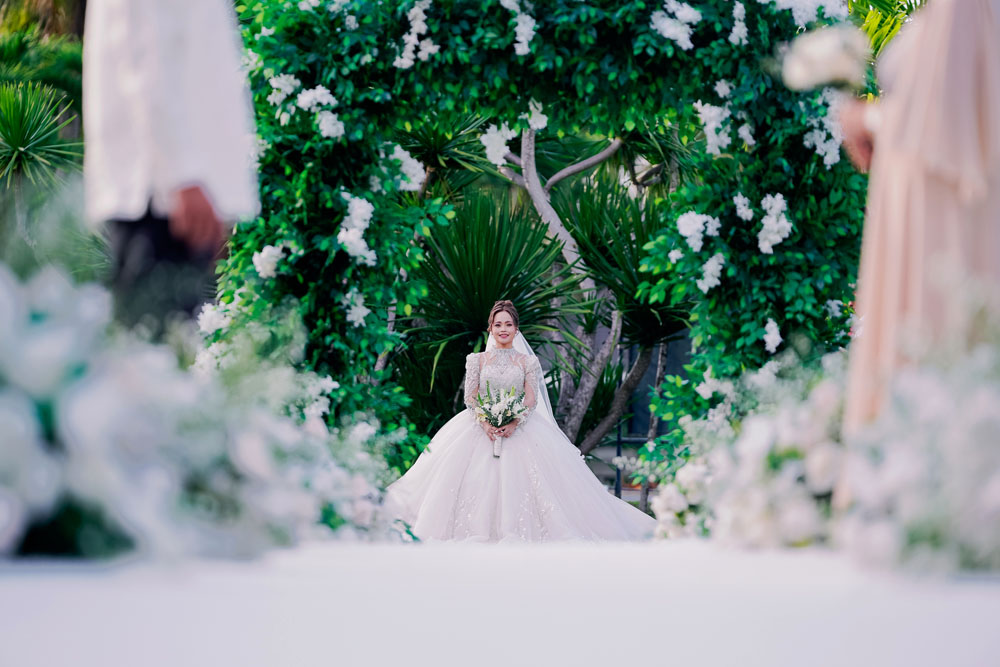
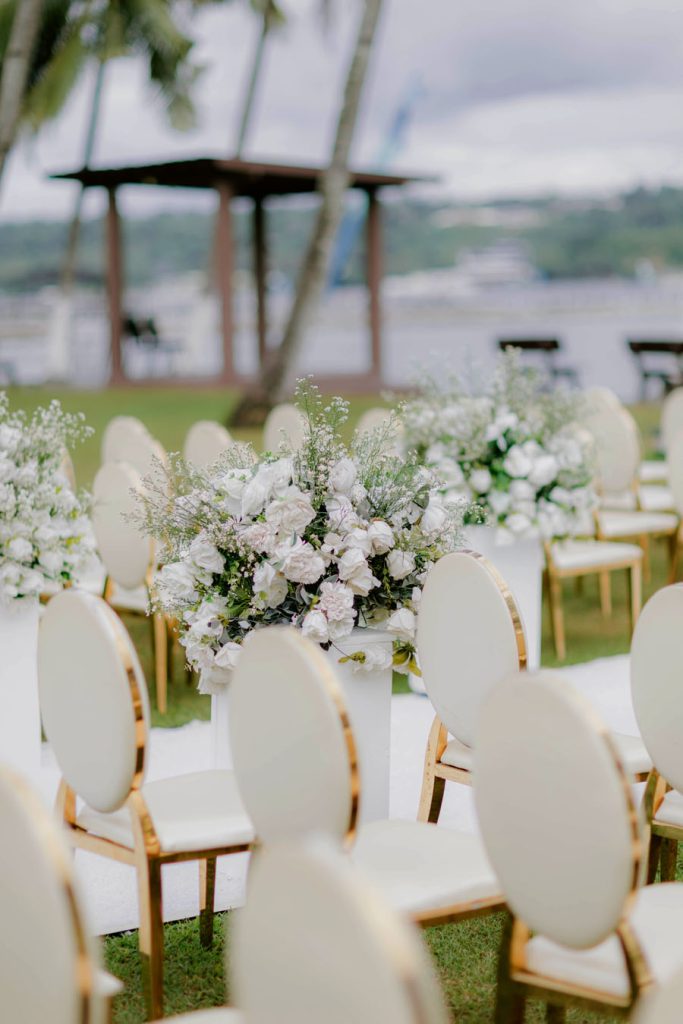
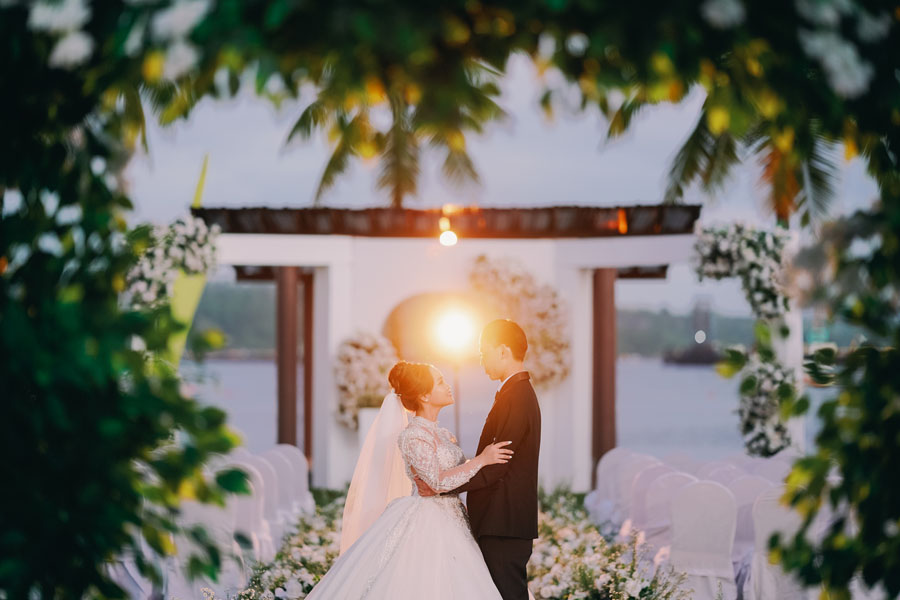
Davao City, Philippines — This February, Waterfront Insular Hotel Davao invites guests to celebrate the season of romance and fortune with Love and Luck at the Waterfront, a thoughtfully curated month-long celebration blending heartfelt moments, festive feasts, and meaningful experiences.
Running from February 6 to February 28, 2026, the campaign brings together Valentine’s romance and Lunar New Year prosperity in the hotel’s signature timeless elegance and warm Filipino hospitality.

Feast at Lunar: A Celebration of Prosperity
Guests may usher in good fortune with Feast at Lunar, a weekend-themed buffet inspired by Lunar New Year traditions. Available from February 6 to 28, 2026, enjoy a bountiful spread symbolizing abundance and prosperity, priced at Php 1,288 nett per person.
A dedicated Chinese New Year Celebration takes place from February 16 to 22, 2026, offering guests an immersive cultural dining experience rooted in tradition and togetherness.
Lucky Love Buffet at Café Uno
From February 13 to 15, 2026, Café Uno presents the Lucky Love Buffet, a special lunch and dinner offering designed for couples, families, and friends celebrating the season of love. Guests can enjoy an indulgent buffet experience at Php 1,588 nett per person, perfect for sharing joyful moments over thoughtfully prepared dishes.
Lucky Love: A Classic Feast – Valentine’s Dinner Night
On February 14, 2026, Waterfront Insular Hotel Davao elevates Valentine’s Day with Lucky Love: A Classic Feast, an elegant evening of romance set at the Garden Pavilion. Beginning at 6:30 PM, the experience features refined flavors, romantic ambiance, and timeless charm, priced at Php 1,888 nett per person. An unforgettable setting for love to flourish.


Romantic Getaway Packages
Couples seeking a complete Valentine’s escape can indulge in the hotel’s Romantic Getaway room packages, thoughtfully designed for comfort and intimacy:
- Standard Room – Php 3,900.00
- Deluxe Room – Php 4,200.00
- Deluxe Premium Room – Php 4,500.00
Guests booking these packages enjoy exclusive dining privileges, including Php 200 nett off per person on the Valentine’s buffet dinner on February 14, 2026. Booking Period: January 26 to February 9, 2026
A Destination for Generational Moments
With its rich heritage, Waterfront Insular Hotel Davao has been a witness to the most cherished memories of Davaoenos and remains a destination where generations come together to celebrate and create lasting moments.
This season, “Love and Luck at the Waterfront” invites guests to embrace romance, prosperity, and togetherness—where every moment is thoughtfully curated, and every celebration becomes timeless.