

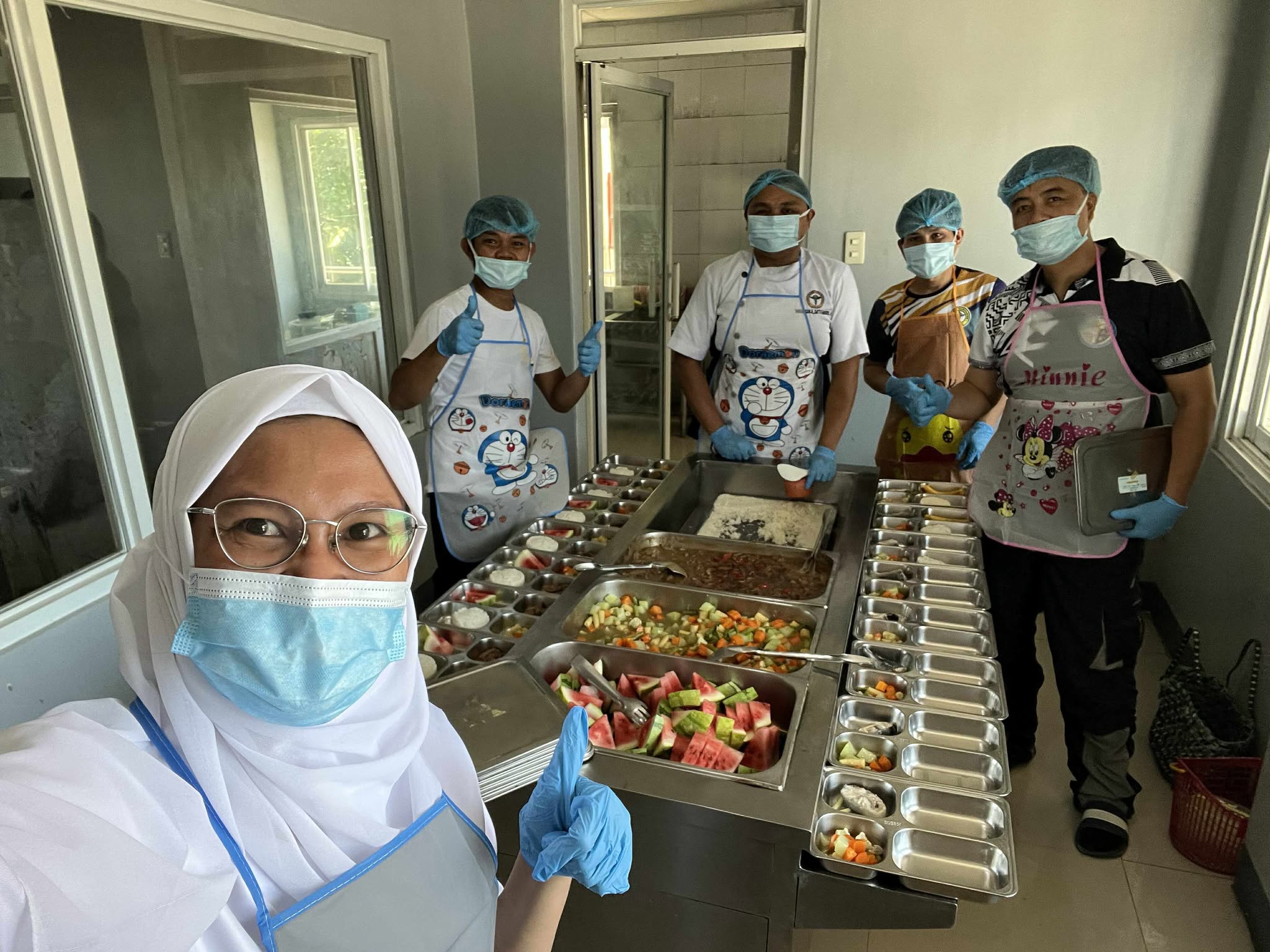
MAGUINDANAO DEL NORTE — Cotabato Sanitarium and General Hospital, a 200-bed Level II hospital retained by the Department of Health (DOH) in the Bangsamoro region, has set a goal of reaching at least 30 percent plant-based dishes on its menus by 2027 as an additional way to boost patient health outcomes. The hospital has already shifted 17 percent of its one-month cycle menu to plant-based meals (moving from one dish to five), centering plant-based proteins such as beans, tofu, and locally grown legumes.
“Opting for plant-based options instead of meat truly lessens the carbon footprint brought by long supply chains,” said Chief Nutritionist-Dietitian Bai Nishran Candao, who leads the effort. “It also helps us utilize government funds better because of lower dish costs, while directly encouraging and supporting local farmers.”
Candao began by cooking trial recipes herself and asking hospital staff to taste them, with doctors also sharing feedback. Those recipes have since been standardized, and she has now challenged each of the hospital’s cooks to create and name an original plant-based dish. Their dishes will be tried on patients, and the best ones will be included in the menu.

The approach also suits the community the hospital serves. With a predominantly Muslim patient population and no pork on the menu, plant-based dishes give the kitchen more halal protein options beyond meat. Sourcing beans and legumes from local growers also supports the government’s Sagip Saka program.
DOH Administrative Order 2022-0020 requires government hospitals to provide patients with an average of 1,800 calories a day, with at least 15 percent from protein. According to Candao, studies before the order found that about 40 percent of hospitals fell short of the standard because of budget limits. Increasing the use of plant-based proteins lets Cotabato Sanitarium and General Hospital save at least ₱40,000 each week, allowing those savings to go toward other food items that raise the total calorie content of patient meals.
“Every tradition was once an innovation,” Candao said. “We will keep improving these dishes until they become a normal part of our patients’ meals. Behavior change is the end goal of every dietitian.”
Candao stressed that many Philippine hospitals already run plant-based projects and that dietitians in her network helped her start. She hopes for a national guideline on plant-based hospital meals, built on research and input from health facilities. “Our cooks would benefit greatly from training in preparing plant-based dishes, and from standardized recipes already used in actual hospital settings,” she notes.
Plant-based foods offer lower cholesterol, higher fiber, and nutrient-rich properties that improve guest health outcomes. Research also shows that plant proteins substantially reduce greenhouse gas emissions and require far less land and water than animal proteins. The Food and Agriculture Organization of the United Nations has found that plant-based foods generate significantly less food waste than meat and dairy products, making Cotabato Sanitarium and General Hospital’s commitment a meaningful step forward for both guest wellness and environmental responsibility.