


THE GLOBAL energy shock is forcing countries to rethink their dependence on imported fuels. But the real test of the transition will be whether it makes life more affordable, protects food security, and creates better opportunities for ordinary people.
A mother in Manila does not wake up worrying about international oil markets or the politics of the Middle East. She worries about the price of rice, fish and vegetables, the electricity bill waiting to arrive; and the money left after paying for her children’s education. A jeepney driver worries about how much diesel will cost today and how much he will take home after a day’s work. A farmer wonders whether the price he receives for his harvest will cover the cost of fertilizer, irrigation, and transportation.
Yet all these seemingly unrelated concerns have something in common. They are increasingly shaped by what happens in the world’s energy markets.
A conflict thousands of miles away, a disruption in the movement of oil tankers, or a sudden increase in the price of imported fuel can eventually reach the kitchen, the marketplace, the farm, and the small neighborhood shop. The ordinary citizen may never see an oil tanker passing through the Strait of Hormuz but may feel its consequences in the next electricity bill or at the petrol station.
This is the human face of the energy challenge confronting the Philippines and much of Asia.
The International Energy Agency (IEA), in its World Energy Outlook 2026, released on November 19, describes the current disruption to global energy supplies as an unprecedented shock. Its assessment is that the longer the disruption continues, the more deeply it could change the way countries source, produce, and consume energy. It also warns that countries should not replace one dependency with another.
There is a larger question that deserves attention. How can countries protect themselves against such disruptions without making energy unaffordable for their people? How can they move towards cleaner sources of energy without creating new dependencies or undermining food security? And how can the benefits of this transition reach the ordinary household, farmer, worker, and small entrepreneur?
These are not merely questions for energy ministers, economists, or international institutions. They concern the everyday lives and future aspirations of millions of people across the Philippines, ASEAN, and Asia.
From electricity security to energy security
In an earlier article, Lighting the Archipelago, I examined the Philippines’ electricity challenge, its dependence on imported fuels, and the opportunities offered by geothermal, solar, wind, hydropower, energy storage, and better regional connections. Those issues remain important. But the present global situation requires a wider examination.
Electricity is only one part of the energy equation. Oil powers much of the transportation system. Gas supports electricity generation and industry. Fuel prices affect agriculture, fishing, manufacturing, and the movement of goods. Even the cost of producing and transporting food is closely linked to energy.
The IEA’s October 6, 2026 report, ASEAN Energy Security Review, makes this connection particularly clear. It identifies rising dependence on imported oil and liquefied natural gas (LNG), exposure to important maritime shipping routes, inadequate preparedness for supply disruptions, and vulnerabilities in clean-energy supply chains as major challenges for Southeast Asia.
The Philippines is especially exposed because of its dependence on imported petroleum and its geographical position. When international fuel prices rise, the consequences are felt not only at petrol stations but also in public transportation, fishing, farming, food distribution, and electricity generation.
The problem is not simply that imported fuel becomes expensive. The entire cost structure of the economy can change. A farmer pays more to irrigate his land; a fisherman spends more to take his boat to sea; a food distributor pays more to move vegetables and fish; and a small restaurant faces higher operating expenses. Eventually, someone has to bear these additional costs, and very often it is the ordinary consumer.
Energy security, therefore, is also food security, livelihood security, and economic security.
Cleaner energy: Good intentions must meet economic reality
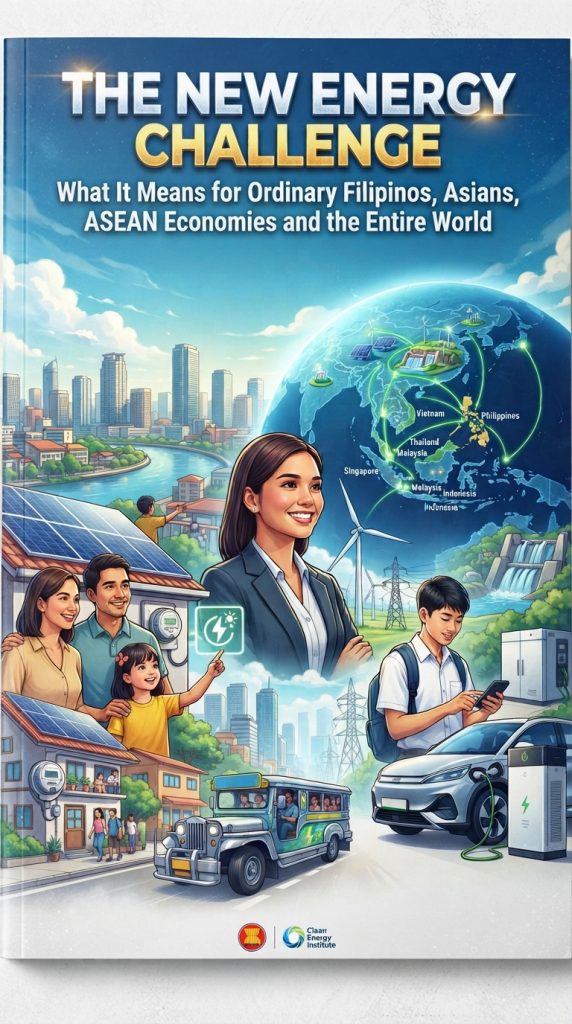
The Philippines and other Asian countries have considerable opportunities to reduce their dependence on imported fossil fuels. Solar, wind, geothermal, hydropower, biomass, and other alternative sources can make an important contribution.
But we should approach these opportunities with both enthusiasm and realism. A technology may be environmentally attractive, but that does not automatically make it commercially competitive or affordable for consumers.
The International Renewable Energy Agency (IRENA), in its report Renewable Power Generation Costs in 2025, published in July 2026, provides encouraging evidence. More than 90% of utility-scale renewable projects commissioned in 2025 generated electricity at a cost below that of the cheapest new fossil-fuel alternative in their respective markets. Its reported global average generation costs included US$44 per megawatt-hour for solar photovoltaic power and US$33 for onshore wind.
These are important developments. But the cost of generating electricity is not necessarily the same as the cost of delivering it reliably to a household or business. Transmission lines, battery storage, backup arrangements, financing, land, and maintenance also matter. The economics can vary considerably from one country and location to another.
The Philippines should make full use of its abundant sunshine, wind resources, and geothermal potential. Geothermal deserves particular attention because it can provide dependable electricity. Solar and wind can reduce dependence on imported fuels, but their expansion must be accompanied by suitable transmission networks, storage, and other arrangements to ensure reliability.
Hydropower also has a role, although water availability, ecological consequences, and changing rainfall patterns need careful consideration.
Biomass and biogas can create opportunities in rural areas, particularly when they use agricultural residues and organic waste. But the availability of these materials, their alternative uses, and the costs of collection and processing must be properly assessed.
Nuclear power deserves a serious, evidence-based examination as a possible source of dependable electricity over the longer term. But safety, financing, regulatory capacity, waste management, and the time required to complete projects cannot be overlooked.
Green hydrogen is another promising area, particularly for industries and applications that are difficult to electrify directly. However, its production, storage, and transportation remain expensive in many circumstances. It should not be presented as an immediate answer to the region’s energy problems.
The point is simple: countries should not choose an energy source merely because it is fashionable or politically attractive. They must ask whether it is affordable, reliable, commercially viable, and appropriate to their circumstances.
Ethanol: Can we solve a fuel problem without creating a food problem?
This is an issue that deserves particular attention in the Philippines.
Blending ethanol with petrol can reduce the amount of conventional gasoline required and create a market for domestic agricultural products. But producing more ethanol is not automatically an economic gain. The source of the feedstock and its alternative uses matter enormously.
On September 1, 2026, the Philippine Department of Agriculture and Department of Energy announced that they were examining ways to expand domestic bioethanol production and possibly increase the gasoline blend from E10 to E15. They were considering molasses, sugarcane juice, and locally produced corn as feedstocks.
The announcement revealed an important economic difficulty. Philippine bioethanol production was estimated at 325 million to 385 million liters annually, while existing distilleries had capacity exceeding 500 million liters. Yet locally produced bioethanol had historically cost about twice as much as imported supplies.
The government was therefore looking for cheaper feedstock and ways to use existing capacity more effectively. The Department of Agriculture also cautioned that increased demand for corn from ethanol producers could raise costs for livestock raisers who depend on corn for animal feed.
This is a classic example of the choices facing policymakers.
Corn can be used for food, animal feed, or fuel. If ethanol manufacturers offer higher prices, farmers may benefit. But poultry, livestock, and eventually consumers could face higher costs. More expensive animal feed can eventually translate into higher prices for chicken, pork, eggs, and other food products.
Sugarcane and molasses also have alternative uses. Their diversion into fuel production must be evaluated against the benefits they provide elsewhere in the economy.
There is no reason to reject biofuels. They can contribute to energy security, support agriculture, and create rural employment. But the economics must be transparent. Who pays if locally produced ethanol is substantially more expensive than imported ethanol? Does a higher blending requirement actually reduce the price consumers pay at the pump? Are the benefits to farmers and the domestic economy sufficient to justify any additional costs?
The Congressional Policy and Budget Research Department’s 2026 study, The Biofuels Act and the Energy Crisis: Identifying and Addressing Policy Mismatches in the Bioethanol Industry, also highlights the importance of aligning blending requirements, import policy, domestic production costs, and agricultural interests.
A sensible approach would be to encourage the use of agricultural residues, sugarcane bagasse, suitable organic waste, and other non-food materials wherever they are available sustainably and can be processed economically. These could create additional value without directly diverting food crops from the market. Even agricultural waste, however, has other uses and cannot be treated as an unlimited resource.
The guiding principle should be unmistakable: a country should not solve its fuel problem by creating a food problem.
LNG: Are we replacing one import dependence with another?
Natural gas and LNG deserve equally careful consideration.
The Philippines has been developing LNG infrastructure to meet its electricity requirements, particularly as domestic gas supplies become less certain. Gas can provide flexible generation and help balance electricity systems that use more solar and wind power.
But imported LNG exposes the country to international prices, shipping disruptions, and long-term supply contracts. Expensive infrastructure can also create financial commitments extending well beyond the period for which gas may remain competitive.
The question is not whether LNG should be rejected. It is whether the country is investing in the right amount of capacity, at the right cost, and for the right duration.
Energy diversification should mean having genuine alternatives, not simply shifting from dependence on imported oil to dependence on imported gas.
The energy transition must also create opportunities
There is a positive side to the changing energy landscape. Investment in renewable energy, electricity networks, storage, energy-efficient buildings, and modern transportation can create employment, encourage new industries, and improve regional development.
But these benefits will not come automatically.
A solar installation in a rural area can reduce the electricity bill of a small business. Reliable power can help a farmer operate irrigation pumps, preserve fish and vegetables in cold storage, and process agricultural produce locally. A modern electricity network can make a smaller city more attractive to manufacturers and investors.
Similarly, better public transportation and more efficient vehicles can reduce the amount of fuel required to move people and goods.
There is also a growing need to consider the minerals used in batteries, solar panels, wind turbines, and electricity networks. Countries may reduce their dependence on imported fossil fuels only to become dependent on concentrated supplies of critical minerals, processed materials, and technologies. The IEA’s World Energy Outlook 2026 identifies diversification of technology supply chains as an important part of the new energy-security equation.
A genuinely secure energy future must therefore include manufacturing capabilities, technical skills, research, recycling, and responsible management of natural resources.
What needs to be done: A practical agenda
The answer is not to abandon fossil fuels overnight or to assume that renewable energy will solve every problem. Countries need a sensible transition that takes account of their resources, financial capacity, development needs, and the ability of ordinary people to pay.
The Philippines needs a comprehensive energy-security strategy that looks beyond individual power projects.
First, it should diversify its sources of imported oil and gas, strengthen strategic fuel reserves, and improve emergency arrangements. No country can completely insulate itself from international markets, but excessive dependence on a limited number of suppliers and shipping routes can be reduced.
Second, domestic energy resources should be developed wherever they are economically and environmentally viable. Geothermal energy deserves renewed attention, while solar, offshore and onshore wind, hydropower and sustainable biomass should be expanded according to their actual costs and benefits.
Third, the country must improve its electricity transmission and distribution systems. Generating more electricity is of limited value if it cannot be delivered reliably to homes, farms, and businesses. Battery storage and other flexible sources of electricity should be developed where they make economic sense.
Fourth, the government should examine the complete cost of LNG investments, including long-term contracts and the possibility that expensive infrastructure may become underused. Similar scrutiny should apply to all major energy projects.
Fifth, biofuel policies must be coordinated with agricultural and food policies. Before increasing ethanol blending requirements, the government should establish whether additional domestic production is commercially viable, whether sufficient feedstock is available, and whether corn, sugarcane, or other agricultural products will be diverted from more important uses. Consumers should not be made to pay more simply to meet a domestic production target.
Sixth, energy efficiency deserves much greater attention. More efficient air conditioners, refrigeration systems, industrial equipment, public buildings, and vehicles can reduce energy consumption without reducing the quality of life. In a hot country such as the Philippines, efficient cooling is particularly important.
Seventh, the government should make electricity more affordable for vulnerable households and smaller businesses. Targeted assistance, better competition, transparent pricing, and reduced system losses can help. Support should be designed carefully so that it protects those who need it without creating unsustainable public expenditure.
Finally, energy investments should be connected to employment and regional development. Smaller cities and rural communities should benefit from reliable power, agricultural processing, cold storage, local manufacturing, and new technical training opportunities.
ASEAN: Cooperation should become practical, not merely declaratory
Southeast Asian countries have different resources and different energy requirements. Some have substantial domestic fossil fuel resources; others have significant geothermal, hydropower, solar, or wind potential, while several depend heavily on imported energy.
This diversity is an opportunity for cooperation.
The ASEAN Power Grid should be developed progressively, with stronger cross-border electricity connections, compatible regulations, and practical arrangements for sharing electricity during shortages.
Member countries should also strengthen emergency preparedness, share information about supply disruptions, coordinate contingency planning, and explore arrangements for maintaining essential fuel supplies during crises.
There is considerable scope for joint investment in battery storage, renewable-energy technologies, sustainable biofuels, critical-mineral processing, and energy research.
Countries should also cooperate on common standards for biofuels, ensuring that the expansion of energy crops does not encourage deforestation, excessive water use, or competition with food production.
The Philippines should play an active role in these discussions. Its geographical position, geothermal resources, renewable-energy potential, and strategic importance in the region give it a meaningful stake in ASEAN’s energy future.
Asia: Diversify, modernize, and avoid new dependencies
Asia’s energy requirements will continue to rise as incomes improve, cities expand, industries grow, and more households acquire air conditioners, refrigerators, vehicles, and modern appliances.
The region must therefore avoid a narrow approach that simply replaces one fuel with another.
China, India, Japan, South Korea, and the countries of Southeast Asia have different capabilities, but all have an interest in more diversified energy supplies, stronger electricity networks, and affordable technologies.
Asian economies should expand domestic renewable-energy production, improve efficiency, develop storage, modernize grids, and invest in research. Nuclear energy may be appropriate for some countries, while geothermal, hydropower, and other resources may be more suitable for others.
The region should also build more resilient supply chains for batteries, solar equipment, semiconductors, critical minerals, and other essential technologies. Cooperation in research, manufacturing, recycling, and skills development can reduce excessive dependence on a small number of suppliers.
Most importantly, the energy transition must remain consistent with food security. Agricultural land and water cannot be treated as unlimited resources for producing fuel.
Globally: Make energy security a shared responsibility
The international community must recognize that energy disruptions have consequences far beyond the countries where they originate.
The world’s major energy producers, consumers, and trading economies need more transparent markets, dependable shipping routes, and stronger arrangements for emergency cooperation. Strategic reserves should be maintained at adequate levels, and countries should avoid unnecessary restrictions that aggravate shortages.
International institutions should help developing countries access affordable financing for renewable energy, electricity networks, storage, and energy efficiency. The cost of capital is often a greater obstacle than the cost of solar panels or wind turbines themselves.
There must also be greater investment in research and development, particularly in battery technologies, sustainable biofuels, geothermal energy, grid management, and technologies that can reduce emissions in difficult industrial applications.
Global cooperation on critical minerals, recycling, and responsible mining will be essential. Countries should not create new strategic vulnerabilities while trying to overcome their dependence on fossil fuels.
The international community must also protect the interests of poorer countries and households that are most vulnerable to high energy prices. Access to reliable electricity and clean cooking should remain fundamental development priorities, not casualties of international crises.
The ultimate test is what happens at home
Ultimately, the success of an energy policy should not be judged simply by the number of power plants built, the capacity of solar panels installed, the volume of ethanol blended into petrol, or the amount of investment announced. These are important indicators, but they are not the final measure of success.
The real test is much closer to home. Can a family keep its lights on without sacrificing other necessities? Can a jeepney driver earn a reasonable living? Can a farmer afford to irrigate his land and sell his produce at a fair price? Can a small business remain competitive? Can young people find productive employment in their own communities?
The energy transition must not become an expensive exercise in changing technologies while leaving ordinary people to bear the costs. Nor should reducing dependence on imported fuel create new dependence on imported technologies, critical minerals, or expensive alternatives.
The Philippines and its ASEAN neighbors have an opportunity to build an energy future that is more secure, affordable, and sustainable. But that future must be built around people, not merely power plants; around livelihoods, not merely investment figures; and around the aspirations of ordinary families, not just the targets of governments.
For the Filipino family, and millions of families across Asia, the ultimate question is remarkably simple: will tomorrow’s energy system make life a little more secure, a little more affordable, and a little better than today?
That is the promise against which the new energy future must be judged.