

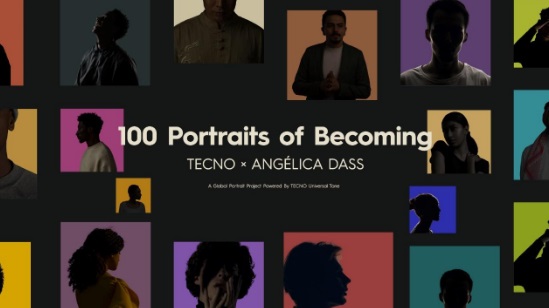
HONG KONG — TECNO and internationally acclaimed visual artist Angélica Dass unveiled the Gallery of “100 Portraits of Becoming,” a two-year global portrait project spanning Kenya, the Philippines, Saudi Arabia, Türkiye and Brazil.
Launching with the first 20 portraits and personal stories from Kenya, the project will ultimately bring together 100 individuals and 100 distinct stories of identity, choice, change and growth. It builds on TECNO’s long-term work in inclusive imaging, where truthful representation begins with ensuring that people across different skin tones can be rendered naturally, fairly and accurately.
The Kenya chapter of this project is now live. As AI increasingly shapes how people are captured, recognized and represented, “100 Portraits of Becoming” extends the conversation beyond inclusive representation of human diversity toward a better understanding of the people’s individuality behind the image.
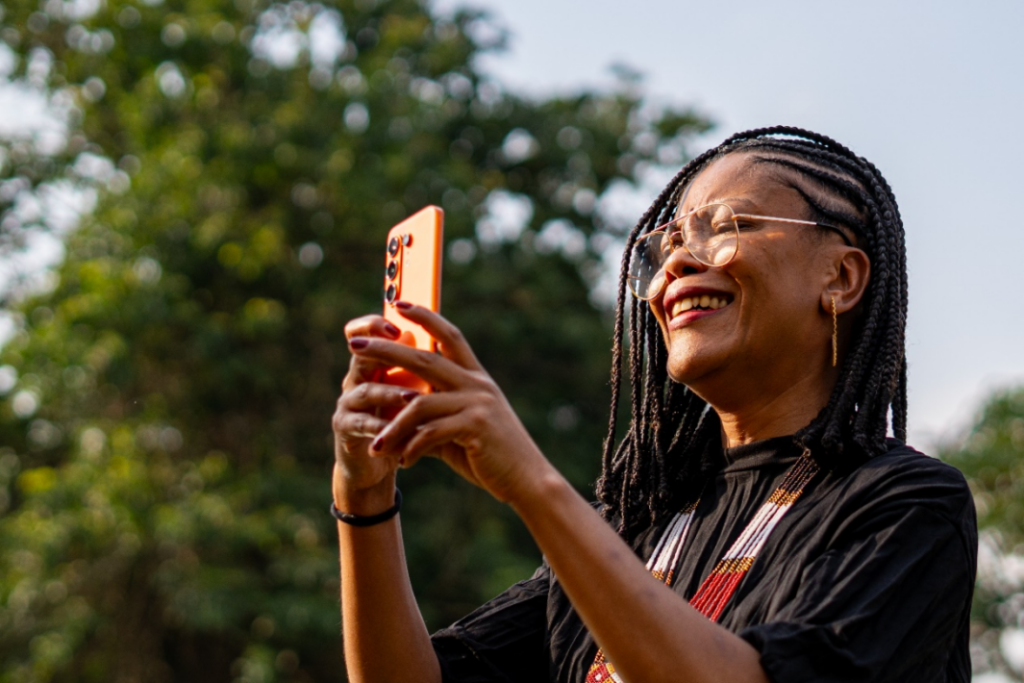
Each participant brings a personal perspective shaped by their own experiences, opening a different way of seeing humanity rather than standing in for a generation, a culture, or a single definition of progress.
A Shared Human-Centered Vision
“100 Portraits of Becoming” grew from a shared belief between TECNO and Dass: both technology and portraiture should begin with respect for the person in front of the lens. Universal Tone was developed around a clear imaging challenge of inclusivity— how to represent people across diverse skin tones more naturally and accurately — but behind that technical work is a broader human value: differences should be represented faithfully rather than flattened into a single standard. That belief closely resonates with Dass’s long-standing practice of questioning labels and inviting viewers to see the individual beyond appearance.
How people are seen shapes how people are understood. As AI becomes increasingly capable of recognizing faces, generating images, and organizing people into categories, the deeper challenge for imaging is to reflect the complexity, individuality, and humanity of the person being seen.
“100 Portraits of Becoming” expands that conversation beyond visual representation, creating space for individual stories and encounters. It is not simply an archive of photographs, but a growing record of human possibilities: people defining themselves beyond inherited labels, social expectations or predetermined categories.
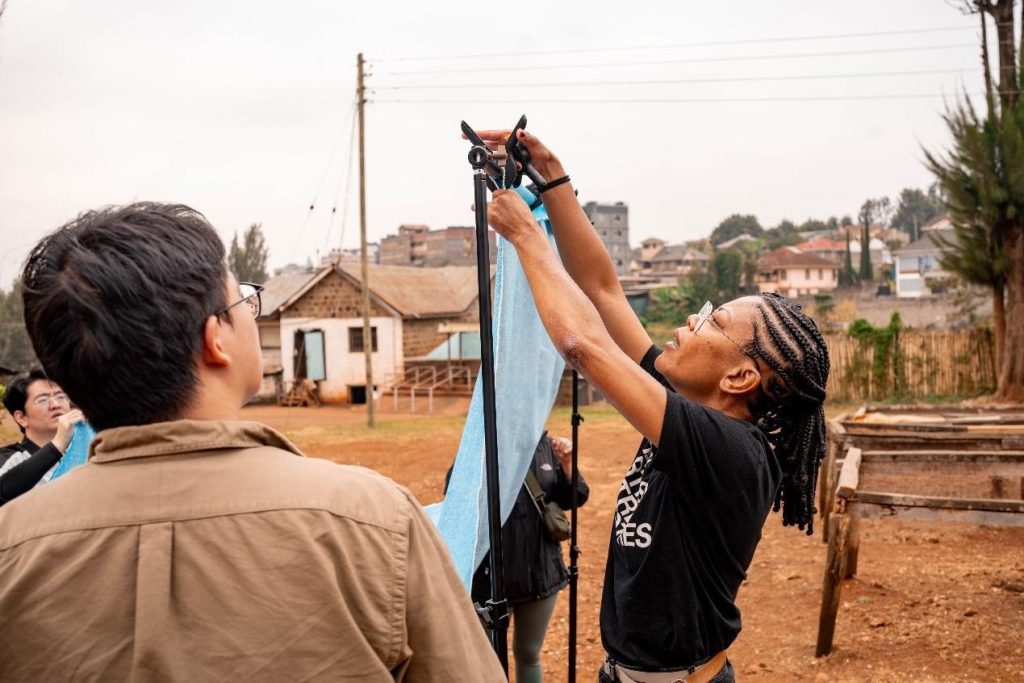
Reflecting on the Kenya chapter, Angélica Dass said, “Kenya showed me that meaningful portraits are never created by technology alone. They begin with trust, with listening, and with the generosity of the people who choose to stand in front of the camera. The camera is simply the tool that allows those encounters to be shared.”
For TECNO, this marks the next step in a long-held belief about imaging: technology should be inclusive and help people be represented accurately and seen more truthfully. “Truthful representation is the foundation of genuine human understanding,” said Jack Guo, General Manager, TECNO. “Every image shapes assumptions – why it matters, who matters, and how people are understood. That makes fair and accurate representation increasingly important in the AI era. But beyond representation lies a bigger question: who is the real person behind the image or the labels put on him or her?”
Kenya Opens the First Chapter
The first chapter of “100 Portraits of Becoming” begins in Kenya, where participants explore what it means to define their own lives. Across the opening 20 stories, participants question ideas that often seem settled — what success looks like, where opportunity comes from, who gets to occupy space, what makes a career meaningful, and ultimately who has the right to define a life.
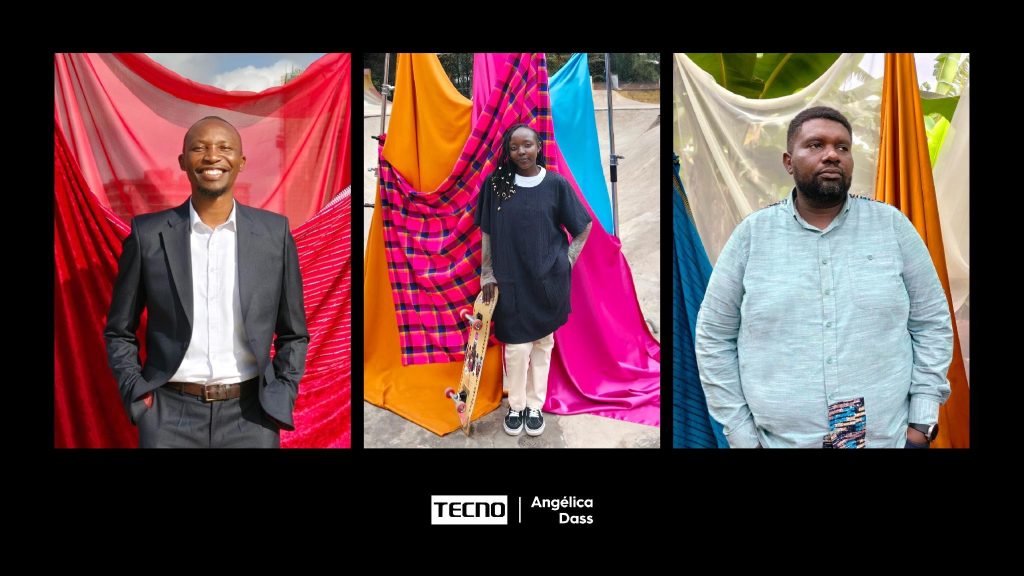
Alex Mutua Muli’s story begins with going back home and creating opportunities for people to stay. Growing up, he watched fruit from his community go to waste because farmers lacked reliable markets. Many young people choose to leave for bigger cities. Instead of leaving to look for opportunities elsewhere, he stayed and co-founded Goshen Farm Exporters, helping connect the local community to larger markets and turning staying into a more viable future.
Alexander Odhiambo approached opportunity from a different place. After a difficult start to his career, he and his friends built a software company from a small Nairobi apartment. What began as creating an opportunity for themselves gradually grew into a business serving African markets and opening new paths for local talent.
Jelimo Cheboi’s story is about creating space. When she took up skateboarding in 2022, she quickly found herself in a scene with little room for women. She went on to co-found GirlSkate Nairobi, growing a WhatsApp group into a community where girls and women could skate, connect, and express themselves more freely.
Alex, Alexander and Jelimo are three of 20 people in the Kenya chapter. Their stories are different, but they share a common instinct: they do not simply accept the definitions handed to them — of where opportunity should be found, what a career should look like, who gets to belong, or what is possible. Some define themselves on their own terms. Some choose a path others might not expect. Some build new ways forward where none existed. Others expand what becomes possible for the people around them.
Together, these stories show what it can mean to define a life on one’s own terms: to decide who you are, choose how you move forward, build what you need, and widen the possibilities for others. In the Kenya chapter, becoming begins with refusing to let the world have the final word on who you can be.
From Kenya to a Global Conversation
Kenya is the first chapter of “100 Portraits of Becoming,” but the project is designed to evolve as it moves across countries. Each location brings its own social context, lived experiences, and questions about identity, expectations and possibility.
In the Philippines, Saudi Arabia, Türkiye and Brazil, TECNO and Dass will continue meeting people whose stories reveal different ways of becoming — how they navigate labels, make choices, create new paths and reshape what feels possible in their own lives and communities.
Rather than applying one definition across cultures, “100 Portraits of Becoming” explores what can be learned by placing distinct individual stories side by side. Through these encounters, TECNO and Dass aim to build a broader conversation about how people want to be seen, understood, and remembered in an increasingly technology-shaped world.
Next Chapter: Beyond Many Labels in the Philippines
Following Kenya, “100 Portraits of Becoming” will continue in the Philippines with “Beyond Many Labels,” featuring 20 individuals, including working solo mothers and people whose lives are closely connected to solo parenthood. Their portraits and stories look beyond societal labels such as “single mother,” “breadwinner” or “strong woman,” revealing self-growth, relationships, ambitions, and everyday choices that those labels can often take away.

The chapter will also explore how participants understand and practice diskarte — the ways they adapt, make choices, and find practical ways forward in work, family, and everyday life.
Looking ahead to the next chapter in the Philippines, Dass said, “Kenya was an extraordinary beginning to this journey. Every encounter reminded me that each place has its own stories, its own rhythms and its own beauty. I’m excited to arrive in the Philippines with the same curiosity, ready to listen, learn and discover the people who will shape the next chapter of ‘100 Portraits of Becoming’.”
One Hundred People, One Hundred Ways to See Humanity
After the Philippines, the journey will continue to Saudi Arabia later this year, followed by Türkiye and Brazil in the coming year, with each chapter adding its own cultural perspective to the project. As the collection grows, each participant will remain distinctly their own: one identity, one story and one life that does not need to stand in for an entire country, generation or community.
By the end of the two-year journey, “100 Portraits of Becoming” will form a global portrait of humanity precisely by refusing to define humanity in only one way: not one answer to what it means to be human, but one hundred ways to see it.