



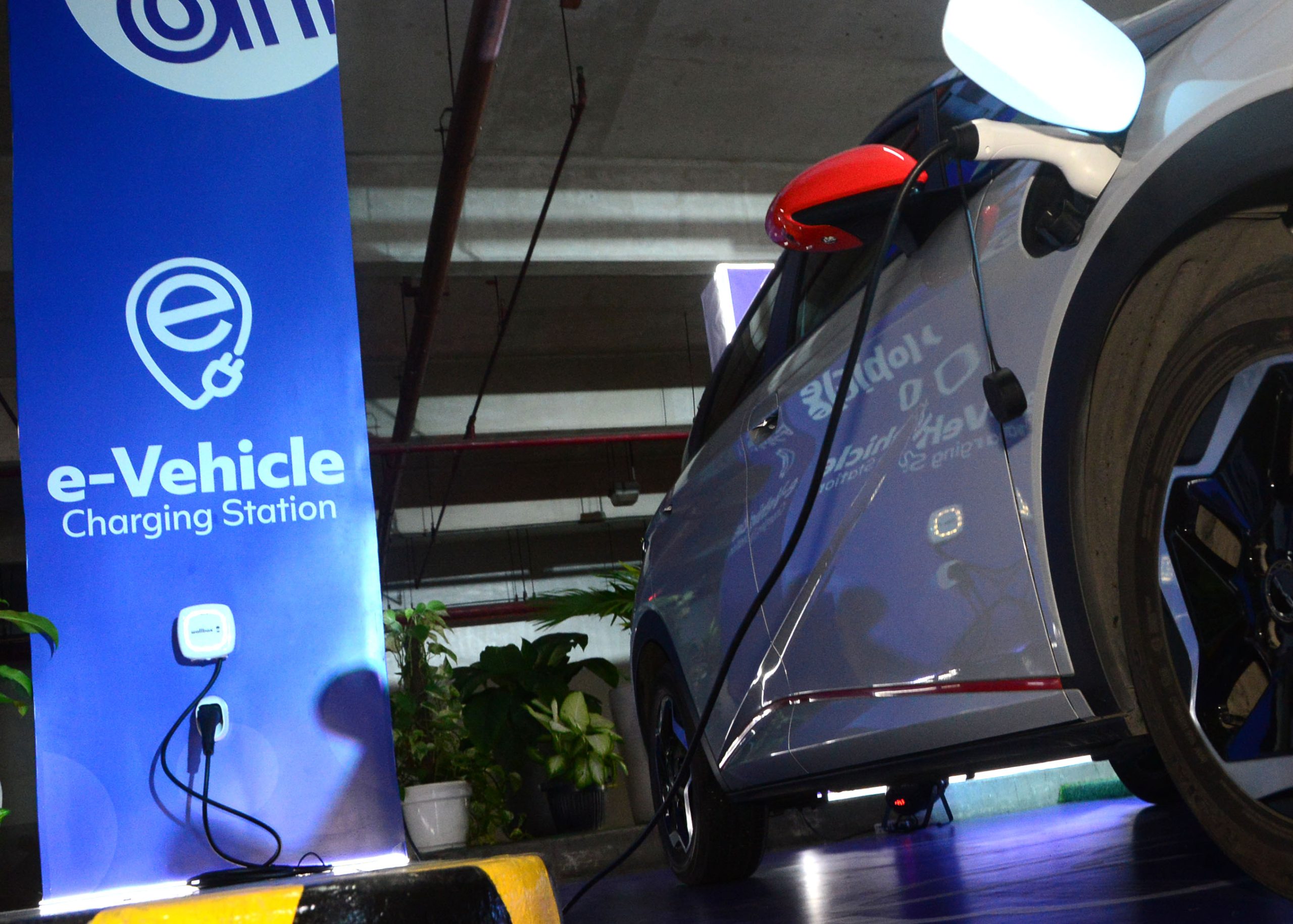
- Lawmakers take next step to reduce fuel dependency
THE 21ST City Council has officially passed the Davao City EV Ordinance on Tuesday, May 12, establishing a comprehensive legal framework to boost the local electric vehicle sector.
For one, the ordinance grants incentives to electric vehicle manufacturers, dealers, users, public conveyance operators, spare parts suppliers, charging stations, and environmentally sound battery disposal and recycling facilities.
The measure is another landmark ordinance for Davao City and the first in the country, aligning with the national Republic Act No. 11697 or Electric Vehicle Industry Development Law and the Davao City Local Incentive Code.
Proponent Councilor Temujin Ocampo said the ordinance outlines specific criteria for businesses to qualify for incentives.
“Eligible business enterprises are entitled to tax holidays for a maximum of six years,” Ocampo told reporters.
The ordinance also aims to simplify the documentation and permitting process through “Ease of doing business” for EV-related businesses.
While certain non-regulatory fees, such as the mayor’s permit, are waived to support these businesses, they still must pay for regulatory fees like building permits and garbage fees.
Users of electric vehicles, on the other hand, can enjoy free parking in designated and city-managed parking areas, citing San Pedro and C.M. Recto streets, for the first three hours.
“The three-hour limit is to ensure the city continues to generate necessary revenue and prevents the abuse of parking spaces,” Ocampo said.
Ocampo added that while the law cannot mandate private entities, the city is encouraging malls and other private businesses to offer similar free parking incentives for EV users.
The councilor confirmed that power utility providers have assured a sufficient energy supply to support the anticipated increase in EV infrastructure with the passage of the ordinance.
The committee had discussed energy requirements with Davao Light and Power Company, which has assured an ample power supply.
In terms of market interest, several major companies, including BYD and VinFast, have already shown interest in investing in charging stations.
For instance, the Vietnamese manufacturer is considering setting up 100 charging stations in the city.
The councilor said the specific investment that businesses may benefit from will have to go through the Investment Board.
In the ordinance, domestic-oriented manufacturing should have a minimum investment/capital of P100 million, at least 20 employees, and be registered with the Board of Investments (BOI) or PEZA.
For an export-oriented manufacturing business to qualify, it must have a minimum paid-up capital of P200 million, a minimum of 25 employees, and a registered BOI or PEZA, with 60% of its products for export.
Distributors or dealers, on the other hand, should have an investment of not less than P10 million with not less than five (70% of the employees must be residents of Davao City).
Finally, charging station operators must have an investment of at least P2 million or a minimum of two charging stations, whichever is higher; the same goes for EV battery recycling and electronic waste repurposing enterprises.

