



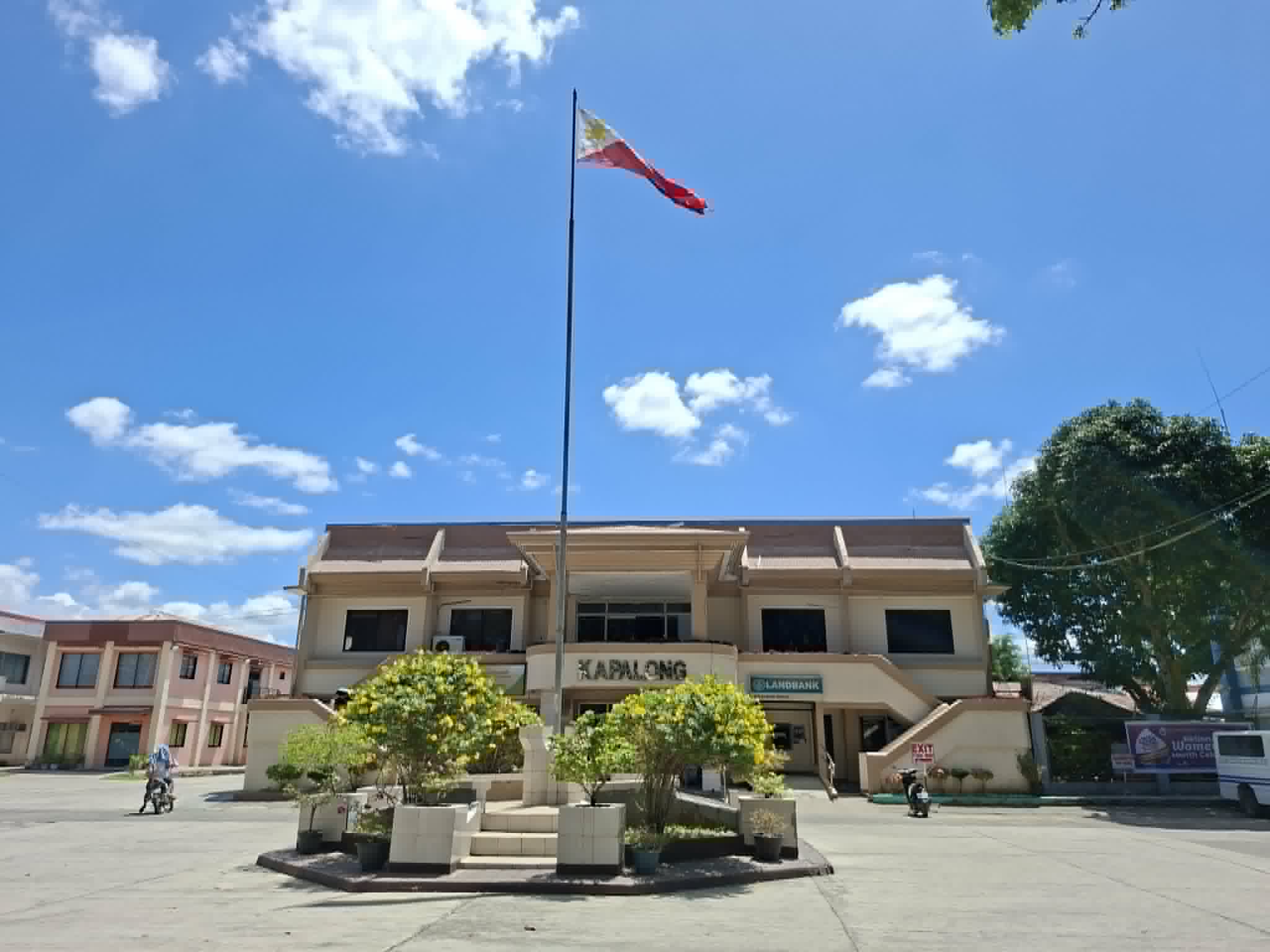
THE GENERATOR roars to life behind Cynthia Castañares’ 7-Eleven store in Barangay Maniki, the business center of Kapalong town in Davao del Norte. It’s not because she wants it to, but because the grid has failed her again. The steady humming of the machine has become a familiar sound here—one that carries the heavy scent of gas and resignation.
For years, this agricultural town has lived under the thumb of unreliable electricity. What should be a basic utility has become a constant source of frustration, financial strain, and even a threat to livelihoods. From small retail shops to appliance stores and even convenience chains, the ripple effects of unpredictable power outages are felt keenly by those who call this town home.
7-Eleven’s constant struggle
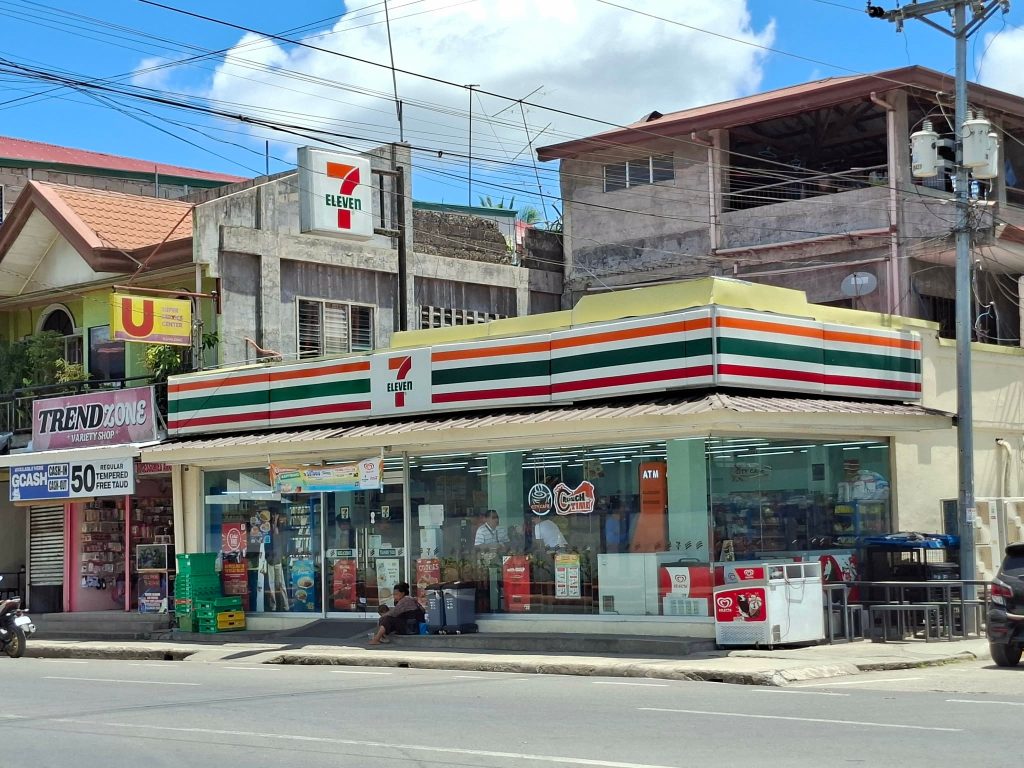
Cynthia, a 27-year-old manager for a 7-Eleven branch in Kapalong, knows the challenges of operating a 24/7 business in an area plagued by power interruptions. Having recently transferred from the Asuncion town branch, she’s observed the immediate impact of prolonged brownouts.
For instance, just recently, a point-of-sale machine broke down, a direct casualty of the unreliable electricity.
“If we receive a memo that the brownout would last eight hours or so, we immediately prepare our genset,” Cynthia explained. However, the operative word here is “assuming they will issue a memo.” The reality is often far less predictable. “Sometimes, there’s a brownout without prior notice. So, we have to wait a while before powering the genset because gas is expensive.”
This financial consideration forces them to endure periods of no power, impacting customer experience and potentially leading to lost sales.
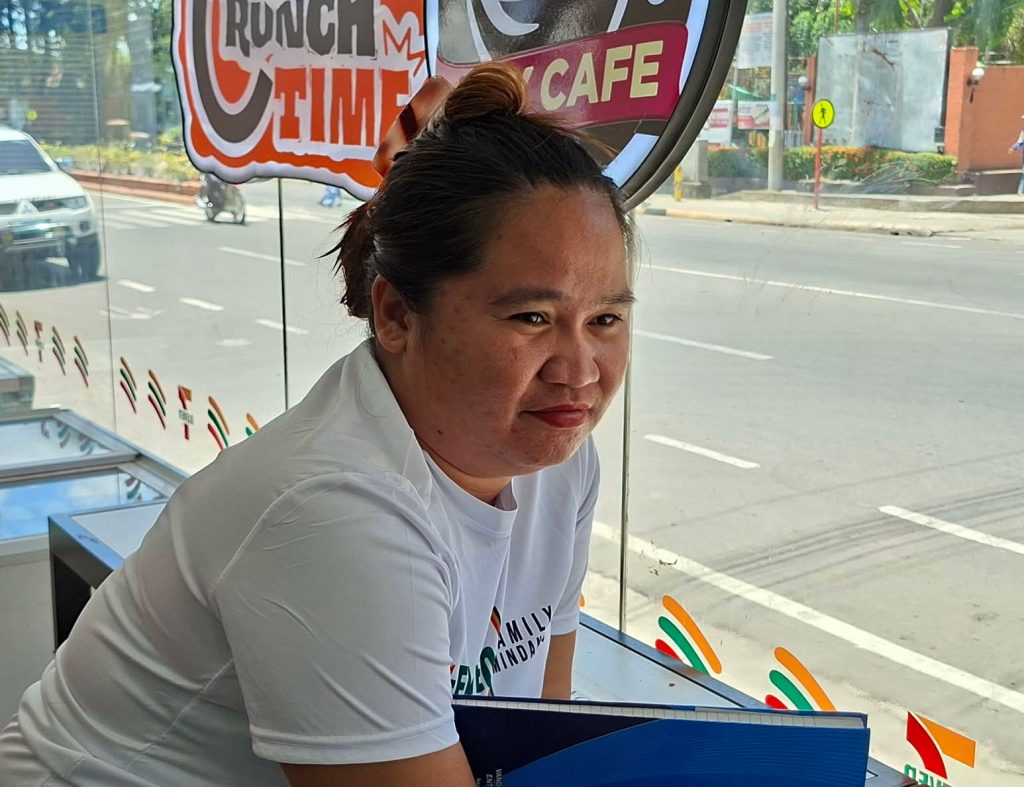
In the middle of a conversation, she pulls out a logbook—the store’s bible during blackouts. Every interruption, every flicker, every hour of darkness gets recorded. It’s not just for operations. It’s for the owner, who needs proof to make sense of the generator’s fuel expenses.
While her current branch in Kapalong’s business center experiences fewer interruptions, Cynthia recounts a different story from her village, Mabantao, just nine kilometers away, where power could be out for a full day, or even two.
“This was last year when I was there for a visit, yet we were paying P2,500 per month,” she said.
‘Kapoy na sige yawyaw’
Xiskha, a small retailer in Kapalong (who agreed to an interview, provided that her real identity is protected), embodies the resilience and frustration of local business owners.
Her story is intertwined with the long-standing and long-settled dispute between the Cooperative Development Authority-registered Davao del Norte Electric Cooperative and the National Electrification Authority-registered Northern Davao Electric Cooperative (Nordeco), battling for control over electricity distribution. This fight left consumers like Xiskha caught in the middle, unsure who to pay and accumulating debt in the process.
When she started her shop, Xiskha discovered a staggering debt of over P50,000 in arrears – a legacy of the previous ownership and the power dispute.
Xiskha had a choice: pack up and leave a prime location with high foot traffic, or absorb the debt. She chose to stay. “I hoped my earnings would be enough to cover it,” she says. That hope, she admits, has been tested more times than she can count.
She now pays between P4,000 and P7,000 monthly for electricity. And while she concedes that Nordeco’s services have improved slightly—perhaps because of the looming threat of competition—the unannounced brownouts haven’t stopped.
Her coping mechanism? Silence. “Ang style nako is i-off nalang nako ang lights. Kapoy na sige yawyaw, wala man gihapon ta mahimo (I’m tired of complaining, nothing changes anyway),” she said.
While Xiskha conceded that Nordeco’s service has seemed to improve recently – she theorizes it’s because they’ve learned about Davao Light’s impending takeover – unannounced brownouts remain a constant nuisance.
But her frustration is far from passive. “I think they just got used to people not complaining because they monopolized our electrical needs,” she says. “Now, if we had a choice, I would definitely transfer to another company.”
She already knows people who have. Some of her customers pay their electric bills through her shop’s GCash terminal—not to Nordeco, but to Davao Light and Power Co., the utility that has quietly begun serving a handful of households and commercial establishments in Kapalong.
“I can see that their monthly bills are very low compared to ours,” she said.
Lines of the screen
Lyza T. Labador, a 24-year-old sales associate at Homelink Appliance, sees the direct consequences of inconsistent power in her daily work. She’s witnessed firsthand how power suddenly shuts off without warning, leaving them to scour Nordeco’s social media for answers. Even then, updates are often delayed, leaving both businesses and residents in the dark, literally and figuratively.
In her less than a year at Homelink, Lyza has lost count of the brownouts. She estimates one to two power interruptions per month, sometimes lasting half a day.
The impact on customers is tangible.
For instance, she’s noticed a worrying trend of newly purchased TV sets being returned for repair due to damaged LCDs. Their technician’s diagnosis: fluctuating power is the primary culprit behind the vertical or horizontal lines on the display screens.
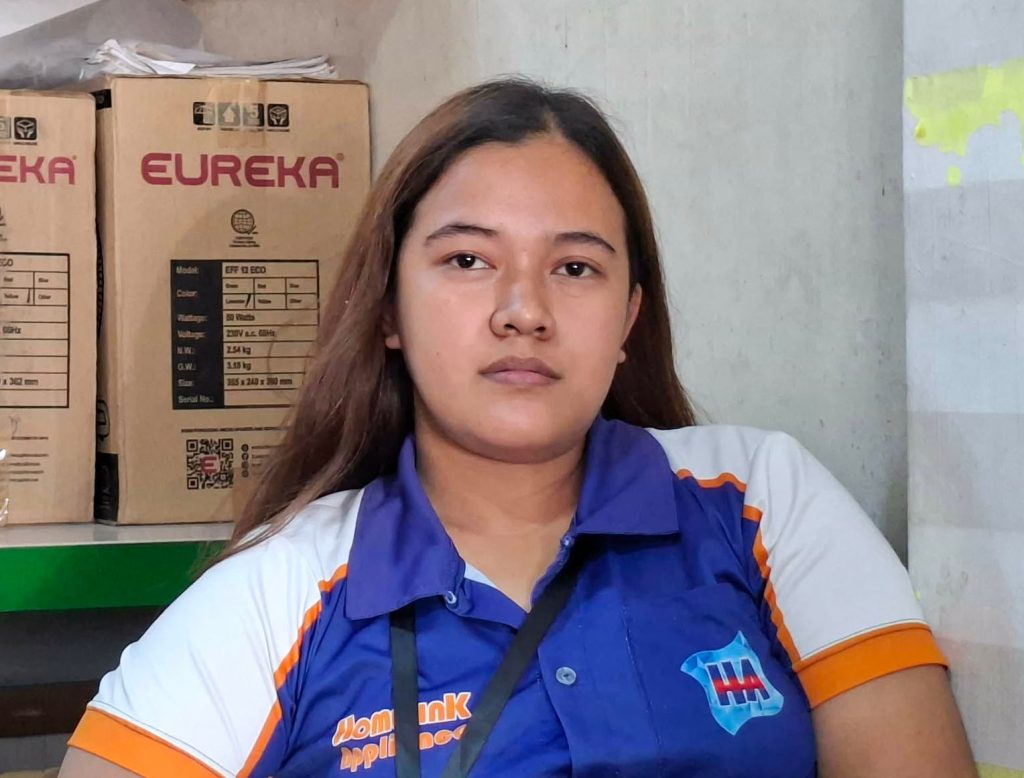
“Once you can already see those lines, it’s very difficult to reset the LCD to its original condition,” Lyza explained. “Mostly, they just buy a new one since the cost of the LCD is 50% of the cost of the TV.”
Lyza also has a personal stake in the power situation. She can directly compare the services of the two utility firms because some of her neighbors in Clementa Subdivision are already connected to Davao Light.
“I remember their houses were well-lit while ours was pitch-black. You can really see the difference between the two providers,” she added.
At home, Lyza’s family got so tired of the inconsistency that they invested P60,000 in a solar panel kit.
“Our monthly bills were very high and very inconsistent. Like one month, we paid P11,000 and the next, we were billed P13,000 when there were no drastic changes in our consumption,” she explained
While the investment proved worthwhile as it brought their monthly bill down to zero, it hasn’t solved everything.
“Water in our subdivision relies on power,” she explained. “So when there’s no light, the pipes also run dry.”
No electricity. No water. And no warning.
A quiet shift
For now, most residents and business owners remain captive to Nordeco. The cooperative has held its ground for decades, and old loyalties—plus regulatory red tape—mean change comes slowly.
What’s unfolding in Kapalong is not yet a revolution. Davao Light’s presence is still small—a few subdivisions, a handful of shops. But it’s enough to show what competition looks like.
Cynthia still meticulously records every brownout in that 7-Eleven logbook. Xiskha still pays her high electricity bills without complaint—publicly, at least. And Lyza would still accept TVs with defective screens for repair.
But all of them are watching and waiting. And if more Kapalong residents do get to choose, they already know which way they’ll go.

