
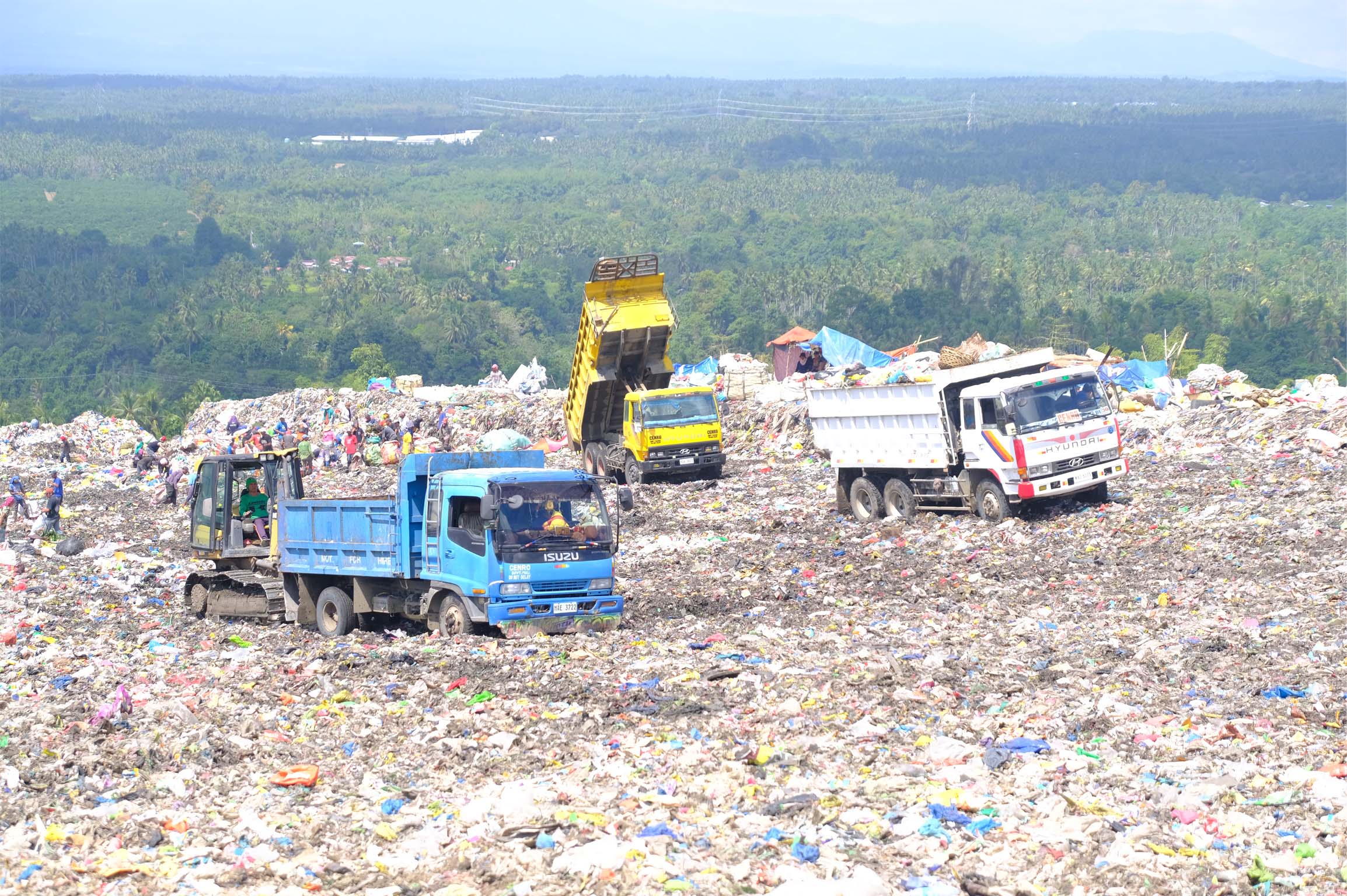
ENVIRONMENTAL group Interfacing Development Interventions for Sustainability (IDIS) has voiced strong opposition to the proposed Davao City Waste-to-Energy (WtE) Incineration project, ahead of the public scoping.
In a statement on Wednesday, April 1, the group said the project is “counter-intuitive” to the city’s established circular economy goals.
The pronouncement comes as the project prepares for a critical public scoping session “to evaluate potential social and environmental impacts”, scheduled for April 15, 2026, at the Barangay Biao Escuela gym.
The public scoping is a mandatory component of the Philippine Environmental Impact Statement (EIS) System, implemented by the project proponent, and overseen by the Department of Environment and Natural Resources (DENR) Environmental Management Bureau XI.
“While this process is intended to assess potential environmental and social impacts and uphold public participation, the IDIS maintains its firm opposition to the project,” the group said.
According to IDIS, the establishment of a WtE facility threatens to undermine ongoing circular economy efforts, including those supported by European Union-Philippines (EU-PH) partnerships that prioritize waste reduction, reuse, and recycling.
The group argues that WtE incineration does the exact opposite of a circular economy, which aims to keep materials in the production loop.
Citing a 2024 study by Hernandez-Romero et al., IDIS pointed out that incineration effectively destroys material quality, particularly plastics, and prevents them from being reused.
“Instead of encouraging waste reduction, recycling, and composting, WtE systems weaken these efforts by competing for the same materials that should be recovered and reused,” the group stressed.
IDIS also highlighted the potential economic fallout for the city’s informal waste sector, the local junkshops, and recycling companies, as this sector relies heavily on sorted municipal solid waste, such as plastic, for their trade and livelihood.
“Rather than supporting better resource management, WtE risks pushing the city into a ‘ take-make-dispose-burn ‘ system, where materials are used once and then destroyed,” it said, noting WTE will affect their current systems, resources, trade, and livelihood.
The current circular economy approach in the city is designed to preserve the capacity of the Sanitary Landfill (SLF) in New Carmen by transforming waste into valuable resources, which eventually will potentially eliminate the need for WtE.
IDIS warns that adopting WtE is a “step backward,” as rather than encouraging waste reduction, recycling, and composting, it weakens these efforts by competing for the same materials that should be recovered and reused.
As the April 15 scoping date approaches, IDIS is calling for a discussion to ensure that the critical concerns of all affected sectors are “properly heard and accommodated.”
Photo: City Government of Davao