


EVERY March, Davao—and the entire Philippines—observes Fire Prevention Month, established under Presidential Proclamation No. 115-A. The timing is not accidental. March marks the height of the dry season, when fire risks increase, and the Bureau of Fire Protection intensifies public awareness campaigns, safety drills, and community outreach.
The message is clear: prevention saves lives.
Yet year after year, fires continue to devastate communities across the city and throughout the country. Awareness campaigns are important, but awareness alone does not stop fires. Enforcement does.
Nowhere is this failure more evident than in densely packed informal settler communities. In many of these areas, the most basic fire safety standards simply do not exist. Buildings stand wall-to-wall with no spacing. There are no firewalls, no fire suppression systems, and often no proper access routes for fire trucks. Escape routes are narrow, overcrowded, or blocked entirely.
These are not just oversights. They are conditions that make disaster inevitable.
Then there is another question that rarely gets asked: the numbers.
When a fire destroys 400 houses, but authorities report 1,500 families affected, the math raises questions. A closer look often reveals rows of boarding houses where beds are rented for as much as ₱3,500 per bed, with two to four beds in a single room. Some of these structures contain as many as ten rooms.
Are these boarding houses registered businesses?
Are they paying taxes to the Bureau of Internal Revenue?
Do they have business permits?
Do they follow fire safety regulations?
Or are they operating entirely outside the system?
If fire laws exist for public safety, then they must apply to everyone. Safety regulations are not optional guidelines—they are protections meant to prevent exactly the tragedies that continue to repeat themselves.
Unfortunately, the pattern remains the same. A fire breaks out. Hundreds or even thousands are displaced. Property is destroyed. Lives are sometimes lost. Aid arrives, the area is rebuilt—and a few years later, it burns again.
The record over the past nine years tells a troubling story:
- November 24, 2017 – Zone 5 & Muslim Village, Sasa: 424 houses destroyed; ₱82.7 million in losses.
- August 6, 2018 – Barangay 76-A, Bucana: 31 houses razed in a densely populated area.
- August 3, 2019 – Barangay 8-A: 29 homes destroyed by a fire sparked by an overheated television.
- September 3, 2020 – Leon Garcia Street: At least 60 houses in an informal settler community burned.
- February 25, 2023 – Barangays 21-C and 22-C (Piapi): More than 1,200 houses lost; 978 families, or nearly 3,000 people, displaced.
- April 7, 2024 – Muslim Village, Barangay 76-A: Over 200 families displaced by two separate fires.
- February 10, 2026 – Sitio Malamboon, Barangay 76-A: Another major residential fire in a known high-risk area.
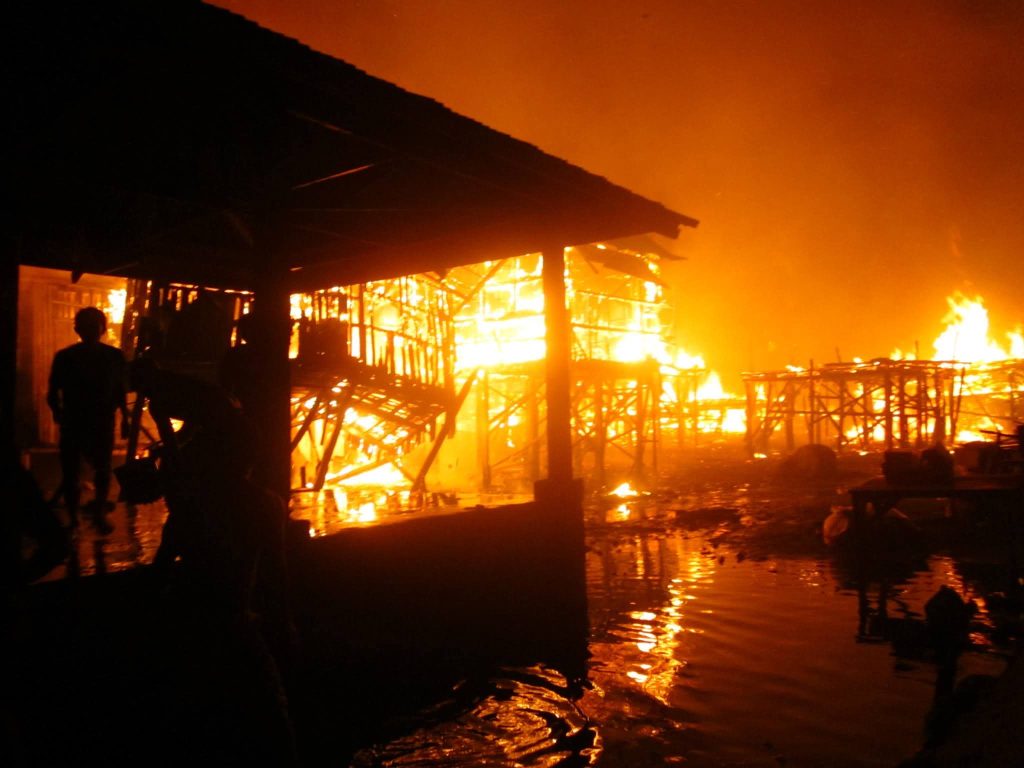
And now, once again, Leon Garcia.
Fire safety laws exist for a simple reason: to protect life. Property can be replaced. Lives cannot.
Lack of enforcement does not just endanger residents—it also places firefighters at extreme risk. Narrow alleys create deadly bottlenecks that slow evacuation and rescue. Illegal parking in tight streets blocks emergency vehicles and delays response times when seconds matter.
Fire Prevention Month reminds us of the dangers of fire. But remembrance and awareness are not enough.
If we truly want prevention, then the laws designed to protect lives must be applied consistently, fairly, and without exception.
Otherwise, next March, we will once again be reminding ourselves of the same lesson—while counting the losses from the next fire.
At some point, we must stop calling these tragedies “unfortunate accidents.” When the same conditions exist, in the same places, year after year, and the same fires return again and again, the problem is no longer bad luck—it is neglect. Fire Prevention Month should not only remind us how dangerous fire can be. It should force us to ask a harder question: how many more homes must burn, and how many more lives must be put at risk, before prevention finally becomes more than just a slogan?