
BY ALEX ALAGON

BY ALEX ALAGON

MANILA, Philippines — Filipino alternative pop-rock band HEY JUNE! kicks off June and celebrates its fifth anniversary with the surprise release of “Kung May Problema Ka,” a heartfelt new single now available on all major streaming platforms.
HEY JUNE! – Kung May Problema Ka
Known for well-loved tracks such as “LASIK”, “Asan Ang Gana Ko,” and “Panahon.” HEY JUNE! has continued to strengthen its presence in the OPM scene with a string of recent releases. Earlier this year, the band announced its highly anticipated sophomore album and subsequently unveiled singles including “Sabihin Mo Lang” and “Pagmamahal,” giving fans a glimpse into their next musical chapter.
Adding to the excitement, the band returns this June with “Kung May Problema Ka,” a powerful pop-rock track that carries a timely message of hope, empathy, and emotional support. Through its uplifting lyrics and dynamic instrumentation, the song encourages listeners to open up about their struggles and seek comfort in the people around them.
At a time when many individuals silently grapple with personal challenges, stress, and uncertainty, “Kung May Problema Ka” serves as a reminder that no one has to carry their burdens alone. The song underscores the importance of communication, friendship, and community—offering reassurance that sharing one’s problems can help lighten the load and bring peace of mind.
The release marks another exciting milestone for the band as it celebrates five years of making music and connecting with listeners through relatable stories and heartfelt songs. Throughout their journey, HEY JUNE! has built a loyal following by blending honest lyricism with infectious melodies and energetic alternative pop-rock soundscapes that resonate with a new generation of OPM fans.
Further solidifying their rising profile in the local music scene, HEY JUNE! was recently selected as part of Spotify RADAR Philippines Class of 2026, joining an esteemed roster of emerging artists recognized for their growing impact and potential to shape the future of Filipino music.

With their sophomore album on the horizon, “Kung May Problema Ka” showcases the band’s continued growth as musicians and songwriters while staying true to the authenticity that has defined their music from the start.
“Kung May Problema Ka” is now available on Spotify, Apple Music, YouTube Music, and all digital streaming platforms worldwide.

TAGUM CITY, Davao del Norte – Most construction delays don’t start on the job site. They start because no one has a clear picture of what’s actually happening there.
That is the problem AIMHI (AI Meets Human Intelligence) was built to solve. Today, the Tagum City-based construction technology startup announces the launch of its Mobile App with Offline Mode — giving contractors, engineers, and project managers a single platform to track project progress, monitor costs, and coordinate teams directly from the field, even without an Internet connection.
The Android version is available beginning June 8, 2026. The iOS version follows within one to two months.
“I have personally seen what happens when construction teams have no single source of clarity — inaccurate estimates, delayed schedules, costs that spiral before anyone notices. We built AIMHI so contractors can see what is happening on their projects while they can still do something about it,” Cherryanne Lee Angoy, AIMHI founder & CEO, said.
The problem behind the product
Philippine construction teams have long worked across disconnected systems — spreadsheets, paper logs, manual reports, and group chats. When project data lives in silos, monitoring becomes reactive. Cost overruns, material leakage, and schedule slippages are discovered late, when margins are already gone.
The challenge is not a lack of data. It is a lack of clarity — and it gets worse on job sites where Internet connectivity is unreliable or unavailable. Standard construction software stops working the moment the signal drops. Work does not.
AIMHI’s mobile app with offline mode is built specifically around this reality. All updates made without connection are saved locally and sync the moment connectivity returns automatically — so no data is lost and no reporting is delayed.
What the app delivers
AIMHI is built around three simple principles — and the mobile app with offline mode brings all three directly to the job site:
See it — Real-time cost vs. estimate tracking across all active projects. Know it — AI flags risks, profit leaks, and delays before they escalate into losses. Act on it — Next-best action guidance — not just dashboards, but decisions.
Construction in the palm of your hand
For contractors and construction teams, the mobile app with offline mode delivers six practical capabilities — each one built around a real pain point:
Broader industry impact
Beyond day-to-day operations, the platform contributes to larger outcomes for the Philippine construction sector:
● Continuity in low-connectivity and remote sites. Offline functionality removes connectivity as a barrier for geographically dispersed projects — from Mindanao infrastructure to provincial builds with weak signal.
● Lower barriers to going digital. Hands-on onboarding and user education help construction teams transition from manual processes without disruption. ● Support for national infrastructure goals. Earlier issue detection and reduced project delays improve delivery across both private and public projects.
● Advancing locally built construction technology. AIMHI is proudly Philippine-built — AI-enabled tools designed for local construction realities.
“Construction operations become chaotic when there is no single source of clarity for teams, data, and decisions. This app puts that clarity in the palm of your hand — kahit mahina ang signal,” said Angoy.
Growing demand, proven momentum
AIMHI enters this launch with strong commercial traction. In 2025, the company grew its customer base 2.5 times year-over-year, cut its sales cycle from six months to two weeks, and recorded a 600 percent increase in qualified pipeline.
The platform serves contractors across Visayas, Mindanao, and the National Capital Region, with a focus on mid-size regional contractors managing PHP 500,000 to PHP 100 million contracts across vertical construction, horizontal infrastructure, residential, and government projects.
Launch roadshow: davao to manila
AIMHI is bringing the launch directly to builders, press, and partners across Mindanao and NCR through a four-stop roadshow:
May 29 — SNEAK PEEK Founder’s Forum — Davao City First public preview. Cherryanne Lee Angoy presents as featured speaker and exhibitor.
June 1–13 — MEDIA Radio Guesting with Patmei · Presscon at Habi at Kape Pre-launch media appearances across Tagum and Davao City.
Week of June 8 — SOFT LAUNCH Tagum City Business & Incentive Center Official soft launch with live demos and onsite engagement.
June 16 — CULMINATING EVENT Hi-Fi Incubation Hub, De La Salle College of St. Benilde — NCR Grand culminating event at one of the Philippines’ premier innovation hubs.
Institutional backing and recognition
AIMHI has received grants from the Department of Science and Technology PCIEERD ($65,000), the Asian Development Bank ($85,000 through the Davao Digital Builders Network), Accenture, and the UP Engineering Research and Development Foundation.
The company was selected for the UP Diliman UPSCALE Innovation Hub in September 2023 and won the E3 Chairman Recognition Award in Kuala Lumpur in December 2023. AIMHI is backed by angel investors from the United States, Australia, and the United Kingdom.
AIMHI (AI Meets Human Intelligence) is a Philippine construction technology company that provides real-time clarity on project costs, risks, and progress — helping contractors make better decisions before problems become losses. Founded by women with direct construction and technology experience, AIMHI offices are in Makati and Tagum City and serve contractors across Visayas, Mindanao, and the National Capital Region.

QUEZON CITY — Hazardous chemicals like lead, which harm developing brains, must not be used in children’s products, including backpacks and other school supplies.
The toxics watchdog group EcoWaste Coalition reiterated the importance of keeping lead and other harmful substances out of children’s products as the academic year 2026-2027 commences on June 8.
“As no amount of lead exposure is without risk, manufacturers and regulators must eliminate all avoidable sources of lead exposure in products marketed for children’s use so they can grow up healthy and safe,” said Aileen Lucero, national coordinator, EcoWaste Coalition. “Labeling information on chemicals in children’s products must also be made mandatory to guide consumers in making sound choices. Consumers have the right to know what they are spending on and be protected against toxic exposure.”
“Children face a higher risk from toxic chemicals because they breathe, eat, and drink more relative to their body size than adults do; they frequently put things in their mouths, and their bodies and immune systems are still developing. Their neurological systems are especially vulnerable during these critical windows of growth — damage done early can have lifelong consequences,” said environmental health specialist Dr. Geminn Louis Apostol of the Ateneo Center for Research and Innovation (ACRI). “Because of their inherent vulnerability, children require special protection against lead, heavy metals, and other harmful chemicals found in their homes, schools, and communities.”
“Protecting children from toxic exposure is not just a health issue — it is a matter of justice and our collective responsibility to future generations,” Apostol emphasized.
To hammer its message home, the EcoWaste Coalition revealed that it has detected potential lead exposure risks in some popular back-to-school essentials it recently purchased from retailers in Caloocan, Manila, and Quezon Cities as part of its ongoing advocacy to uphold children’s right to a healthy, toxics-free environment.
A total of 69 products were procured and screened for heavy metals using an X-Ray Fluorescence (XRF) analyzer, including 46 backpacks, 11 lunch bags, 6 stainless steel tumblers, and 6 polyvinyl chloride (PVC) plastic raincoats.
Backpacks. Out of 46 backpacks, 36 were identified as posing lead exposure risks because they contained lead levels as high as 30,320 parts per million (ppm), way above legal limits. Specifically, lead levels varying from 110 to 3,026 ppm were detected on the colored fabric or PVC plastic design of 22 backpacks. Also, the zipper sliders and pull tabs of 17 backpacks contained lead ranging from 12,040 to 30,320 ppm. Only one of these backpacks provided labeling information, but in foreign characters; the rest were totally unlabelled.
Lunch bags. Of the 11 lunch bags, 7 were found to contain lead up to 25,670 ppm. Lead levels between 238 and 509 ppm were detected on the colored fabric or PVC plastic design of 3 lunch bags. Zipper sliders and pull tabs of 6 lunch bags also contained 13,360 to 25,670 ppm of lead. Nine of these lunch bags had zero labeling information.
Tumblers. Of the 6 stainless steel tumblers, one was found coated with lead-containing green paint, measured at 64,620 ppm. While no lead was detected in the exterior paint of the other tumblers, lead levels ranging from 37,530 to over 100,000 ppm were found in the solder dot at the base of 5 tumblers. This area poses a potential exposure risk if the covering sticker is peeled off. None of the six tumblers carried basic labeling information.
Philippine and US laws limit lead in paints to a maximum of 90 ppm, while US law prohibits accessible components of children’s products, such as zipper teeth, pulls, and sliders, from containing more than 100 ppm of lead.
Raincoats. Additionally, toxic cadmium up to 205 ppm was detected in all six PVC plastic raincoats. Cadmium up to 487 ppm was also detected in 13 backpacks, such as those made of clear PVC plastic.
European laws limit cadmium in plastic to no greater than 100 ppm.
To protect children’s health and safety, the EcoWaste Coalition urged the authorities to strictly regulate and monitor products marketed for children’s use, noting that strong and enforced regulations can help prevent lifelong health problems. The group called on policy makers and implementers to:
– Review, strengthen, and expand current regulations on lead and other harmful substances in children’s products.
– Fix policy gaps, such as banning lead in accessible parts of any children’s products.
– Prohibit use of PVC plastic in children’s products to prevent exposure to toxic chemical additives, particularly cadmium and phthalates.
– Require mandatory labeling information for all children’s products, including chemical composition and hazard warnings.
“As classes begin, we hope our children step into healthy, safe, and toxics-free spaces in school and at home where they can truly develop and flourish,” the EcoWaste Coalition concluded.
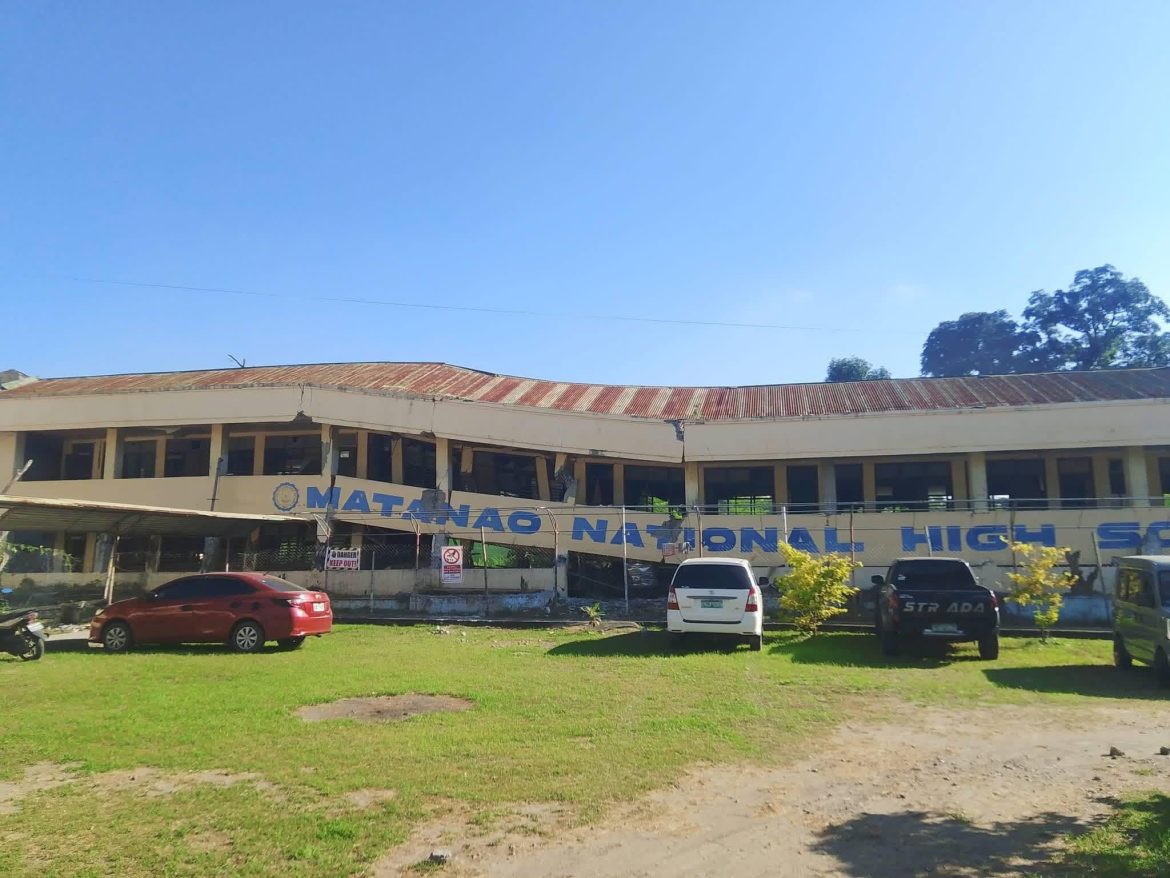
THE DEPARTMENT of Education (DepEd) XI is prioritizing structural safety over a hasty return to classrooms, declaring that it “will not gamble the lives” of the region’s estimated 1.5 million learners following the massive magnitude 7.8 earthquake that shook Mindanao.
In an exclusive interview with TIMES, DepEd XI spokesperson Jenielito Atillo revealed that while there are currently no verified reports of active school buildings being destroyed, government engineers are carrying out rapid structural assessments.
Atillo told the TIMES on Tuesday, June 9, that classes remain suspended across the region while inspections are underway.
The Matanao NHS viral video
Addressing a viral social media video showing a building collapse at Matanao National High School in Davao del Sur, Atillo clarified that the structure was not an active facility.
“I want to clarify that the part of the building that collapsed is not part of an active facility,” Atillo stated. “It is a very old building that was already condemned because it was heavily dilapidated and had been compromised by earthquakes in previous years.”
He added that the structure had been strictly cordoned off long before it finally gave way during Monday’s intense shaking.
Student safety and localized suspensions
Regarding casualties within school grounds during the initial tremor, Atillo confirmed that no major injuries were reported.
“There are no injuries recorded among students. While we recorded some who lost consciousness, they were managed well because every school has Disaster Risk Reduction and Management (DRRM) personnel headed by teachers and students. We also saw an immediate response from barangay officials who quickly deployed their rescue teams,” Atillo said.
“We do not consider it a major crisis because the response for our children was immediate and swift,” he added.
DepEd XI comprises 11 schools division offices spanning from Davao Occidental to Davao Oriental.
Atillo emphasized that localized divisions and LGUs are in the best position to assess immediate ground effects and declare class suspensions under existing policies like Executive Order No. 66.
“The LGUs have the immediate and swift capability to determine the current situation in their areas because they have the human resources on the ground,” Atillo explained. “We work under that arrangement because if the declaration comes solely from the regional office, it might not be timely. It is more appropriate to get data from the ground first.”
New school calendar unaffected
The tremor struck on the opening day of School Year 2026–2027, which marks the implementation of the country’s new three-term school calendar. However, Atillo assured the public that the core learning timeline has not been severely set back.
“This week is an orientation week—a time to organize classes and determine who will be included in the school feeding program. Formal lecture classes are scheduled to begin next week,” Atillo explained.
Despite the temporary suspension of physical lectures, Atillo reminded parents and teachers that student attendance tracking officially commenced on Monday.
DepEd XI advises all school communities to stay tuned to their respective LGUs for official announcements regarding when it is safe to resume on-campus activities.
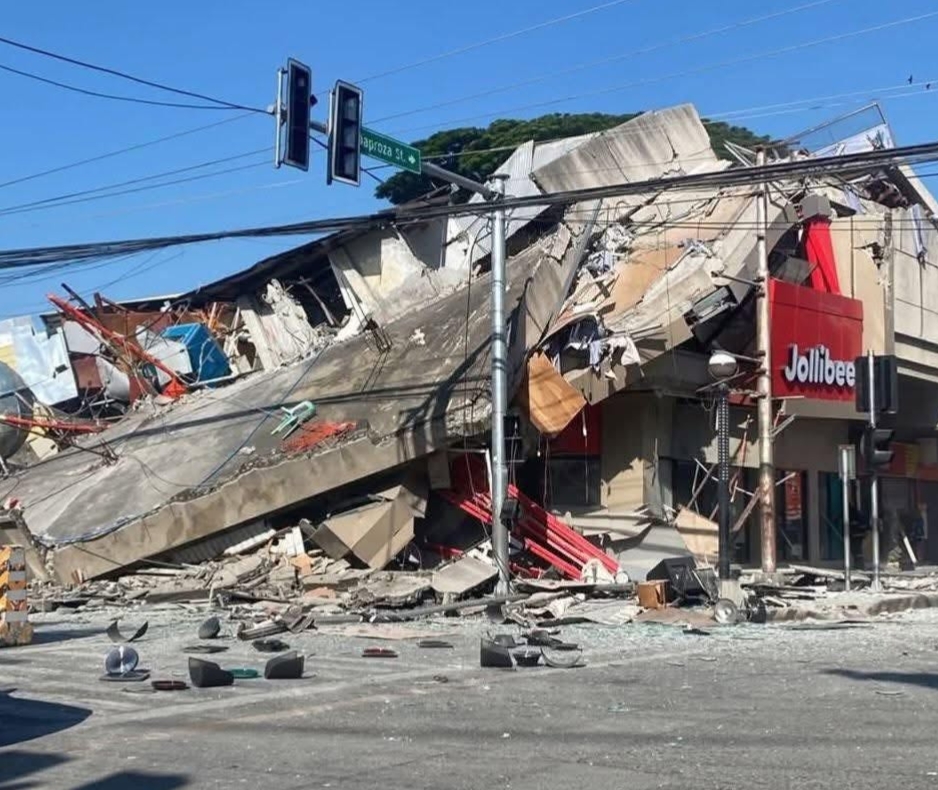
AT LEAST four people have been confirmed dead, and 23 others injured in the Davao Region following the devastating magnitude 7.8 earthquake that struck offshore of Maasim, Sarangani, local disaster officials reported Tuesday morning.
The Regional Disaster Risk Reduction and Management Council (RDRRMC) XI placed its Emergency Operations Center on “Red Alert” as of 9 a.m. on June 9, 2026, mobilizing rapid emergency responses, deployment of air assets for damage assessment, and immediate relief distribution.
Over 18,000 individuals displaced
According to the latest situation report from RDRRMC XI, the powerful tectonic tremor has directly affected 42 barangays, impacting 8,322 families or a total of 18,384 individuals across the region.
Disaster agencies have activated 14 evacuation centers, which are currently sheltering 1,544 families (5,447 individuals).
An additional 35 displaced individuals are reportedly staying outside official evacuation centers with relatives or in open spaces.
Government validation alongside local social welfare offices remains ongoing.
Infrastructure crumples; ports sustained damage
While the overall assessment notes that vital lifelines remain functionally operational, local infrastructure took a visible hit.
A total of 98 houses were reported damaged—12 of which were destroyed, while 86 sustained partial damage.
Initial infrastructure damage is valued at ₱500,000, spanning six locations in Davao City, two in Davao del Sur, and four in Davao Occidental.
Commercial and residential buildings across Davao City and Davao Occidental have also shown varied structural cracks.
In terms of logistical networks, officials recorded disruptions across 10 road sections and two bridges. While airports continue normal operations, sea travel faces localized hiccups as Mabila and Balangonan ports sustained verified structural damage.
Power interruptions were also flagged across six affected areas.
Widespread class suspensions and government response
To prioritize public safety and clear the way for structural integrity inspections, localized work and classes across all levels have been suspended in 49 Local Government Units (LGUs) across the region.
A total of ₱2,041,774.57 in humanitarian aid has already been disbursed to families.
The Department of Social Welfare and Development (DSWD) XI spearheads the relief push with ₱1.47 million worth of food and non-food items, complemented by ₱565,256.57 from the Office of Civil Defense (OCD) XI.
To counter potential communication blackouts in severely hit areas, response clusters have successfully deployed two Starlink satellite internet units to the Provincial DRRMC Emergency Operations Center, keeping critical field command lines open.
Local disaster offices continue to monitor coastal and high-risk zones for aftershocks, urging the public to remain vigilant and rely solely on official government channels for safety advisories.
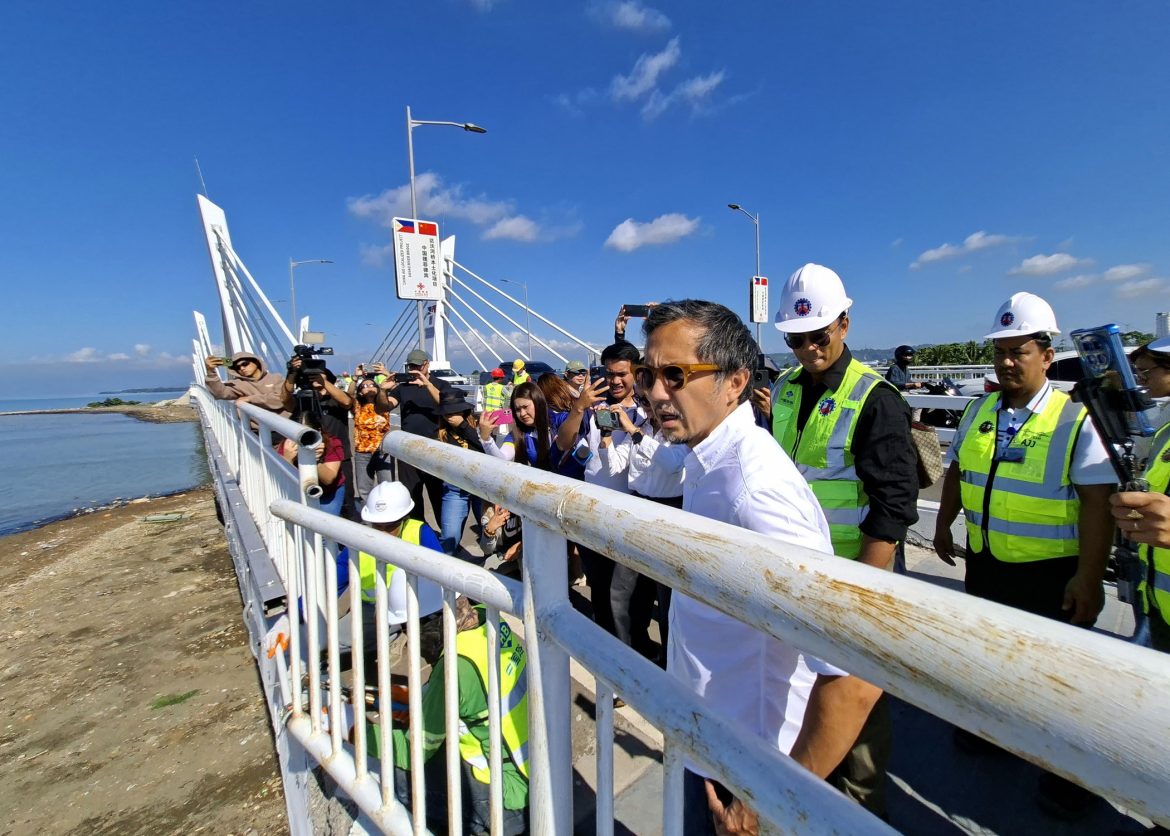
DPWH Secretary Vince Dizon assured the public on Tuesday morning, June 9, that the Bucana Bridge in Davao City remains safe and open to motorists following the powerful magnitude 7.8 earthquake that struck Mindanao on Monday.
During an inspection, Dizon clarified that engineers and contractors found only minor, non-structural damage to the bridge’s expansion joints and railings, which will be repaired within three to five days.
“Minor damage on Bucana Bridge—our engineers and the contractor assure us. It’s very minor, so we can still pass through the bridge. So, it’s very safe. They’ve checked the bottom. There’s just a little problem with the expansion joint, but it will be finished within three to five days,” Dizon told reporters.
“There are only non-structural cements that have given way a little bit but are being repaired. But the main structure that makes up the bridge is intact; there are no cracks,” he added.
Inspection of DPWH-XI and contractors
Department of Public Works and Highways (DPWH) Secretary Vince Dizon personally visited this morning, June 9, 2026, to check the general condition of the bridge after the strong earthquake.
Joining Dizon were DPWH-XI officials, including spokesperson Dean Ortiz, representatives from the China-Aid Localized Project for the Davao River Bridge, and technical experts of the China Road and Bridge Corporation.
The secretary reviewed the ongoing assessment and structural repair works in the area to ensure the complete safety of motorists who pass through that crucial route.
On Monday, authorities opened the Bucana Bridge for light vehicles starting at 1 pm, while the trucks and other heavy vehicles are being diverted to alternative routes while waiting for the final clearing from the engineers.
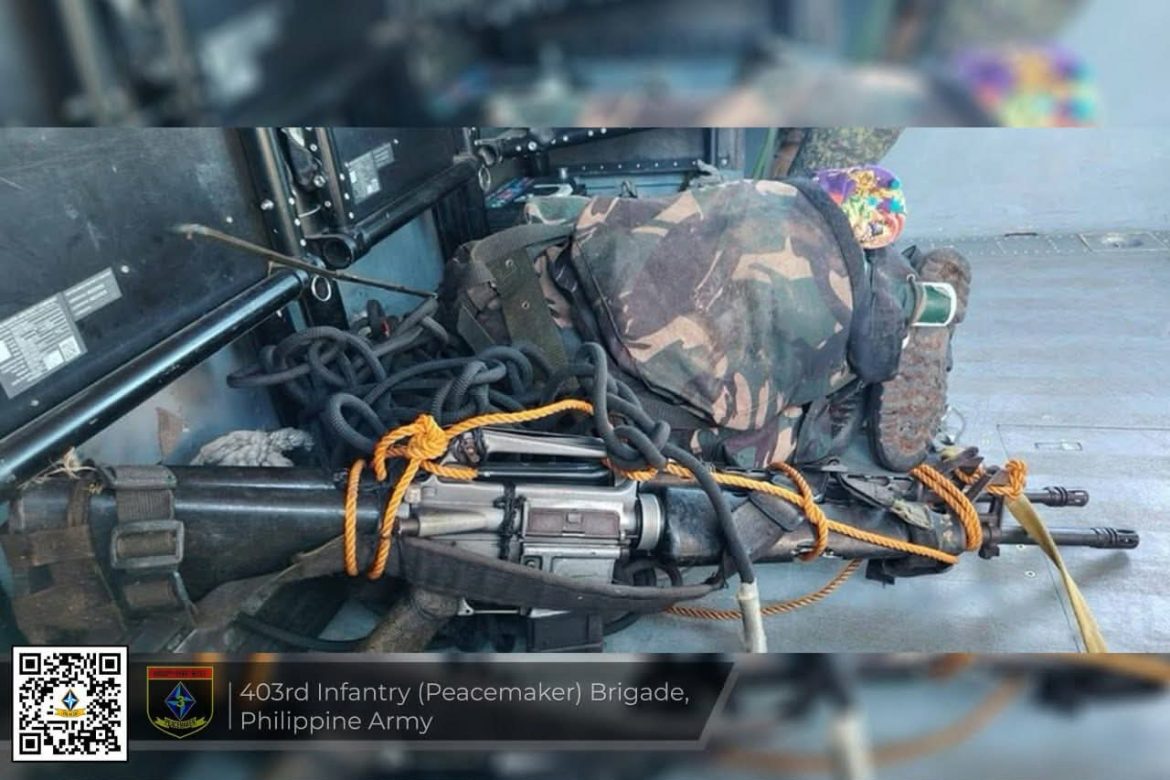
GOVERNMENT troops seized high-powered firearms and assorted war materiel following a fierce firefight against Communist Terrorist Group (CTG) members in Sitio Mahawan, Barangay Busdi, Malaybalay City, Bukidnon.
Elements of the 403rd Infantry Brigade, under the 4th Infantry Division (4ID), said the rebels retreated after exchanging fire for 20 minutes.
Responding clearing teams recovered two M16A1 rifles, high-capacity magazines, and various subversive documents of operational significance.
Brigadier General Seigfred C. Tubalado, commander of the 403rd Infantry Brigade, praised the swift tactical execution of the troops and urged the remaining insurgents to lay down their weapons before they are completely neutralized.
“We once again extend our appeal to you, not as adversaries, but as fellow Filipinos,” Tubalado said. “True courage is not measured by the bearing of arms, but by the willingness to embrace peace and unity. Do not squander your lives on a futile cause and a distorted ideology. There remains a lawful path through surrender.”
Major General Marion T. Angcao, commander of the 4ID, reiterated that the military will not let up on its focused operations across Northern Mindanao and the Caraga Regions.
He pressed the remaining fighters to avail themselves of the government’s Enhanced Comprehensive Local Integration Program (E-CLIP).
“The 4th Infantry Division remains steadfast in its mission to protect the people and neutralize all armed threats,” Angcao said. “We will continue to intensify our focused military operations to ensure lasting peace and stability.”

THE MOTHER of the late Rene Baterbonia, Davao Regional Athletic Association (DAVRAA) Eagles’ most valuable player, revealed they were not briefed on the type of training that Ateneo de Manila University players underwent in Aurora.
In a video posted on Facebook on Tuesday, Rovelyn Baterbonia told Agusan del Sur Santi Barriga Cane Jr. that she would not have allowed Rene to go if she had known.
“Wala mi gi orient nga pag moanhi imong anak naa mi training ing-ana. Kung gipasabot lang ko nila nga naa na di ko mosugot, bahalag magkalisod mi di nako siya iadto didto,” she said.
Rene Clert Beterbonia, 19, and teammate Divine Adili, 21, reportedly drowned during a team-building activity of the ADMU Blue Eagles team in Dipaculao, Aurora.
ADMU confirmed their passing through a statement on its Facebook page on Monday, noting the entire Ateneo community mourns the loss of Rene and Divine.
The university said it is in communication with the families of the players to provide support.
“The university extends its heartfelt condolences to their families, friends, teammates, coaches, and loved ones. We ask the community to keep them in their prayers during the most difficult time,” ADMU said in its statement.
Rovelyn, along with Rene’s brother and father, flew to Manila on Tuesday morning. In an interview with national media, Rovelyn called for justice for his son, stressing that training on the beach with weights is not necessary as her son signed up for basketball and not as a swimmer.
In her Facebook post, Rovelyn shared a video clip of Mike Nieto, a former Ateneo Blue Eagle, who revealed his boot camp experience as part of the team building.
Nieto shared they were brought to a hidden resort and underwent military-type training for a week, including waking up at 3 a.m. to a loud siren.
“Bigla pong may alarm ng 3 a.m. tapos po magla-lungs kami sa buhangin tapos lalangoy din po kami, tapos siyempre iba niyo pong kasama hindi naman po marunong lumangoy, hindi niyo po pwedeng iwan,” he said.
The episode was posted on December 9, 2025, and has resurfaced on Facebook.
Rene was able to bring home a silver medal for the DAVRAA Eagles during the Palarong Pambansa 2026, held in his hometown, Agusan del Sur, last month.

PLDT and Smart have immediately mobilized field and operations teams to assess network facilities and restore connectivity services in areas affected by the recent earthquake that struck parts of Mindanao.
Among the hardest-hit areas are General Santos City and several municipalities in South Cotabato. Initial assessments indicate that the majority of PLDT and Smart network facilities remain stable and operational. Service interruptions have primarily been linked to commercial power outages affecting certain sites.
To support emergency response efforts and ensure continuous communications, PLDT will deploy Starlink satellite broadband services to critical locations and areas identified by local government units as requiring backup connectivity.
“Safety remains our foremost priority as our teams conduct assessments and restoration activities on the ground. At the same time, we recognize the vital role connectivity plays during emergencies and are working tirelessly to keep communities connected,” PLDT Chief Operating Officer and Chief Technology Officer Menardo “Butch” G. Jimenez, Jr.
PLDT and Smart continue to coordinate closely with local authorities and disaster response agencies as recovery efforts progress.