

BY ALEX ALAGON

BY ALEX ALAGON
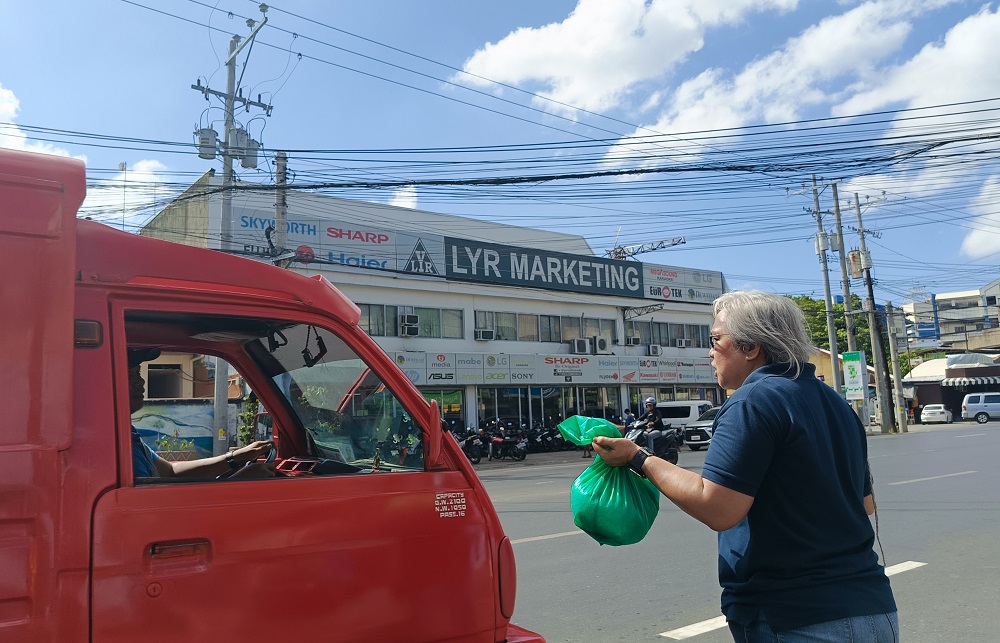
THE MATINA Community Pantry and Konsensya Dabaw set up a relief initiative, “Kusina sa Katawhan Hinabang alang sa mga Drayber,” on Monday, April 6, to provide aid to the transport sector heavily hit by rising fuel prices.
The group, which also relies on donations, distributed rice packs (three kilos each) to a total of 251 jeepney, taxi, and tricycle drivers outside the CVA Building along J.P. Laurel Avenue.
Mags Maglana, Konsyensya Dabaw co-convenor, said the program follows a philosophy of mutual aid, encouraging participants to contribute what they can and take only what they require.
“Importante nga karong mga nanginahangaln karon mahatagan nato sila og hinabang, ang prinsipyo namo mao man sad ni prinsipyo sa ubang community pantries,” Maglana said in an interview.
Maglana acknowledged the program offers temporary relief and emphasized the need for a systematic solution to address the fuel crisis.
“Kasabot mi nga isa lang ni ka hinanaling solusyon sa problema nato karon kay naa man gyud krisis naninahangalan og mas sistematikong tubag gikan sa gobyerno para gyud kining presyo sa krudo,” Maglana said.
She challenged big corporations in the city to extend their corporate social responsibility to the transport sector, among the most vulnerable affected by the rising fuel prices.
Maria Loreto Lopez, Matina Community Pantry co-founder, said the initiative stemmed from the interview with drivers who expressed their immediate need for rice.
Lopez reported that drivers usually bring home P600-P1000 before the fuel price skyrockets, but now, it only leaves them P250-P300 for the whole 16-hour trip.
“Gusto kasi nila rice para may mauwi talaga sila sa kanilang bahay, kasi wala na silang mauwi,” Lopez said.
She emphasized that the initiative to provide boiled eggs and rice cakes is to temporarily alleviate the hunger of drivers who ply their routes early, as some reported having skipped meals to prioritize trips.
Lopez said another round of distribution is to be set, dependent on the donations they receive, but a community cookout through Art Relief Mobile Kitchen will provide cooked meals to drivers on Tuesday, April 7, for Quirino route drivers.
On April 1, Konsyensya Dabaw also provided 62 packs of rice for Youth Advocates for Pro-People Transportation (YAPPT) Network which launched the pantry on April 1.

MANILA, PHILIPPINES — Love doesn’t always arrive the way we expect it to—but when it does, it stays. Rising OPM act HEY JUNE! leans into this truth with their latest single, “Pagmamahal,” a track that captures the quiet, familiar, and deeply Filipino ways we experience love today.
Instead of a traditional launch, the group brought the song straight to the streets—literally. What started as a simple bike ride around Intramuros turned into an intimate fan moment, complete with an exclusive first listen and spontaneous connections. It wasn’t grand or overly staged, and that’s exactly the point. “Pagmamahal” lives in those small, shared experiences—the kind that feel real, fleeting, and unforgettable all at once.
At its core, the single moves beyond the usual love song formula. While it echoes the kilig of young romance, it also reflects something deeper: love as a constant in a world that rarely slows down. Whether it’s for family, friends, or someone special, “Pagmamahal” reminds listeners that connection—no matter how simple—still matters.
The release is supported by a full visual rollout, including a performance-driven visualizer and an animated lyric video that mirrors the song’s nostalgic yet modern tone. Together, they paint a picture of what it feels like to grow up, fall in love, and find meaning in everyday life as a Filipino today.
With “Pagmamahal,” HEY JUNE! continues to build their identity in the OPM scene—championing authenticity, storytelling, and real-life fan connection. More than just a release, it marks another step in strengthening their bond with a growing community that sees their own stories reflected in the music.
“Pagmamahal ang kailangan mo lang.”
At minsan, sapat na ‘yon.
Listen to “Pagmamahal” here:
https://heyjune.Ink.to/Pagmamahal
Watch the animated lyric video:
https://youtu.be/qog5vZcZ-lg?si=X4D1da5m_19PvmSa
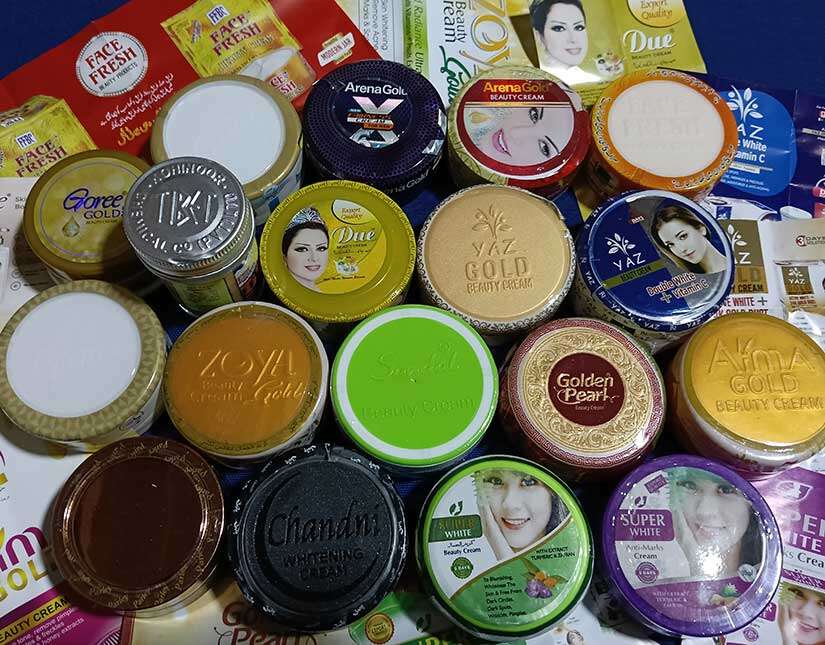
QUEZON CITY — In conjunction with World Health Day on April 7, the toxics watchdog group EcoWaste Coalition took the Government of Pakistan to task for its apparent failure to enforce the global ban on mercury-added cosmetics.
The Minamata Convention on Mercury, ratified by Pakistan and the Philippines in 2020, set a 2020 phase-out deadline for the manufacture, export, and import of mercury-added cosmetics, such as skin-lightening products. In 2023, the phase-out deadline was adjusted to 2025 to address evident gaps and loopholes hindering the effective implementation of the ban.
The EcoWaste Coalition, which has been exposing dangerous skin-lightening products with mercury additives since 2011, deplored the persistent violation of the global ban on mercury-added cosmetics following its detection of outrageous levels of mercury up to 33,970 parts per million (ppm) in 18 out of 20 newly-purchased products labeled as made in Pakistan, including eight products bearing the Pakistan Standards mark.
“The unrelenting manufacture of so-called beauty creams in Pakistan with hidden mercury content is unlawful and unacceptable. Exported with impunity and offered for sale in the marketplace, these highly contaminated products pose a serious threat to the health of women and their families, especially the young children,” said Aileen Lucero, National Coordinator, EcoWaste Coalition. “We join the over 20 international health and environmental organizations that have earlier called on Pakistan to stop the domestic production and global trade of these dangerous cosmetics with mercury. If not now, when?”
“I am thankful to EcoWaste Coalition for vigilantly watching over women’s health in campaigning tirelessly against mercury-laced cosmetics, particularly skin-whitening products. Mercury is purported to hasten the skin-lightening effect of cosmetics by inhibiting the production of melanin– our body’s natural sunscreen,” said feminist Jean Enriquez, Executive Director, Coalition Against Trafficking in Women – Asia Pacific (CATW-AP). “Manufacturers, importers, distributors, and sellers continue to sell such cosmetics targeting Filipinas and other women who are clueless about the long-term health effects of mercury in their bodies and the ecosystems.”
From March 1 to 31 this year, the EcoWaste Coalition, as part of its observance of the National Women’s Month, purchased a total of 20 products manufactured by 14 Pakistani cosmetic companies that claim to lighten the skin tone and remove signs of ageing. Thirteen of these products were purchased from third-party online sellers at Lazada and Shopee, and seven from beauty product stalls operating in Pasay City. Five of the products are marked “export quality.”
Of the 20 products purchased and analyzed using a handheld Olympus Vanta M Series X-Ray Fluorescence (XRF) device, 18 contained mercury up to 33,970 ppm, of which 11 had mercury above 20,000 ppm. All 18 products had mercury in excess of the 15 ppm limit for waste contaminated with mercury, and should be declared hazardous waste. Also, 13 of the mercury-tainted products were manufactured in 2025, two in 2024, and three in 2023, way past the 2020 and 2025 phase-out deadlines.
The discovery of highly contaminated skin-lightening products sparked fresh calls for parties to the Minamata Convention on Mercury, such as Pakistan, to firmly enforce the ban on mercury in cosmetics. It also reinforced calls for women to embrace their natural skin color and to resist colorism and objectification, and for erring companies to be held accountable.
“I call on women to resist the pressures from patriarchal, racist, and capitalist culture, to resist succumbing to the use of cosmetics that belittle us, that reduce our worth to our looks. This women’s month and always, we have to resist by believing and knowing that our worth goes beyond our physical attributes,” said Enriquez.
“As Filipinas, we have to resist messaging by corporations and merchants that our brown color can be equated to lower status, or to objectification. Buo ang ating pagkatao, tayo ay may talino, galing, lakas, puso at lalim. Hindi hiwalay ang ating katawan sa ating lalim at kaluluwa. We have to value ourselves as persons equal to men, and we have to defy corporate interest to profit from our historical subjugation,” she pointed out. “Make these companies accountable. Uplift all women, regardless of color.”
The analyzed products with the highest concentrations of mercury include: Yaz Beauty Cream Double White + Vitamin C with 33,970 ppm; Arena Gold Beauty Cream, 31,370 ppm; Arena Gold New Fairness Cream for Men, 30,130 ppm; Yaz Gold Beauty Cream Active White + 24K Gold Dust, 29,870 ppm; Goree Day & Night Beauty Cream, 28,640 ppm; Chandni Day & Night Whitening Cream (black packaging), 28,330 ppm; Goree Beauty Cream with Lycopene, 27,600 ppm; Goree Gold 24K Beauty Cream, 25,760 ppm; Zoya Gold Beauty Cream, 22,090 ppm; Aima Gold Beauty Cream, 21,720 ppm; and Face Fresh Beauty Cream, 20,510 ppm.
Also found adulterated with mercury were: Golden Pearl Beauty Cream, 17,580 ppm; Due Beauty Cream, 16,590 ppm; Parley Goldie Advanced Beauty Cream, 15,750 ppm; Sandal Beauty Cream, 13,900 ppm; Super White Anti-Marks Cream, 1,214 ppm; Super White Beauty Cream, 852 ppm; and Tibet Snow, 75 ppm.
Mercury was not detected in the analyzed Face Fresh Cleanser Cream and Glow & Clean Beauty Cream.
The Food and Drug Administration (FDA) of the Philippines has already issued public health warnings on the three variants of Goree Beauty Cream, Golden Pearl Beauty Cream, Parley Goldie Advanced Beauty Cream, and Sandal Beauty Cream. It has yet to advise the public on the adverse effects of using the other products with mercury content, as reported by the EcoWaste Coalition to the FDA on April 1, 2026.

THE MA-A police Station confiscated over P2.5 million worth of smuggled cigarettes from a delivery crew member at Purok 27, Camansi Riverside, Barangay Ma-a, Davao City, early Monday morning, April 6.
The Davao City Police Office (DCPO) identified the suspect only as alias Dems, 33, a transient resident of Barangay 22, Boulevard, originally from Zamboanga City.
Authorities seized 50 boxes of suspected smuggled cigarettes with an estimated market value of P2,500,000.
The arrest occurred during a special patrol for an anti-robbery operation by the Ma-a Police Intelligence Section, led by Major Philip Dave Uddin, alongside the City Special Operation Group and the Regional Intelligence Division.
Officers caught the suspect hauling the boxes, which lacked the required graphic health warnings and legal documentation. The inventory and marking of the evidence were conducted on-site in the presence of the suspect and witnesses.
The suspect is currently in the custody of the Ma-a Police Station. The suspect faces charges for violating Republic Act 10643 (The Graphic Health Warning Law) and RA 10863 (Customs Modernization and Tariff Act).
THE DAVAO City Chamber of Commerce and Industry, Inc. (DCCCII) called for government intervention due to rising and volatile fuel prices to address the impact on businesses.
In a statement on Monday, DCCCII warned that without immediate and structural policy actions, the business will face a “potentially severe economic slowdown.”
The organization cited findings from the recent DCCCII Member Pulse Survey, which revealed that nearly one-third reported high impact, with operating costs increased to 21% to over 40% for a substantial number of businesses.
It recognized the measures taken by the government, but the prevailing outlook among respondents emphasized continued price increases on the ground despite government restrictions.
“Prolonged volatility, and a potentially severe economic slowdown if immediate interventions are not undertaken,” it emphasized.
The chamber called for immediate relief measures like requesting temporary fuel tax relief and/or expanded fuel subsidies for public transport, trucking and delivery, agriculture, fisheries, and MSMEs.
The group recommended these measures remain in place for at least three months, subject to review as new national excise-tax suspension laws are implemented.
The chamber also called to create a Davao Fuel and Energy Task Force, responsible to stabilize prices and monitoring fuel prices in Davao to prevent overpricing.
The Task Force, consisting of the Davao City government, Department of Energy, business, and transport, should provide the public with clear weekly guidance and quickly implement local traffic and logistics measures that reduce fuel wastage and protect commuters and businesses.
The chamber also recommended the need for structural measures to reduce fuel dependency and support fuel-saving and alternative energy investments.
Proposed measures of the chamber include providing tax incentives and simplified permits for businesses investing in solar energy, fuel-efficient vehicles, and other cost-saving technologies, with emphasis on the micro, small, and medium enterprises.
The chamber also highlighted the need to improve logistics and traffic efficiency within Davao City, specifically calling to improve port operations and freight movement to reduce unnecessary fuel consumption.
A public-private coordination mechanism is also urged to monitor energy developments and recommend timely actions to protect consumers and the business community alike.
“Establish a regular fuel and energy coordination platform in Davao City involving government agencies, business groups, transport representatives, and consumer sectors to monitor developments and recommend timely action,” the chamber stressed.
The chamber emphasized it is open and ready to work with the government and stakeholders to implement practical solutions that stabilize costs and, at the same time, protect businesses.

THE DAVAO City Police Office (DCPO) on Monday reported a “successful and peaceful” observance of Holy Week 2026, citing a zero-incident record during the major religious festivities.
Thousands of devotees participated in church services, processions, and traditional pilgrimages across the city.
According to DCPO director Col Peter Bauzon Madria, the solemnity of the events was maintained through the strategic deployment of personnel and close coordination with the city’s security cluster.
“This accomplishment would not have been possible without the unwavering dedication and coordination of our partner agencies, force multipliers, and volunteers,” Madria said in a statement.
Police presence was notably increased around key areas, specifically pilgrimage sites and major churches, to manage the influx of residents and tourists.
Madria also credited the public’s cooperation for the orderly outcome, noting that Davaoeños’ adherence to security protocols was vital to the operation’s success.
“Your vigilance and respect for the solemnity of the occasion truly reflect the unity and strength of our community,” the City Director added.
The DCPO confirmed that despite the high volume of people in public spaces, no significant security threats or major crimes related to the Lenten activities were recorded.

THE COAST Guard District Southeastern Mindanao (CGDSEM) concluded its Holy Week operations with a perfect safety record, reporting zero maritime casualties despite a massive influx of over a quarter-million passengers.
During the ten-day implementation of OPLAN Biyaheng Ayos: Semana Santa 2026, which ran from March 28 to April 5, the district successfully monitored and assisted a total of 269,155 passengers across the Davao Region’s various ports and coastal hubs.
By the numbers
According to the CGDSEM’s final report, the operation included:
District officials attributed the smooth flow of travel to proactive monitoring and seamless coordination with partner agencies.
The deployment of nearly 1,000 personnel ensured that safety regulations were enforced even during the peak travel days on Maundy Thursday and Easter Sunday.
“This accomplishment reflects our unwavering commitment to maritime safety,” the CGDSEM stated in its post-operation assessment. “Through strict enforcement and effective inter-agency coordination, we were able to ensure that the public’s sea travel remained safe and orderly throughout the Lenten break.”
While the Holy Week alert has been lifted, the Coast Guard reminded the public that heightened vigilance will continue throughout the summer vacation season, especially as coastal tourism remains high in areas like the Island Garden City of Samal and Davao Occidental.

THE ALPHA Company of the 89th Infantry Battalion completed a three-month awareness campaign from January to March 2026, reaching 47 barangays across San Fernando and Valencia City.
The troops, led by First Lieutenant John Andrew S. Gloriani, integrated with local communities during the 1st Semester Barangay Assembly Meetings.
The initiative covered 24 villages in San Fernando and 23 in Valencia City, marking one of the province’s most extensive civil-military outreaches this year.
The campaign focused on direct dialogue with residents and local officials, moving beyond traditional security patrols to act as partners in community development.
By participating in the assemblies, Alpha Company provided a platform for residents to raise local concerns and receive firsthand information on government peace and order initiatives.
“The success of any community depends on its people,” 1st Lt. Gloriani said during one of the assemblies. “We have developed together as a community for years. Let us continue to protect our barangays by staying vigilant and aware of the challenges around us.”
Local government officials noted that the military’s presence in the assemblies helped reinforce the Philippine Army’s role as a reliable partner in public service rather than just a combat force.
The high level of participation from residents highlighted a growing trust in community-based programs, which military officials say is crucial for maintaining long-term stability and addressing the root causes of local conflict in Bukidnon.
The 89th Infantry Battalion reaffirmed its commitment to sustaining these “Makatao” (humanitarian) engagements, ensuring that the momentum of the first quarter carries through the rest of the year.

HOW DOES the ongoing conflict between the United States, Israel, and Iran affect the regional economy of Mindanao?
To answer this question, we need to revisit Mindanao’s position within the broader national economy and the country’s development history.
Since the administration of former President Ferdinand Marcos Sr., Mindanao has been designated as the country’s agricultural export powerhouse. As a result, the region became the site of vast plantations producing high-value export crops such as pineapples, mangoes, abaca, coconuts, sugar, and various spices. While political leadership has changed since 1986, Mindanao’s role as a center of export-oriented agricultural production has largely remained unchanged.
However, this role must be understood within the broader shift in Philippine economic policy. From the 1950s to the 1960s, the country pursued import substitution industrialization (ISI). Beginning in the 1970s, this shifted toward export-oriented industrialization (EOI), which restructured the economy into two segments: traditional and non-traditional exporters.
Traditional exporters consist primarily of agricultural producers and commodity-based industries that dominated Philippine exports in earlier decades. In contrast, non-traditional exporters include manufacturers engaged in electronics, semiconductors, mining, and other forms of industrial production.
Between these two segments, traditional exporters have struggled to keep pace since the 1970s, largely because government policy has favored the expansion of non-traditional industries. This imbalance became especially evident in the 1990s, when many Mindanao-based food producers expressed strong opposition to the Philippines’ participation in the General Agreement on Tariffs and Trade (GATT), which later evolved into the World Trade Organization (WTO). For these producers, trade liberalization was perceived not as an opportunity but as a threat to their survival.
More than two decades later, Mindanao’s agricultural sector is once again facing external pressures—this time stemming from the global economic repercussions of the ongoing conflict in West Asia.
During the Senate PROTECT hearing on March 24, 2026, lawmakers noted that the conflict could affect not only fuel prices in the Philippines but also agricultural productivity. A key concern is the disruption of fertilizer supply chains, as a significant portion of global fertilizer trade passes through the heavily guarded Strait of Hormuz. Any disruption in this critical chokepoint has direct implications for countries like the Philippines that rely on imported agricultural inputs.
For Mindanao-based food producers, this translates into two immediate challenges: higher fertilizer prices and potential supply constraints. These pressures threaten not only farm productivity but also the broader economic stability of the region, where agricultural exports remain a major source of employment and income. In turn, this may have implications for national food security and rural livelihoods.
Although recent reports indicate that Iran has allowed Philippine-bound vessels to pass safely through the Strait of Hormuz, fuel prices have not declined as expected. A similar trend may apply to fertilizer prices and supply, suggesting that the economic effects of the conflict may persist in the near term.
* * * * *
While the economy grapples with these external shocks, agricultural stakeholders in Mindanao must also identify opportunities for resilience and adaptation. In this regard, recent initiatives by the Japan International Cooperation Agency (JICA) Philippines offer a promising pathway.
In partnership with the Bangsamoro Autonomous Region in Muslim Mindanao’s Ministry of Agriculture, Fisheries and Agrarian Reform (MAFAR), JICA has launched upskilling programs for coffee and cacao producers in the region. These programs aim to improve production consistency, enhance processing methods, and raise product quality through technical training led by experts from Hiroshima University.
The first cacao training session was conducted from March 27 to April 1, 2026, in Tupi, South Cotabato. The program brought together cooperative members from Maguindanao del Norte and Lanao del Sur for hands-on training in key aspects of cacao production, including fermentation, planting, and fertilization techniques.
Participants are also expected to undergo advanced chocolate-making training in Hiroshima, where they will acquire specialized skills that can be shared with their respective communities upon their return. The initiative forms part of a broader program known as “Chocolate for Peace,” which uses cacao production as a platform for peacebuilding, community empowerment, and market development in the Bangsamoro region.
While full economic normalization may take time due to disruptions in global energy and supply chains, initiatives such as JICA’s support for Mindanao’s coffee and cacao sectors play a critical role not only in promoting economic empowerment and peacebuilding but also in strengthening the region’s resilience against external shocks affecting the broader Philippine economy.
Brian U. Doce is a practitioner-scholar with a background in politics and international relations. He lectures at several universities in Metro Manila and has extensive experience in business–government relations, policy research and advocacy, and diplomacy. He may be reached at scholarbud@gmail.com.