



BY ALEX ALAGON

BY ALEX ALAGON
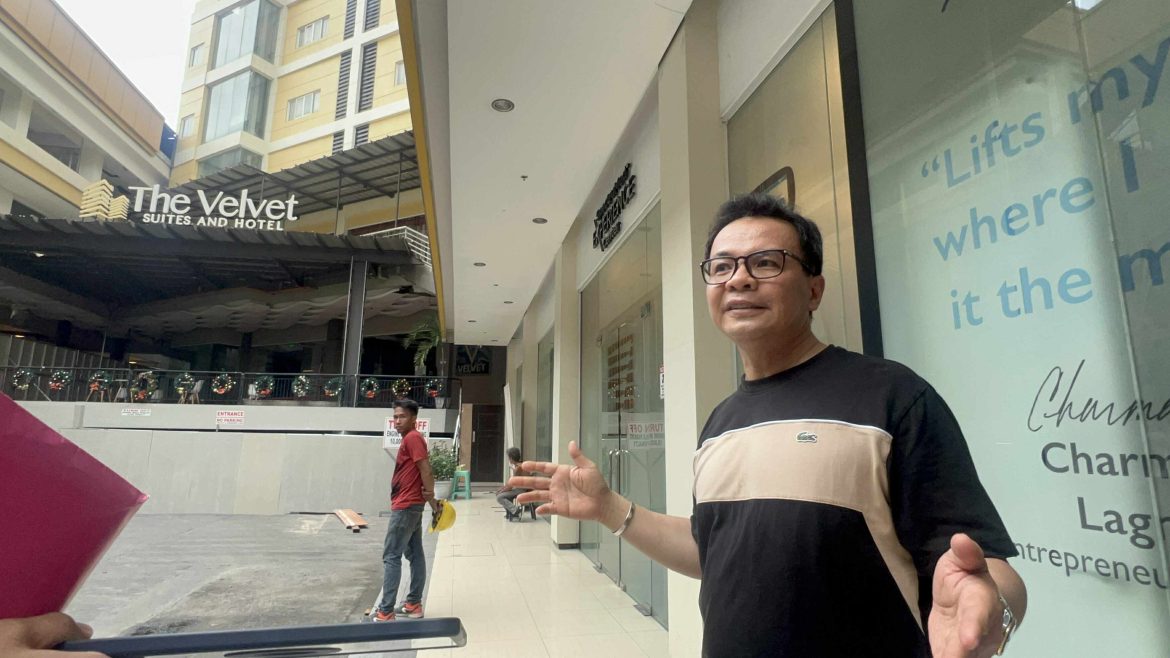
THE Office of the City Building Official (OCBO) has issued Red Tag and Yellow Tag notices to several major establishments in the wake of the recent earthquakes.
Architect Kashayar Toghyani, officer-in-charge of the OCBO, delivered the findings during a press briefing at the City Hall conference room on Monday afternoon, Oct. 13.
“Following the rapid visual inspection conducted by the OCBO, together with Philippine Institute of Civil Engineers (PICE) Davao City Chapter, the OCBO has issued red tag and yellow tag notices to several establishments in the city,” he said.
Red Tag (Occupancy Prohibited)
Inspection results showed that the structure has sustained severe damage and is considered dangerous. A comprehensive structural assessment is now required. Entry or use of the premises is prohibited until all necessary repairs have been completed and cleared by the OCBO.
Establishments with Red Tag Notices:
Yellow Tag (Restricted Use)
Inspection results revealed moderate structural or non-structural damage requiring repairs before full re-occupancy. Certain areas may remain accessible under controlled conditions, subject to the approval of the OCBO.
Establishments with Yellow Tag Notices:
Toghyani further said that there are still 40 to 50 buildings on their list for inspections.
The OCBO emphasized that all concerned establishments must strictly comply with these conditions and safety requirements before allowing any form of re-occupancy.

“These measures are implemented to ensure the safety and protection of residents, tenants, and the general public,” Toghyani said.
“Inspections with other establishments with reported visible cracks are still ongoing and are being jointly conducted by OCBO and the PICE,” he added.
“Red tag or yellow tag is basically an engineering system that we have made here in the city so that when earthquakes happen, we will know which buildings to inspect first,” he explained, adding that PICE has been designated as a city’s consultant through an executive order issued by City Hall.
“What does it mean if you are Red Tag? We prohibit the occupancy, which means it may be that your structure still stands, did not collapse or tilt, but there are hazards in that area,” he said.
“For example, there is a damage to the fire exit, not all building was damaged… so their use should be restricted because the fire exit is already lacking every time there will be an emergency,” he added.
For the yellow tag, the specific damage should be repaired before people are allowed to return.
“But it doesn’t mean you are Red Tag or Yellow Tag, you will demolish the building, that’s not that,” he said, adding that the owner should follow the recommendations to repair or reinforce the damage to make it safer for the tenants and occupants.
The owner’s engineers must then submit a checklist and repair methodologies to secure a permit as a precondition for reopening. Once the city accepts their repair methodology, “that’s the time that they should proceed to fix the structure and finally obtain a Green Tag.”
The National Building Code imposes a P20,000 penalty or imprisonment of not more than two years to building owners who will deny entry of city officials attempting to conduct a structural integrity inspection.
“I would like to remind those establishments who had received red and yellow tags, please comply with those notices and follow so that there will be no accident,” he further said.
He added that The Velvet Suites and Hotel still don’t have an occupancy permit despite multiple applications. He also alleged that the management defied the order by allowing people in and removing the yellow tape installed by the city’s engineers.
“We have already imposed sanctions. We have given them warnings, so right now we are also talking to other regulatory offices and the Business Bureau and our city legal. We will see what other options are available so that we can make them comply with the law, so that we can make sure that everybody is safe,” he added.

Cebu Pacific proudly hosted the official launch of Women in Aviation International – Philippines (WAI-PH), the country’s first organization dedicated to empowering women across the aviation industry.
The Philippine chapter is the local arm of Women in Aviation International (WAI), a nonprofit with over 20,000 members worldwide. WAI provides mentorship, scholarships, and networking opportunities for women in aviation, with a mission to educate and empower women across all sectors of the industry.
“Cebu Pacific is proud to support this initiative that empowers women in aviation,” said Shevantha Weerasekera, CEB Vice President for Engineering and Fleet Management. “It aligns perfectly with our goal of fostering an inclusive and equitable workplace where everyone can take flight.”
The launch, sponsored by CEB Engineering and Fleet Management (EFM) and the People Department alongside the chapter’s founding officers, comes at a pivotal moment as the Philippine aviation sector modernizes fleets, embraces digital transformation, and addresses workforce gaps.

As part of the event, WAI-PH also celebrated Girls in Aviation Day (GIAD), inspiring young Filipinas through hands-on activities; career talks led by female pilots, engineers, mechanics, and cabin crew; aircraft tours; and resource kits from WAI-USA. This initiative gave the participants an early glimpse into the exciting world of aviation, encouraging them to consider careers in the aerospace industry.
Looking ahead, WAI-PH aims to expand beyond its founding members—CEB, Aplus, and Airlink Aviation College—and engage other airlines, aviation schools, and maintenance organizations (MROs) nationwide. Through mentorship, leadership programs, and outreach initiatives, CEB seeks to inspire more Filipinas to pursue aviation careers and contribute to a more diverse and inclusive industry.

Globe has mobilized its emergency response teams following the magnitude 7.6 earthquake that struck offshore Davao Oriental on October 10. The strong tremor, followed by multiple aftershocks, was felt across the Davao Region and neighboring provinces, prompting precautionary evacuations and temporary suspension of operations in several establishments.
Globe is closely coordinating with local government units (LGUs) and partner organizations to assess the impact of the quake and ensure continued connectivity and assistance for affected communities. Relief operations are set to take place on Monday, October 13, in Manay, Davao Oriental, in coordination with the Ayala Foundation Inc. (AFI).
“Our immediate priority is to keep people connected and informed as response efforts continue. We are working closely with local authorities to monitor the situation and provide network support where it’s needed most,” said Yoly Crisanto, Chief Sustainability and Corporate Communications Officer, Globe.
Globe services were affected across 8 provinces. All affected municipalities have since been fully restored, with network restoration reaching 100% in Agusan del Norte, Agusan del Sur, Davao de Oro, Davao Oriental, and Lanao del Sur, and 96.55% in Davao City.
Globe assures customers that it will continue to monitor the situation and deploy technical teams as needed to sustain connectivity in all affected areas. Residents are advised to stay alert, follow official advisories from PHIVOLCS and local authorities, and prioritize their safety.
More updates will be provided as the situation develops. Visit the GlobeICON social media pages for the latest information.

Manila – 2GO, the Philippines’ premier sea travel provider, has formalized a partnership with the Department of Trade and Industry (DTI) to promote locally made products under the One Town, One Product (OTOP) program through its Biyahe2Business campaign.
The partnership aims to boost market visibility for regional micro, small, and medium enterprises (MSMEs) by featuring their OTOP products in dedicated kiosks onboard 2GO Travel vessels. This initiative transforms every voyage into a showcase of regional flavors, craftsmanship, and Filipino pride.
The collaboration officially launches with OTOP products from Region 12 as the first to be featured under the Biyahe2Business program. A special OTOP nook will be installed onboard MV 2GO Masinag, highlighting accredited products in partnership with the local DTI office. More OTOP displays from other regions will soon be available on additional 2GO vessels.
This initiative supports DTI’s Supply Chain and Logistics Center (SCLC), a platform that provides real-time logistics information, market linkages, and capacity-building programs for MSMEs.
“This collaboration allows DTI regional offices to bring and promote their products across islands through creative and practical logistics solutions,” said DTI-12 Regional Director and DTI-RAPID Growth Project National Director Flora D. Politud-Gabunales, CESO V. “Through this, 2GO has opened new opportunities for MSMEs to reach more customers and for travelers to discover authentic Filipino flavors and craftsmanship from across the country.”
The partnership aligns with 2GO Travel’s ongoing commitment to empower small businesses by improving access to transport and logistics solutions through the 2GO Travel’s Biyahe2Business platform. With this program, 2GO bridges the gap between local entrepreneurs and wider markets, ensuring that Filipino-made products can travel as far and as proudly as the people who create them.
“This partnership underscores our long-term commitment to help small businesses thrive by providing flexible, affordable, and reliable transport solutions,” said Francis John Chua, Business Unit Head for 2GO Travel. “With our generous 50KG luggage allowance, SMEs can move their products and supplies more freely across islands. This advantage supports their growth and reach. At 2GO, we believe sea travel is not only about connecting destinations, but also about connecting communities, celebrating culture, and enabling commerce. Through this initiative, we bring the best of every region to more Filipinos.”
Beyond showcasing local products, 2GO Travel, as DTI’s official travel and logistics partner, will offer group tour packages and exclusive MSME travel discounts. These programs will provide cost-effective and dependable mobility solutions for entrepreneurs. With direct routes from Manila to major trade hubs such as Iloilo, Bacolod, Cebu, Cagayan de Oro, and its newest destinations Davao and General Santos City, 2GO continues to strengthen national connectivity for trade and enterprise.
As part of the agreement, 2GO will also provide consultancy and logistics advisory services tailored to MSME needs and support Logistics Support Desks at select Negosyo Centers in key regions.
For inquiries on MSME-exclusive logistics and travel offers, contact tours_groups@2go.com.ph.
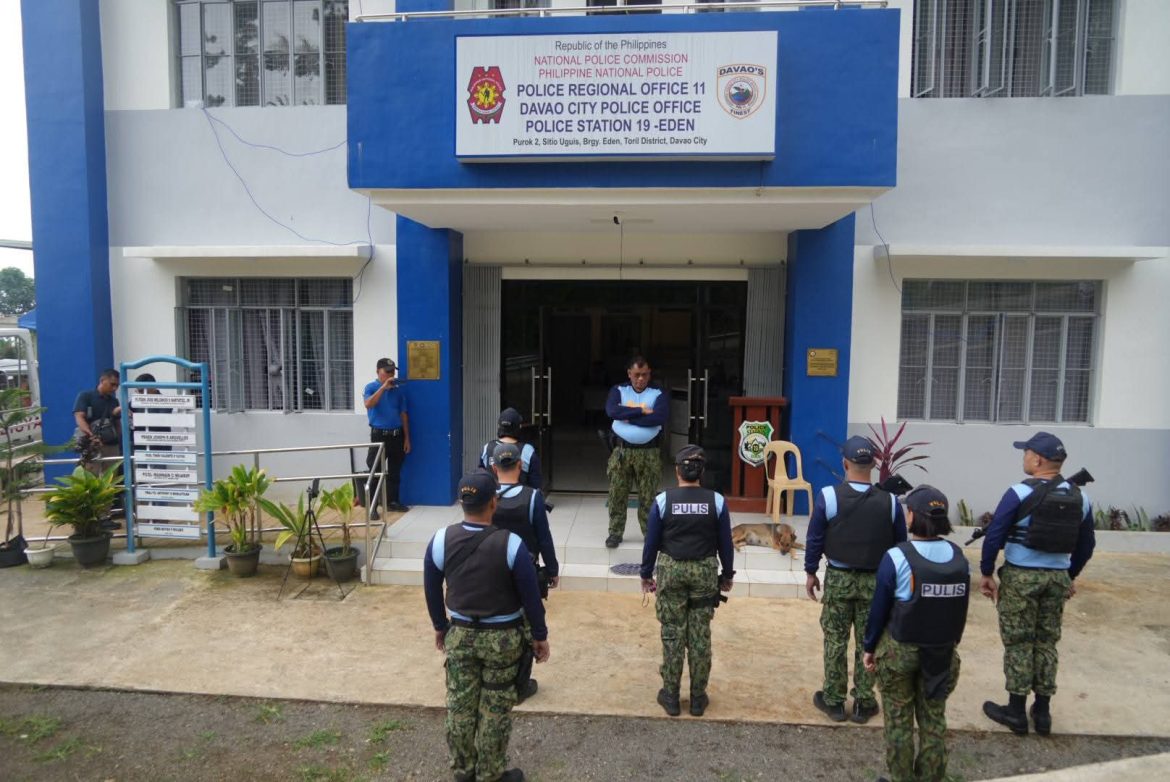
A POLICE sting ensnared a patrolman and his civilian accomplice along Roxas Avenue, in front of a prominent University, early Monday, Oct. 13.
The operation, conducted at approximately 4:50 a.m., targeted the illicit sale of high-powered firearms in violation of Republic Act (RA) No. 10591 or the Comprehensive Firearms and Ammunition Regulation Act.
The Davao City Police Office only identified the arrested individuals as Louie, a manager of a security agency and resident of Prudential Village, Daliao, Toril; and Muhammad, a Philippine National Police (PNP) personnel assigned to Regional Mobile Force Battalion 14, Bangsamoro Autonomous Region, and a resident of Sirawan, Toril.
The City Intelligence Team-RID XI, Police Station 1 (Sta. Ana), Regional Special Operations Group /RPDEU XI, and other intelligence units under the direction of Col Melvin Montante, chief of the Regional Intelligence Division XI, launched the operation.
According to the report, a police undercover agent purchased the firearms from the suspects during the buy-bust. Authorities recovered an array of weapons and materiel, including the following:
They also impounded the Toyota Vios (dark brown, plate number AHA 4983) used in the transaction.
The suspects, along with the seized firearms and other pieces of evidence, are now in police custody.

THE 701ST Infantry (Kagitingan) Brigade, led by Brigade Commander Brigadier General Allan Jose L. Taguba, facilitated the arrival of urgently needed tents and relief goods from the National Government.
The supplies were transported aboard a Philippine Air Force C-130 aircraft at Mati City Airport, Davao Oriental, on Oct. 12, 2025.
The tents and relief are intended for families and communities severely affected by the recent Magnitude 7.6 earthquake and its aftershocks in Davao Oriental.

Under BGen Taguba’s leadership, the 701st Brigade and its operationally controlled units coordinated closely with the Provincial Government of Davao Oriental, the PDRRMO (Provincial Disaster Risk Reduction and Management Office), and other concerned agencies.
This coordination ensured the swift offloading, transport, and distribution of the supplies to the affected areas.
Photos courtesy of 701st Infantry Brigade

BY WANG HAONAN, YANG YANFEI, SHEN JINGRAN, PEOPLE’S DAILY
ACTIVE transportation – whether through leisurely walks or eco-friendly cycling – has become an increasingly popular choice in Chinese cities. Urban “slow-traffic systems,” defined as non-motorized networks prioritizing walking and cycling, are expanding nationwide with locally tailored designs. These systems enhance urban livability while reducing environmental impact.
At dawn in Beijing, traffic on the Second Ring Road began to pick up. Nearby, 63-year-old Zhang Jianguo, who lives in Andingmen in Dongcheng district, started his morning exercise on a greenway along the road. “This path makes both exercise and daily travel so much easier,” he said. The 35.5-kilometer corridor, fully opened last year, connects parks, heritage sites, and commercial districts like an emerald ribbon encircling the city.
By 2024, walking and cycling accounted for 50.1% of trips in Beijing, with bicycles representing 20%. The city has constructed 60.6 kilometers of segregated bike lanes and widened 329.9 kilometers of existing routes.

“The optimal solution for short-distance travel and transit connections,” notes Wang Shuling of the Beijing Transport Institute. “They’re also vital for reducing transport emissions,” Wang emphasizes that well-planned systems – ensuring safety, continuity, and dedicated spaces for pedestrians, cyclists, and vehicles – boost overall urban mobility efficiency.
On Beijing’s first bicycle-only expressway (6.5 km linking Huilongguan to Zhongguancun), commuters like Mr. Zhang report: “Travel time dropped from one hour to under 30 minutes. Dedicated lanes make cycling faster than buses and less stressful than driving.”
At 6 am in Nanchang, capital of east China’s Jiangxi province, cycling enthusiast Wang Qing set off from beneath the Yingxiong Bridge and pedaled along a greenway by the Ganjiang River. “Previously, I cycled in the suburbs – now scenic routes like Fenghuangzhou Park and Qiushui Square are minutes from home,” he says. Honggutan District’s 28-kilometer integrated trail system – featuring rest stations and segregated paths – has transformed the riverside into an ecological retreat, elevating residents’ quality of life.
Through interconnected trails, smart facilities, and open green spaces, Nanchang has unified parks, cultural landmarks, and wetlands into a cohesive “lifestyle belt” where citizens exercise amidst nature.
In Yuzhong district, Chongqing municipality in southwest China, a woman surnamed Chen took a short walk along a local slow-traffic system to reach Jiukengzi wet market. “I used to take a big detour to buy groceries. Now it’s just a few steps away!” she said with a smile.

In a mountainous city like Chongqing, walking has never been simple. Differences in elevation and winding roads mean public spaces are often scattered. In recent years, Chongqing has fully tapped into its local topography to develop high-quality slow-traffic systems.
Using the city’s signature hillside trails, it has linked communities, parks, schools, and metro stations into a network. To date, more than 840 kilometers of hillside trails have been built in the downtown area, forming a multi-functional system that is interconnected, convenient, efficient, and accessible to people of all ages.
In Chongqing’s Daijiaxiang, trails have even reshaped the community’s social and economic landscape. Along the winding stone steps, more than 40 cafes, cultural shops, and bookstores have sprung up, reviving the once quiet neighborhood. With annual output exceeding 100 million yuan ($14.05 million), this is not only a commercial revival but also a community rebirth.
“Trails are not just pathways. They connect people’s daily routines, commercial activities, and cultural memories. Our goal is to revitalize communities through trails and promote integration through slow travel,” said Tang Baijun, director of Yuzhong district’s key project construction affairs center.

MANILA, Philippines – The PAHAYAG 2025 Third Quarter (PQ3-2025) survey shows a significant rise in anti-administration sentiment, driven by declining confidence in national leadership, governance, and the economy.
Anti-administration sentiment rises; pro-administration support declines
Voters expressing anti-administration sentiment surges (27% in Q3 2024 to 43% in Q3 2025), while support for the Marcos administration declines sharply (30% to 18%) over the same period.
The rise in anti-administration views is strongest in the Visayas (53%) and Mindanao (52%)—traditionally Duterte strongholds. Meanwhile, North-Central Luzon (25%) sustains much of the remaining pro-administration sentiment, and South Luzon (46%) voters are increasingly neutral, split between support and opposition.
In contrast, pro-opposition sentiment remains steady at 25%, but anti-opposition views rise (25% to 29%), while neutrality toward the opposition drops (51% to 46%).
Public outlook on national situation and economy weakens
Filipinos’ views of the country’s current condition have deteriorated, with the share describing it as “weak” (35% to 45%), while those calling it “strong” decline (30% to 27%). Similarly, those who believe the country is moving in the wrong direction jumps (30% to 43%), while those who believe on the right track have declined (40% to 33%).
Optimism about the national economy also drops markedly—from 43% to 34%—as those expecting economic conditions to worsen grow (28% to 40%). Confidence in household financial prospects is slightly decreased (53% to 50%), with pessimism inching up (17% to 19%).
Optimism regarding the country’s state has decreased, particularly in North-Central Luzon and South Luzon. Similarly, confidence in the nation’s direction and economic outlook has declined across all regions. However, household financial outlooks have remained relatively stable, with only South Luzon and the Visayas experiencing a downturn.
Rising negative sentiment toward end-2025
As the country heads into Q4 2025, negative sentiment about the country’s leadership direction has risen (70%, from 58%) in the previous quarter—the highest in four years. Notably, only 2 in 10 voters express optimism and hope, while another 2 in 10 feel either hopelessness or anger, reflecting growing disillusionment among the public.
PQ3-2025 is an independent, non-commissioned nationwide purposive sampling survey conducted from September 27 to 30, 2025, comprising 1,500 respondents who are registered Filipino voters, randomly selected from the market research panel of PureSpectrum, a US-based panel marketplace with global operations and a regional office in Singapore.
PAHAYAG is a CSR of PUBLiCUS Asia Inc., which has tracked key metrics since 2017, while Vox Opinion Research is its commissioned research arm since 2007.

URDANETA CITY – Social Security System (SSS) Luzon Central 1 Vice President Vilma P. Agapito and San Quintin Mayor Farah Lee Lumahan signed a memorandum of agreement (MOA) to register San Quintin LGU as the first Contribution Subsidy Provider in Pangasinan.
Starting September 2025, 217 barangay workers will receive a P760 monthly subsidy for their SSS contributions, totaling P164,920 in monthly support. The program will be fully funded by the local government throughout the term of Mayor Lumahan, as part of the municipal government’s efforts to enhance social protection for community-based workers.
SSS Vice President for Luzon Central 1 Division Vilma P. Agapito said that the groundbreaking agreement between SSS and an LGU is the first of its kind in Pangasinan and Luzon Central 1 Division, which covers Barangay Health Workers (BHW), Barangay Population Workers (BPW), Barangay Nutrition Scholars (BNS), and Child Development Workers (CDW) of the said municipality.
“Through this MOA, we are bringing social security protection closer to our grassroots workers who serve as frontliners in their communities. This collaboration with the San Quintin LGU is a trailblazing initiative that we hope other local governments will replicate,” Agapito said.
She further emphasized that consistent and regular SSS contribution remittance ensures long-term protection and access to a wide range of benefits such as sickness, maternity, disability, retirement, funeral, and death benefits. Members also become eligible for salary and calamity loans, providing immediate financial assistance in times of need.
Meanwhile, San Quintin Mayor Farah Lee Lumahan highlighted the LGU’s commitment to the barangay workers.
“Our barangay workers have long been the backbone of community service. By partnering with SSS under the CSPP, we are ensuring that their sacrifices and contributions are recognized through social security protection. This is just the beginning, as we also commit to include our Civic Volunteer Organization (CVO) workers in 2026,” she said.
SSS Urdaneta is also conducting courtesy meetings with other LGUs in its jurisdiction to offer the CSPP, in the hope that they will follow San Quintin’s lead in providing a subsidy for the social security coverage of their barangay workers.
