



BY ALEX ALAGON

BY ALEX ALAGON

MANILA—For Anne Curtis and Erwan Heussaff, the habits that shape a good life are not learned all at once but built in the small everyday moments at home. In partnership with Manulife Philippines, the couple is sharing how they are guiding their daughter, Dahlia, through two lessons meant to stay with her for years: from eating well to managing money wisely.
Healthy choices, one baon at a time
Inside Dahlia’s lunchbox is a small lesson in balance. There is something fresh, something filling, and a little something fun: fruit or vegetables for vitamins, rice or bread for energy, protein to help her grow, and a treat to make her smile.
For Erwan, that perspective matters most when it is introduced early. “With Manulife as our family’s health and wellness partner, we know how important balance is. Listen to your body and treat it well. It’s time to move today, because it’s never too early to start taking care of your health for the long run,” said Erwan in the video posted on his and Manulife Philippines’ social media pages.
Money lessons made simple
Anne and Erwan also believe that a good life isn’t just defined by eating healthy. Anne’s latest video shows that at the age of six, Dahlia is being raised to be a “Peso Smart” kid, and the lessons are as ordinary as the coins she sorts into three small piles—one to save, one to spend, and one to give. In their household, prices are talked about openly, never hidden. A toy she wants becomes a lesson in patience: she can wait and save for it, or earn it through chores beyond her usual ones. Bit by bit, everyday moments at home become a child’s first steps in learning to make responsible financial decisions.
“You don’t need to wait for kids to learn about money in school. You can teach them young, and in your home,” Anne says. “I’ve been preparing for Dahlia’s future since before she was born, because the earlier you start, the more ready you are for life’s twists and turns. People are living longer now, and that is a gift—but it also means planning further ahead. Teaching her to save today is really about giving her the freedom to enjoy a long life on her own terms.”
Small steps that last a lifetime
Behind Anne and Erwan’s lessons with Dahlia is a belief that well-being, whether in health or in finances, is rarely the result of one big decision. It grows from steady choices repeated over time. A balanced meal today powers a healthier adult tomorrow. A few coins set aside now evolve into a habit of financial preparedness in the long term.
This is the idea at the heart of ManulifeMOVE, Manulife’s holistic health and wellness program designed to help customers take charge of their well-being and enjoy a better, longer life. Through the Manulife App, it brings together practical health insights, exclusive perks from trusted partners across preventive care, treatment, and recovery—all backed by comprehensive health plans that protect families from early diagnosis to recovery. It reflects how Manulife sees its role: as a lifelong partner supporting Filipinos through every life stage.
“At Manulife, we believe better health and financial confidence are built through the everyday choices families make. Anne and Erwan show how healthy habits and smart money decisions can start at home, in simple moments that children can carry with them as they grow,” said Joy Concepcion, Chief Marketing Officer, Manulife Philippines.
Concepcion added, “We want to empower Filipino families to take those first meaningful steps early, giving them the confidence to prepare for the future and develop habits that lead to better health and financial resilience. Anchored by the Manulife Longevity Institute, we are deepening our understanding of longevity and translating these insights into solutions that equip Filipinos to live longer, healthier, and more financially secure lives.

MANILA — Filipino fans can now bring home exclusive Golden State Warriors merchandise when they purchase PhP1,500 worth of Tanduay products at www.shots.ph, Tanduay’s official online store.
“As an official and long-time partner of the Golden State Warriors, we want to create memorable experiences for our consumers, especially our passionate Filipino basketball fans who have supported both Tanduay and the team throughout the years,” said Tanduay Digital Brand Manager Edzel Ty.
Bring Home a Limited-Edition Merch and Qualify for a Signed One, Too!
The promotion runs from August 1 to August 31, 2026, and is open to individuals at least 18 years of age and residing in the Philippines. Purchase at least PhP1,500 worth of Tanduay products at www.shots.ph to receive one random Golden State Warriors merchandise that can either be a limited-edition t-shirt or cap. Only one item will be given away per qualified transaction.
Apart from the instant free merchandise, consumers with qualified transactions will also receive a raffle entry for a chance to win a Golden State Warriors signed jersey or signed photo.
The raffle draw will be held on September 1, 2026, and the winners will be announced on the same date on the official SHOTS.PH Facebook page.
“Our partnership with the Golden State Warriors is just one of the many strong collaborations we have created with other brands throughout the years, and this happened because of the continued support from all our consumers. This promotion is our way of showing our appreciation for the love you have given us,” Ty said.
Tanduay became the first Philippine brand to sponsor a team from the National Basketball Association (NBA) when it partnered with the Golden State Warriors in 2017.

Dominik Bauer, Managing Director of Bosch Service Solutions Philippines, discusses how connected services can support digitalization across business operations and customer touchpoints.
Showcasing technologies for construction, operationsand maintenance
MANILA — Every new tower on the Metro Manila skyline is a promise that will be tested for decades, in energy bills, maintenance, and the safety of everyone inside. It is the challenge Bosch Philippines recently put to
developers, contractors, and building operators at its Builders Day event in Bonifacio Global City on August 13, 2026, drawing attention to what follows project completion: how buildings perform, operate, and are maintained over time.
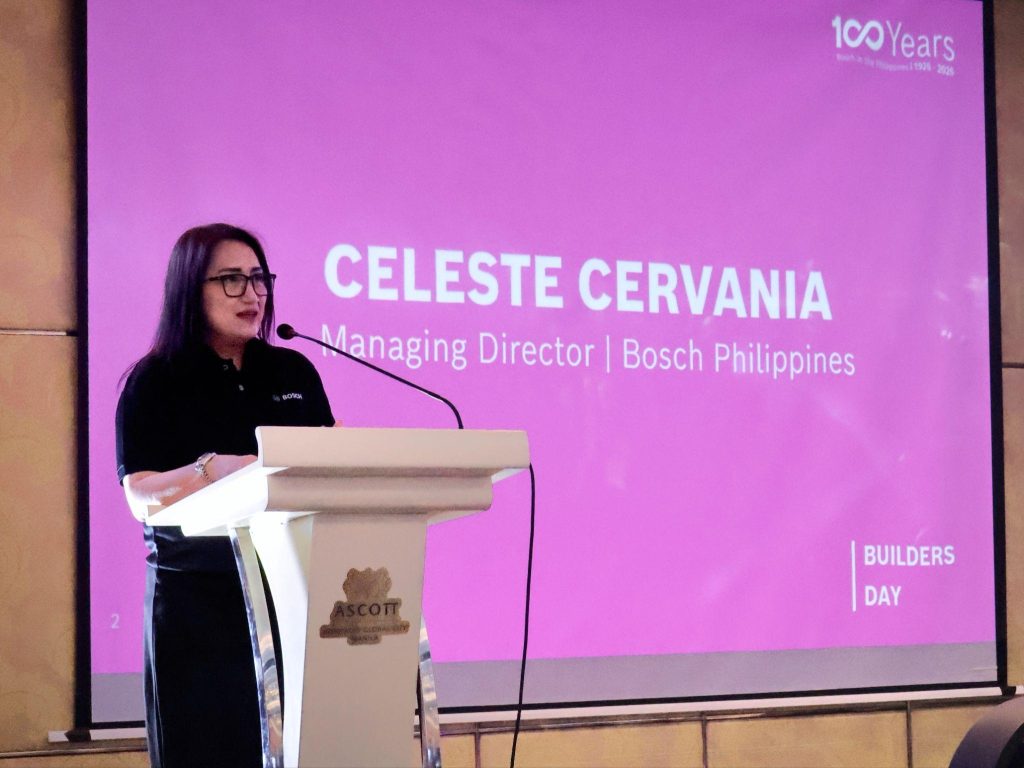
“As more homes, workplaces, and infrastructure are developed, quality must remain central not only during construction, but throughout the life of every project,” said Celeste Cervania, Managing Director of Bosch Philippines. “ It shows in how safely and efficiently a building operates, how easily its systems can be maintained, and how consistently it delivers comfort and reliability to the people who use it every day.”
Construction and project delivery In the Philippines, Bosch’s professional power tools goes back decades, including early advances in cordless technology. Today, that experience is reflected in its Professional 18V platform, which covers more than 350 tools across different trades and allows teams to work with a common battery system. The platform is backed by an established nation-wide service network, including after-sales support, genuine spare parts, warranty coverage, and digital tools for equipment and work management, giving contractors a clearer path from active construction to ongoing repair and maintenance. Safety, comfort and convenience across modern developments Builders Day also shifted the discussion towards Bosch’s role in maintenance beyond project turnover. For life safety, Bosch highlighted how fire detection and alarm systems’ component compatibility, planning tools, and remote management can make future expansion and maintenance more manageable for property operators.
For climate control, Bosch Home Comfort highlighted solutions across residential, commercial, and industrial applications, combining indoor comfort with energy-efficient operation. The portfolio is positioned around reliable engineering, local service support, and solutions suited to Philippine climate conditions, giving developers and operators options that consider both comfort and operating efficiency over time. For residential developments, Bosch Home Appliances brought the focus back to everyday living. Refrigerators, dishwashers, hobs, and hoods support food storage, preparation, cleaning, and ventilation, while also contributing to more efficient use of energy and water.
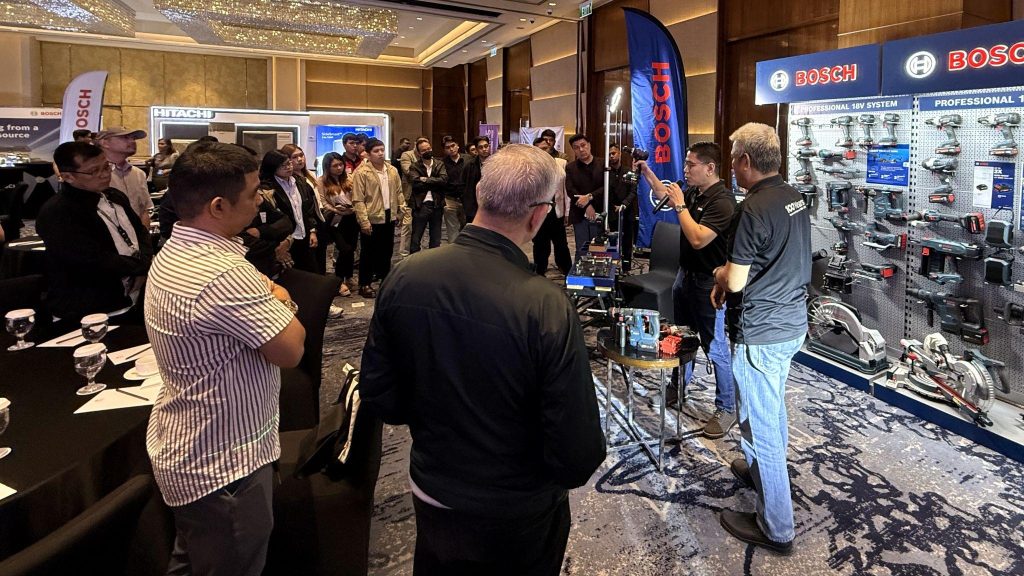
Estate management and wider development needs As mixed-use developments, townships, and commercial districts grow, their operating requirements extend beyond individual buildings to mobility, fleet management, monitoring, maintenance, and the services that support people and businesses across the wider property. Bosch highlighted how its broader capabilities can support these needs.
Mobility solutions can address vehicle and fleet requirements, while Bosch Service Solutions brings capabilities in monitoring, technical support, customer services, and connected services that can help improve efficiency, reduce downtime, and support day-to-day property operations.
“Through innovation and technologies used across the project lifecycle, Bosch helps enable stronger building performance from construction and installation to operations and maintenance. That continuity is what we brought to the conversation at Builders Day,” Cervania added.

REGIONAL Development Councils (RDC) XI called for a larger share of the national budget for Mindanao for sustained funding for big-ticket projects.
In an interview last Aug. 14 at Park Inn by Radisson here, Davao del Norte Governor Edwin Jubahib, RDC XI chairman, said the region and other regional councils, along with the Mindanao Development Authority (MinDA), have presented their grievances to the national government.
The consensus was reached following coordination with MinDA Secretary Leo Tereso Magno, aligning RDCs from regions IX, X, XI, and the Bangsamoro Autonomous Region in Muslim Mindanao (BARMM).
The RDC chair said they are pushing to increase Mindanao’s budget allocation from the current 11% to 21% for Fiscal Year 2027.
“Kami always present jud mi sa tanang schedules, nakig fight jud mi for Mindanao labi na sa increase sa atong rax allotment nga part sa Mindanao,” Jubahib said.
He emphasized that the requested 21% share aligns with Mindanao’s economic contributions and population size, aiming to drive major development and infrastructure initiatives across the entire island.
“Para ni sa mga mega project nato for the entire Mindanao. So, wala na namo gitan-aw nga per region lang, kundi nag-cite ta og common project nga makahatag og kaayohan sa tibook Mindanao,” he stressed.
Alongside MinDA, the RDCs have unified their recommendation to construct an electrified, double-track rail line for passenger and cargo transport as part of the proposed Mindanao Railway Project.
RDCs from Region IX, X, XI, and the Bangsamoro Autonomous Region in Muslim Mindanao (BARMM) agreed to revert to the project’s original double-track, electric design.
Jubahib said the national government has approved and funded the update for the project’s feasibility study, a key step required before securing full construction funding.
“Naa na ta sa feasibility study kay gi-approve man sa national government nga butangan ug pondo ang feasibility study. Tanan man jud nga mega project, mag-start jud sa feasibility study,” he said.
The RDCs proposed four project segments, electric-powered and to cater to passengers and cargo. Two segments are currently positioned to receive initial budget allocations.
Funding for the railway program is expected to be finalized under the proposed 2027 national budget.
Jubahib said the RDCs are optimistic about the realization of the railway with the increased funding for 2027.

Naga City Mayor Leni Robredo (center), Pag-IBIG Fund President and CEO Marilene Acosta (left), and Ayala Land Group Head of Strategic Growth and New Ventures and Chief Sustainability Officer Robert S. Lao (right) turn over the keys to one of the first 110 Naga City government employees who received homes under the city’s 1,011-home housing program at BellaVita Naga in Barangay Pacol on Aug. 18, 2026.
NAGA CITY, Camarines Sur — BellaVita, Ayala Land, Inc.’s socialized housing arm, today turned over the first 110 homes to qualified Naga City government employees under a housing program covering 1,011 units at BellaVita Naga in Barangay Pacol.
Naga City Mayor Leni Robredo led the ceremonial turnover, joined by Pag-IBIG Fund President and CEO Marilene Acosta, Social Housing Finance Corporation President and CEO Frederico Laxa, Department of Human Settlements and Urban Development (DHSUD) Assistant Secretary Engr. Johnson Domingo, Robert S. Lao, Group Head of Strategic Growth and New Ventures and Chief Sustainability Officer of Ayala Land, and representatives of the Naga City Housing and Settlements Development Office.
The program was established through a Memorandum of Agreement between BellaVita Land Corp. and the City Government of Naga. Under the arrangement, BellaVita makes the homes available to qualified city employees, while the Naga City Government, through its Housing and Settlements Development Office, facilitates employee participation and coordinates with Pag-IBIG Fund. Employees acquire their homes individually through Pag-IBIG housing loans.
“Today, we are awarding the house keys to 110 beneficiaries… Ang pinaka maganda dito sa BellaVita, fully developed na ‘yung buong village. Meron ng multi-purpose hall, yari na ‘yung mga bahay,” said Naga City Mayor Leni Robredo. Malaking pasasalamat po kami sa BellaVita for offering this to us, maraming salamat sa PAG-IBIG for making this possible. Napakapalad po ng Naga City.”
Today’s turnover marks the first phase of the program, with approximately 110 qualified employee-buyers receiving their keys. The 1,011 homes covered by the agreement are part of BellaVita Naga’s
community in Barangay Pacol. Units included in the current awarding batch have water and electricity connections and completed road infrastructure.
“[This project] did not arrive on its own. It took Mayor Robredo and the entire Naga City government, Secretary Aliling and the DHSUD, and Pag-IBIG Fund under CEO Marilene Acosta — all choosing to build a bridge together, so that the very people who keep this city running, who process the permits, clear the streets, and answer the calls at City Hall, could come home to an address of their own, here in the same city they serve,” Lao said.
The program brings together an LGU-facilitated employee housing initiative, private-sector socialized housing development and Pag-IBIG financing to create a pathway to homeownership for working city employees.
For the first 110 homeowners, the turnover represents more than the completion of a housing transaction. It marks the beginning of a new chapter for families who can now establish a home in the same city they serve.
BellaVita is Ayala Land, Inc.’s socialized housing arm, focused on providing quality and affordable homes. Its communities integrate affordable homeownership with community facilities and livelihood opportunities, creating practical environments where families can live and build their futures.

Newport World Resorts Chief Hospitality Officer John Lucas (center) leads the ceremonial slicing of the giant mooncake together with (from left) Manila Marriott Hotel Director of Culinary Meik Brammer, Marriott International – Philippines Area General Manager Bruce Winton, Marriott International – Philippines Market Director of Sales & Distribution Lala Quilantang and Manila Marriott Hotel Director of Restaurants and Bars Jun Salvador last 2 July 2026 held at the Still Tea & Whisky Lounge to kick-off its two-month campaign dubbed, Manila Marriott Hotel Moonfest through a High Tea Mooncake Pairing Party. The Moonfest campaign is a first in the Philippines for Marriott.
Metro Manila – Michelin-guide-listed Manila Marriott Hotel at Newport World Resorts is known for institutionalizing high-impact campaigns like “All Ways Valentines”, “Women of Wonder” for Women’s Month, “Time-To-Spoil-Mom” for Mother’s Month, “Dad of Steel” for Father’s Month, “Paskonstelasyon” for the holidays and the “Sinagtala Famsgiving” a program aimed to champion Philippine Culinary Arts globally, and the multi-awarded Marry Me at Marriott weddings & socials campaign, gears up for another first for Marriott in the Philippines with the hotel mounting its version of the Mid-Autumn Festival celebration dubbed, “Manila Marriott Hotel MOONFEST”.



Beyond making and selling premium mooncakes during this season, the two-month campaign is intended to make hotel guests at Manila Marriott experience the mid-autumn festival with Marriott and Filipino touch, not only in their Michelin-Selected authentic Cantonese Restaurant; Man Ho, but also in all their restaurants and bars, including staycation, with a semblance of how it is done in neighboring countries like China, Singapore and Malaysia. The MOONFEST will include selling mooncakes in elegant packaging as a gift idea and pairing them with first-class teas, two kitchen takeovers, and launch of Manila Marriott’s latest innovation in two of its restaurants as shared by Chef Chan Chi Fai, Man Ho’s Chinese Executive Chef.

A LAWMAKER pushed for immediate assistance for the 300 displaced Davao Mighty Steel workers following a raid on the company’s plant in Barangay Ilang, Bunawan District last week.
In her privilege speech on Tuesday’s regular session, Aug. 18, Councilor Pamela Librado-Morata said their priority is not the conditions cited by authorities but the sudden loss of their livelihood.
The councilor met with the affected workers on Aug. 17, after more than 200 workers trooped to the council to air their concerns.
To note, the Presidential Anti-Organized Crime Commission (PAOCC) and the National Bureau of Investigation (NBI), assisted by the Philippine Nuclear Research Institute, the Philippine Air Force, the Philippine Coast Guard’s CBRN units and Special Operations Group, and the 10th Infantry Division, served search warrants on DMS last Aug. 13 over allegations that the firm was manufacturing and distributing substandard reinforcing steel bars.
The operation resulted in what authorities described as the “rescue” of 174 Filipino workers.
PAOCC executive director, Usec Benjamin Acorda Jr., said the workers were found in a hazardous environment containing radioactive materials, dust, fumes, wastes and production residues that posed risks of continued occupational exposure.
But Librado said the workers expressed fear rather than rescue, and questioned what kind of rescue leaves them without jobs or support.
“They demand that DMS or Davao Mighty Steel give their pending two weeks’ salary since after the raid, nobody from the management gave an advisory or official statement as to their salaries, the status of their employment and the next steps,” she said.
The City Social Welfare and Development Office profiled more than 200 workers; most were male residents of Davao City who had worked for the company for 3-1 years.
Librado also said the fallout has extended beyond DMS workers to junk shops and scrap dealers in the city who used to sell their scrap metal to the company.
She said the committee will hold a series of consultations and public hearings throughout August, in coordination with the CSWDO, the Department of Labor and Employment, and the Public Employment Service Office to address the workers’ situation in aid of legislation.
The councilor said displaced DMS employees are covered by the city’s existing Workers’ Protection and Development Ordinance (WPDO) despite having been hired through an agency, and are entitled to make their case without judgment or discrimination.
She added that workers should be protected from undue harm while the facts of the case are established through a fair, impartial, and transparent investigation.
The councilor said the committee is studying the creation of a Workers’ Emergency Lifeline Ordinance to give temporary assistance to workers who lose their jobs due to calamities, pandemics, enforcement actions, or other extraordinary events beyond their control.
“The proposed measure seeks to establish a temporary safety net for affected workers and their families during periods of crisis, helping them meet their basic needs while they recover from unforeseen livelihood disruptions,” she said.
“In the long-term, atong tumong ug tinguha nga makatrabaho balik ang kapin 300 ka workers sa Davao Mighty Steel,” she added.
The privilege speech was considered read under first reading and referred to the SP Committee on Labor and Employment Opportunities and the Committee on Civil, Political and Human Rights.

THE DAVAO City Police Office (DCPO) reiterated the warning against making or spreading false bomb threats online, confirming that criminal charges have been formally filed against a 19-year-old individual who posted a bomb joke during a live broadcast of the Kadayawan Festival.
The suspect was charged before the Office of the City Prosecutor for violating Presidential Decree No. 1727, also known as the Anti-Bomb Joke Law, which penalizes the malicious dissemination of false information concerning bombs and explosives.
Police authorities arrested the suspect after cybercrime investigators traced a live stream comment claiming an explosive device had been planted along the Davao Coastal Road during festival events.
Special units from the Explosive Ordnance Disposal (EOD) and Special Weapons and Tactics (SWAT) teams immediately swept the area and verified that the threat was false.
As of this writing, the suspect remains in police custody, with bail set at ₱42,000.
DCPO director PCOL Peter B. Madria emphasized that the arrest serves as a direct legal warning to individuals behind a recent spate of online bomb hoaxes targeting local schools and educational institutions across Davao City.
“Public safety is never a joke, and spreading false threats is a punishable crime under the law,” Madria warned in an official statement.
“A reckless comment creates public panic and wastes vital security resources. What happened to this suspect will happen to anyone else who commits this crime. To those targeting our schools or public gatherings: we treat every threat with absolute seriousness. Whatever it takes, anyone who violates the law shall face its full length.”
Local law enforcement agencies warned that online pranks carry severe legal repercussions, including immediate arrest, formal criminal records, and potential imprisonment.
Police cybercrime units remain actively deployed to monitor digital platforms, track IP addresses, and prosecute individuals creating or sharing false threat reports.
The police command reiterated its appeal to the public, parents, and students to exercise responsibility on social media and refrain from sharing unverified security claims that cause unnecessary public alarm.

COUNCILOR Myrna Dalodo-Ortiz on Tuesday commended the “successful conclusion” of Kadayawan sa Dabaw 2026, crediting the festival’s organizers, cultural communities, and residents.
Ortiz, chairperson of the City Council’s committee on trade, commerce and industry, said the celebration went beyond entertainment and delivered real economic gains for the city.
“Kadayawan creates opportunities for our MSMEs, local entrepreneurs, farmers, artisans, performers, tourism workers, transport providers, hotels, restaurants, and countless other businesses,” Ortiz said in a privilege speech.
She stressed that when an event is “properly planned and sustainably managed,” it is not only an occasion but a platform for culture, tourism, livelihood, trade, and inclusive economic development.
“Every visitor who comes to Davao, every local product purchased, every meal enjoyed, every room booked, and every livelihood supported contributes to the continuing economic vitality of our city. This is why festivals matter,” she added.
She extended recognition to the Kadayawan Executive Committee, the City Government of Davao, the City Tourism Operations Office, law enforcement and security personnel, barangays, private-sector partners, sponsors, business establishments, artists, performers, volunteers, and media partners for their roles in the staging of the festival.
The councilor gave particular mention to the city’s 11 deputy mayors representing Davao’s cultural communities as their leadership helped keep the traditions and identities of these communities “at the heart of Kadayawan.”
“Your traditions, stories, music, dances, artistry, and heritage give Kadayawan its soul and authenticity. You remind us that as our city progresses, we must never lose sight of where we came from and who we are,” she said.
Ortiz called for continued work to preserve the authenticity of Kadayawan, expand opportunities for local communities and MSMEs, and balance tourism growth with the protection of Davao’s culture and environment.
“Kadayawan has once again shown us that when Davao comes together, when our cultural communities, government, business sector, workers, and people stand together, we can create something truly extraordinary,” she stressed.
The City Tourism Operations Office reported a record-breaking crowd of 120,000 for the first-ever Indak-Indak sa Kadayawan set at the Coastal Road, the largest crowd in Kadayawan history.
