

BY ALEX ALAGON

BY ALEX ALAGON

TAGUIG, Philippines — The Bankers Association of the Philippines (BAP), in partnership with The Asian Banker, brought together senior leaders from the Philippine banking and financial services industry for Finance Philippines 2026, convening regulators, banks, digital banks, fintechs, technology providers and corporates to examine the forces transforming the country’s financial ecosystem.
Held at Seda Hotel BGC, Taguig City, under the theme “The Operating Playbook for AI Banking,” the event focused on the practical realities of an industry undergoing simultaneous transformations in artificial intelligence, digital money, and financial connectivity. Discussions examined not only what is technologically possible, but how financial institutions can translate innovation into measurable business value while maintaining security, governance, resilience, and customer trust.
“The question before us is no longer whether artificial intelligence will matter to banking. The question is whether we will build the organizations, safeguards, capabilities, and ways of working needed to use it well,” said Ana Aboitiz Delgado, President and CEO of UnionBank and President of BAP. “So the real question is not whether AI will become part of banking; it is when AI becomes as indispensable as the internet, which institutions would have built it properly, and which ones would be scrambling to catch up.”
The conference placed this question at the center of the industry dialogue, with sessions examining the economics of AI-enabled banking, agentic AI, production-grade AI infrastructure, AI-driven fraud and the implications of embedding AI across the banking enterprise.
With the Philippine financial sector entering a period of accelerated technological and structural change, Aboitiz Delgado believes that accountability and collaboration are essential to ensuring that innovation translates into sustainable and inclusive growth.
“The central point here is that accountability remains with the institution. It does not move to the vendor, the model, or to the technology team; the bank and the bankers need to own their outcomes. Every AI system in production should therefore have a named owner, a clear governance chain, and a documented failure role,” said Aboitiz Delgado.
“My favorite advocacy is that we must collaborate as an industry. We need common standards and stronger sharing, especially in fraud intelligence. Fraud networks do not recognize institutional boundaries. In an interconnected financial system, one’s institution vulnerability can quickly become a wider problem, and our defenses must therefore be coordinated. For the Philippines, the opportunity is not only about efficiency; it’s also about inclusion,” she added.
Through its partnership in Finance Philippines 2026, the BAP reaffirms its commitment to fostering meaningful dialogue and collaboration across the financial services ecosystem and to supporting the continued development of a more innovative, resilient, and future-ready Philippine banking industry.

QUEZON CITY – The Social Security System (SSS) announced that members affected by Tropical Storm Maymay and the enhanced Southwest Monsoon (Habagat) may avail themselves of the existing Emergency Loan Program (ELP) to help address their financial needs arising from the calamity.
SSS president and chief executive officer Robert Joseph M. de Claro said the ELP remains available to qualified members nationwide and serves as a readily accessible source of financial assistance for those experiencing financial hardship due to calamities and other emergency situations.
“The ELP is part of SSS’ continuing commitment to provide immediate financial relief to members affected by unforeseen events. Through the ELP, qualified members affected by Tropical Storm Maymay and the enhanced Southwest Monsoon may access much-needed financial assistance under more flexible eligibility requirements,” de Claro said.
“Under the ELP, which has been in effect since 01 May 2026, the required number of monthly contributions has been reduced from 36 to 18, provided that the member has at least six posted contributions in the last 12 months,” de Claro said.
He added that self-employed, voluntary, non-working spouse, and land-based Overseas Filipino Worker (OFW) members must have at least six monthly contributions under their current membership type before the month of loan application.
Other eligibility requirements are as follows:
Qualified members may borrow up to ₱20,000 at an interest rate as low as 7% per annum. The loan is payable over 30 months, inclusive of a six-month moratorium period.
“Members are not required to make monthly amortization payments during the first six months from the date of loan approval. No penalties will be imposed during this period. Regular monthly amortization payments will begin in the seventh month,” de Claro explained.
De Claro added that members affected by the tropical cyclone may also apply for an SSS salary loan at the same time, subject to the eligibility requirements.
Members may apply online for both the ELP and the salary loan through the My.SSS Portal at www.sss.gov.ph.

DAVAO CITY — OUT of the 8 regional finalists in the recently concluded Davao City leg of the URC (Universal Robina Corporation) Flour ‘Sugod Bakery Caravan’ Matuto at Masgsaya sa Bawat Masa 2026, Daily Croissant Bakeshop owned by Joseph Mola bagged the overall title and earned a spot for the national finals of the URC Flour Bida sa Masa event set in Manila next year.
URC Flour staged its ‘Sugod Bakery Caravan’ last August 14 and 15 at the People’s Park with the competition as one of the main highlights in day 2 of the event, featuring 8 different bakeshops and their breads on display and in contention for the public to see and taste.
URC Flour Visayas-Mindanao Brand Ambassador PWD Pastry Chef extraordinaire Aileen Asilom conducted a special demo during the event which was in line with the 2026 Kadayawan sa Dabaw festival and was attended by various bakers in and around the city.
Universal Robina Corporation (URC) Flour also showcased its state-of-the-art Sugod Bakery Van to Mindanao for the very first time.
Following the highly successful legs across Luzon in Sariaya and Lucban, Quezon, the Sugod Bakery Caravan finally made its way to Davao.
Positioned as one of the major highlights of this year’s Kadayawan festivities, the initiative transforms festival celebrations into a practical platform for community development, giving local bakers and micro-entrepreneurs an interactive, hands-on opportunity to experience mobile bakery firsthand.
Through this initiative, URC Flour is actively investing in countryside micro, small, and medium enterprises (MSMEs) by bringing high-level technical training, baking equipment, and practical business strategies directly to neighborhood bakeries. “Our agreement with the Davao City LGU.
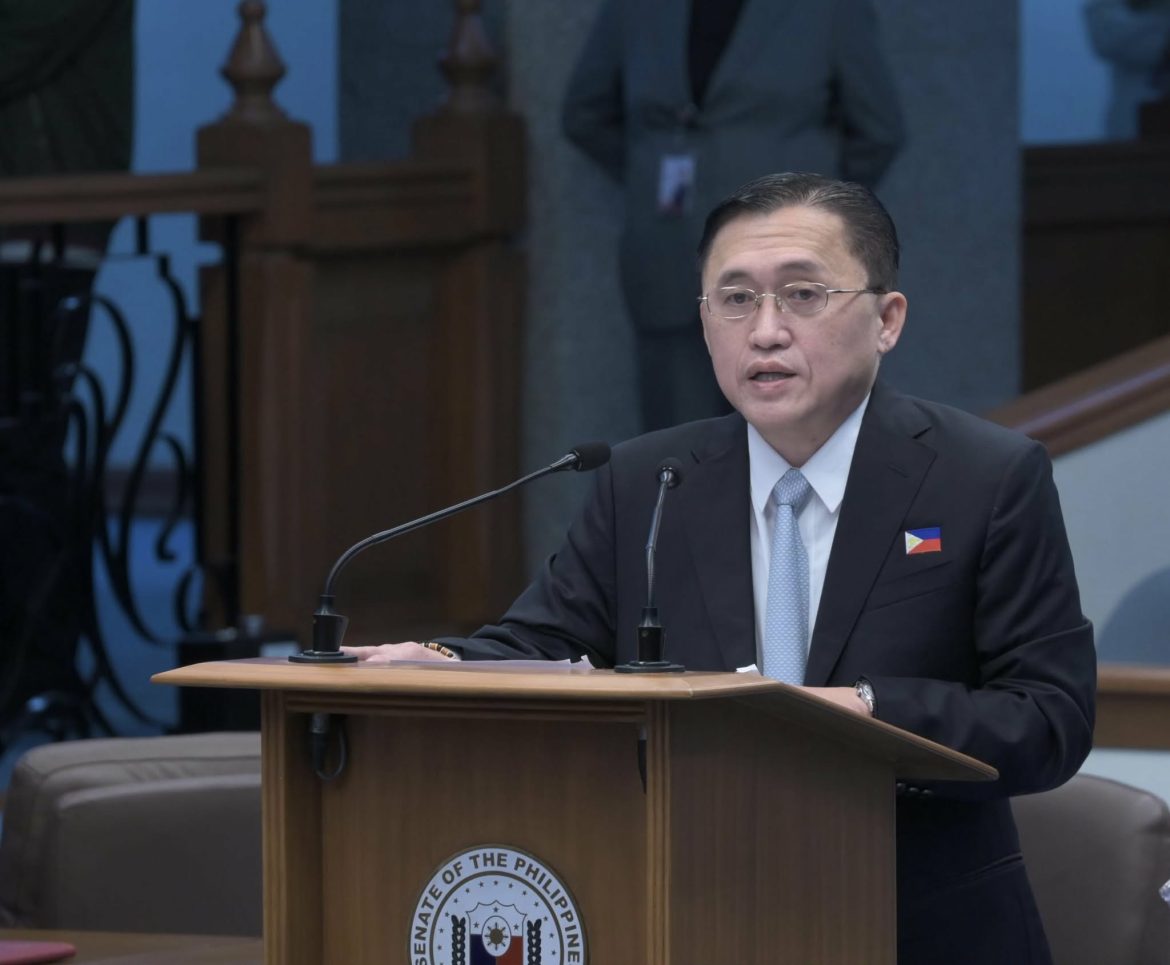
SENATOR Christopher Lawrence “Bong” Go welcomed the Senate’s approval on second reading of his sponsored bill seeking to strengthen protections for patients against hospital detention over unpaid medical expenses.
Senate Bill No. 1511, officially titled the “Strengthening the Protection of Patients Against Hospital Detention” bill, reinforces existing safeguards for patients prevented from leaving hospitals or clinics due to financial incapacity.
Go, vice chairperson of the Senate committee on health and demography, said the proposed legislation aligns with ongoing efforts to ensure financial hardship does not compound the burden of illness.
“Kapag gumaling na ang pasyente at sinabi na ng doktor na maaari na siyang umuwi, hindi dapat maging dahilan ang kakulangan sa pera para manatili siyang nakakulong sa ospital. Sapat na ang hirap na pinagdadaanan ng isang pamilya kapag may nagkakasakit,” Go said.
The senator emphasized that patients who are medically cleared for discharge should be allowed to return home under reasonable legal safeguards, even if their families cannot immediately settle their bills.
He added that the bill also balances patient protection with the operational needs of healthcare facilities.
“Naiintindihan natin na may obligasyon din ang mga ospital at kailangan nilang magkaroon ng sapat na pondo para magpatuloy ang kanilang serbisyo. Kaya ang mahalaga rito ay magkaroon tayo ng patas at makataong sistema—protektado ang pasyente at may mekanismo rin para mapangalagaan ang mga health facilities,” he stressed.
The measure strengthens Republic Act No. 9439, which prohibits hospitals from detaining qualified patients solely for nonpayment and allows discharge upon fulfilling specific requirements, such as executing a promissory note.
SBN 1511 introduces stiffer penalties for violations following plenary deliberations aimed at balancing patient rights with facility sustainability.
“Ang karapatan sa kalusugan ay hindi dapat nakadepende sa kapal ng bulsa,” Go added, noting that vulnerable families are often financially devastated by severe illness or emergency care.
The initiative complements Go’s earlier health legislation, including RA 11463 (Malasakit Centers Act of 2019), which established one-stop shops for medical assistance, and RA 11959 (Regional Specialty Centers Act), alongside support for local Super Health Centers.

THE 10TH Infantry Division graduated 550 new CAFGU Active Auxiliaries (CAAs) on Friday, Aug. 14, boosting local defense and disaster response capabilities across the region.
The graduates completed the 45-day CAA Basic Military Training Class 02-2026 at the 10th Division Training School in Camp General Manuel T. Yan Sr.
As part of the integrated territorial defense system, the new auxiliaries will help secure peace gains in areas previously impacted by the Communist Terrorist Group and assist in external security operations.
The force was also trained to support Humanitarian Assistance and Disaster Response (HADR) missions, enhancing regional disaster resilience.
Keynote speaker COL Silas Trasmontero, 10ID chief of staff, urged the new graduates to uphold discipline and integrity as they deploy to their respective assignments.
10ID commander MGEN Alvin Luzon underscored the dual nature of their role in community protection and emergency response.
“Your training has prepared you not only to protect communities, but also to serve them when they need you most,” Luzon said. “Carry your responsibilities with discipline, integrity, and dedication, and always remember that your readiness must translate into meaningful service to the Filipino people.”
The addition of the 550 auxiliaries reflects the division’s ongoing effort to strengthen reserve forces supporting active military operations and local community security throughout its area of responsibility.
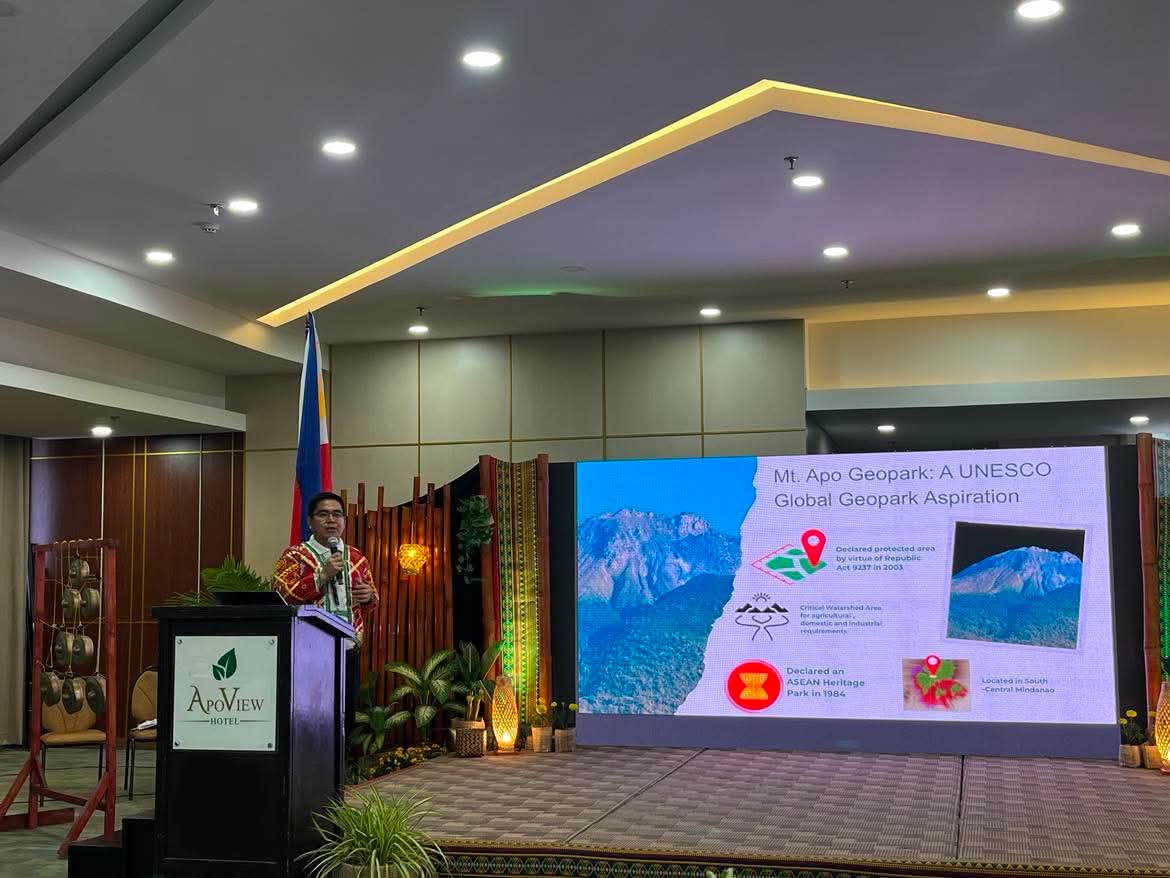
OFFICIALS of the Mount Apo Natural Park (MANP) presented their official bid to international evaluators to secure the status of UNESCO Global Geopark and become the second site in the Philippines, after Bohol, to receive the designation.
Dr. Guy Martini of France and Chenggong Zhang of China arrived in Davao City on Sunday, Aug. 16, to conduct a five-day on-site validation mission.
The evaluators will verify the self-evaluation document and application covering conservation, education, and sustainable community-led development submitted jointly by the Department of Environment and Natural Resources (DENR) regional offices XI and XII.
During the Partners in Stewardship: Mt. Apo Geopark Stakeholders’ Dialogue at Apo View on Sunday, protected area superintendent Clint Michael Cleofe outlined the framework of the 640-square-kilometer (64,000-hectare) protected area.
First declared a national park in 1936 and legally gazetted under Republic Act 9237 in 2003, Mount Apo traverses seven local government units across two administrative regions XI and XII.
Cleofe detailed the primary grounds anchoring Mount Apo’s international geological significance: geological tectonics, clean energy, biodiversity and indigenous culture.
MANP has globally rare double-verging arc-arc collisions of the Molucca Sea Plate and the Philippine Sea Plate, which gave rise to the country’s highest peak.
Located within MANP is a world-class geothermal production field operated by the Energy Development Corporation and Philippine National Oil Corporation.
Cleofe added that there is a high level of species endemicity directly linked to the mountain’s varied abiotic features.
MANP has a deep cultural integration with three resident indigenous groups: the Bagobo Tagabawa, Bagobo Klata, and Obu-Manobo.
Following initial activities with the Bagobo Klata community, the two-person UNESCO evaluation team will visit Indigenous Cultural Communities in Digos City and Santa Cruz, Davao del Sur, to meet with members of the Bagobo Tagabawa and Obu-Manobo tribes.
Initial preparation for the application started in 2022, culminating in the formal submission of the application.
In addition to cultural heritage sites, the itinerary includes visits to local schools, community-based eco-tourism programs such as Lake Agco hot springs, and the Mount Apo Geothermal Production Field operated by the Energy Development Corporation in Cotabato Province.
The evaluators will compile a report to be vetted by member states of the UNESCO International Geoparks and Geosciences Programme.
DENR XI regional director Ma. Mercedes Dumagan emphasized Mt. Apo’s landscape possesses geological, biological, and cultural values “that deserve not only national recognition but also a place among the world’s most outstanding territories.”
For Martini, working on Geopark is “looking much more than simply a territory well-managed” but “to come back to a knowledge and a sense of the place, a holistic sense.”
“By mixing an effusion with all our heritage, the cultural, the natural, the geological, and the intangible, we can maybe develop in this territory a new policy of sustainable development towards our population, making our local population proud to be there,” Martini said.
Zhang, on the other hand, said he looks forward to visiting geo-sites and meeting the communities, as their role as evaluators is to help “tell the beautiful story of Mt. Apo to the whole world.”
“We are here not just to conduct the evaluation. We are here to help; we are not to judge. We want to see how you successfully connect geo-heritage, clean geothermal energy, and community development,” he said.
A final decision from UNESCO on Mount Apo’s nomination is expected by 2027 following the completion of the full evaluation cycle.

BALANGAY City High Performing Arts from the City of Mati, Davao Oriental claimed their 3rd championship in the Indak-Indak sa Kadayawan 2026 Open Category.
The Hall of Famer was awarded at the first-ever Indak-Indak grand showdown held in the Davao City Coastal Road on Sunday evening, Aug. 16.
The group also bagged Best in Artistic Design, Best in Choreography, and Best in Streetdance with P50,000 each.
Balangay brought home P2 million in cash as the grand champion and P150,000 in cash for the minor awards.
It bested seven other contingents from Davao de Oro, Sarangani province, and Surigao.
Sindac Anib Performing Ensemble of Bislig City, Surigao del Sur won 2nd place and Best in Music.
The group brought home P800,000 for the major award and P50,000 for the minor award.
Nagadayawa Dance Artist Ensemble of Pantukan, Davao de Oro was the third place and brought home P500,000.
Panay National High School Hamungaway Performing Arts Group from Sto. Nino, South Cotabato won 4th place and P300,000, while Lumad Mainitnon Folkloric Group of Mainit, Surigao del Norte won 5th place with P200,000.
Hakot awards
In the Davao City school-based category, Mana Performing Arts Ensemble of Daniel R. Aguinaldo National High School defended their crown in the Davao City school-based category.
Apart from the P1.7 million grand prize, DRANHS also secured all four special awards: Best in Artistic Design, Best in Music, Best in Choreography, and Best in Street Dance for P50,000 each.
Meanwhile, the Sta. Ana Performing Arts Guild of Sta. Ana NHS secured second place with P700,000; Lapulapu ES was 4th with 400,000; Tribung Bago Gallerahanun of Don Enrique Bustamante NHS was 3rd with P300,000, and San Roque Central ES was 5th with P200,000.

CEBU CITY, Philippines – Cebu-based shipping operator Aznar Shipping Corporation (“Aznar Shipping” or the “Company”) is supporting cadetship programs for the upcoming academic year by providing onboard training opportunities to more than 200 aspiring seafarers, helping address the maritime crew shortage in Central Visayas.
Based on industry estimates, Central Visayas has around 525 active shipping vessels requiring approximately 2,625 officer-level personnel, composed of 1,575 deck officers and 1,050 engine officers. The region, however, faces an estimated shortage of 1,446 officers, equivalent to a 55% gap from the required crew complement. This includes a shortage of 938 deck officers and 508 engine officers.
To help address this gap, Aznar Shipping has partnered with maritime training and educational institutions, including Palompon Institute of Technology, University of Cebu, University of the Visayas, Philippine Maritime Institute in Bohol, and Capitol University in Cagayan de Oro, to support cadetship and apprenticeship programs through actual onboard training.
“The future of Philippine shipping depends not only on modern vessels and stronger routes, but also on the young seafarers who will operate and sustain the industry. We want to make sure that financial limitations do not prevent hardworking and deserving cadets from getting the onboard experience they need. If they have the discipline, grit, and perseverance to pursue this profession, we want to help open that door for them,” Kyle Alexander Aznar, President and CEO, said.
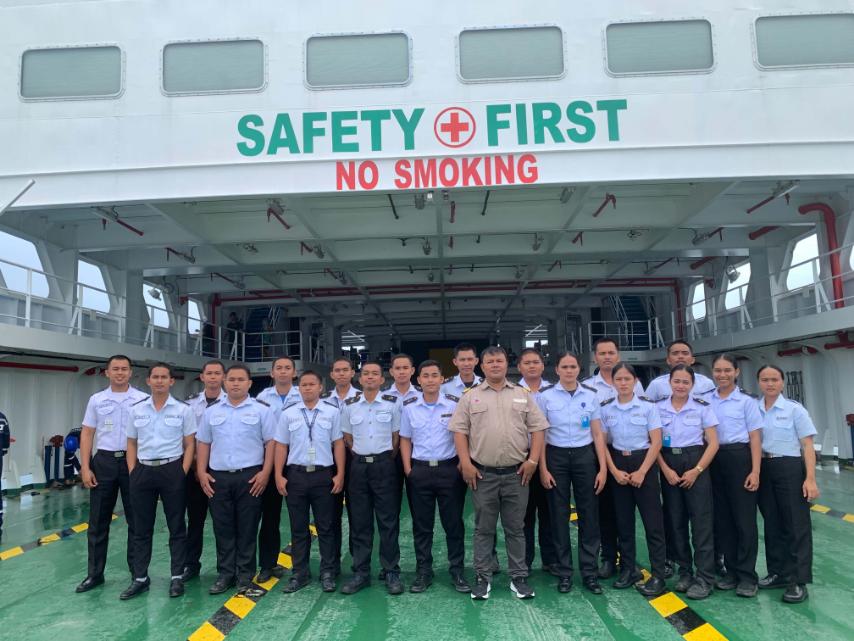
Aznar Shipping is among the few domestic shipping companies that do not charge apprenticeship fees, removing a major financial barrier for students who need vessel exposure to complete their training and pursue careers in the maritime industry.
Through the program, cadets are given practical exposure to Aznar Shipping’s inter-island operations across the Visayas. The Company operates across six ports and serves major routes that support trade, mobility, and regional connectivity, including Danao City, Cebu to Isabel, Leyte; Tabuelan, Cebu to Escalante City, Negros Occidental; and Bogo, Cebu to Palompon, Leyte.
In 2025, according to the Philippine Ports Authority, the Visayas accounted for 48.56% of total maritime passenger traffic and 50% of total ship calls in the Philippines, underscoring the region’s critical role in domestic shipping and the need to sustain a skilled maritime workforce.
“Inter-island shipping is essential to the Visayas economy because it moves people, vehicles, and goods across island communities. As demand for reliable shipping grows, the industry must also ensure that there is a strong pipeline of trained maritime professionals who can support safe, efficient, and responsible operations,” Aznar added.
The initiative forms part of Aznar Shipping’s broader commitment to maritime workforce development and responsible business practices. By supporting cadetship programs, the Company aims to contribute to the long-term growth of the domestic shipping industry while helping young Filipinos build meaningful careers at sea.

SENATOR Francis “Chiz” Escudero is pushing for a nationwide ban on gambling advertisements across all media platforms to curb addiction and protect vulnerable Filipinos.
In his “Chiz Wiz! Usapang May Laman” podcast aired on Sunday, Escudero discussed his proposed measure, Senate Bill No. 2347, which seeks to set firm, legally enforceable limits on how gambling platforms promote themselves.
“Iyan ‘yung logic ng ating proposed legislation, huwag padaliin … Paano ba pahirapan ‘to para hindi basta-basta makapaglaro,” he stressed, noting that online gaming has become pervasive and easily accessible to adults and minors alike.
According to Escudero, there is a need to institutionalize the ban on gambling‑related advertising through legislation, to include the Ad Standards Council’s voluntary guidelines requiring members to remove gambling imagery and paraphernalia across all media platforms because they are not legally enforceable.
This has prompted him to file SB 2347 to prohibit all forms of gambling sponsorships and advertisement across television, radio, print, online platforms, and social media, which he called the “first step in a broader effort to reduce gambling‑related harm.”
“Ang kailangan ng batas ay itong sa advertisement dahil kailangan mong i-regulate dito ‘yung mga private companies,” he said.
The Bicolano senator said the country is moving toward a regulatory path similar to the tobacco industry, which began with the passage of Republic Act 9211 banning, among others, cigarette advertising and later expanded to include graphic health warnings.
He noted that while many countries have long banned tobacco promotions, only a few impose strict prohibitions on gambling ads. Spain limits broadcast hours, and bans welcome bonuses; Italy’s Dignity Decree prohibits gambling advertising across all media and sports sponsorships; New Zealand bans affiliate marketing for online gambling, while China prohibits advertising for any internet or real‑money gambling.
According to Escudero, these examples show that full advertising bans remain rare globally, underscoring the significance of the Philippines’ move toward stronger industry regulation and consumer protection.
Content creator and anti-gambling advocate Carlo Ople expressed support for the passage of SB 2347, saying online gambling apps are intentionally engineered to be addictive. “It was designed specifically to get you addicted … painless, effortless, and addictive,” he told the senator during the podcast.
Meanwhile, recovering compulsive gambler Darren Telan committed to advocate for the legislation as he admitted that gambling advertisements are direct triggers for individuals trying to recover. “Kapag kami nakakita ng ads, babalik or trigger sa amin ‘yun,” he said.
Escudero said his proposed measure lays the groundwork for a more comprehensive regulatory framework for gambling in the Philippines.
The bill prohibits gambling advertisements and promotions, bans the use of celebrity endorsers and influencers, disallows bonus incentives that encourage betting, and bars the placement of gambling content across online, electronic, and physical media.