

BY ALEX ALAGON

BY ALEX ALAGON

MANILA, PHILIPPINES — Monde Nissin Corporation received a Special Citation for Obliged Enterprises (OE) at the 2026 Extended Producer Responsibility (EPR) Recognition Program, organized by the Department of Environment and Natural Resources (DENR) and the Philippine Alliance for Recycling and Materials Sustainability (PARMS).
The recognition highlights the company’s efforts to advance responsible packaging, circularity, and plastic waste management under the Philippines’ EPR Act. It affirms Monde Nissin’s commitment to environmental stewardship and its broader aspiration to improve the well-being of people and the planet while creating sustainable solutions for food security.

As part of its efforts to reduce plastic at source, Monde Nissin reported a total reduction of 176,000 kilograms of plastic between 2023 and November 2025 through packaging redesign and operational efficiencies. Key initiatives included lightweighting and component removal in Monde Mamon packaging, avoiding approximately 80 metric tons of plastic; eliminating garnish sachets in Lucky Me! Mini Go Cup, which prevented an additional 96 metric tons of plastic waste in 2023; resealable Lucky Me! Salu-Salo packs, reducing plastic use by 25% at the outer packaging level; and lightweight EcoLean packaging for GoodNom Gata.
Beyond reduction, Monde Nissin made significant progress in advancing circular packaging. In 2024, 94% of the company’s plastic packaging by volume consisted of mono-material plastics, bringing it closer to its target of 95% mono-material packaging by 2025. The company also achieved 100% recovery and diversion of its obligated plastic footprint in both 2023 and 2024, including flexible plastics that are traditionally difficult to recycle.
Monde Nissin’s sustainability initiatives extend to community-centered circular systems. Through the Aling Tindera Program, implemented in partnership with PCX Markets and HOPE, the company integrates women micro-entrepreneurs into plastic recovery networks. In 2024 alone, the program helped recover 600 metric tons of multi-layer plastic waste while generating approximately ₱1.5 million in additional income for participating women entrepreneurs.
The recognition from DENR and PARMS underscores the role of collaboration among government, industry, and communities in addressing plastic waste challenges. For Monde Nissin, these initiatives form part of a broader commitment to building sustainable food systems—one driven by continued investment in responsible packaging and circular solutions, and aimed at a future that balances innovation, environmental responsibility, and long-term food security.

Aligned with this year’s national theme, “WEcanbeEquALL: Navigating Our Future, Together,” Aboitiz InfraCapital’s (AIC’s) Women’s Month celebration highlights the role women play in shaping infrastructure that improves everyday life—from enabling safe travel and reliable water access to strengthening digital connectivity.
Through its #WomenBuildForward campaign, AIC, the infrastructure arm of the Aboitiz Group, spotlights the stories and contributions of women across its businesses, demonstrating how inclusive leadership and collaboration strengthen the way the company builds and operates infrastructure.
At AIC, advancing gender equality means creating an environment where team members can contribute their perspectives, grow in their roles, and support one another’s success. This reflects the broader message of this year’s theme—that building a more inclusive future requires shared responsibility and collective action.
“Our work in infrastructure is ultimately measured by the impact it has on communities,” said Cosette V. Canilao, President and CEO of Aboitiz InfraCapital. “Women across our organization bring valuable insights, leadership, and empathy that help shape how we approach challenges and serve the people who rely on our infrastructure every day.”
Across AIC’s businesses, women are helping translate this commitment into action—whether through frontline operations, technical expertise, or roles that support projects behind the scenes.
For Tess Labesores, Chief Human Resources Officer for Mactan-Cebu International Airport, inclusion is reflected in the culture of support and collaboration within teams. Early in her journey in the aviation sector, guidance from a colleague helped her navigate the complexities of entering a new industry. Today, she sees that same spirit of mentorship and encouragement reflected across the organization.
“Seeing how women across our teams bring dedication, empathy, and excellence to their work—whether in frontline operations, technical roles, or leadership positions—is something I truly value,” she shared. “It’s also a reminder of how powerful it is when women intentionally support and uplift one another.”
At the operational level, Mae A. Perez, a Terminal Duty Officer at Laguindingan International Airport, believes inclusive workplaces empower individuals to grow into their roles with confidence. Early in her career, she learned to overcome hesitation by studying past incidents and learning from experienced officers, which helped her develop the ability to anticipate and address operational challenges.
For Perez, infrastructure requires both technical strength and empathy. “Strength ensures our systems are dependable,” she said, “while empathy reminds us that the work we do ultimately supports people’s safety, convenience, and quality of life.”
In the water sector, Monique Cardenas, Business Development Manager for AIC Water, sees infrastructure as a service that directly sustains communities.
“Providing water and managing wastewater is more than just a job—it’s a vital service that keeps communities running,” she shared. “Technical reliability ensures our partners can depend on the system, while empathy reminds us that every unit of water supports homes, businesses, and livelihoods.”
For Hazel Alcontin, SAQ Officer at Unity Digital Infrastructure, inclusion also means ensuring that infrastructure considers the needs of the communities it serves.
“The towers we build don’t just support networks—they support education, business, and the everyday lives of communities,” she said. “When infrastructure balances technical, social, and cultural considerations, it helps ensure communities benefit from connectivity.”
Meanwhile, Toni Inot-Retuya, Legal and Compliance Manager at Apo Agua, shared how stepping into a highly technical industry required determination and continuous learning. Assigned to handle permitting for a hydropower facility despite having no background in the power and water sectors, she immersed herself in research and on-site operations to build her expertise.
“Behind every pipeline, permit, or project are real people,” she said. “When essential services like clean water reach communities, you realize the work we do contributes to something fundamental to health, safety, and quality of life.”
At LIMA Water, Jeela Tolentino, a Laboratory Supervisor, underscores the importance of maintaining high standards to ensure safe and reliable water services. Balancing her professional responsibilities with motherhood, she takes pride in guiding her team to consistently deliver quality outputs that support operations and environmental standards.
For Ma. Binabeth Duarte, a Firefighter with the Aircraft Rescue and Firefighting (ARFF) team of Bohol-Panglao International Airport, inclusion also means demonstrating that women can thrive in roles traditionally seen as physically demanding. Through discipline, training, and teamwork, she helps ensure safety and readiness for passengers and airport communities.
Even behind the scenes, women play an important role in sustaining infrastructure systems. Lyka Rumbaoa, a Controllership Specialist at AIC, reflected on how financial stewardship supports the long-term sustainability of projects.
“Much of our work happens behind the scenes,” she shared, “but it’s meaningful knowing that what we do supports systems communities rely on—from airports connecting people to water reaching households.”
Together, these stories reflect the spirit of WEcanbeEquALL—a reminder that infrastructure becomes stronger and more responsive when diverse perspectives help shape it.
Through #WomenBuildForward, Aboitiz InfraCapital celebrates the women whose dedication, expertise, and leadership continue to strengthen infrastructure and empower communities across the Philippines—demonstrating that progress is most meaningful when it is built together.
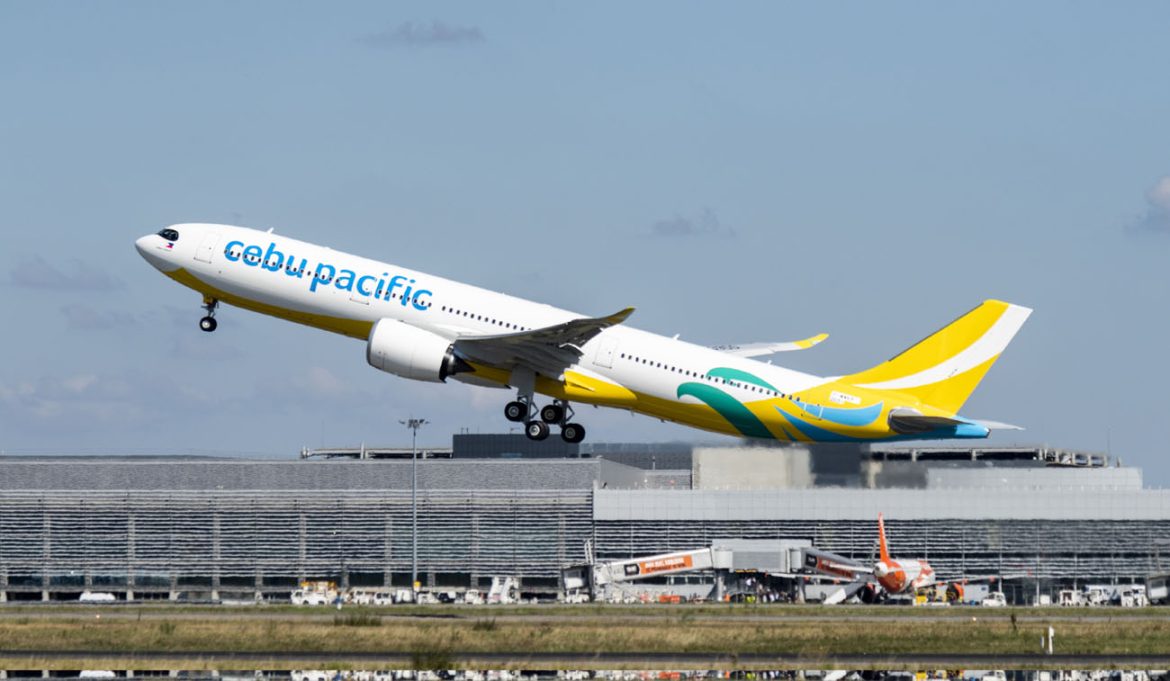
Cebu Pacific wraps up its 30th anniversary month celebration on a high note as it rolls out another round of the Super Seat Fest, with up to 750,000 seats on sale to give travelers more opportunities to score the lowest guaranteed fares for their dream vacations.
From March 27 to 31, travelers may book flights to domestic and international destinations on sale for as low as PHP 88 one-way base fare, exclusive of fees and surcharges.
The travel period runs from July 1, 2026 to March 31, 2027, giving travelers more flexibility to plan trips for summer getaways, autumn foliage views, and winter holidays.
Exploring the Philippines is now more seamless than ever, made possible by CEB’s extensive domestic network. From its key hubs in Manila, Clark, Cebu, Davao, and Iloilo, travelers can conveniently fly to destinations such as Puerto Princesa, Boracay, Cagayan de Oro, and Bohol, among others. Whether it’s a quick family getaway, a trip with friends, or a solo escape, CEB’s wide reach offers easy access to some of the country’s popular leisure destinations.

For international adventures, travelers can conveniently fly to Hong Kong, Japan, Taiwan, Vietnam, and South Korea via CEB’s major hubs across the country. From Hong Kong’s iconic skyline and Japan’s blend of tradition and modernity to Taiwan’s vibrant night markets, Vietnam’s scenic landscapes, and South Korea’s dynamic mix of culture and city life, each destination offers a unique experience.
CEB is holding its month-long anniversary Super Seat Fest to thank passengers for their unwavering support throughout the airline’s 30 years in service. From its maiden Manila to Cebu flight on March 8, 1996, the airline has flown over 250 million passengers across its widest Philippine and international network and continues to offer affordable and accessible flights.
CEB currently operates in 35 domestic and 26 international destinations spread across Asia, Australia, and the Middle East.
For an enhanced travel experience, passengers may avail of Go Easy when booking and get discounts on check-in baggage and seat selection. Pre-ordered meals are also available online, with options including Beef Adobo, Grilled Chicken Wrap, and Pinoy Spaghetti.
CEB offers various payment options, including credit or debit cards and e-wallets, to book flights and buy add-ons.

THE FUEL supply squeeze in the Davao Region showed signs of recovery on Friday as authorities confirmed that half of the gas stations previously forced to shut down have now reopened their pumps.
As of March 27, Police Regional Office XI spokesperson Major Catherine Dela Rey reported that only eight gas stations remain closed across the region, down from the 16 closures reported just two days ago.
According to PRO XI, the updated figures for remaining closures are:
“Stations in Davao City and Davao del Norte have begun reopening,” Dela Rey said. “We are now down to eight remaining closures [out of the original 16 recorded at the height of the scarcity].”
Despite the positive trend, the Special Task Force Unified Response to Fuel Issues remains on high alert. Under the State of National Energy Emergency, police are continuing “dipping” inspections of underground tanks to verify actual fuel levels.
These inspections, authorized by the Department of Energy (DOE), aim to distinguish between genuine supply exhaustion and potential hoarding.
Dela Rey reiterated that while the PNP conducts the inspections, the DOE remains the sole authority to penalize violators.
“Our role is to validate if these stations are truly at the critical 10 to 15 percent supply mark,” Dela Rey explained. To date, no official cases of hoarding have been documented in the region.
Public order remains stable
While the State of National Energy Emergency remains in effect, the Davao City Police Office (DCPO) reported that the anticipated friction between the transport sector and the public has not materialized.
DCPO spokesperson Captain Hazel Caballero confirmed that all 19 police stations in the city have registered zero fare-related disputes. “There is a sense of mutual understanding between drivers and passengers regarding the current volatility,” Caballero noted.

THE DEPARTMENT of Agriculture-Mindanao Inclusive Agriculture Development Project (DA-MIADP), with the backing of the World Bank, is stepping up efforts to strengthen oversight and accelerate the implementation to ensure timely delivery, improve quality standards, and reinforce accountability in the rollout of agri-infrastructure and enterprise initiatives across Mindanao.
This was the consensus reached during the Technical Discussion and Exit Conference in Davao City, following the 2-day field visit by the World Bank’s rural infrastructure consultant, Engr. Raoul Azanza, and social development specialist Annabelle Vitti C. Valenzuela to assess progress and address implementation challenges of the subproject implementation in Barangay Gupitan in Kapalong, Davao del Norte, and Barangay Little Baguio in Malita, Davao Occidental.
“We remain open to recommendations and encourage honest dialogue with our partners from the World Bank and from the LGUs. We recognize differing perspectives, but ultimately, we strengthen our shared goal of completing all subprojects,” said deputy project director Noel T. Provido on behalf of project director Macario Gonzaga.
Provido further underscored the commitment of MIADP to uphold quality standards, particularly those outlined in the Institutional Strengthening Action Plan (ISAP), in line with World Bank guidelines.
Engr. Mary Ann Christy S. Cotejo of RPCO XI highlighted key challenges and recommendations from ongoing subprojects. These included developments in barangays Little Baguio and Gupitan farm-to-market roads (FMRs), and the dialogues with the Datu Danwata Women’s Association (DDWA) for their coffee enterprise subproject, reflecting both operational hurdles and opportunities for improvement in the field.
Engr. Azanza emphasized that the catch-up plans for the delays will be implemented, and variations should be properly documented, reviewed, and approved by either PSO or RPCO. Valenzuela added that the affected schools and households must be provided with immediate resolutions.
For his part, MIADP-RPCO XI deputy project director Zabdiel Zacarias urged project teams to remain steadfast in delivering quality outcomes.
“Let this be a guide for both the PSO and RPCOs in implementing subprojects on our supported ancestral domains. These are times that test our grit, but we must challenge ourselves to perform better, uphold what is right, and support one another as a team. Constructive feedback, even when difficult, is meant to strengthen us. There are higher peaks to conquer as we work together to improve the quality of life of our Indigenous Peoples,” he said. (PR/DA-MIADP)
BY LIZA BELLE PATAGOC & MICHELLE G. RAFAEL/DNSC Interns
THE DEPARTMENT of Health (DOH) XI, Davao City Health Office, and the Philippine Society of Nephrology (PSN) Davao Chapter highlighted kidney care and prevention on March 26, 2026, at the Annex Event Center of SM City Davao.
Medical experts emphasized the importance of proper care to prevent kidney disease during the observance of World Kidney Day.
Dr. Conrad Earl Cabahug, a urologist, explained that kidney stones may be caused by both genetic and lifestyle factors.
“Is a kidney stone inherited, or is it because of lifestyle? Sadly, both are true. Kidney stones are highly genetic or hereditary. If your parents have a history of kidney stones, there is a higher possibility that you may develop them as well. However, the increasing number of cases today is largely influenced by lifestyle,” he said.
The public is urged to closely monitor diet and food intake as a key measure to prevent kidney stones.
Cabahug also stressed that kidneys should never be neglected, noting that proactive care through proper hydration, a low-sodium diet rich in fruits and vegetables, and routine health screenings can significantly lower the risk of kidney stones and other related diseases while maintaining optimal renal function.

PUBLIC utility jeepney (PUJ) drivers serving the Matina, Buhangin, and Bunawan routes stage a protest at Km. 24, Bunawan, Davao City, on Friday, March 27, 2026, as part of the 2-day nationwide strike amid the rising fuel prices.
The drivers collectively called on the national government to reduce oil prices and scrap the value-added tax (VAT) on fuel products and other basic commodities.
Mario Payot, 55, a PUJ driver, expressed concern as rising fuel prices drive up operating costs, which reduce their daily earnings.
“Ang among gisinggit ron nga mobalik lang sa normal nga presyo ang krudo para maka-cover mi sa among pagbyahe sa matag adlaw (We demand a rollback at least to normal fuel prices to cover our daily trips),” Payot told TIMES in an interview during the protest.
Payot emphasized his take-home driving a jeep with route Bunawan to Roxas via Buhangin, only netting about P200-P400 daily. He spends P700-800 for fuel by round trip, reaching up to P3,000 for the whole day trip from 5:30 until 9 p.m.
Payot said they will only break even if they extend their operations for three hours, from the previous 6 p.m. to 9 p.m.
“Ning add mig oras para naa lang gyud ma take home bisan gamay nga kantidad (We extended our hours so that we would have a take-home pay even if it’s still meager,” he stressed.
Rodel Rioja, 38, expressed disappointment over the continued rising prices of fuel, as it leaves him only P450 to take home, starting his day from 6 a.m. until 8 p.m.
He said this is significantly lower than the previous P1,000 take-home pay when fuel was ranging from P55-P60 per liter.
“Dako kaayo ang nawala sa among kita kay padulong na sa krudo, maong ang ubang driver wa na gyud ning byahe (A significant chunk of our income goes only to fuel. That’s why the other drivers have stopped),” Rioja told TIMES in an interview during the protest.
Rioja rents a jeepney with route Lasang to Roxas via Buhangin, which he pays P1,150 per day, while the fuel pay for a full tank is P2,800- P3,000.
“Agwanta lang gyud bahalag gamay kita basta naay makaon sa adlaw-adlaw (We just have to bear with our meager income so that we have something to eat every day),” he stressed.
Reny Boy Baliguat, vice chair of Kilusang Mayo Uno (KMU) Mindanao, called to scrap the 12% VAT and the excise tax to reduce the fuel prices by P20.
“Because of the 12% VAT and excise tax, an additional P20 will be added to the cost per liter in our country, further burdening the drivers here in Davao region and causing a big impact on the economy,” he stressed.
Protest centers were set up at various points: Milan Buhangin, where 20 individuals participated; Matina Crossing, which had 20 protesters, and Bunawan, with 40 drivers.
The protest in Matina and Buhangin ended at 9:30 a.m., while Bunawan ended at 10:15 a.m., as the drivers resumed operations.

THE DEFENSE team for former President Rodrigo Duterte dismissed concerns from the International Criminal Court (ICC) prosecution regarding the handling of confidential information, labeling the prosecution’s request as “unnecessary.”
The filing on March 26, authored by defense counsel Nicholas Kaufman, addressed a “peculiar” request for clarification from the prosecution concerning the role of certain individuals (whose names remain redacted) in the case.
In the document, Kaufman issued a series of formal “guarantees” to the Pre-Trial Chamber, asserting that the individuals in question have no access to the inner workings of the defense’s legal strategy.
Specifically, Kaufman confirmed that these individuals have not and will not receive any official disclosure in the case, do not have access to non-public filings, and are not entitled to legally privileged meetings or communications with Duterte inside the Detention Center.
Kaufman criticized what he described as an “implied suggestion” or “insinuation” by the prosecution that the defense might be violating Article 8 of the Code of Professional Conduct.
Kaufman rejected the “insinuation” of misconduct, reminding the senior trial lawyer for the prosecution not to believe everything he reads in the papers.”
Kaufman added a caveat to that advice: “…unless, of course, it relates to Mr. Duterte’s innocence.”
The case, officially titled The Prosecutor v. Rodrigo Roa Duterte, continues to move through the Pre-Trial stage at the ICC, with this latest exchange highlighting the increasingly friction-filled relationship between the prosecution and the former president’s legal representatives.

AMID THE global oil price hikes, the province of Davao del Norte hopes to acquire a shipment of 44 million liters of diesel from Malaysia, Governor Edwin Jubahib said in an ambush interview on March 25.
Jubahib has planned for a sit-down meeting with the representative of the King of Malaysia, Sultan Ibrahim Iskandar, regarding the prices and the computed amount of diesel coming from a Malaysian-based gas company.
The financing will be done via the Development Bank of the Philippines, along with the help of private stakeholders.
Negotiations are still on-going and a depot will be prepared once the shipment has arrived.
He also said he will inform the Department of Energy so that the companies and workers in the province will continue to operate.
The provincial government had purchased two large mobile tankers that can store 24,000 liters, used in times of shortages and for rescue vehicles during emergencies.