

BY ALEX ALAGON

BY ALEX ALAGON

MANILA, Philippines — Shincheonji Church of Jesus (SCJ) marked its 42nd founding anniversary with celebrations across the Philippines, bringing together 1,910 members at 31 onsite locations nationwide and 484 more participating virtually. The event was part of the global commemoration of the denomination’s growth from humble beginnings to a worldwide movement attracting tens of thousands of new members each year.
Globally, the main commemorative service was held on March 15 at the Cheongju Church in South Korea, attended by over 2,000 members in person and streamed live to believers across South Korea and other countries.
Chairman Lee Man-hee emphasized the importance of faith grounded in the Bible, particularly the Book of Revelation, urging members to remain faithful to what he described as the unchanging Word of God.
Founded on March 14, 1984, Shincheonji Church of Jesus began with small gatherings before expanding its presence internationally. The church attributes its continued growth to its Bible education initiatives, particularly through the Zion Christian Mission Center, which has produced large numbers of graduates from its Bible courses worldwide.
The church also cited its expanding partnerships with churches globally through various cooperation agreements. According to Shincheonji, it has established hundreds of partnerships with churches in South Korea and thousands more across dozens of countries.
Apart from its religious activities, the organization highlighted its humanitarian efforts, including blood donation drives, plasma donations during the COVID-19 pandemic, and volunteer work in disaster-affected communities. The church said it also conducts community outreach programs such as medical missions and support activities for vulnerable sectors.
Shincheonji said it intends to continue expanding its outreach while promoting what it described as faith centered on biblical teachings.

CONCRETE Stone Corp. (CSC) presented its concrete modular construction system to President Ferdinand R. Marcos, Jr. and key government officials, highlighting how factory-built classrooms can be rapidly deployed to help address classroom shortages across the country.
During the visit, officials from CSC guided the President and Education Secretary Sonny Angara through the company’s modular classroom facilities in Bataan. The system features classroom components that are manufactured in a controlled factory environment and later assembled at CSC’s Bataan plant, ensuring consistent quality and faster completion timelines.
The modular classrooms comply with Department of Education (DepEd) standards and have a floor area of 75.6 square meters, accommodating up to 42 learners and one teacher per classroom. Designed to support immediate educational needs, the classrooms demonstrate how modern construction methods can help accelerate the delivery of learning spaces.
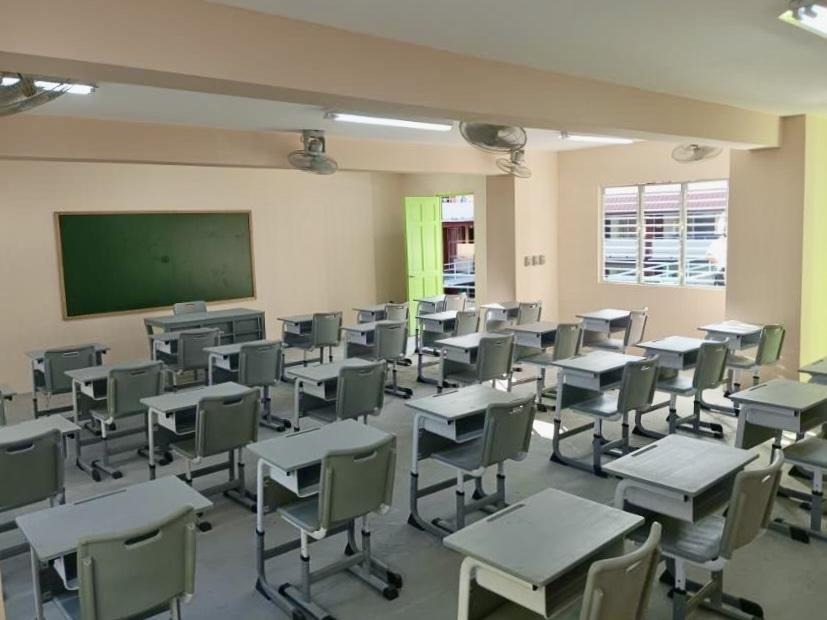
Built using factory-produced components—including walls, slabs, beams, stairs, and retaining walls—the concrete modular system enables quicker installation, improved quality control, and reduced on-site labor requirements. The structures are engineered to withstand harsh weather conditions and are resilient enough to endure earthquakes of up to magnitude 8, providing safe, durable, and eco-friendly classrooms adaptable to various educational settings.
President Marcos also visited Mariveles National High School – Cabcaben Annex (Alasasin) in Bataan, where he inspected classrooms currently being used by teachers and students. The school has been utilizing prefabricated classrooms to support its growing student population.
According to Jerry C. Perello, principal of Mariveles National High School – Cabcaben Annex (Alasasin), the prefabricated modular system allowed classrooms to be constructed in a significantly shorter period of time. This enabled the school to make the facilities available to students sooner and immediately address classroom shortages.
CSC president Engr. Alfredo Comendador, Jr. emphasized that concrete modular construction has already been widely adopted in neighboring countries such as Hong Kong and Singapore. He noted that the system helps speed up construction, improve build quality, and provide safer learning environments for students, while also supporting broader infrastructure development through faster and more resilient buildings.

Makati City, Philippines – As the world of work continues to evolve at pace, Ayala Land Offices (ALO) is transforming its flexible office offering, Clock In, into Click Space, a future-ready workspace solution designed to support businesses seeking greater flexibility and scalability.
Click Space moves beyond traditional coworking by offering plug-and-play workplaces, build-to-suit solutions, and enterprise-grade operational support, seamlessly combining workplace agility with the high standards and trusted quality of Ayala Land’s office portfolio. Through this evolution, the offering is repositioned to respond to a new era shaped by hybrid work, technological advancement, and changing industry needs.
“Click Space is not just a new name; it is a renewed promise,” said Hamm E. Katipunan, President and CEO of Ayala Land Offices. “This evolution reflects our vision to go beyond providing space. We are building ecosystems that help businesses scale, stay resilient, and thrive in a world that is changing faster than ever.”
Driven by rapid advancements in AI, emerging technologies, and hybrid work models, organizations are increasingly seeking workplaces that go beyond simply providing desks. They require strategic and adaptive environments that support growth, collaboration, and operational efficiency.
In response, Click Space integrates customizable workspaces with value-added services, enabling companies to scale efficiently within a trusted ecosystem. This direction is reflected in the new brand identity, which embodies the digital, connected, and future-ready nature of work.
Looking ahead, ALO will place stronger emphasis on attracting large, scalable tenants in innovation-driven industries such as technology, creative sectors, and professional services, helping ensure sustained demand and long-term relevance.
Preparations are underway for the flagship branch at One Ayala, which will introduce a refreshed design and an enhanced suite of services. The site will also feature the newest branch of Deuces, the beloved coffee spot that brings added convenience and vibrancy to the overall workplace experience. Expansion plans are likewise in motion, with new Click Space locations being evaluated to reach more professionals and enterprises across key business districts nationwide in the next one to two years.
While its identity and offerings have evolved, its core remains unchanged, continuing to deliver high-quality workspaces, foster meaningful community, and uphold a steadfast commitment to customer care and operational excellence. Ayala Land Offices now invites organizations to experience a future-ready workspace that seamlessly blends flexibility with the strategic advantage of build-to-suit solutions.
For inquiries and more information, please contact clickspace@ayalaland.com.ph

MANILA, Philippines – Agora (NASDAQ: API), a global leader in real-time engagement, unveiled its Conversational AI Agent solutions for Customer Service and Sales & Marketing—built on a unified platform designed to solve the technical friction that has kept Conversational AI from true enterprise-grade deployment across global markets, including the Philippines.
This arrives as the industry reaches a critical inflection point. According to Gartner, by the end of 2027, conversational AI agents are expected to automate 70% of customer interactions, and by 2028, AI agents are projected to outnumber human sellers 10 to 1. Despite this massive opportunity, many businesses remain constrained by legacy systems that are simply unable to address long wait times, rigid call routing, or inefficient outreach – creating operational strain while eroding customer trust.
While 85% of establishments in the Philippines have basic digital infrastructure, only 15% of businesses have integrated advanced AI technologies into their operations, according to the Department of Science and Technology. With Agora’s new AI Agent solutions, the company aims to help Philippine enterprises bridge this gap and improve their overall performance.
Agora’s comprehensive Conversational AI platform eliminates high-stakes production hurdles by unifying three core technologies into a single, high-performance stack:
By leveraging this high-performance stack, Agora delivers a level of operational reliability that competing voice AI solutions cannot match – ensuring natural conversational flow through ultra-low-latency interactions, crystal-clear communication on congested networks, and accurate responses in noisy environments through AI noise suppression and voice locking.
“Voice is the most natural way we communicate, but delivering real-time conversational AI at scale requires infrastructure built specifically for it,” said Tony Zhao, founder and CEO of Agora. “By solving the latency and orchestration challenges that have historically limited voice AI, we’re enabling companies to finally deploy conversational agents at scale without compromising on the quality of the customer experience.” Currently, global organizations are already deploying these capabilities to transform high-volume customer service and outbound engagement workflows.
AI customer service agents: Scaling support without compromising experience
As customer interaction volumes increase, contact centers face mounting pressure to maintain service quality while managing operational costs. Agora’s AI Customer Service Agents solve this by automating routine inquiries – such as appointment reminders, shipping updates, technical troubleshooting, and billing inquiries – providing consistent, real-time support that allows human agents to focus on more complex cases.
AI sales & marketing agents: Intelligent outreach at scale
Outbound engagement has historically relied on rigid dialers and scripts that feel impersonal to customers. Agora’s AI Sales & Marketing Agents solve this by bringing conversational intelligence to outreach – powering high-impact use cases like debt collection, payment processing, outbound lead qualification, interactive surveys, and real-time event polls – through natural, real-time voice interactions.
“The challenge with traditional market research is the friction of the initial outreach. By using Agora’s Voice AI agents to invite participants to our survey platform, we’ve seen a 10% conversion rate – a figure that was previously unattainable with manual dialing,” said Alejandro Pinto Villalba, executive director at FasesBI. “The agents handle the initial pitch and incentive explanation flawlessly, allowing us to scale our data collection and reward distribution without increasing our operational headcount.”

THE DAVAO City Police Office (DCPO) removed over ₱7.4 million worth of illegal drugs from the streets and arrested 56 individuals during a week-long anti-crime sweep ending March 21, 2026.
Acting city director Col Mannan C. Muarip said police units conducted 22 separate operations, resulting in the arrest of 26 suspects. In total, they confiscated 1,090 grams of suspected shabu with an estimated street value of ₱7,417,705.20, along with a smaller quantity of marijuana.
In addition to the drug buy-busts, the DCPO executed 30 operations targeting individuals with standing warrants of arrest. This resulted in the apprehension of nine individuals, including several tagged as “most wanted” persons in the region.
The week’s accomplishments also included:
“These achievements reflect not only the dedication of the men and women of DCPO but also the strong partnership we have with the community and the local government unit,” Muarip said.
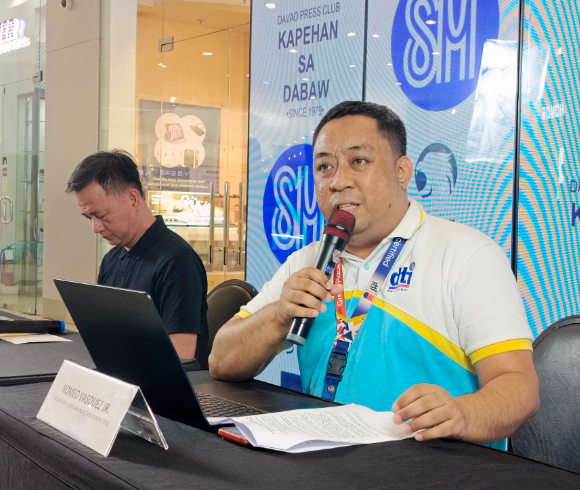
THE DEPARTMENT of Trade and Industry XI reported on Monday that prices of basic goods and prime commodities in the region remain “generally stable” amid the rising global fuel prices triggered by the Middle East conflict.
Romeo Vasquez Jr., DTI Consumer Protection Division chief, said the goods they monitored on shelves and markets are still within the suggested retail price (SRP).
“Based on the last three weeks’ monitoring of the prices and supply of the basic necessities and prime commodities, we do not see any significant effect on the price of fuel on the basic commodities,” Vasquez said during the Kapihan sa Dabaw on Monday.
Based on the latest monitoring, while some exceeded the SRP, the price variance is just below P1 per product, attributed to logistics and delivery being affected by rising fuel prices.
Citing, for example, a brand of sardines (155g) whose SRP is P20.5 but was priced at P20.85; and a brand of beef loaf (150g) which has a P21.75 SRP but was sold at P22.20.
Vasquez said establishments that sold products exceeding 10% of the SRP were asked to explain within 48 hours and justify the increase.
“We issue a letter of inquiry to them to explain the increase, but the major factor is the logistics affected by the high price of fuel,” Vasquez said.
If the response is unsatisfactory, the agency would issue a notice of violation and impose penalties on the retail establishments, including an administrative fine of P5,000 to P2 million, or worse, cancel the business permit.
Vasquez also mentioned the price rollback of some canned goods brands and bottled water, according to the recent monitoring last March 16-21.
“We in DTI, we continue to intensify our monitoring activities, we monitor weekly through our provincial teams,” Vasquez said.
To note, a total of 21 manufacturers, including canned sardines, bread, bottled water, instant noodles, coffee, canned meat, toilet soap, and candles, have committed to holding the prices for the next 30 days.
The agency reported some manufacturers committed to doing so for up to 60 days, during a meeting with the Trade Secretary Ma. Cristina Roque on March 16, 2026.
Prices are expected to remain stable, with no increase anticipated for canned sardines such as Unipak, 555, Ligo, Lucky 7, Fresca, Morjon, Golden Town, and Mega; bread products such as Pinoy Tasty and Pinoy Pandesal; bottled water such as Wilkins and Nature’s Spring; toilet and laundry soaps such as Safeguard Pure White, Tide Bar Original Scent, and Green Cross Pure White; condiments such as Datu Puti’s soy sauce and vinegar, and Lorins’ Patis: processed canned meat of CDO; and candles from Liwanag, within the next 30 days.
Meanwhile, the prices of brands such as Lucky Me, Ho-Mi, Argentina, Lucky 7, 555, Swift Premium, Wow! and Shanghai will remain at their prices for 60 days, while manufacturers of brands such as Kopiko, Nescafé, San Mig coffee 3-in-1, and Export candle have pledged to maintain current prices with no price increase at present.

SUPPORTERS of former President Rodrigo Roa Duterte are set to take to the streets on March 28, for a “Solidarity Walk” to commemorate his 81st birthday.
The event, which was announced via the former president’s official social media channels, invites the public to gather for a late-afternoon march through the heart of the city.
Participants are expected to begin assembling at 3 p.m. along Roxas Avenue, specifically on the side of Ateneo de Davao University. The walk is scheduled to begin at 4 p.m. officially.
The marchers will proceed from the assembly point towards Rizal Park, a traditional venue for major gatherings in the city.
The “Solidarity Walk” serves as a public demonstration of support for the Davao-born leader as he reaches his 81st year, who is currently detained at The Hague Netherlands.
Organizers have invited supporters to join the march as a gesture of “solidarity” and a tribute to his years of public service.
Local authorities are expected to monitor the route for traffic management, as Roxas Avenue and the streets leading to Rizal Park are among the city’s busiest corridors, especially on a Saturday afternoon.
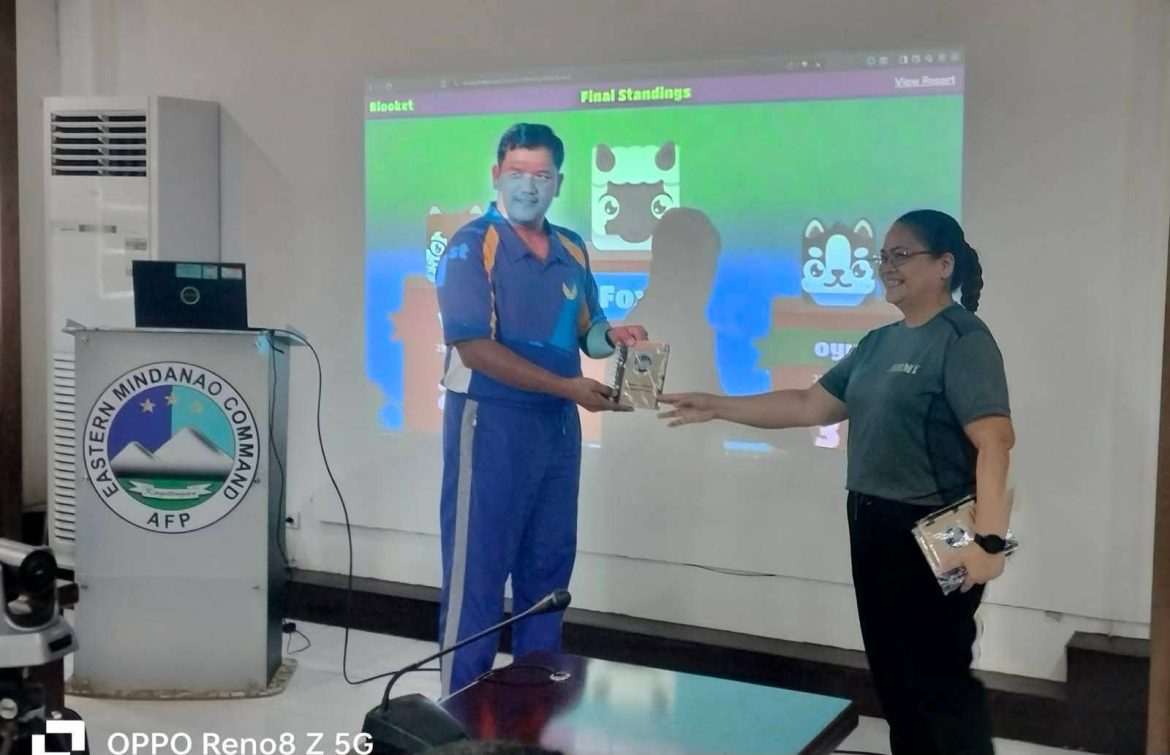
THE EASTERN Mindanao Command (EastMinCom) launched its first-quarter Cybersecurity Awareness Campaign for 2026 at Camp Panacan on March 17, emphasizing that digital defense is now a “shared responsibility” across all ranks.
The initiative was led by the Office of the Assistant Chief of Unified Command Staff for Communications, Electronics, and Information Systems (CEIS, U6), headed by Col. Rosa Ma Cristina Rosete-Manuel.
Conducted in collaboration with the AFP Cyber Command, the training focused on strengthening the resilience and digital practices of personnel, with a particular focus on newly assigned members.
The event saw high-level engagement, with the command’s primary staff and officers in attendance to signal leadership’s commitment to securing the organization’s information infrastructure.
Subject matter experts delivered briefings on the evolving global threat landscape, core security principles, and defensive behaviors.
A highlight of the session was a live social engineering demonstration, illustrating how attackers use psychological manipulation to breach secure systems.
To reinforce the technical lessons, participants engaged in a competitive “Blooket” challenge, a gamified learning tool designed to test retention of cybersecurity protocols.
Top Performers recognized during the challenge included:
In her closing remarks, Rosete-Manuel underscored that cybersecurity is no longer a niche technical concern but a fundamental part of modern military discipline.
“Cybersecurity is no longer just a technical issue; it is a shared responsibility and a daily discipline—especially in an environment where even the websites of major institutions and security organizations are being targeted,” Rosete-Manuel said. “We hope that what you learned today will not only stay with you but will also be practiced in your daily tasks to help protect our systems, our organization, and our mission.”

THE DAVAO City Police Office (DCPO) will deploy more than 1,000 law enforcers and auxiliaries to secure 46 churches for the observance of Palm Sunday on March 29, 2026.
DCPO spokesperson Captain Hazel Caballero announced the security plan on Monday, noting that the deployment is part of the city’s proactive measures for the Lenten season.
According to Caballero, the security force will consist of 608 personnel from the DCPO and 476 from the Public Safety and Security Auxiliary, bringing the total deployment to 1,084.
The personnel will be stationed at key religious sites to manage crowds and ensure the safety of churchgoers during the start of Holy Week.