



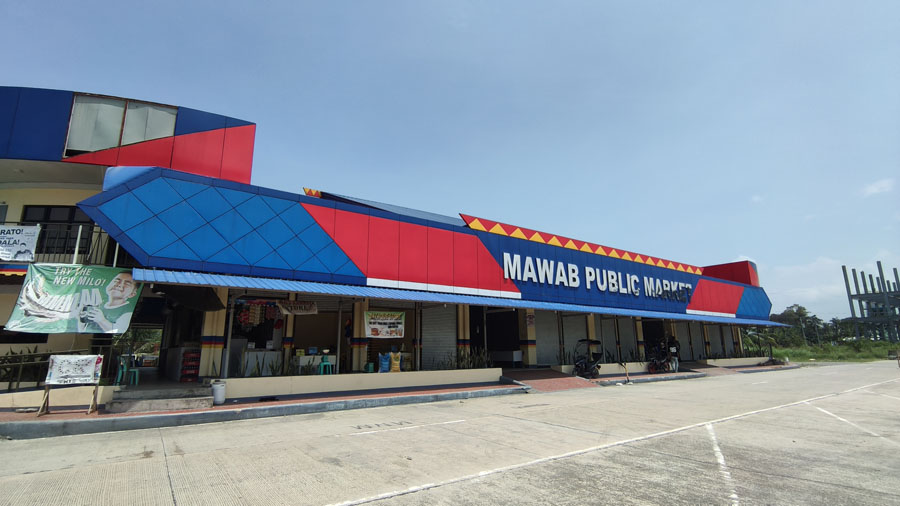
WHAT HAPPENS when the need to keep the lights on begins to surge beyond the cost of putting food on the table? For many residents in Mawab town, Davao de Oro, this past September’s electricity bill arrived as a shock—an unwelcome guest that demanded more than how much they could afford.
In one of the homegrown bakeshops in Mawab, Mimi Permangil, 27, stood behind glass counters attending to a customer as she shared her experience with their current utility provider.
She did not even need a long prompt, as she had a lot to say about her September bill.
For one, she saw her electricity bill soar to P1,500 in September, which wrecked her household budget. According to her, she only pays, on average, around P600 for her electricity bill.
With the sudden increase, she had to take from their food expenses to settle the bill. “Regardless of how I feel about it, we still have no choice but to pay. We couldn’t afford to have our electricity cut off,” she said.
“I think that electricity bill was already 50% of my budget for that month, so it wasn’t fun,” she added.
Unlike in previous years, the electricity provider no longer gives a two-month grace period to settle the balance. She said that when the consumer receives the dreaded notice of disconnection in red ink, the process moves quickly. They are given less than an hour to visit the office to pay the amount. Otherwise, a dark house greets them when they return home.
She had no idea how their electricity bill skyrocketed when everybody was either at work or in school. Her own shift starts at 7 a.m. and ends at 3 p.m., but she doesn’t go home immediately. So, the only time everyone uses electricity at home is when the daylight starts to fade.
Still, Mimi believed it was useless to contest the bill or ask how it’s computed. A quick check with her co-workers told her all she needed to know. Everybody confirmed what she already suspected. Electricity costs had indeed gone up.
“It’s really difficult because all food prices in the public market also went up. If this situation continues, it’s going to be trouble for us,” she said, not a tinge of happiness in her smile.
When told about Davao Light and Power Co. taking over Nordeco’s franchise in the area, she only had one wish: “I hope we can get better rates. I don’t care about the brownouts because we are not always at home. But if I pay less on my electricity bill, that would go a long way to help our household budget.”
Good news, bad news
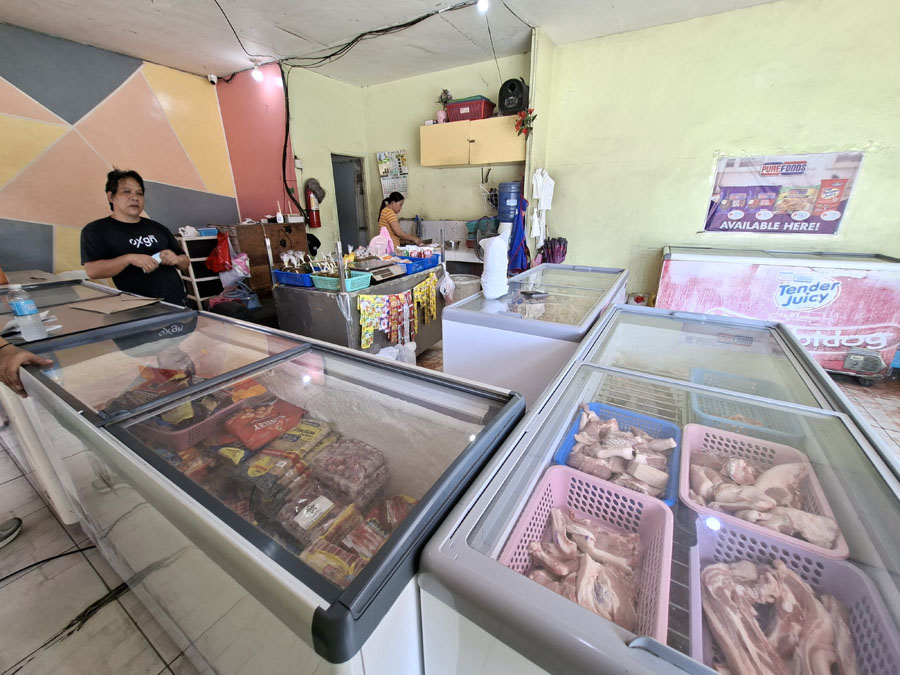
In true Filipino fashion, Benny Amigo, 47, a meat shop owner, couldn’t help but crack a joke in the face of adversity. “At least, we don’t deal with day-long brownouts anymore, unlike before, if what they are saying is true,” he said.
Benny is not a native of Mawab, having relocated to town from New Corella, Davao del Norte, two years ago to open his business. After hearing the horror stories about unstable power, he prepared for the worst. “But it turns out that we only get 45 minutes to one hour of brownouts here, which is nothing to be worried about even if I run a frozen meat business,” he said.
However, when asked about her September bill, Benny’s face winced at the reminder. “I paid P18,000, which was really shocking since I only pay between P12,000 and P14,000 monthly,” he said.
Good thing his earnings for that month were sufficient to absorb the cost difference, but he admitted that it wouldn’t be sustainable if the electricity bill continues to rise.
Running a business always forces him to look at the bottom line. “Now, if Davao Light will indeed come here, I hope their rates are cheaper. At the end of the day, I am a businessman. I want to make as much profit as I can,” he said.
Back in New Corella, he recalled paying only about P300 a month. To be fair, that’s for his household, as he had no business then.
Still, he is familiar with Davao Light’s services and had high hopes that the utility provider could replicate its service and better rates from its franchise areas once it started operating in Mawab.

Expenses racking up
Just like the rest of the town’s residents, egg vendor Ching Cabatuan, 38, wasn’t spared from the sudden spike in electricity expenses. “I was surprised to read that my bill reached P1,300 for September.
Apart from a minimal number of appliances—three electric fans and one seven-cubic refrigerator—Ching also said that she’s at work from 6:30 a.m. until 6:30 p.m. “We are only four living in the house, and we are home only at night. So, that’s the only time we use electricity.”
The P1,200 might not seem much, but that amount was already a quarter of the family’s monthly expenses of around P5,000.
“I also have one college student and one high school student, so from tuition and their daily allowance, the basic living expenses can really rack up,” she said. “I am not blaming our situation entirely on the high electricity bill, but it added to the burden.”
Hopefully, she said, Davao Light can ease their burdens and give them better rates and stability. “I think it’s more like we don’t know what to expect with our electricity bill. Sometimes, the costs skyrocket without warning, like what happened last September, and suddenly, we have to find money quickly or else.”
“If Davao Light comes here, hopefully they can give us more clarity,” she added.

