
THE PHILIPPINES classification as an “upper middle-income country” (UMIC) by the World Bank does not reflect the economic reality of most Filipinos.
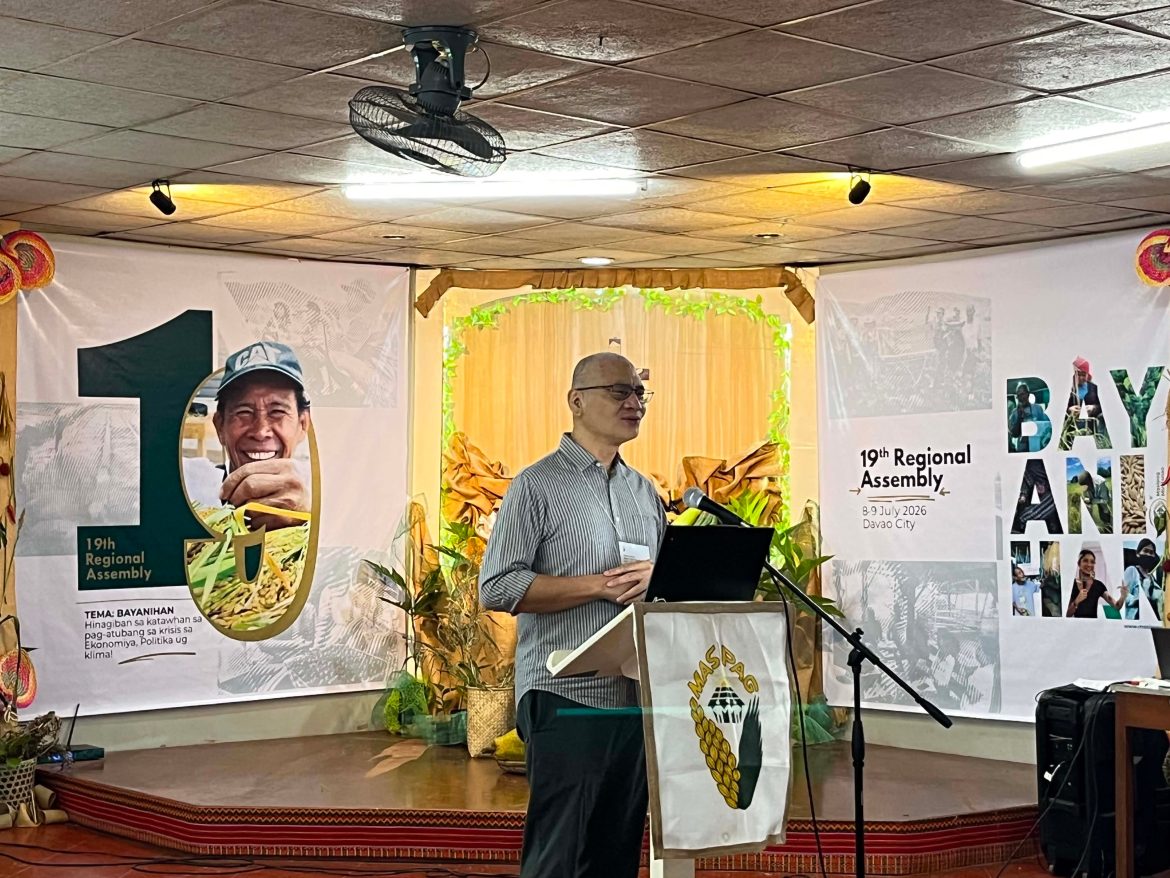
Speaking during the MASIPAG 19th general assembly meeting, IBON executive director Sonny Africa said the UMIC tagged the mismatch in the data on families who remain poor or low-income.
“Yung pagpipilit nila na upper-middle-income na ang bansa ay andun sa diwa na kailangan nilang magbuhat ng sariling bangko,” Africa said.
The World Bank based the UMIC classification on a gross national income (GNI) per capita of $4,850, a figure Africa said creates a misleading impression that the average Filipino family earns about Php1.2 million a year, or roughly Php100,000 a month.
He noted that only the wealthiest 5 percent of Filipino families earn income at that level.
“Sinukat ang upper middle income ng World Bank, pinapakita na pwedeng lumago ang ekonomiya na naiiwan ang mamamayan, lalong-lalo na naiiwan ang sektor ng agrikultura,” he said.
Africa added that roughly 15 million Filipino families or 70 million Filipinos belong to the poorest, low-income, earning less than P22,000 a month.
Meanwhile, another seven million or 28,000 Filipinos belong to the lower middle class, earning P22,000-36,000 a month.
Africa reported that the country has the slowest GDP growth in Southeast Asian nations compared to Vietnam, Indonesia, Malaysia, and Singapore.
The country also posted the highest unemployment from 4.2% in 2025 to 5.0% in 2026 (March); and the 2nd highest inflation from 1.7% in April 2025, which increased to 7.2% in 2026.
“Pwede namang lumago, pero kung mahal naman ang bilihin, kulang ang trabaho, medyo walang saysay ang ganyang klaseng datos,” he stressed.
Meanwhile, he also pointed out that agriculture remains the country’s biggest unresolved problem, noting the industry’s smallest share of employment.
Philippine Statistics Authority (PSA) figures show agriculture, fishery, and forestry share has fallen to 7.9 percent of GDP, the lowest on record.
He cited PSA that farmers and fisherfolk have the highest poverty incidence among basic sectors.
“Hindi lalakas ang pambansang ekonomiya kung hindi matibay ang sektor ng agrikultura. Hindi tataas ang kita ang maraming pamilyang Pilipino kundi palakasin ang agrikultura,” he stressed.
Africa added that widespread landlessness persists, where 7 in 10 farms are not fully owned by the farmers, and the number of tenanted farms has increased.
He stressed that there is a chronic government neglect of agriculture, which can be seen in the worsening priority for the budget.
The agriculture share of the General Appropriations Act from 2024 continued to decline, such that in 2024 it was recorded to have 4.05% but decreased to 3.78% in 2026.
He also stressed that importation is not the solution, as it only affects local production.
“Ang solusyon dapat ay hindi pag-aangkat kundi pagsuporta sa agrikultura gamit ang pundo na trilyon-trilyon ng gobyerno,” he stressed.