

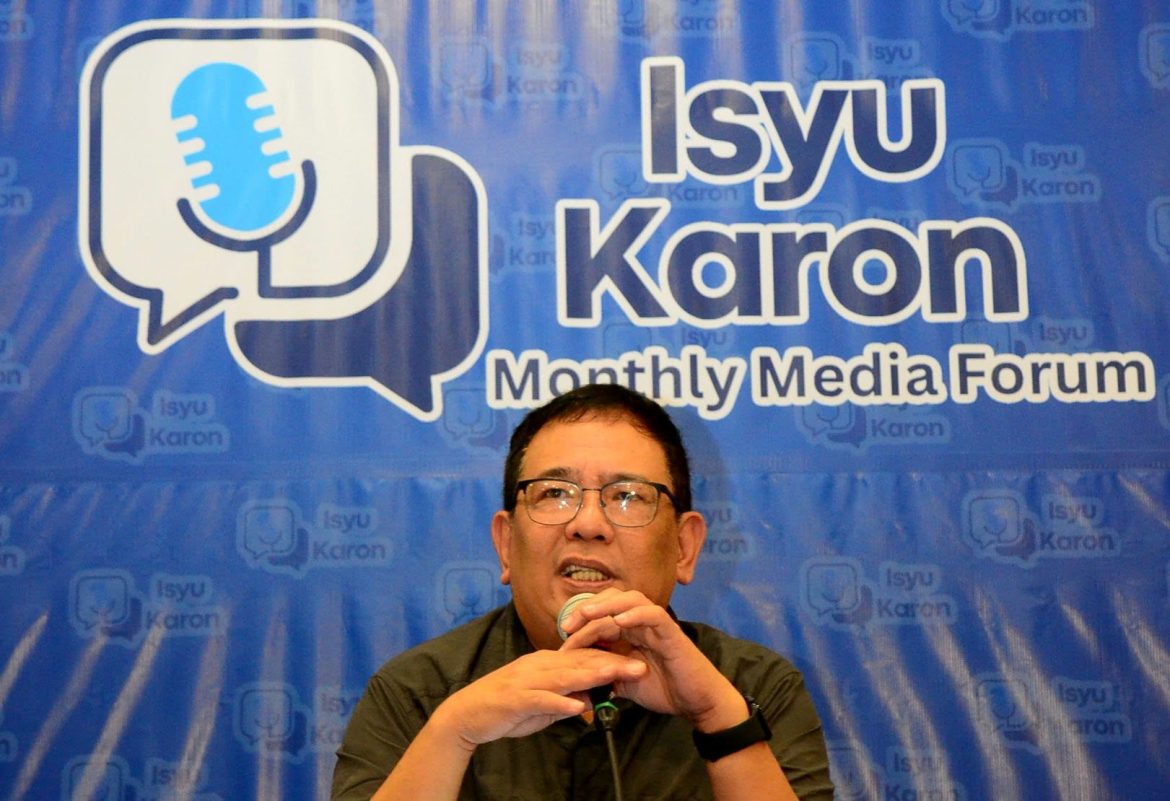
THE PRESIDENTIAL Task Force on Media Security (PTFoMS) reported that 204 journalists have been killed in the Philippines from 1986 to the present, with 18 of those cases recorded in Region XI, according to executive director Usec Jose “Joe” Torres Jr.
Speaking during the Isyu Karon press briefing at The Royal Mandaya Hotel on Friday, Sept. 11, 2026, Torres detailed the status of the long-standing cases, noting that nearly half lacked initial follow-ups because grieving families opted not to pursue legal action.
To date, the task force’s review accounts for 59 convictions, 22 cases under ongoing trial, 27 currently under investigation, and 96 dismissed, archived, or lacking clear records (more or less 6 to 7).
Torres clarified that upon reviewing the data, almost half of the recorded killings were ultimately found to be unrelated to the exercise of press freedom or media work.
“Is the killing of journalists matindi [severe]? Yes. But is it because they are journalists? In many cases, no,” Torres explained, though he underscored that high-profile atrocities like the 2009 Ampatuan massacre in Maguindanao remain deeply significant, noting that around 80 suspects from that incident are still at large despite notable convictions.
Across Mindanao, PTFoMS data shows varying totals of media fatalities:
BARMM: 36 (Torres noted that excluding the 2009 Ampatuan massacre, only two journalist killings are recorded in the region, both of which have unclear motives regarding their profession)
- Region 11: 18
- Region 12: 17
- Region 9: 15
- Region 10: 10
- Region 13 (Caraga): 9
Torres added that historical records also account for journalists killed by the New People’s Army (NPA) in the past, noting that several of these cases have been resolved while others remain under active investigation.
Most of the victims across the national tally belonged to the broadcast and radio sector.
Established under Administrative Order No. 1 by former President Rodrigo Duterte in 2016 in response to the country’s dismal safety index for media workers, the PTFoMS is mandated to assist in the investigation and prosecution of media killings and address physical threats.
Torres shared that when President Ferdinand Marcos Jr. appointed him in 2022, he received explicit instructions to prioritize provincial media workers, noting that local politicians are often “onion-skinned” and reporters frequently find themselves in the crossfire for reporting the truth.
Beyond cold cases and ongoing trials, Torres emphasized that the task force is heavily focused on proactive safety measures.
These include conducting orientations, safety and security training, basic life support, and first aid workshops for journalists operating in conflict zones or covering high-risk situations like disasters, elections, and flooding.
“We need a safe and secure media to ensure independent journalism in our country,” Torres concluded.