



BY ALEX ALAGON

BY ALEX ALAGON
BY ALEX ALAGON

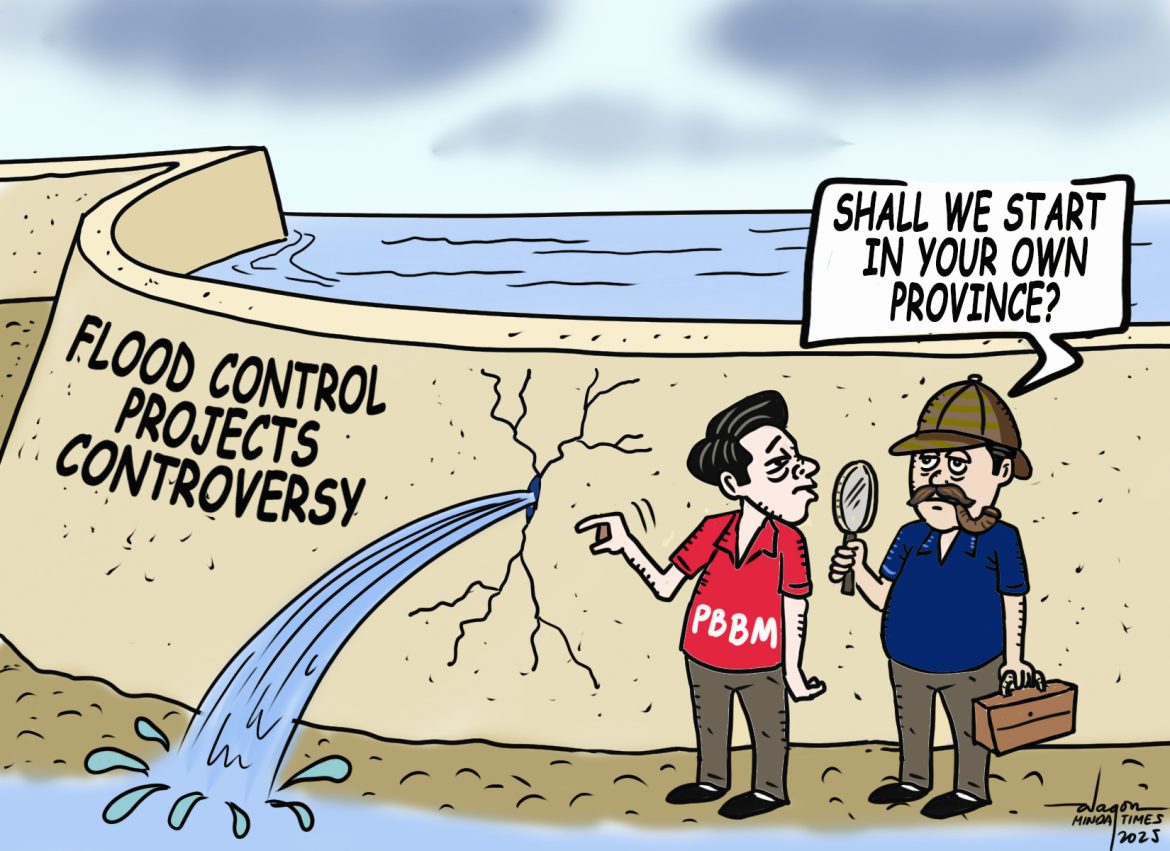
IN OUR column yesterday, we predicted that a different scenario was going to unfold in the TriCom hearing of the House of Representatives on the anomalous anti-flood control projects.
Our prediction came as an offshoot of the disclosure by the Discaya couple, owners of nine contracting companies that are now the center of investigation by both the Senate and the Lower House.
In the Senate hearing the other day, the Discayas revealed several names of House members who they claimed to have received kickback money in hundreds of millions of pesos. In that bold disclosure of the names of Congressmen, including House Speaker Martin Romualdez, as well as top officials of the Department of Public Works and Highways (DPWH), never did the couple mention the names of even just a single senator to have been involved.
But in yesterday’s hearing by the TriCom House committee, both contractors, Curee Discaya and Bulacan District Engineer Brice Hernandez, presented a more “upgraded” revelation. Hernandez, initially hesitant, eventually named Senators Jinggoy Estrada and Joel Villanueva as having poured in his engineering district in Bulacan huge amount of funds for flood control projects.
According to Hernandez Estrada poured in through insertions a total of P350 million in flood control projects. Senator Villanueva, though, was able to bring in similar projects in his district in Bulacan with a total budget of P650 million.
After getting the assurance of the Committee that he will be “custodied” for the safety of his life and that of his family, Hernandez proceeded to mention that the proponent Senators were allocated a 30 percent commission. Or, to be blunt about it, kickback money. And the district engineer added that when the projects were supposed to be finished and paid by the DPWH, the contractor delivered the money at one time, amounting to P245 million, in boxes to his former superior, then District Engineer Alcantara, through his office.
On the other hand, Curee Discaya was trapped by one word he used in his sworn affidavit submitted to the Senate and then to the House. The word in Pilipino, iilan, refers to the members of the House whom he named to have benefited in his contracts with the DPWH.
His being put to a compromise happened when he was asked by Partylist Congresswoman Laila De Lima if there are still other House members who have been involved, but he has yet to name. De Lima made use of her observation on the word “Iilan” as taken to mean there are still other Congressmen whom the husband of Discaya did not include among those he named.
Again, in their apparent efforts to appear honest, in what the two “resource” persons said, they invoke the phrase “We fear for our personal safety and that of the members of our family.”
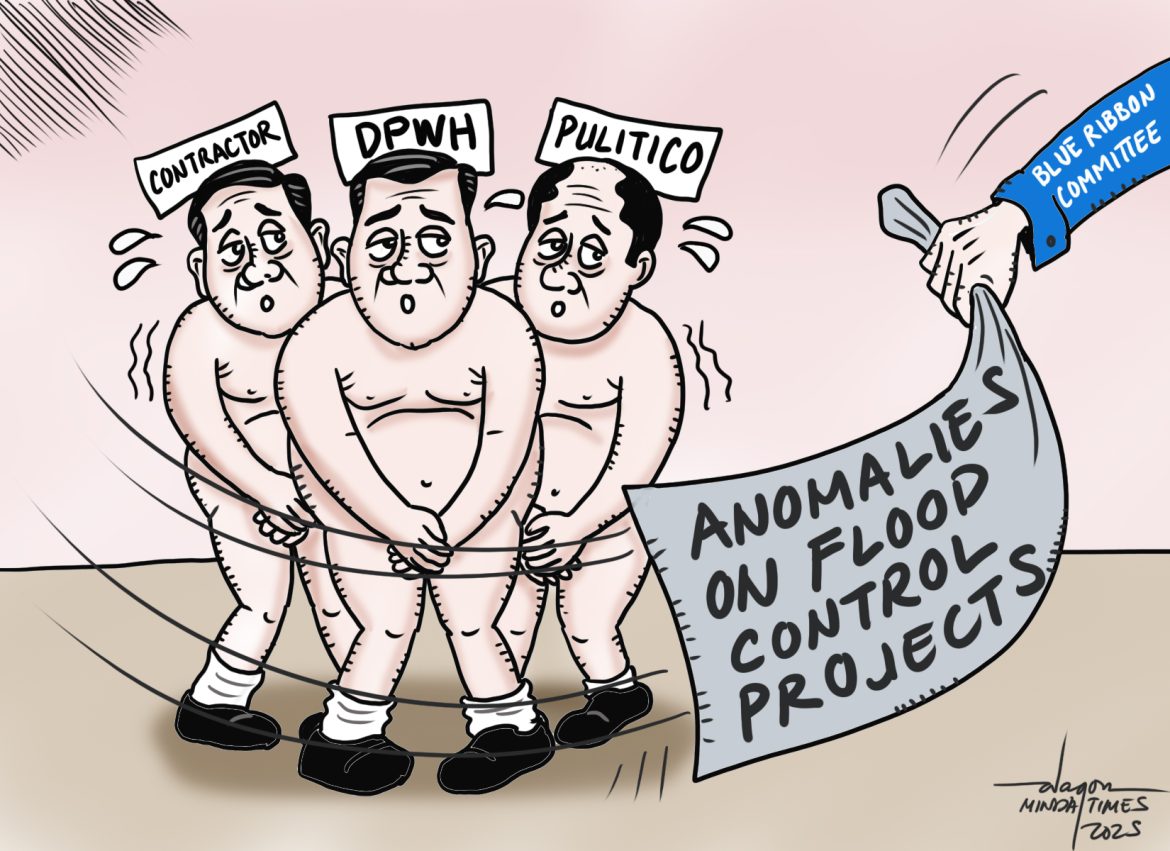
Personally, however, we have a different take on these two diverse scenarios in the Senate and House hearings. Now that the web of corruption perpetuated by a well-disguised syndicate composed of some lawmakers, DPWH officials, and contractors is getting exposed and investigated with a degree of seriousness, the “disadvantaged” contractors would rather involve every one of the corruption “stakeholders” rather than getting passed over.
In other words, the contractors, and perhaps with the instigation of some DPWH officials named in the controversy, “Damay damay na lang.”
And we can only thank that no one among those congressmen mentioned by the Discayas was from the Davao Region and that there was only one from Mindanao, from Zamboanga Sibugay.
What could have been the reason? Certainly, there are flood control projects funded nationally in all provinces and cities of the Davao Region. Therefore, the possibility is that the DPWH people and the contractors were able to undertake the flood control projects according to their specifications. And the contractors are all based locally and not those involved in the graft-ridden projects in Luzon and the Visayas.
And let all of us be reminded that the DPWH in the Region, the proponent lawmakers, and the local government officials, all of them with excellent working relations with each other, may have their own “favored” contractors that they can negotiate to be “sharing” in the opportunities to transact with the DPWH.
IN THE recent hearing by the Senate Blue Ribbon Committee on the highly anomalous government flood control projects, Curlee Discaya, the other half of the Discaya-led construction companies, came up with a litany of names of Congressmen, Department of Public Works and Highways (DPWH) officials, staff of some lawmakers who came to their office to collect money or made arrangements in behalf of their bosses on the mode of sharing of kickbacks.
We were a bit surprised when we heard names that are familiar and not among those mentioned in the grapevine as corrupt. The husband, Discaya, while mentioning the names of certain congressmen like Rep. Roman Romulo of Pasig City, did not say that it was the Pasig lawmaker who personally got the money. Rather, it was some other persons who claimed that he collected the money from the Discayas on behalf of Congressman Romulo.
The Discayas also made it appear that they were the victims of the scheming lawmakers and DPWH officials saying that after taking out a huge percentage of the contract amount to satisfy the greed of latter, their firm had to make do with only between three to five percent profit in order for their business to survive and to ensure that their employees will continue to have work.
It was very clear, however, even if they present themselves as the ones disadvantaged in their multi-billion-peso projects with the government, their display of luxurious living says exactly the opposite. Meaning, if their firms were able to comply, as they claimed, with the quality requirement of the completed project despite the huge “under-the-table” transaction, how could the couple possibly build a palatial building for both their offices and residence? And what about the 28 or so luxury vehicles garaged in a mall-like parking area within the compound of their offices and residence? The cars could very well cost more than one hundred million pesos.
We are dead sure that by late this afternoon and early tonight, all social media platforms available in the Philippines and the mainstream media will be flooded (thanks to the Discayas) with denials and threats by the concerned co-conspirators with the contractor couple.
But of course, the efforts to deny the inclusion of their names in the disclosure by Curlee Discayas are their immediate defense fallback. It is even possible that some of those congressmen mentioned in Discaya, the husband’s read statement, will rather take a “no talk” attitude if only to obviate the possibility of getting caught on the mouth.
But wait, why were the Discayas so composed in reading out aloud the names of the congressmen involved in the shady flood control projects? And how come no one single senator’s name was mentioned by the Discayas? Is it because they could have been at the mercy of the senators had they managed to name even just one? Had it happened, the Senate hearing would have certainly turned into some kind of a circus.
Meanwhile, will the Filipino people get more interesting development when it is the House hearing’s turn to grill the Discaya couple?
The members of the committee in the Lower house will surely ask the Discayas questions, the answer or answers to which may hint or perhaps directly implicate senators, and not only Congressmen.
We are eagerly awaiting the Lower House’s version of the hearing on the same issue of corruption-laden flood control projects, with the Discayas and other contractors invited as resource persons.
********************************
It looks like all is calm at the local front. Yes, we mean the local government of Davao City. We have not heard lately of any controversial development in the city’s governance. But we have not also heard of any worthwhile measure undertaken by the city to sustain or even enhance its socio-economic growth trajectory.
The latest that we heard or read in the papers and the airwaves was the call of a second district councilor for the DPWH to construct a pedestrian overpass in front of the Panacan Public Market. The other is the proposal of another second district Councilor to regulate the imposition of parking fees by business establishments like the Gaisano Mall of Davao. The mall recently announced it is collecting parking fees from vehicles that would be parked inside its parking space reserved for customers.
From the looks of it, we sense that Councilors from other districts in the city so far appear unproductive these days in the City Council.
Why, do they not have any staff in their office charged with researching and developing ways to craft local legislation that will address issues they found worth governing with an enabling ordinance?
Say, their researchers or any staff with work equivalent, can look into what more is needed to arrest further degradation of Davao City’s environment. They can look into possible measures that will prevent the agglomeration of illegal settlers’ colonies in the city proper. Or, come up with drafts of local legislation that will encourage the establishment of new economic enclaves outside the main business center. This last one will also help address the burgeoning vehicular traffic congestion in the city’s central business district.
We can only hope that those tasked to help our local legislators come up with measures relevant to the city’s growth objective will do their best to do justice to the pay they receive monthly.

BY ALEX ALAGON
BY ALEX ALAGON
