

BY ALEX ALAGON
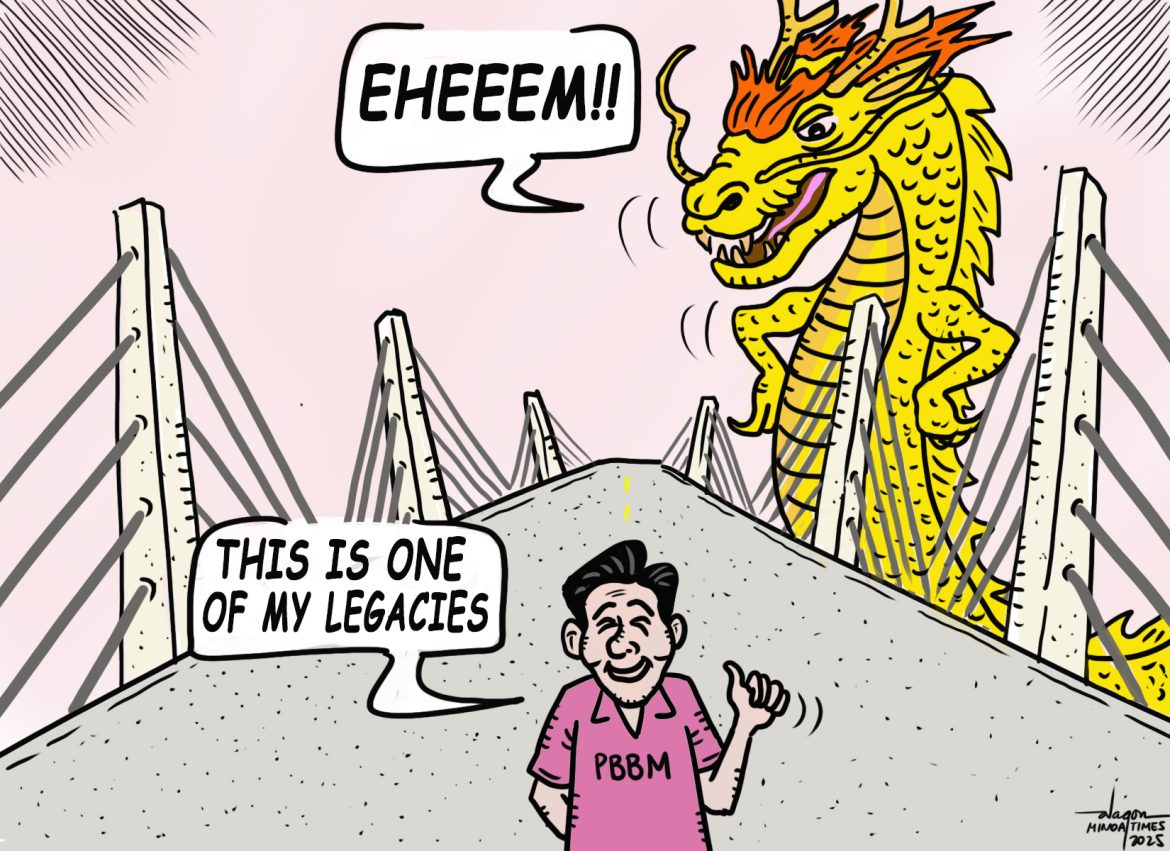
BY ALEX ALAGON

CENTRAL and Eastern Visayas, specifically the Province of Cebu, have been hit with a second whammy in less than a month.
Yes, after the deadly and devastating 6.9 magnitude earthquake that steamrollered Northern Cebu towns, a Signal 4 typhoon leveled whatever was left standing after the earthquake. Tropical Storm Tino brought floods and submerged houses, and the resulting deluge swept vehicles and appliances away.
Typhoon Tino affected not only the two Visayan regions but also the entire Negros Island and some provinces within the Mimaropa cluster, as well as portions of the Caraga Region in Mindanao.
Unluckily for the areas, some provinces and cities suffered additional and even more destructive calamity— continuous rain that resulted in ravaging floods that were rooftop-deep.
The devastation is so widespread and the affected population is in millions of people that we cannot imagine how the government will respond to their needs to help them get back on their feet again.
And we have no doubt some politicians will blame the government for the perdition the people suffered, even if the calamity is an act of nature.
The same political personalities will again find an opportunity to show they are the better leaders by competing with other officials in terms of the speed with which they come to offer assistance to the victims.
How happy would the victims of the typhoons be if, for once, and for even a limited period, they set aside their fighting just to come together and make a united effort to help the affected?
But we are certain such show of unity, even in plastic only, will not likely happen.
************************************
Of late, the modern and more sophisticated battle grounds among quarreling politicians in the country – the various platforms of social media – appear to be dominated by the anti-administration vloggers and trolls.
The number of posts, all provided with graphics or video presentations, mostly came from the anti-administration groups. The vloggers find every available material they could use to chastise the Marcos, government.
They watch with keenness all of the President’s body language and capture it on video or still documentation, and provide captions based on how they would want the public to interpret the same.
They even manipulate crowd of religious procession goers into appearing like it is a throng of people on their way to Malacanang to storm the seat of power and drive the Palace tenant.
Then there are vloggers who are openly encouraging the members of the country’s armed services to abandon the duly constituted authorities and join the people in ousting the President and protect them instead.
All their importuning are in the guise of saving the country from a corrupt regime. But will driving away the incumbent President be a surefire guarantee that a corruption-free administration will take over from the present government?
That was exactly the thunderous assurance when the supposed people power drove away to exile the incumbent President’s father.
But what happened during the administration of the one who assumed the Presidency when Marcos Sr. was kicked out? How were the succeeding governments after Cory Aquino characterized?
It was no secret that some of those who shouted the loudest to oust the alleged corrupt dictator were also those who made fortunes during the old Marcos’ time.
They just did a short lull when the elder Aquino administration took over. But they came back with vengeance not too long after. There are even some of them – or their younger kin – who are still in the present government.
A number of them may even be the source of funds for the operation of both the anti-administration and pro-administration vloggers and trolls.
Should we then be surprised why the social media political battles are getting nastier as election time gets nearer and potential aspirants overtly manifest their intention?

Over the past few weeks, after the President himself divulged during his State of the Nation Address (SONA) last July 25 that massive corruption is prevalent in the implementation of flood control projects, his administration became the object of scathing denunciation and tirades.
The majority, if not all, of the vicious attacks seem to come from people identified with the opposition. The critics have been very vocal against the President and those who they believe are close to him and who the critics claim are responsible for corruption in the country.
Triggered by the multi-billion peso heist from completed but highly substandard, long overdue, or worst, non-existent or “ghost projects,” multitude of people in the country’s major cities took to the streets chastising the Marcos, Jr. administration over the massive corruption> They demand that the government make those individuals involved be made to account for their misdeeds, and be prosecuted in the courts.
Some of those who took to the streets and shouted the loudest were identified as politically at odds with the party in power. They are those who are demanding earlier that the President should resign. Lately, these groups of critics have brought their demands to a much higher level. They are now demanding not only for the President give up Malacañang. Some from the groups are demanding that a People Power mass action be launched to force the President out of the Palace.
There are also those who are urging the Armed Forces to withdraw support to the President and establish some kind of “revolutionary government” on an interim basis. According to some reports, those who are proposing this support withdrawal measure are retired military and police generals.
The most vocal, however, is a known civilian who changes political loyalty when the person deems it necessary for his own personal and business interests. The same personality is also known as the purveyor of corruption himself during earlier administrations, more particularly during Joseph Estrada’s Presidency..
Then came this latest proponent of a measure that he seems to personally believe will, once and for all, end corruption in government.
Yes, Sen. Alan Peter Cayetano, who is touted to become the possible replacement of Senate President Vicente “Tito” Sotto III, is strongly proposing a snap election. And he could not have meant any other position in government but that of the President.
But will any of the three suggested options effectively stop corruption in government? Will these really put an end to the already deeply ingrained malady in the government since many, many years ago?
Clearly, history will tell us that any of the three strongly advocated means of bringing corruption to its end is not a guarantee.
The Philippines underwent two People Power phenomena. The first one ousted the elder Ferdinand E. Marcos Sr., exiling him to distant and ocean-surrounded Hawaii. But still, the administrations that were installed after Marcos Sr.’s departure did not escape the tentacles of corruption. As always, it implicated the Presidents during those administrations.
And yes, even assuming that the Presidents during those times may not have possibly done it by themselves, and those who committed the corrupt practices were their underlings, still, by the doctrine of “command responsibility,” they became part of the corrupt practices.
In the case of the third President after Marcos, Sr., Joseph Estrada, who was elected by a huge majority because of his popularity, he became the second object of People Power, again because of widespread corruption in his short Palace occupation.
In the two people’s revolts, the military merely played a support role instead of initiating the people’s “uprising.”
So much hope for a clean government was nurtured by the people when the beneficiary of the ouster, then Vice President Gloria M. Arroyo, was installed. But it did not take long for her administration to be swallowed by the systemic corruption in government. Her policies and her failure to rein in the people who helped her run the government, including her husband, led to the deterioration of the people’s as well as the foreign countries’ trust in her capability to run the country.
It was during her administration that a certain sector of the military attempted to topple her a few times. Yet all attempts failed because the coup attempt did not get the support of the higher echelon of the military.
Snap election? Well, the only time that it happened in the country, supposedly to change the ruling Marcos Sr. government, only led to dismay as the result proved otherwise, again because of corruption that altered the real choice of the people.
Now Senator Cayetano is proposing to conduct the same exercise again, thinking that it is one sure remedy to stamp out corruption in the Philippine government.
But we are certain that the Senator from Taguig may not even know that some of those who shouted the loudest with the most devastating accusations of corruption in the present administration could be among those engaging in corrupt practices. Or, if they are not, they may be the most ardent and fastest learners in corruption practices when their opportunity comes.
As the saying goes, “History tends to repeat itself.” And our history of having a snap election and two People Power revolutions happened not too long ago. It is, therefore, not far-fetched that the players of the Sept. 21, 2025, mass protest be devoured by the same system of corruption they fought to eliminate.