


DAVAO City councilors are looking at strengthening the penalties and enforcement mechanisms in the proposed ordinance against illicit tobacco and vapor products, with discussions emphasizing that illegal trade should not be treated merely as a minor violation comparable to ordinary anti-smoking offenses.
The issue was raised during the latest committee deliberations on the proposed Davao City Anti-Illicit Tobacco and Vapor Products Ordinance, which seeks to prohibit the manufacture, sale, distribution, transport, and possession of illicit and counterfeit tobacco and vapor products.
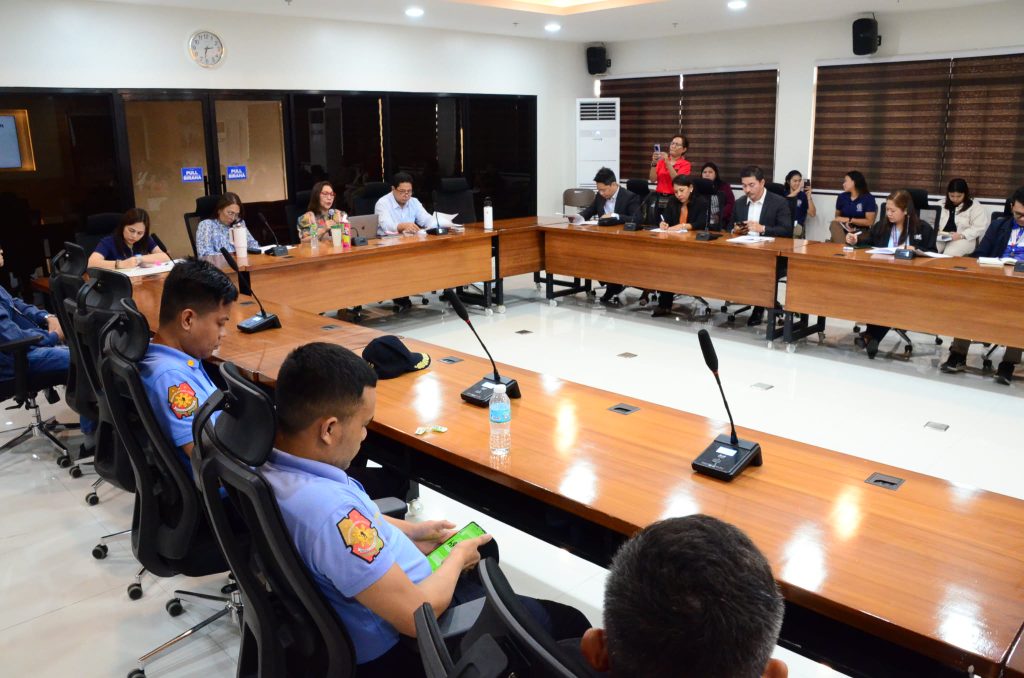
The committee on trade, commerce and industry, chaired by Councilor Myrna Dalodo-Ortiz, is tackling the proposed measure. The draft seeks to establish a citywide enforcement framework involving local offices and national agencies.
A key point raised in the deliberations is the need for penalties and enforcement to reflect the more serious nature of illicit trade.
Unlike an ordinary anti-smoking violation involving individual behavior, illicit trade may involve an entire commercial chain covering manufacture, smuggling, warehousing, transport, distribution, and retail.
The discussion therefore centered on ensuring that serious violations do not end simply with confiscation or payment of relatively small administrative fines.
Under the revised draft, local administrative sanctions would begin with a ₱1,500 fine and at least a 30-day suspension of a business permit for a first offense, escalating to a ₱5,000 fine and permanent revocation of the permit for third and subsequent offenses.
More serious cases involving violations of national laws would be referred to the appropriate agencies, including the Philippine National Police, National Bureau of Investigation, Presidential Anti-Organized Crime Commission, Bureau of Internal Revenue, Bureau of Customs, Department of Trade and Industry, Food and Drug Administration and Department of Justice, for prosecution under applicable national statutes.
The approach reflects concerns previously raised during committee discussions that enforcement should not stop with the seizure of illegal products.
During an earlier joint committee hearing, Dalodo-Ortiz stressed the importance of follow-through, saying authorities must ensure cases are properly developed and prosecuted rather than simply intercepted.
The proposed ordinance would also create an Anti-Illicit Tobacco and Vapor Products Task Force involving the city government, police, and national regulatory agencies. It provides for unannounced inspections of retailers, warehouses and distribution facilities, as well as verification of tax markings and regulatory documents.
Commercial vehicles and bulk shipments entering Davao City may also be subjected to inspections and required to present bills of lading, permits and distribution clearances under the proposed enforcement framework.
Business permits would likewise become a major enforcement tool. Establishments engaged in the sale, storage or distribution of tobacco and vapor products would be required to obtain a compliance clearance, while non-compliant businesses could face suspension or eventual revocation of their permits.
Davao City already imposes a ₱3,000 fine for ordinary anti-smoking violations, while establishments caught selling tobacco products to minors may face a ₱5,000 fine and possible cancellation of their business licenses.
The committee discussions point to the need to ensure that illicit traders, particularly those involved in organized distribution and commercial-scale activity, face consequences proportionate to the underlying violations rather than being treated merely as ordinary ordinance offenders.
The revised proposal takes that approach partly by referring violations of national statutes to national authorities, where heavier penalties may apply depending on the offense and evidence established.
The City Council has been deliberating the anti-illicit trade measure as part of a broader effort to strengthen Davao’s enforcement framework against counterfeit and unregulated tobacco and vape products. Earlier hearings brought together the BOC, BIR, NBI, DTI, FDA, local enforcement offices and industry representatives to identify regulatory and enforcement gaps. BY RJ CUEVAS