


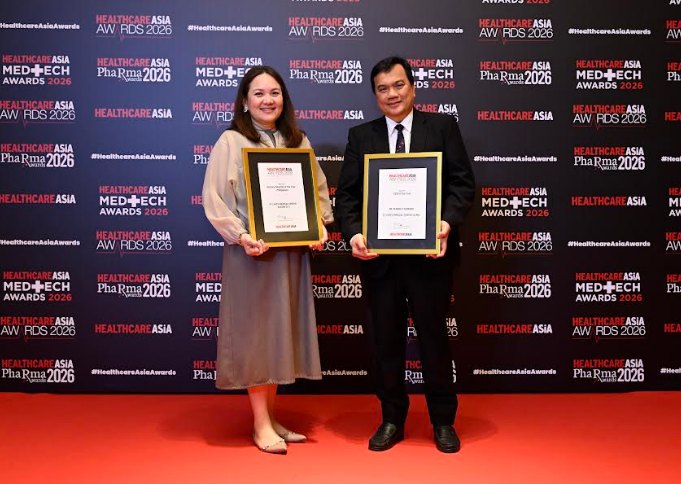
MANILA, Philippines – St. Luke’s Medical Center, as part of the St. Luke’s One Healthcare System, has been recognized at the Healthcare Asia Awards 2026 with two major distinctions: Tertiary Hospital of the Year – Philippines for St. Luke’s Medical Center – Quezon City, and CEO of the Year – Asia for its president and CEO, Dr. Dennis P. Serrano.
These recognitions reflect the institution’s sustained investment in accredited care programs, medical innovation, and patient-centered systems that support efficient and coordinated healthcare delivery.
Under the leadership of Dr. Serrano, St. Luke’s has reinforced its role as a leading private referral center in the Philippines, particularly for complex and specialized care. This is driven by consistent performance in clinical outcomes, operational efficiency, workforce engagement, and community outreach.
A strong foundation in quality and safety continues to underpin its operations. In 2003, St. Luke’s Medical Center – Quezon City (SLMC QC) became the first hospital in the Philippines and the second in Asia to achieve Joint Commission International (JCI) accreditation. It further strengthened its leadership in 2016 as the country’s first JCI-accredited Academic Medical Center Hospital, recognizing excellence in clinical care, medical education, and research. It remains the Philippines’ only JCI-accredited Academic Medical Center for eight consecutive years.
The institution has also set benchmarks in specialty care, including being the first in Southeast Asia to receive JCI Clinical Care Program Certification for its Kidney Transplant Program. These milestones reflect a sustained commitment to high standards in complex and multidisciplinary care.
St. Luke’s continues to lead in surgical innovation. Since pioneering robotic surgery in the Philippines in 2010, it has expanded its capabilities with the introduction of the da Vinci Xi Surgical System across both hospitals. The institution has completed nearly 3,000 robotic-assisted procedures across specialties, including national firsts in kidney transplant, cardiac surgery, and pediatric urologic procedures. These advancements enable less invasive treatments, faster recovery, and improved outcomes for complex cases, strengthening its position as a regional leader in surgical care.
Alongside clinical advancements, St. Luke’s continues to accelerate its digital transformation. The eHealth Hub mobile platform allows patients to access results, manage appointments, and navigate their care journey through a secure interface. The integration of a real-time discharge tracker has improved coordination across clinical and support teams, contributing to reduced discharge turnaround time and better bed utilization.
At the core of its operations is a culture of care, which shapes how teams collaborate, perform, and deliver service across the organization. This approach has strengthened workforce engagement and efficiency, resulting in higher associate satisfaction and translating into more attentive, compassionate, and coordinated care for patients.
Beyond its hospital network, St. Luke’s continues to expand access to care through its social responsibility initiatives. The opening of the 40-bed Evelyn D. Ang (Dāna) Charity Ward provides fully subsidized care for indigent patients. The institution also conducts community surgical missions in partnership with local governments and advances health equity through the Health Equity and Research (HERE) Foundation, supporting research, policy advocacy, and access programs across the Philippines.
“These recognitions reflect the collective work of our people,” said Dr. Serrano. “We remain focused on delivering care that our patients can trust, strengthening how we serve, and continuing to lead with responsibility.”
Through sustained investment in people, systems, and innovation, St. Luke’s Medical Center continues to raise the standard of care—delivering outcomes that are globally competitive and grounded in service to the Filipino.
