



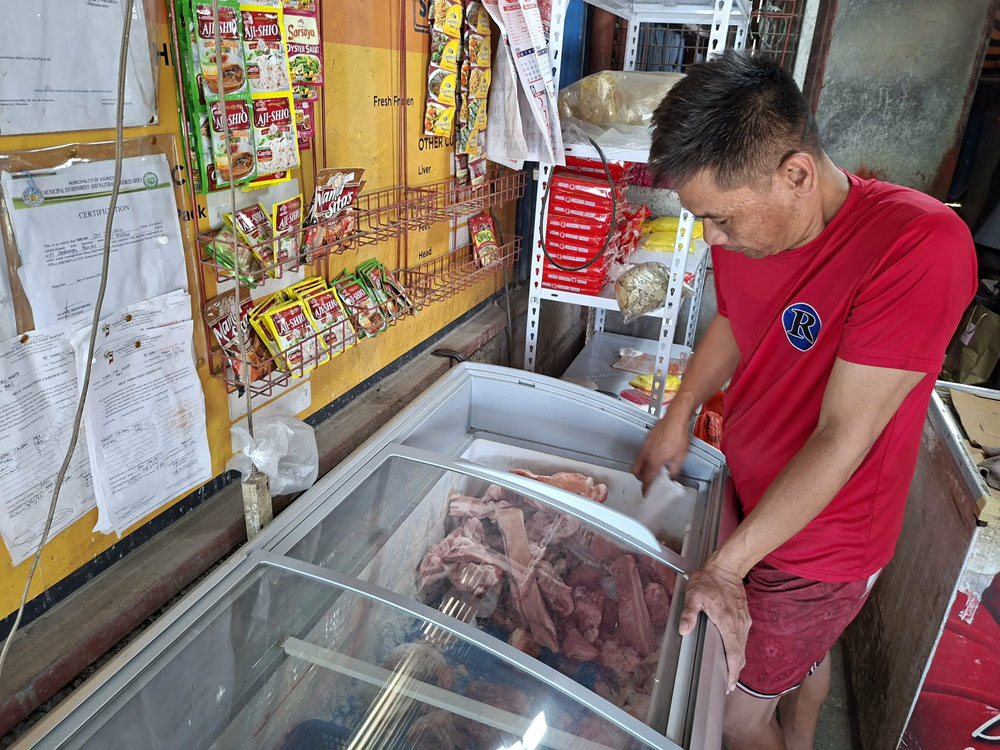
EVEN years later, Noel Jabines still remembers the smell. When he opened his freezer after returning to his store from an errand that took longer than expected, the sickly sweet odor of spoilage greeted him. It was a smell that meant lost profits and wasted product.
For over a decade, he has run Jabines Meat Shop in Asuncion, Davao del Norte, a first-class municipality 14 kilometers from Tagum and a population of around 70,000. He has observed how the town grew, but he has also seen his business suffer under the weight of unreliable electricity.
The worst moment came without warning. A power outage hit, as it often did before, but this time it lasted for hours. Inside his freezers, 100 kilos of mixed chicken cuts slowly sweltered and finally putrefied.
When power finally returned, he knew the meat was no longer safe for consumption. He had to throw it all away as he could not risk making his customers sick and damaging his reputation beyond repair.
However, that’s not even his most significant loss.
By Noel’s count, three of his freezers, the backbone of his business, were damaged beyond repair in a span of 10 years.
With little savings, he had to take out a loan to replace them. Each new freezer had cost him between P40,000 and P60,000, depending on the size. And for a small business that earns just enough, it was a heavy blow.
“It was really hard,” Noel said, shaking his head. “You work so hard, and then in one moment, it’s gone. The meat, the freezers—it all just added up. I had to borrow money just to keep going.”
He acknowledges that the situation has improved recently. The brownouts have become less frequent, and he has a theory about why.
He believes the local electric cooperative, Northern Davao Electric Cooperative (Nordeco), knew that Davao Light was planning to take over the distribution in Asuncion. Facing competition, they had to step up their service.
“It’s only a theory,” he laughed. “But it’s the only thing that makes sense. They didn’t want to lose us, their customers. Now, the power is a bit more stable. It’s better than it was, but I still don’t trust it completely.”
Learning from the surges
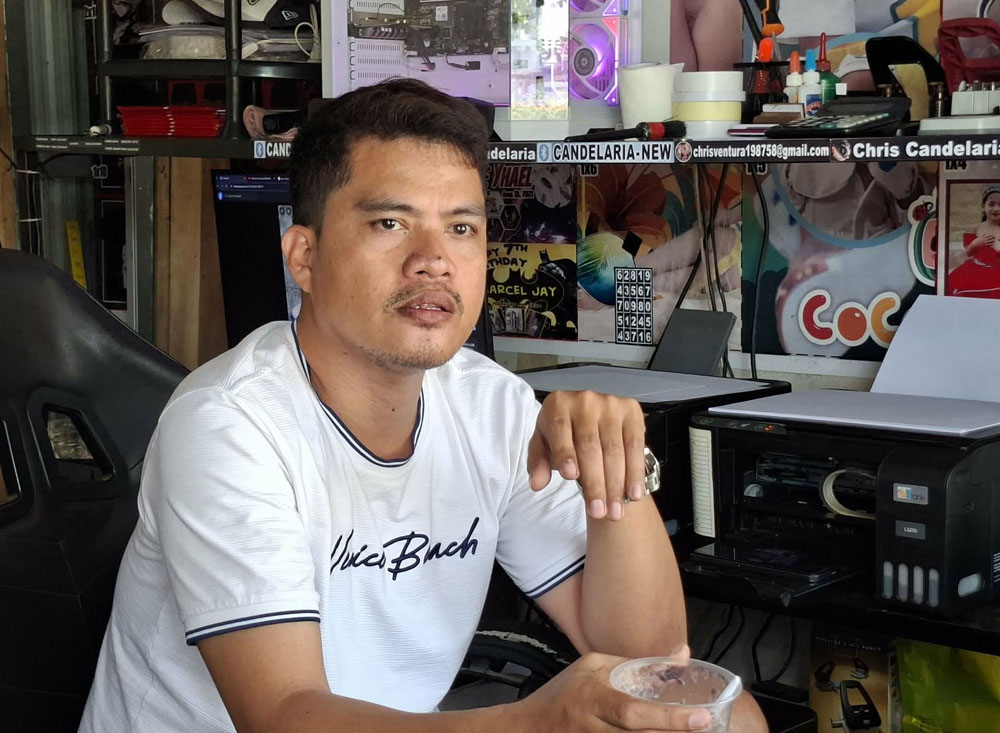
Crisanto Candelaria, 37, owns JVC Printing Shop. He has only been running his own shop for three years, but he entered the business with a plan against unreliable power.
Before setting up his own shop, Crisanto worked for seven years as an all-around employee at a computer shop in Tagum City. There, he saw the problems caused by unannounced brownouts. He watched as expensive desktop computers fried and motherboards shorted out due to fluctuating power.
He learned a painful lesson about the cost of being unprotected.
So, when he opened his own printing shop in Asuncion, he carried those memories with him. He didn’t want to experience similar problems with his business. But instead of buying the cheaper, basic surge protectors, he invested in expensive automatic voltage regulators with a built-in 15-minute delay to protect his two high-end laptops.
“That delay is everything,” Crisanto explained. “If the power goes out, the protector keeps the laptops on for a few minutes. It gives me time to shut them down properly. No sudden cut, no surge when it comes back.”
Because of his foresight, Crisanto hasn’t lost a single machine yet. He treats his AVRs as the most important employees in his shop. In a town where the grid is unstable, he knows that a small investment in a surge protector can save a business from total failure.
“I am lucky that the brownouts don’t affect me as much, unlike the other businesses here,” he said. “But I also drew from my previous experience and learned my lessons well.”
Lucky, so far
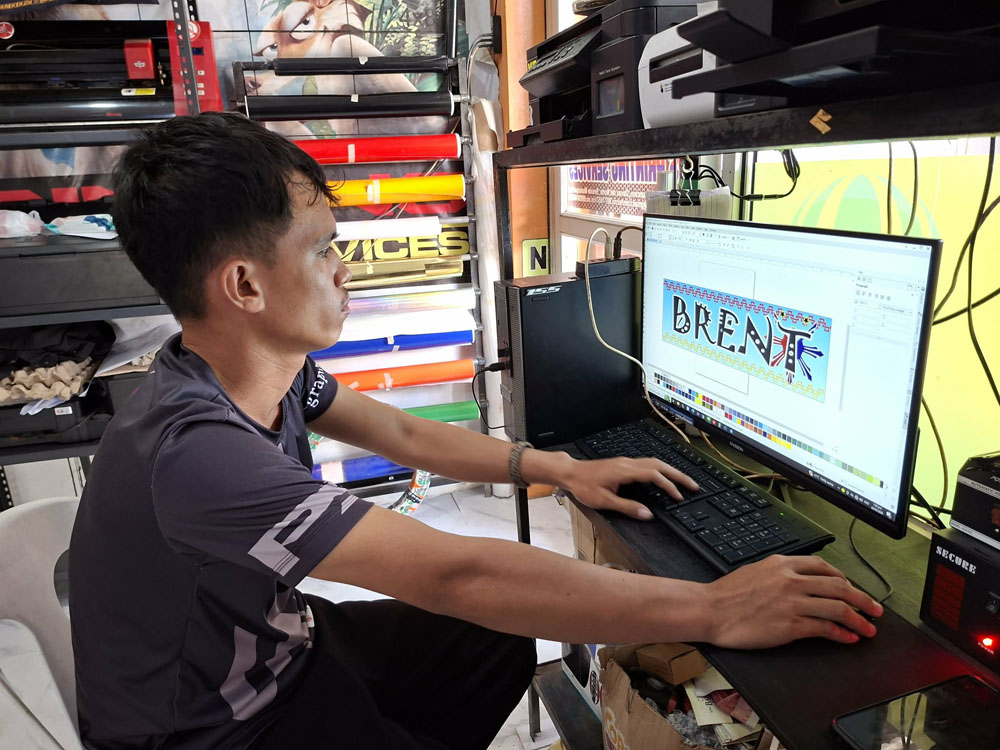
Lloyd Vincent Jabines, 24, is a layout artist for another printing shop in town. He is fully aware of the cost of the equipment he works with. For instance, the shop has a large-format printer, which easily costs six digits.
“So far, in our printing shop, none of our equipment has sustained damage yet,” Lloyd said.
He knows how lucky they are. He has friends in other businesses—particularly in his hometown in Sawata, San Isidro, about an hour’s drive from Asuncion—who have not been so fortunate. They tell him stories of televisions, refrigerators, and computers that simply stopped working after a sudden power cut.
Lloyd has lived and worked in the town for three years. His life is tied to the shop, as he sleeps in the staff quarters provided by his employer, sharing a small room with other workers.
On some nights, the air in Asuncion is thick and humid. The workers rely on a single, dusty electric fan to sleep. When the power goes out at night, the room becomes an oven. Lloyd and his roommates often find themselves lying awake in the dark, waiting for the power to return.
“I think it’s better in this town. In the three years I’ve worked and lived here, the power might go out, but it almost always returns after a few minutes,” he noted.
For years, Asuncion, along with the other towns in Davao del Norte, swirled in confusion over the dispute between two factions of the previous distributor, the Davao del Norte Electric Cooperative. The competing factors were controlled by the Cooperative Development Authority and the National Electrification Association.
While that dispute was already settled in 2019, the town again finds itself in the middle of the legal wrangling between Nordeco and Davao Light and Power Co.
While Davao Light already took over Nordeco’s substation in Asuncion, along with three others in Tagum City, on the strength of the writ of possession issued by the Regional Trial Court in Tagum City, residents remain confused.
“We heard that Davao Light is already coming, but we are still paying to Nordeco,” Noel said. So, we really have no idea about what’s happening. Ultimately, we only want the chance to choose which one can give us better service.”

