



POPE Leo XIV’s recent lung cancer diagnosis and surgery have drawn worldwide attention, raising awareness about lung cancer treatment and advances in thoracic surgery.
On 13 October 2026, the 71-year-old pontiff underwent surgery in Rome to remove the lower lobe of his right lung after doctors discovered a suspicious nodule during a routine medical examination. The procedure was completed without complications, and the Vatican subsequently reported that his recovery was progressing as expected.
His experience offers several useful lessons about lung cancer, starting with when surgery may be an option.
Understanding Lung Cancer Surgery
Lung cancer surgery aims to remove cancerous tissue from the lungs. It is commonly considered for patients with early-stage non-small cell lung cancer when the tumor is localised, and the patient is medically suitable for an operation.
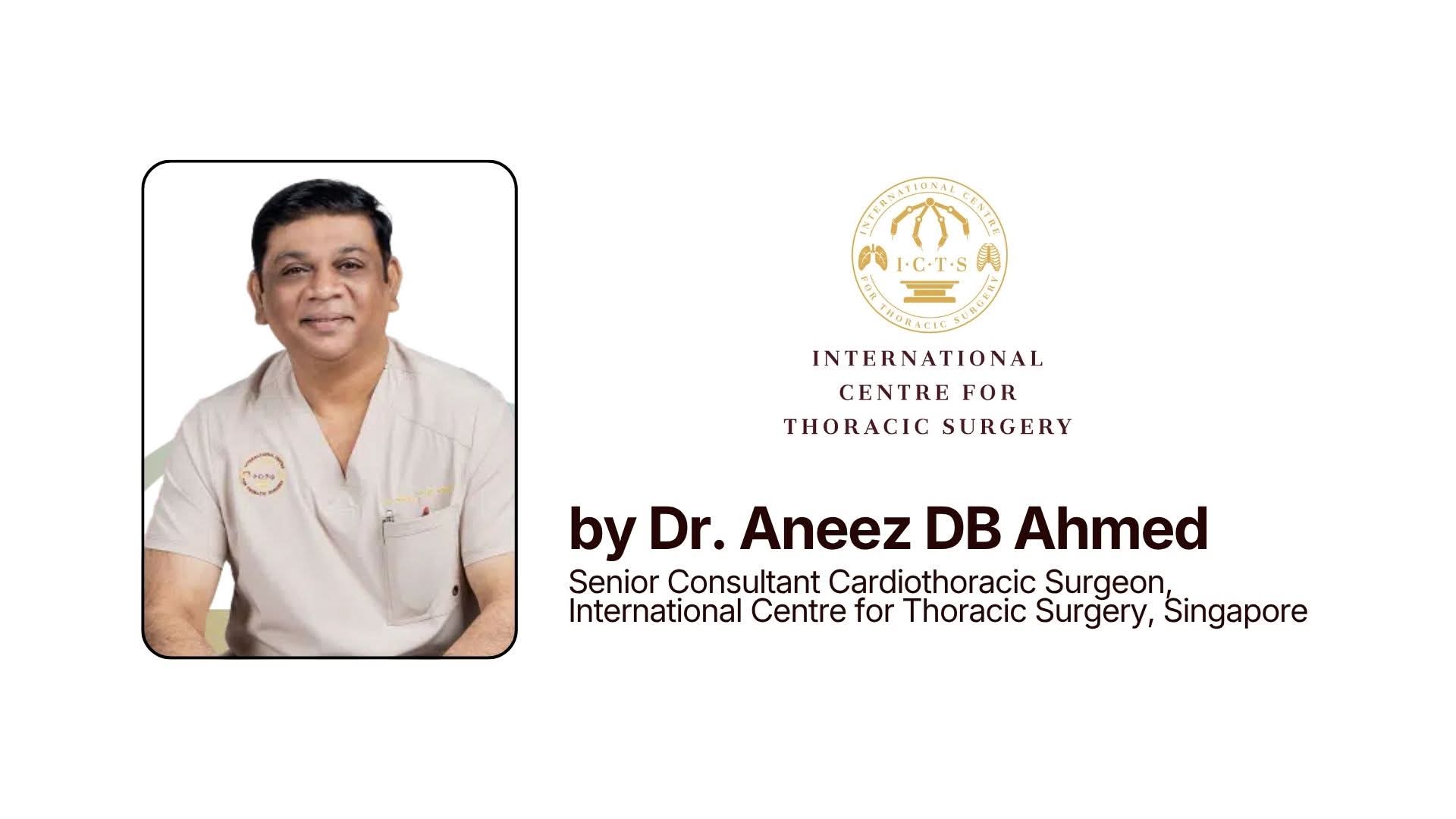
Dr Aneez D.B. Ahmed, Senior Consultant Thoracic Surgeon and Medical Director of the International Centre for Thoracic Surgery in Singapore, specializes in thoracic oncology and minimally invasive lung surgery.
Depending on the tumor’s size, location, and extent, different surgical approaches may be considered.
A lobectomy, which involves removing one lobe of the lung, is an established surgical treatment for selected patients with lung cancer. Other procedures may involve removing a smaller section of lung tissue or, in certain cases, an entire lung.
Can Lung Surgery Be Minimally Invasive?
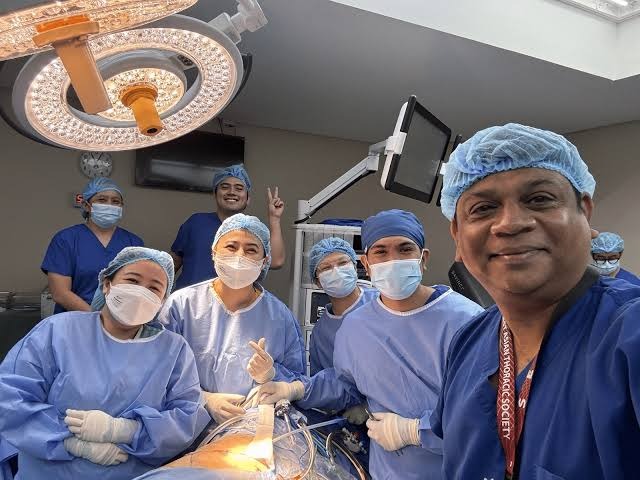
Advances in thoracic surgery have introduced minimally invasive approaches, including video-assisted thoracoscopic surgery (VATS) and robot-assisted thoracic surgery.
These techniques use small incisions and specialized instruments to perform procedures within the chest.
For appropriately selected patients, minimally invasive surgery may offer benefits such as reduced postoperative discomfort and shorter hospital stays compared with traditional open surgery. However, not every patient is suitable for these approaches.
Lung Cancer Is Not Only a Smoker’s Disease
Smoking remains the leading risk factor for lung cancer, but it is not the only one. A significant proportion of lung cancer patients have never smoked. This is especially notable in Asia, where many patients diagnosed with lung cancer, particularly women, are non-smokers.
Adenocarcinoma, the type of lung cancer reported in Pope Leo XIV’s case, is the most common type of lung cancer overall and the type most frequently seen in people who have never smoked.
Other factors that may increase lung cancer risk include:
- Secondhand smoke at home, at work, or in public places
- Air pollution, including outdoor pollution and indoor smoke from cooking or burning fuels
- Occupational exposure to substances such as asbestos, silica and diesel exhaust
- Radon, a naturally occurring radioactive gas that can build up indoors
- Family history of lung cancer
- Genetic changes in the tumour, such as EGFR mutations, which are found more often in Asian patients who have never smoked
Because many people assume lung cancer only affects smokers, non-smokers may dismiss warning signs such as a persistent cough, unexplained weight loss or breathlessness. Anyone with ongoing symptoms should seek medical assessment, whether or not they have ever smoked.
Why Early Detection Matters
Lung cancer may develop without noticeable symptoms, particularly in its early stages. Some cases are discovered incidentally during imaging examinations for unrelated reasons.
Importantly, not every lung nodule is cancerous. Further evaluation may involve imaging, monitoring, or tissue sampling, depending on individual risk factors.
For patients in the Philippines and elsewhere, Pope Leo’s experience serves as a reminder of the importance of timely medical assessment.
Early detection can provide more treatment options, including the possibility of surgery for suitable patients. Ultimately, treatment decisions depend on the cancer stage, overall lung function, and individual health circumstances.
Medical Disclaimer
This article is intended for general education and awareness purposes only and does not constitute medical advice, diagnosis, or treatment. Individual symptoms and medical conditions may vary. Please consult a licensed medical practitioner for appropriate assessment.
For more information about Dr Aneez D.B. Ahmed and his medical practice, visit icts.com.sg or contact Beyond Medical Assistance (Philippines) via WhatsApp at (63) 956 0655 717

