

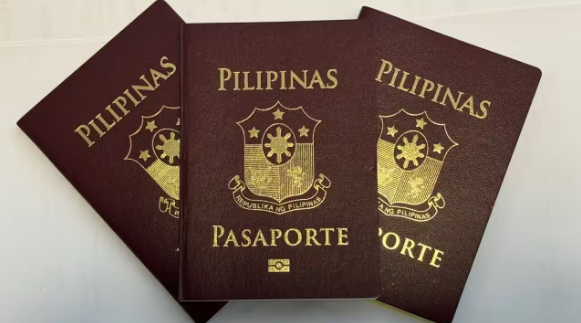
THE SEPTEMBER 2026 report places the Philippines 43rd among 199 countries in its welcoming-country ranking, while the Philippines passport ranking stands at 117th globally. The passport records a Mobility Score of 78 and a global access rate of 39.4%, showing a clear difference between the ease offered to foreign passports entering the Philippines and the access available to Philippine passport holders abroad.
The Mobility Score is made up of 38 visa-free destinations, 36 destinations available through visa on arrival or other simplified entry arrangements in the same access category, and four destinations accessible through an electronic travel authorization, or eTA. A further 120 destinations are classified as requiring a visa. The three accessible categories add up to the reported Mobility Score of 78.
Access profile across major regions
Within Asia, the Philippine passport ranks 26th among 50 passports. The report records access to 53.1% of destinations in the region, including 16 visa-free destinations, eight in the visa-on-arrival or related simplified-entry category, and two through eTA; 23 Asian destinations require a visa.
Regional access is highest in Central Asia at 80.0%, where Kazakhstan and Tajikistan are visa-free, Kyrgyzstan and Uzbekistan fall under the visa-on-arrival or simplified-entry category, and Turkmenistan requires a visa. Oceania follows at 64.3%, while Africa and South America each show 50.0% total access. The Caribbean is recorded at 43.8% and North America at 34.8%.
The lowest regional access percentages in the report are in Europe, the Gulf countries and the Middle East. Europe is listed at 4.3% total access, with Russia and Ukraine in the visa-on-arrival or related simplified-entry category and 45 European destinations requiring a visa. The Middle East stands at 17.6%, and the Gulf-country grouping at 16.7%, where Oman is the only destination in the simplified-entry category and five destinations require a visa.
Visa-free stays and special entry procedures
Among the 38 visa-free destinations, the report records stays of up to 180 days in Peru, 120 days in Fiji and Vanuatu, 90 days in destinations including Barbados, Brazil, Colombia, Morocco and Rwanda, and 30 days in destinations including Indonesia, Kazakhstan, Laos and Paraguay. Brunei, Taiwan, Hong Kong and Macao are also listed as visa-free, with shorter stated stays.
The simplified-entry category contains a mix of procedures rather than a single visa-on-arrival rule. Nepal is listed with eVisa also available and a stay of up to 150 days, Armenia with eVisa also available and up to 120 days, and Papua New Guinea with an eVisitor procedure and up to 60 days. The report also flags arrival-card requirements for visa-free travel to Malaysia, Singapore and Thailand.
The four eTA destinations are Kenya, Seychelles, Sri Lanka and Israel. Kenya and Israel are listed with stays of up to 90 days, Sri Lanka with 30 days, and Seychelles with tourist registration and a stay of up to 90 days.
ASEAN, APEC and other comparison groups
In comparison groups included in the report, the Philippines ranks 7th among 11 ASEAN countries and 20th among 21 APEC member economies. It is 64th among 132 G77 countries and 108th among 159 World Trade Organization members. The report also places the passport 41st among 60 countries in the English-language grouping and 27th among 57 presidential republics.
Reciprocity signals point in two directions
The reciprocity section compares outbound access with the visa requirements for entering the Philippines. It lists 91 countries whose passport holders can enter the Philippines visa-free, with an electronic authorization or on arrival, even though those countries require a visa from Philippine passport holders. The group includes the United States, Canada, the United Kingdom, Australia, Japan, South Korea, China, the United Arab Emirates, Saudi Arabia and Qatar, along with many European states.
The report identifies seven countries in the reverse situation: Armenia, the Palestinian Territories, South Sudan, Nigeria, Sri Lanka, Timor-Leste and Ukraine. Their passport holders require a visa for the Philippines, while Philippine passport holders are shown as having visa-free, eTA, visa-on-arrival or related simplified access to those destinations. These figures are presented as reciprocity signals and do not assign a reason or policy judgment to either direction.
The 2020-2026 series
The report’s historical series shows a Mobility Score of 52 and a global rank of 126 in 2020, which the source labels as affected by COVID-19. The score rose to 58 with a rank of 135 in 2021, then to 77 and 116th in 2022. It reached 80 and 115th in 2023, followed by 79 and 114th in 2024, 77 and 113th in 2025, and the current 78 and 117th in 2026.
Taken together, the current report shows that Philippine passport holders have access through the three mobility categories to 39.4% of destinations worldwide, with the strongest regional percentage in Central Asia and the lowest in Europe. At the same time, the Philippines’ 43rd-place welcoming ranking is higher than the passport’s 117th-place global position, while the reciprocity lists show that inbound and outbound entry conditions frequently differ by country.
Passport Reports ranks passports first by Mobility Score, defined as the total number of destinations accessible visa-free, through visa on arrival or other simplified arrangements classified in the same access category, and through eTA. When two passports have the same Mobility Score, the ranking compares visa-free access first, then eTA access, and then the visa-on-arrival or related simplified-entry category; if all four values are identical, the passports share the same rank.
Source: Passport Reports