


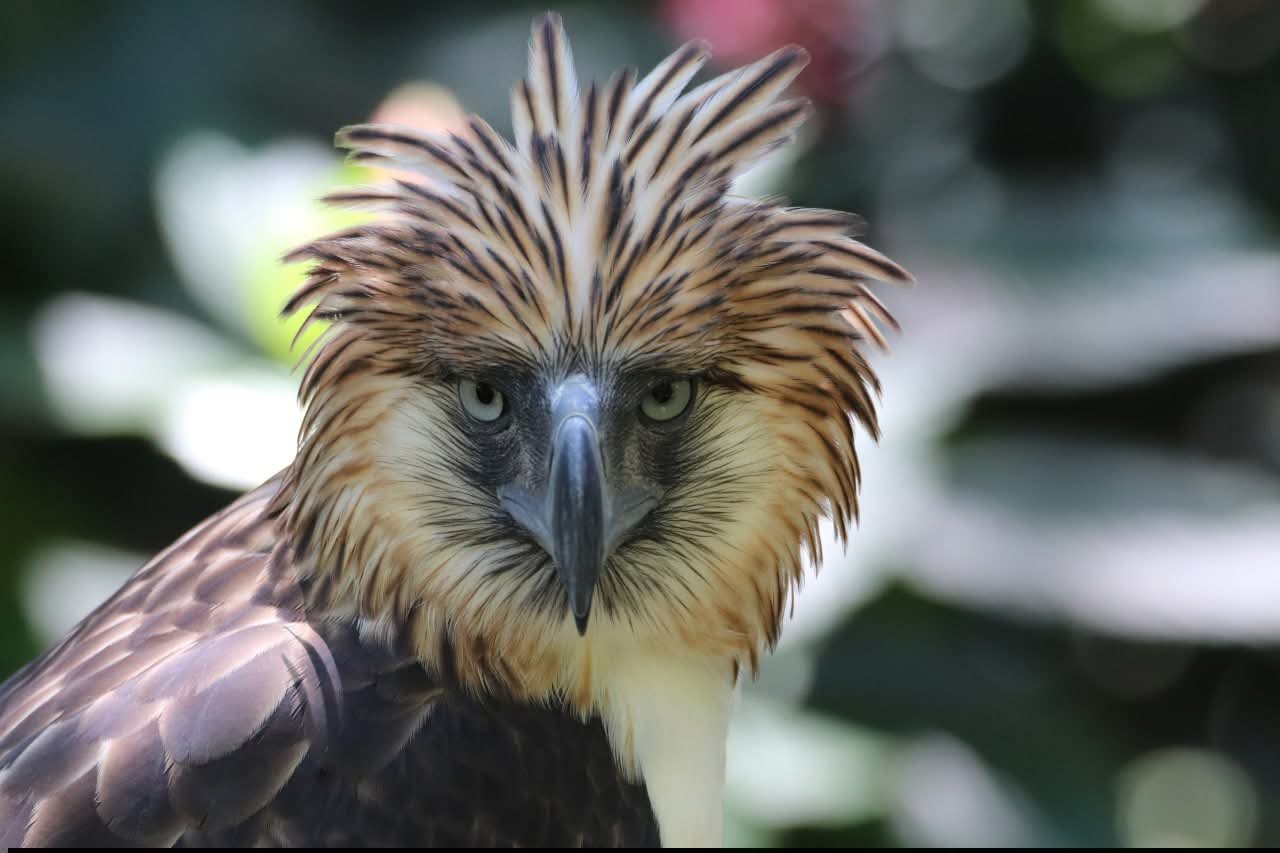
A NEW genetic information to guide captive breeding and future releases of Philippine eagles has been discovered in the first mitochondrial genome study of these endangered raptors.
Scientists from the University of the Philippines Mindanao–Philippine Genome Center (PGC) and the Philippine Eagle Foundation (PEF) have completed the genome study of the Greater Mindanao Faunal Region (GMFR).
In a statement, PEF said the study is published in the open-access journal Ecology and Evolution.
The study analyzed mitochondrial genomes from 32 raptors housed at PEF’s two facilities in Davao City – the old Philippine Eagle Center and the new National Bird Breeding Sanctuary. The group found that Philippine Eagles from across the GMFR now share very little genetic variation, confirming how close the species is to extinction.
However, PEF explained that despite this extremely low overall nucleotide diversity, PEF’s collection of captive eagles, including those rescued birds and those bred in captivity, “retains a high diversity of maternal lineages (haplotypes).
This also includes rare bloodlines possessed by eagles that were bred and hatched on-site.
“PEF’s captive-bred birds carry all 17 haplotypes detected in the study, showing that the current
breeding stock holds much of the remaining known genetic variation of the species,” it said.
In the study, the researchers detected at least two main genetic clusters of Philippine Eagles and identified three particularly distinct haplotypes, including one from Samar Island Natural Park.
“Results from Samar, together with key biodiversity areas such as Mt. Busa–Kiamba, Mt. Kampalili–Puting Bato, and Mt. Pantaron that showed genetic distinctiveness, highlighted geographically important lineages that need to be better represented in the current genetic stock,” it stressed.
The study also affirms that the Philippine Eagle is part of the subfamily Circaetinae within the raptor family Accipitridae, together with species like the crested serpent eagle (Spilornis cheela) and Circaetus pectoralis.
PEF said this emphasized how mitochondrial genomes can be used as a practical genetic tool for threatened species where full-genome data are still limited.
Mitochondria are tiny energy-producing parts of a cell, often called its “powerhouses.” Unlike most DNA found inside the cell’s nucleus, mitochondria have their own separate DNA, passed almost entirely from the mother to her offspring. Because mitochondrial DNA (or “mtDNA”) changes slowly over time and is inherited through the maternal line, it is widely used to trace bloodlines or “gene families.”
PEF said the mtDNA helps scientists identify how many unique maternal lineages remain in an endangered species.
“This is especially important for breeding threatened animals like the Philippine Eagle, where maintaining as many distinct bloodlines as possible can improve genetic health and survival in both captive populations and released birds in the wild,” it said.
“Our work shows that even if overall genetic diversity is low, the Philippine Eagle still holds a surprising variety of maternal lineages. By mapping these lineages, the PEF can now secure new genetic stocks from the wild and pair more birds in a smarter way—aiming to keep as much genetic diversity as possible in every chick that hatches,” lead author Michael G. Bacus of the PGC Mindanao and the Department of Biological Sciences and Environmental Studies at UP Mindanao.
UP Mindanao Chancellor Dr. Lyre Anni E. Murao, who is also a co-author and leads wildlife and genomics research at the university, stressed the role of Mindanao-based science.
“This is an example of how a Mindanao campus, working closely with conservation NGOs, can generate globally relevant science. We are proud that the students and young researchers of the UP Mindanao–PGC are helping decode the genome of our national bird and turning that knowledge into concrete tools for saving it,” Murao said.
Dennis I. Salvador, PEF executive director, said the findings serve where new genetic stocks can be secured from the wild and can guide us in choosing pairs and release candidates more wisely.
“For years, we have carefully bred eagles using pedigree records and field experience. This study clearly shows that nearly four decades of careful pairing and breeding at the Philippine Eagle Center have produced a healthy mix and preservation of precious haplotypes (bloodlines) ex situ,” he stressed.
The researchers recommended follow-up studies using nuclear DNA and larger sample sizes from other islands such as Luzon and additional sites in Leyte and Samar to build a more complete picture of the species’ genetic health.
PEF also eyed to integrate the new genetic insights into ongoing breeding plans at its new NBBS, including securing, with government permission, new genetic stocks from areas which harbor unique eagle maternal lineages namely: Samar, the Pantaron Range, Mt. Busa–Kiamba, and Kampalili–Puting Bato.
The results will serve as a guide for future reintroduction efforts across Luzon and Leyte islands.
