


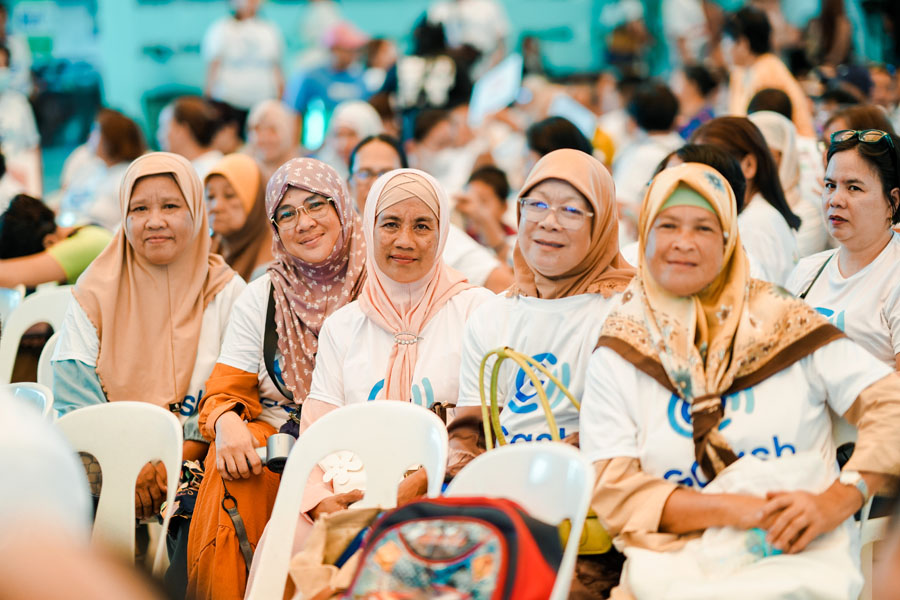
The Ministry of Social Services and Development of the Bangsamoro Autonomous Region in Muslim Mindanao (MSSD-BARMM) has partnered with GCash, the Philippines’ leading finance super app and largest cashless ecosystem, to expand its cashless disbursement system under the Financial Assistance System Transformation (FAST) Project, an initiative designed to make the distribution of social assistance faster, more efficient, and more transparent for beneficiaries across the region.
While MSSD-BARMM has already begun transitioning to digital payouts, the partnership with GCash expands the reach of the FAST Project, ensuring that financial assistance is more accessible and convenient for beneficiaries, including those in remote and underserved communities.
“This partnership strengthens our FAST Project by expanding our cashless distribution channels and ensuring timely assistance for our beneficiaries,” said Atty. Raissa H. Jajurie, Minister of the Ministry of Social Services and Development. “Through this collaboration, we aim to make social support programs more inclusive, reliable, and efficient, reaching every Bangsamoro family and community who need it most.”
The GCash engagement with the FAST Project also aligns with the company’s strategic focus on promoting financial inclusion among underserved communities, particularly within the Islamic population and the BARMM region. By prioritizing these areas, GCash seeks to support equitable access to financial services while empowering local communities with tools for everyday transactions and long-term financial health.
Under the partnership, beneficiaries will receive Bangsamoro Cards powered by GCash, which serve as both identification and a cashless payment tool. The cards allow users to withdraw funds, make purchases, and access essential financial services even without a smartphone, helping ensure that no one is left behind in the region’s digital financial ecosystem. This expansion will directly benefit key MSSD-BARMM programs under the FAST Project, including educational assistance through Angat Bangsamoro: Kabataan Tungo sa Karunungan (ABaKa), livelihood support through Bangsamoro Sagip Kabuhayan (BSK), and emergency relief through the Bangsamoro Critical Assistance to Indigents in Response to Emergency Situations (BCARES).
“For GCash, BARMM and Islamic communities are among our priority sectors,” said Cleo Celeste Santos, Head for Public Sector at GCash. “Digital finance penetration in these areas has historically lagged, which is why we are doubling down on our efforts. By working closely with MSSD-BARMM, we are providing accessible and culturally responsive solutions that help ensure the success of the FAST Project and other government programs.”
By expanding the FAST Project through GCash’s digital Funds Disbursement Service (FDS), MSSD-BARMM reinforces its commitment to modern governance, accountability, and inclusive development. Beneficiaries can now access assistance through a more convenient, secure, and widely available platform, ensuring that social aid reaches those who need it most. Through this partnership, GCash aims to strengthen financial access in BARMM, delivering solutions tailored to the unique needs of Muslim communities and supporting sustainable local growth.
GCash continues to collaborate with national agencies, local governments, and ministries to advance digital transformation, helping ensure that social aid, livelihood support, and emergency assistance are delivered efficiently to Filipinos, particularly in priority and underserved sectors.
