



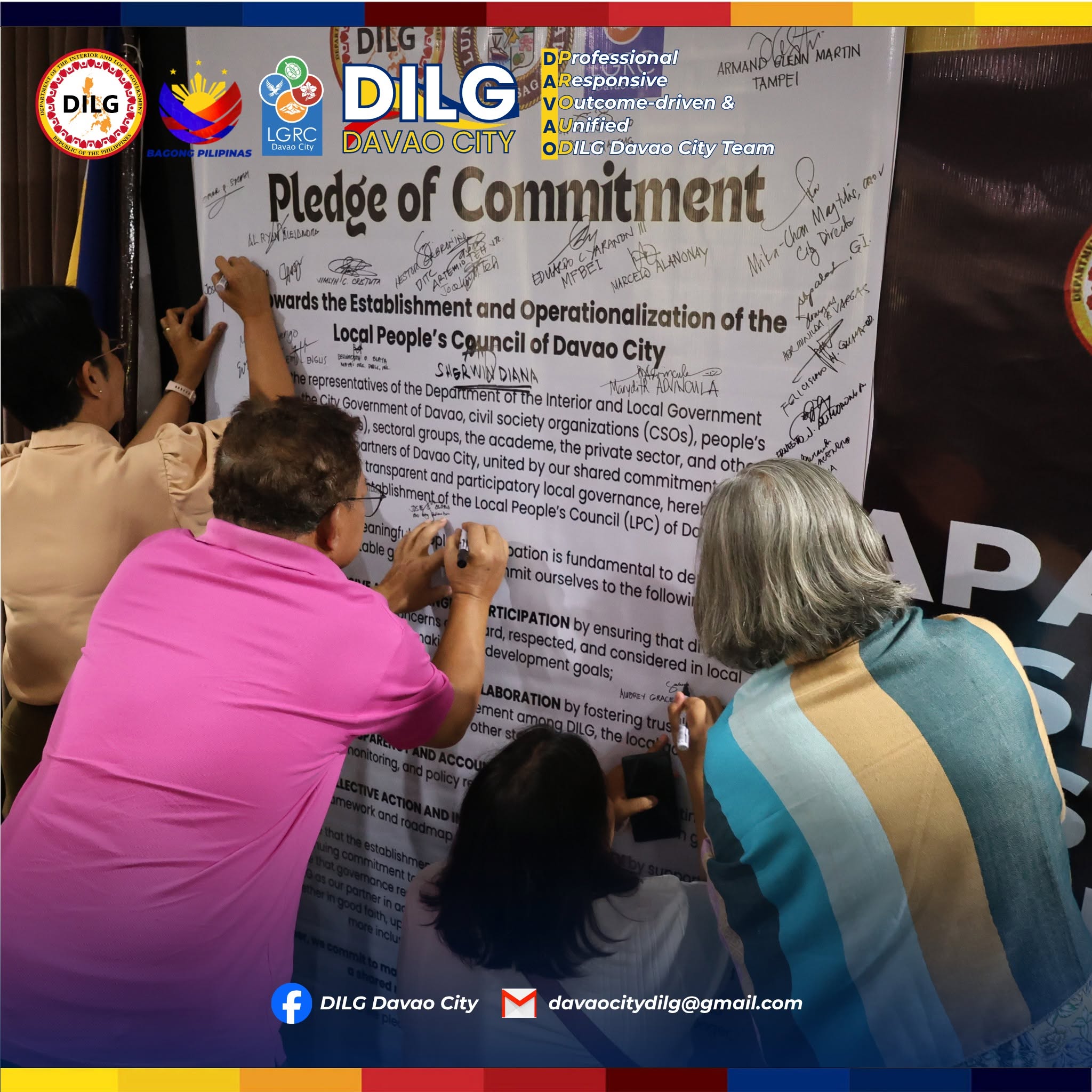
THE DEPARTMENT of the Interior and Local Government (DILG) in Davao City and civil society groups signed a pledge of commitment to work toward establishing a local people’s council (LPC).
The signing capped a two-day capacity-building and multi-sectoral dialogue on Oct. 26-27 at The Apo View Hotel, organized by the DILG Davao City Operations Office.
Local government representatives, accredited civil society organizations (CSOs), people’s organizations, sectoral groups, and the academe convened at the event.
DILG- Davao City director Mika-Chan S. Magtulis said institutionalizing an LPC can contribute to local governance.
She said constructive participation does not hinder governance but makes it “more informed, trusted, and effective.”
“Good governance is not only about what the government can do for the people, but also about what the government and the people can accomplish together,” Magtulis said.
The sessions covered the legal and policy framework for the institutionalization of the LPC and the open government partnership in terms of inclusive participation. The workshops involved organizations to assess their readiness to take a more active role in governance.
The accredited CSOs came from sectors including fisherfolk, farmers, persons with disabilities, environmental advocates, social protection groups, and economic sector organizations.
Councilor Al Ryan S. Alejandre, chairperson of the City Council’s committee on cooperative development and people’s participation, backed the initiative and committed support to the LPC’s institutionalization.
He emphasized the importance of unity between the local government and various organizations to strengthen people’s participation in making policies and decisions for the city.
Initial recommendations for a working LPC framework were lobbied, covering the proposed council’s composition, mandates and functions, sectoral representation, membership safeguards, and operationalization.
The CSOs also identified steps to move the proposal forward, including responsible organizations, timelines, and support.
“More than establishing another structure for compliance, the LPC envisions a continuing avenue where communities can raise concerns, offer recommendations, and help shape local development,” DILG Davao City said.

