



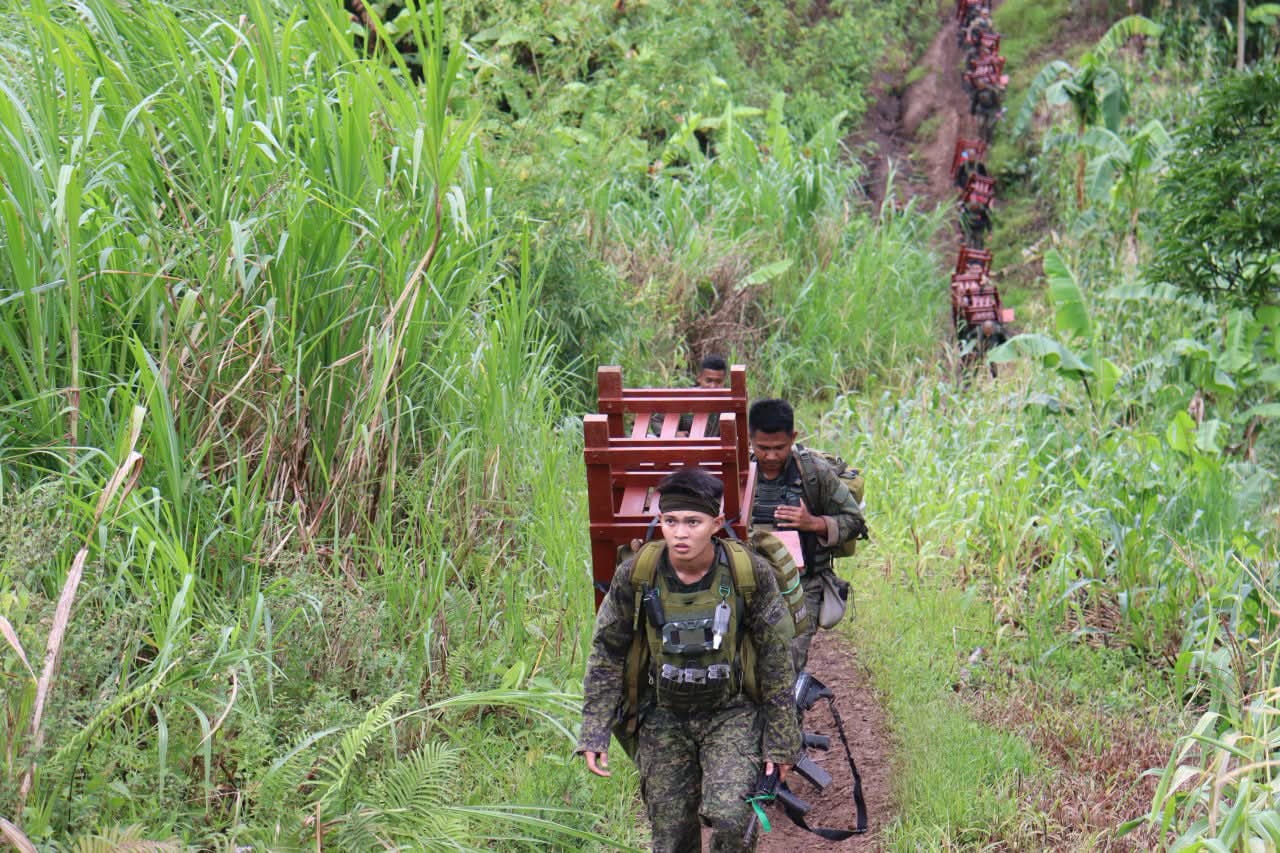
OVER A hundred soldiers from the 60th Infantry Battalion went on a grueling mountain trek to deliver classroom furniture and launch a specialized literacy program for indigenous children in one of the region’s most isolated areas.
Departing at dawn on July 11, the troops—led by 60IB commander LTCOL Jesus L. Rosete—navigated rugged mountain ranges, dense forests, steep mud trails, and raging river crossings to reach Sitio Nalubas in Barangay Palma Gil, a geographically isolated and disadvantaged area completely inaccessible by vehicles.
Lacking road access, the soldiers physically carried classroom chairs on their shoulders across the unforgiving terrain to build a functioning learning space for the local Indigenous Peoples (IP) community.
The mission serves as the prelude to the formal launch of the “Mediator PAGLAUM Program,” a collaborative peace and development framework between the 60IB, the Provincial Government of Davao del Norte, led by Governor Edwin Jubahib and Vice Governor Clarice Jubahib, and various civic stakeholders, including JCI Kadayawan, the Philippine Army Officer Candidate School, AFPSLAI Davao, and KALINAW SEMR.
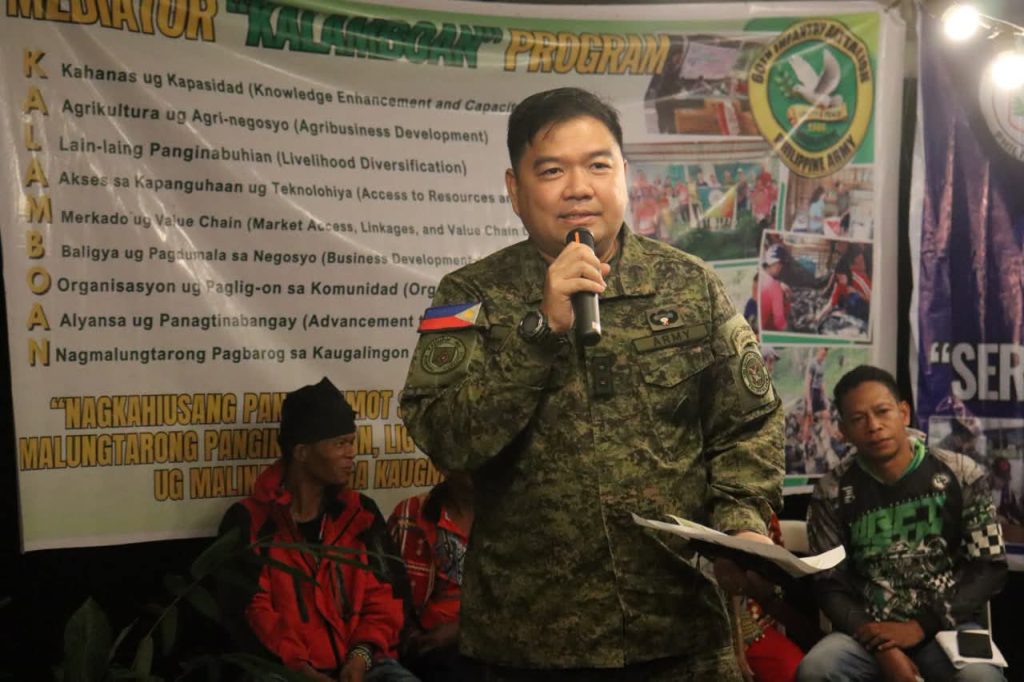
Anchored on the local phrase “Papel ug Lapis, Dili Pusil ug Bala” (Paper and Pencils, Not Guns and Bullets), the flagship initiative seeks to utilize education as a primary pathway to counter violent extremism and sustain long-term regional stability.
Under the program, a dedicated “Mediator PAGLAUM Soldier-Teacher Team” will be regularly deployed to remote tribal communities.
These specialized military personnel are tasked with providing basic literacy support, values formation, leadership training, and essential life skills to complement the formal education system.
According to the 60IB, the program is built on seven strategic pillars focused on partnership, enhanced educational access, guidance, leadership development, community upliftment, and sustainable peace.
Military officials emphasized that the initiative reflects a shift toward holistic civil-military operations under their broader peace program, operating under the principle that lasting security is achieved not merely through force but by actively investing in the infrastructure and future of isolated tribal youth.

