



A new British-funded study reveals that pandemic policing made the Philippines’ prison crisis worse, and that the country now has a rare chance to fix it before history repeats itself.
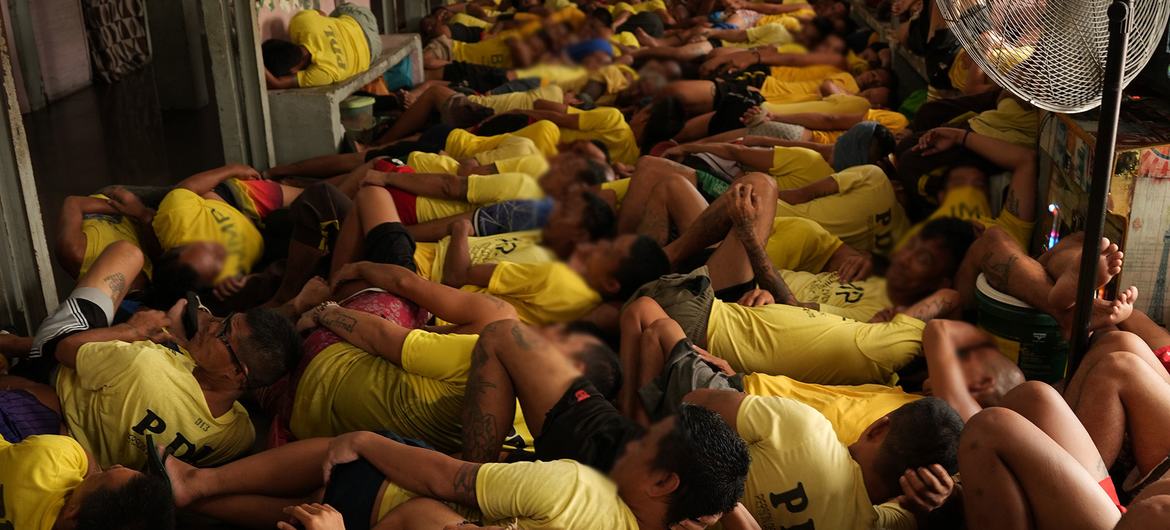
When COVID-19 swept through the Philippines in 2020, the country’s jails were already at breaking point. In some facilities, 362 people were crammed into a space designed for 100. There was no room to isolate the sick, no space to keep distance, and in many cases, no doctor on site.
“I haven’t seen any jail that is spacious, even police precincts,” one senior Philippine public health official told our research team. “If one person gets COVID, everyone gets it.”
Pandemic policing made things worse
A new comparative study led by Dr Nasrul Ismail, Senior Lecturer in Criminology at the University of Bristol, United Kingdom, and funded by the British Academy, examined how governments governed prisons during COVID-19 across Malaysia, Thailand, and the Philippines. It drew on 154 policy documents, spending data going back to 2010, and interviews with 37 senior officials, including prison policymakers, health authorities, human rights institutions, and civil society leaders.
In the Philippines, the findings are stark. Public health regulations were frequently enforced through arrest and detention, blurring pandemic policing with existing drug-war enforcement. The number of people being detained rose sharply at precisely the moment when overcrowding posed the greatest health risk. The pandemic did not ease the Philippines’ prison crisis. It deepened it.
Women bore a particular burden. “Some women were isolated for almost a year,” one civil society leader told our researchers. “They worried about their children every day.”
Civil society saved lives
When official systems failed, civil society stepped in. NGOs raised funds for medicine, masks, and vitamins. Human rights institutions elevated prison health onto the national agenda. Faith-based organisations filled the gaps that the state could not.
“The collaboration was strong, but it was improvisation,” one faith-based organization leader said.
That improvisation was admirable. It cannot be the plan for next time.
The capacity exists. The political will has not
The study’s econometric analysis, the first of its kind across the three countries, found that Philippine prison spending as a share of GDP actually increased during the pandemic. The money could be found when the crisis demanded it.
But the spending went on containment, on lockdowns and restrictions, not structural reform. Baseline investment in prison health remained extremely low. Technically sound health protocols failed for a simple reason: there was no paracetamol, no protective equipment, no doctor.
The Philippines’ prison health crisis is not primarily a funding problem. It is a political prioritization problem.
A window that will not stay open
The research also identifies genuine post-COVID progress. The Healthy Places of Detention policy, currently being finalised with implementing rules and regulations, was cited by multiple interviewees as a significant milestone. Civil society’s role in detention health has strengthened. These are real gains worth protecting.
Three priorities stand out for what must happen next. Extreme overcrowding in police jails and precincts must be treated as an urgent public health emergency, not a background condition. The Healthy Places of Detention policy must be operationalised across all facilities without delay. And civil society participation in detention health planning must be formally institutionalised, not left to improvise under pressure.
The Philippines has something Malaysia and Thailand did not demonstrate to the same degree: active civil society, functioning democratic institutions, and genuine reform energy. What is needed now is the political will to use the window before the next outbreak closes it.
Photo credit: UN Office on Drugs and Crime/Laura Gil

