

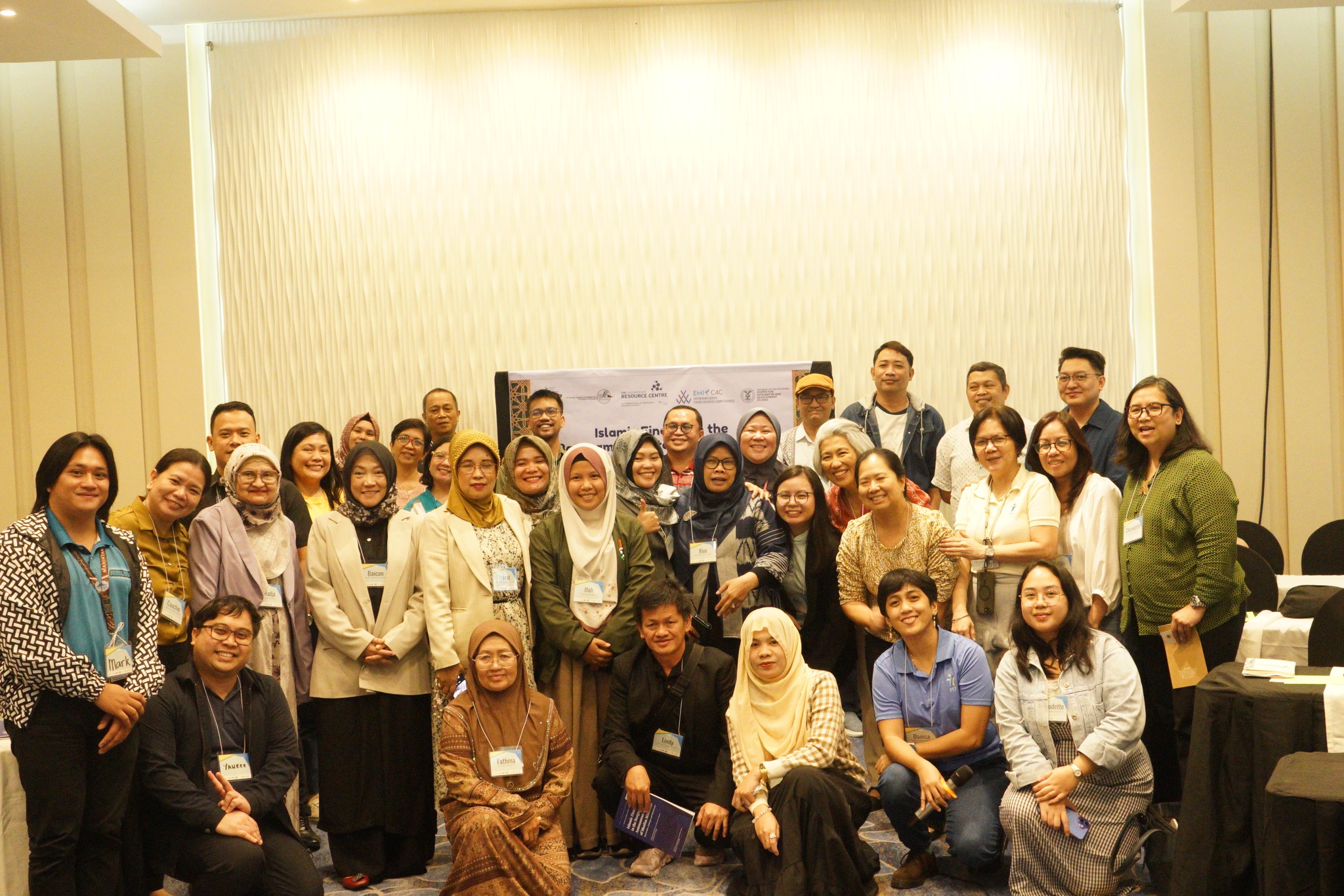
CAGAYAN DE ORO – The Peace and Equity Foundation (PEF) and Escaping the Middle-Income Trap: Chains-for-Change (EMIT C4C) Program of the University of the Philippines Center for Integrative and Development Studies (UP CIDS) presented the landscape, opportunities, and challenges of developing Islamic Financing in the Bangsamoro region on Dec. 9, 2025, in this city.
Attended by representatives from the Bangsamoro parliament, civil society, advocates, microfinance institutions, and academia, the presentation highlighted the development of Islamic finance in the region, current efforts to advance its implementation, and best practices from organizations that have implemented the program.
“The Islamic practices of Sharia financing, Halal, and other essential mechanisms are not just viable options, but pathways to dignity, inclusion, and opportunities in the region, PEF Executive Director Roberto Calingo remarked.
Crafting the Islamic finance landscape
Islamic finance, or Shari’ah-compliant financing, refers to instruments and services that comply with Islamic law. According to the action research, its development and promotion will advance financial inclusion and deliver solutions for Muslims residing in the Bangsamoro region.
“This mechanism is an appropriate and relevant tool for promoting financing because it addresses the pressing need to mobilize capital ethically, fairly, and inclusively,” EMIT-C4C co-convenor Annette Balaoing-Pelkmans said in her presentation of the study results.
In April 2024, PEF and EMIT C4C partnered with the UP Strategic Research and Management Foundation to launch a collaborative action research project. The teams conducted extensive interviews and gathered data across Cotabato City, Sarangani, Lanao del Norte, Lanao del Sur, and Zamboanga City. Their findings were later compiled into a comprehensive monograph published in 2025.
After presenting the study results, Bangsamoro Parliament’s policy research and legal service director Nassef Manabilang Adiong shared the government’s efforts to develop a framework for implementing Islamic Finance.
CARD-MRI program manager Daissiel Gonzales also presented their Paglambo project, their Shari’a-inspired microfinancing program. At the same time, Islamic social finance expert Rini Supri Hartanti from Indonesia shared the model used by Ramon Magsaysay Awardee Dompet Dhuafa, along with other best practices in Islamic finance implementation from Indonesia, highlighting approaches to advancing inclusion and diversity in financing.
Making an Islamic finance ecosystem a reality
According to Calingo, PEF will pursue additional efforts beyond action research to develop and scale up community-based models, while partnering with other institutions to expand the implementation of Islamic Finance in the region.
“This is not a one-time engagement for PEF but part of their long-term vision to empower families and strengthen local economies,” he said.