



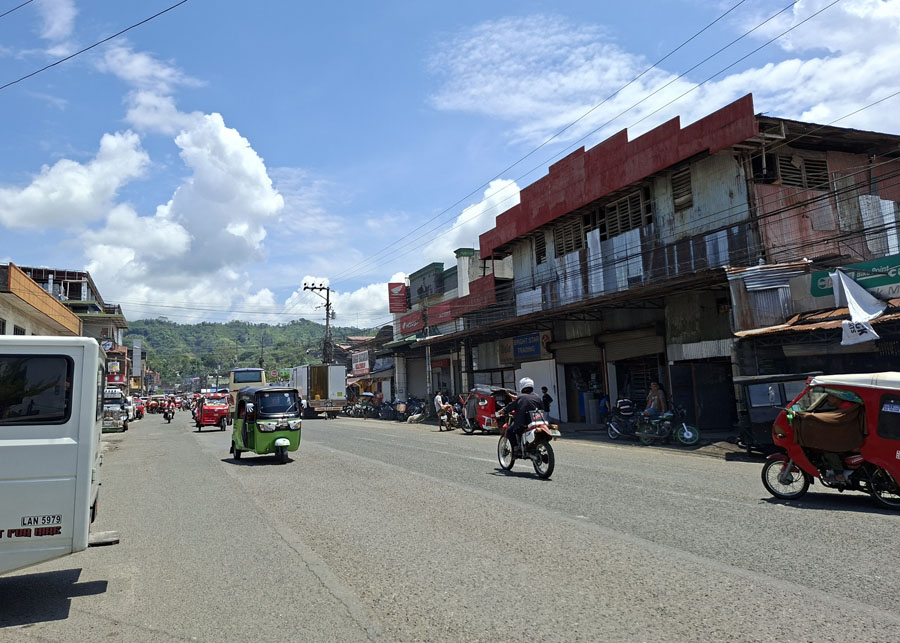
WHILE MOST people take a steady power supply for granted, Nabunturan is living a different reality. Small businesses are the most vulnerable, considering they absorb most of the damage and cost, with no respite in sight.
So, when the lights go out without warning—and no apology—the clock starts ticking. Meat thaws. Water pumps fall silent. And for a small business that literally needs each centavo to sustain its operations, the power outages go beyond inconvenience. It’s a story of survival—one brownout at a time.
A graveyard of freezers
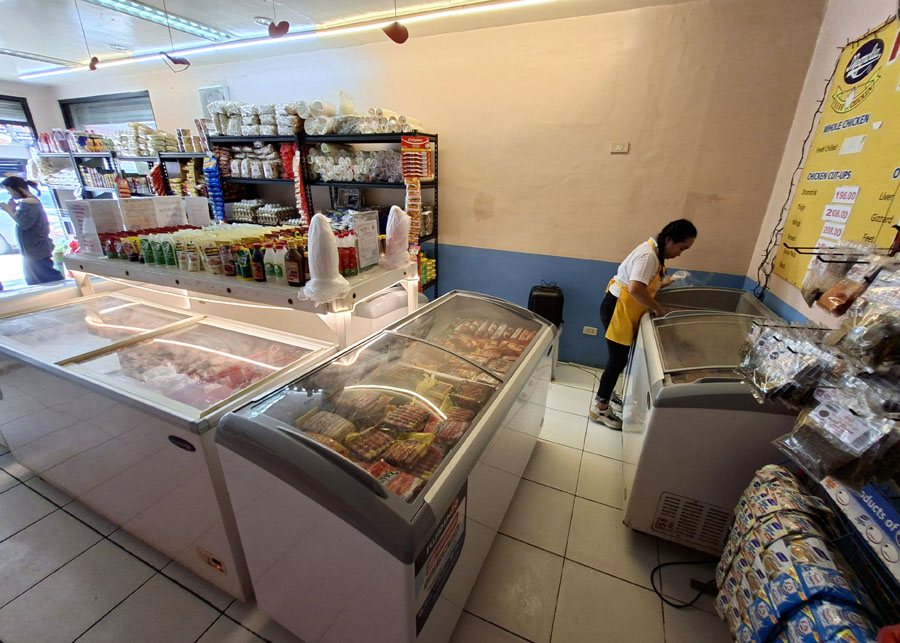
Jocel Melendres, a cashier at JLCJ Manukang Bayan, a local meat and grocery shop, described the unstable power supply as like playing tag with disaster, especially since they sell meat and poultry that are at risk of spoiling.
A good reputation is crucial for a small business facing stiff competition. One viral post on social media about spoiled meat would destroy their business. “We rotate turning on our freezers to ensure that at least one or two have enough ice to sustain a prolonged brownout,” she said.
For instance, she shared that at the time of the interview, their area had just been hit by a four-hour brownout. Fortunately, they have already adopted a rotational system to preserve the meat and protect their reputation.
However, their equipment is not insulated from the damaging impact of unstable power.
Their equipment tells a darker story. Thirteen freezers require constant monitoring since voltage fluctuations attack without mercy. “We actually have a warehouse that has become a graveyard of broken freezers,” Jocel admits. “I think we have more than 15 freezers there.”
Meanwhile, the electric cooperative charges them around P20,000 monthly—a price Jocel believes the service does not justify.
For his part, Jomari Albacite, a sales agent for a giant processed food distributor, recalled that about 15 kilos of bad meat were returned by a regular customer following an extended power outage.
“These are choice cuts of poultry, and we did not immediately notice that they were already spoiled when we sold them,” he said. “Thankfully, we did not lose their business as they understood what happened.”
No off-the-rack solutions
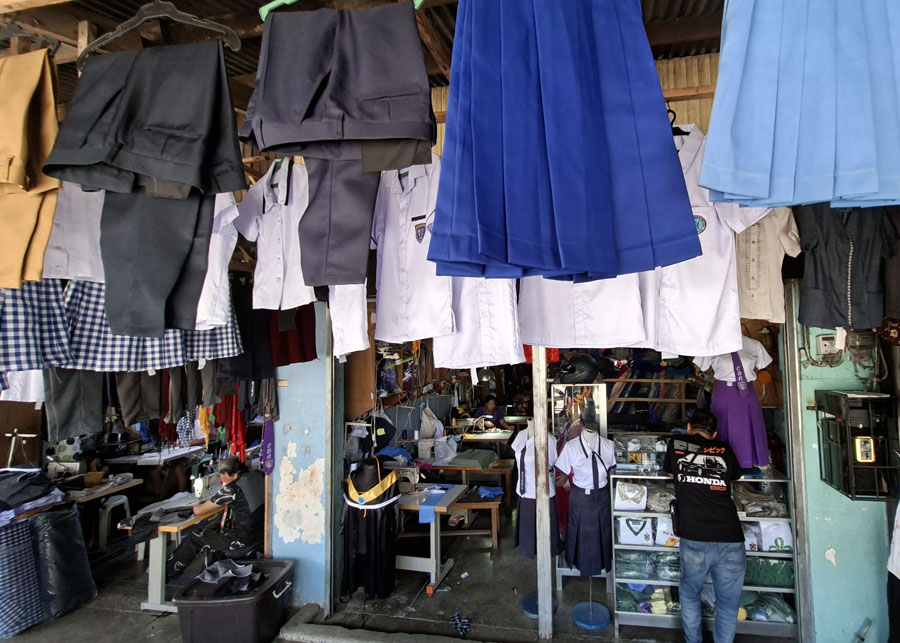
Meriam Logo, 63, a cashier at a local tailoring shop, said their employer has bought a generator to ensure all seven electric sewing machines are constantly humming even when the rest of the province goes silent.
Describing herself as an all-around assistant, Meriam said they have no choice but to absorb the extra expenses because they couldn’t afford to miss the delivery order deadlines. The business decision is understandable, considering their shop is one of the few sanctioned by the Department of Education to supply uniforms for its teachers and students.
“We also sew the uniforms of the employees of the local government and other private businesses here,” she said.
“As far as brownouts go, we are not affected because we can continue to work,” she said. “It’s just that our costs are adding up.”
For instance, by her recollection, they spend an additional P5,000 to P6,000 in fuel cost to run their generator. That’s on top of the average P14,000 they pay to the power provider.
Thirst must wait
Reyjon Roche, 21 years old, an employee at a water refueling station, said the business has been affected by the unstable power supply.
Unfortunately, their utility provider relies on electricity to distribute the supply to its clients. So, water is cut off during power outages. “When that happens, we just turn away clients while waiting for the electricity,” he shared. “But they understand our situation and simply come back later.”
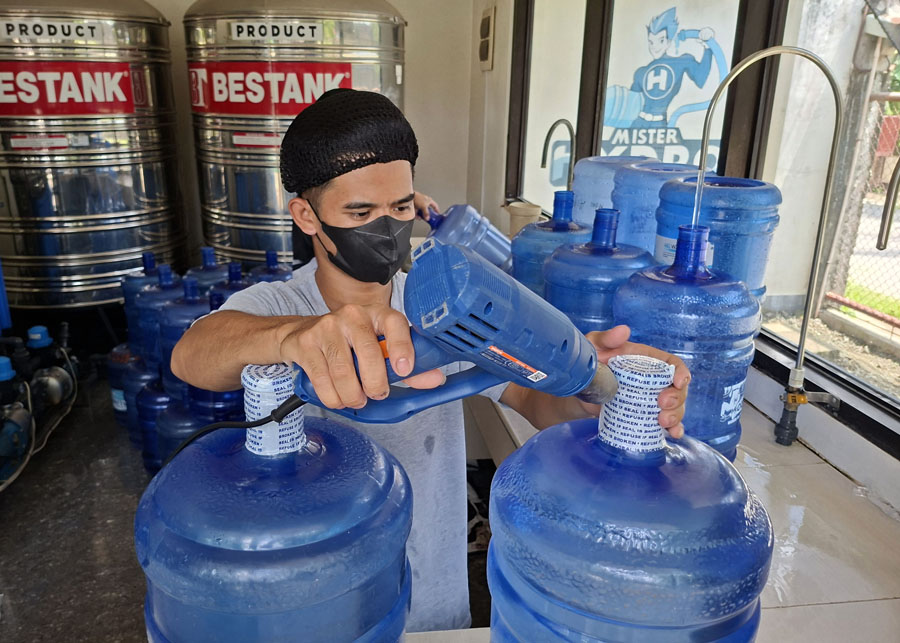
By his estimate, they cater to 25-30 clients per hour. The water refueling station charges P30 per container for refills and P35 for delivery.
He said that they hadn’t experienced any power interruptions in recent days. But he did recall a two-hour brownout a week before the interview.
The company hasn’t employed Reyjon for long. However, in the one year that he has worked there, he has become more conscious about the number of outages they have experienced. When asked about the frequency, he answered, “I would say there’s not a month that passed by that we did not have at least two.”
He said the company is a small business, so the owners couldn’t afford to purchase a generator for now. But with fuel prices skyrocketing, he didn’t think that investing in one would have helped much anyway, as it would only add to their expenses.
What unites them is not just the inconvenience of brownouts, but the invisible math of survival. After all, how many spoilages, how much extra fuel, and how many more lost sales can a small business absorb before it breaks?
Three businesses. One problem. The grim reality is this: they are held hostage to the unstable power supply in the province. And no solution on the horizon.

