

BY ALEX ALAGON

BY ALEX ALAGON
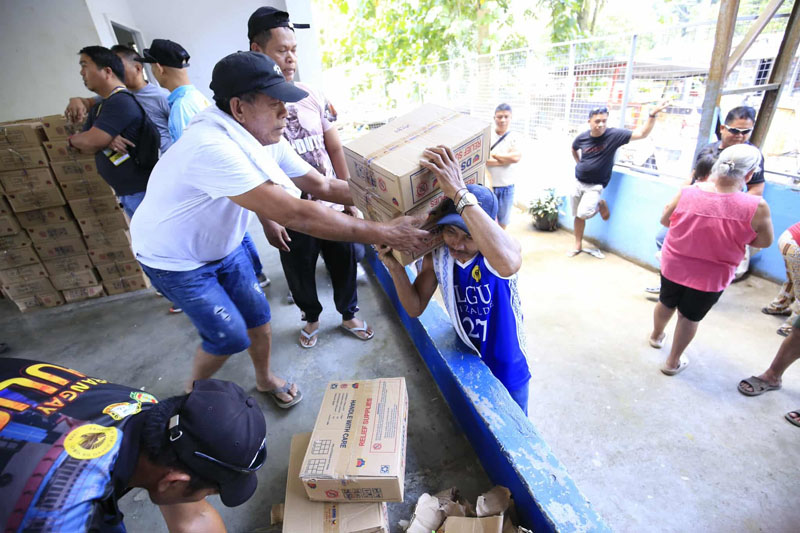
In the aftermath of the recent magnitude 7.4 earthquake that struck Davao Oriental, the Provincial Government of Davao de Oro continues to provide immediate assistance to affected families in the province.
With Governor Raul Mabanglo’s commitment to swift and sustained disaster response especially under the state-of-calamity, the Provincial Government began the distribution operations in successive phases throughout October and November, reaching thousands of affected households across the province.
A total of 8,896 affected families from the municipalities of Maco, Pantukan, New Bataan, Montevista, Nabunturan, Mabini, Monkayo, Compostela, and Mawab received aid from October to present.
These beneficiaries were identified through the Rapid Damage Assessment and Needs Analysis (RDANA), which determined their homes as partially damaged or unsafe for occupancy.
The coordinated efforts of the Provincial Government have earned the gratitude and appreciation of all families affected by the disaster.
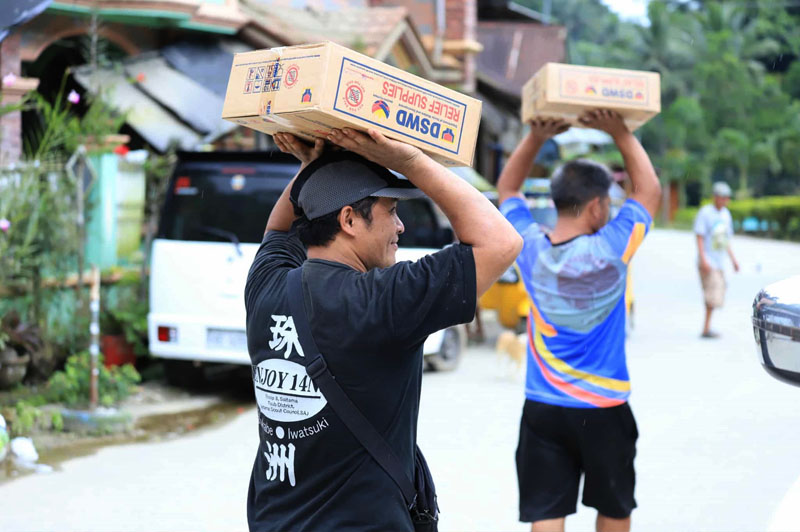

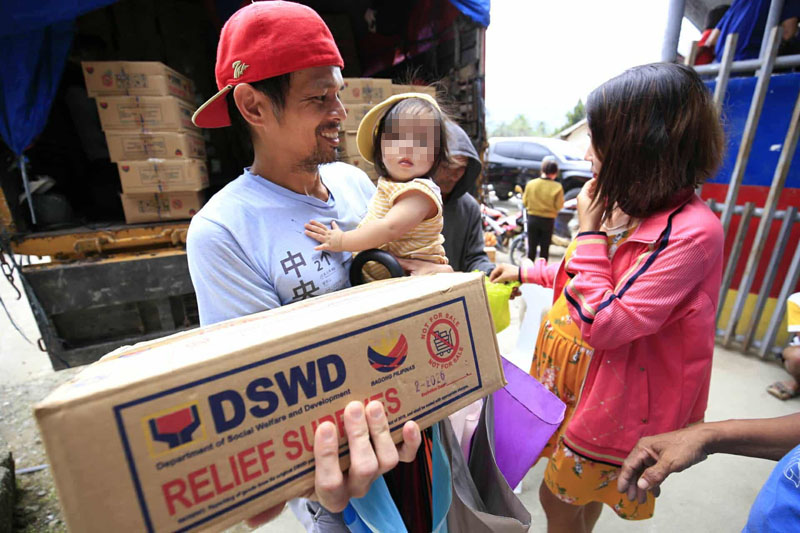
The relief food packs, provided by the Department of Social Welfare and Development (DSWD) Region XI, were promptly delivered to the affected municipalities through the Provincial Social Welfare and Development Office (PSWDO) – Davao de Oro, ensuring that assistance reached the affected families without delay.
The relief operation will continue until all areas are covered reflecting the Provincial Government’s firm commitment to sustained recovery and support for every affected resident of Davao de Oro.

MANILA — EdgePoint Infrastructure (“EdgePoint”), a leading ASEAN-based independent telecommunications infrastructure company, through its subsidiary, EdgePoint Towers Inc. (“EdgePoint Philippines”) has inked an energy partnership with Globe Telecom, Inc. (Globe), a leading digital solutions provider in the Philippines, with major interests in telecommunications, financial technology, data center services, venture building, shared services and digital marketing solutions, to supply Direct Current (“DC”) Power Systems to Globe sites moving forward.
This new partnership consolidates all of Globe’s passive tower infrastructure needs – including towers, power systems, and operations and maintenance – under a single, integrated provider. As a comprehensive, one-stop infrastructure solutions provider, this 10-year partnership with EdgePoint will enable Globe to ensure the consistent availability of its telecommunications services in the areas where the DC systems are installed. The collaboration will also allow Globe to streamline operations, enhance cost efficiency, optimize costs, and achieve greater network stability and stronger long-term planning capabilities for infrastructure investments.
William Walters, chief executive officer of EdgePoint Philippines, said: “This energy partnership builds on our existing commitment to Globe, specifically to continue supporting their network expansion and business growth through operational synergy that results in significant cost savings. EdgePoint is pleased to work closely with Globe to tailor a partnership model that allows us to support Globe in an integrated manner, where they will achieve operational, cost, and energy efficiencies simultaneously. With our growing portfolio of tower and energy-related ancillary services, we hope to enhance the energy resilience of telcos in the Philippines by offering reliable sustainable solutions.”
Carlo Puno, chief finance officer of Globe Telecom Inc., said, “Our partnership with EdgePoint demonstrates how collaboration drives progress. This alliance allows us to enhance operational efficiency and strengthen the resiliency of our network, while staying focused on delivering world-class connectivity. Reliable and sustainable access to power is critical in today’s digital world. Through this partnership, we’re strengthening the foundation for seamless, energy-efficient connectivity and supporting our vision of a more inclusive and resilient Philippines.”
The scope of the energy partnership involves the deployment and upkeep of DC power systems comprising rectifiers and battery storage solutions on EdgePoint sites, where Globe will co-locate its active telecom equipment. EdgePoint Philippines currently operates over 3,000 telecom sites in the country for all local Mobile Network Operators, including 20 solar-hybrid sites

THE CAMP of former President Rodrigo R. Duterte challenged the recent Department of Justice (DOJ) claim that it may utilize the “quicker surrender option” to implement International Criminal Court (ICC) warrants of arrest against Senator Ronald dela Rosa.
In a statement released Wednesday, Nov. 12, 2025, Atty. Salvador Paolo A. Panelo Jr., counsel for Veronica Duterte in the habeas corpus petitions for the former President, argued that “There is no such animal as an ‘option’ to ‘surrender’ Filipinos to the ICC… without prior authority from a Philippine court.”
The statement comes amidst circulating rumors of a potential ICC warrant for Senator Ronald “Bato” dela Rosa, a key figure in the Duterte administration’s anti-drug campaign.
Panelo asserted that the DOJ’s purported “executive mode” of surrender violates fundamental constitutional protections.
He cited Article III, Section 2 of the Constitution, which requires a warrant of arrest to be issued only upon a determination of probable cause by a judge of a competent Philippine court.”
The DOJ has no authority to bypass the judiciary and choose the so-called ‘executive mode’ of ‘surrender,’ to detain and deliver any person subject to an ICC warrant of arrest,” Panelo stated.
He maintained that Sec. 17 of Republic Act No. 9851, which governs crimes against international humanitarian law, must be read alongside the Constitution, necessitating a Philippine court warrant before any surrender or ceding of jurisdiction can occur.
Citing jurisprudence and Rome Statute
Panelo further argued that foreign judgments, including ICC warrants, are not automatically recognized in the Philippines unless confirmed by a local court, citing Rule 39, Section 48 of the Rules of Court.
He noted this position was previously articulated by former Justice Secretary Jesus Crispin Remulla in 2024.
Furthermore, the statement points out that the Rome Statute itself (Article 59 (2)) requires a person arrested to be brought “promptly before the competent judicial authority in the custodial State” (Philippines) to verify the legality of the arrest.
The counsel also reiterated that any option to “surrender” or “cede jurisdiction” under RA 9851 expired when the Philippines’ withdrawal from the Rome Statute became effective on March 17, 2019, thus stripping the ICC of jurisdiction.
Urgent appeal to Supreme Court
The Duterte camp intends to file an urgent motion urging the Supreme Court to immediately resolve the consolidated habeas corpus petitions filed on behalf of former President Duterte.
Panelo hoped that the resolution would “provide the necessary judicial guidance to put a stop to this administration’s shameless constitutional violations for the sake of political gain,” and directed the government to facilitate the “long overdue repatriation” of the former President.
AN INTELLIGENCE-DRIVEN operation by the Police Regional Office XI resulted in the successful arrest of the Top 1 Regional Most Wanted Person for November 2025 in Davao del Norte.
The suspect, identified only by the alias Pang-gong, was apprehended on Nov. 10, 2025, on serious charges including murder and violation of the Anti-Carnapping Act.
The arrest was carried out in Barangay Gupitan, Kapalong, Davao del Norte, by operatives of the Provincial Intelligence Team–Davao del Norte (PIT–DNPPO), which operates under the Regional Intelligence Division XI (RID XI).
The operation, led by RID XI chief Col Melvin R. Montante, involved a concerted effort from multiple units, including the Kapalong Municipal Police Station (MPS), the Regional Special Operations Group/Regional Drug Enforcement Unit XI (RSOG/RDEU XI), and various other provincial intelligence and mobile force units.
The successful apprehension, which follows the directive of Acting Chief, PNP PLTGEN Jose Melencio C. Nartatez Jr., was the culmination of intensive surveillance, information gathering, and community-based monitoring.
Alias “Pang-gong” was arrested by virtue of two Warrants of Arrest, both issued on January 8, 2025, by the Regional Trial Court Branch 30, Tagum City:
Murder (Article 248 of the Revised Penal Code), for which no bail was recommended.
Violation of the New Anti-Carnapping Act of 2016 (RA 10883), with a recommended bail of P300,000.00.
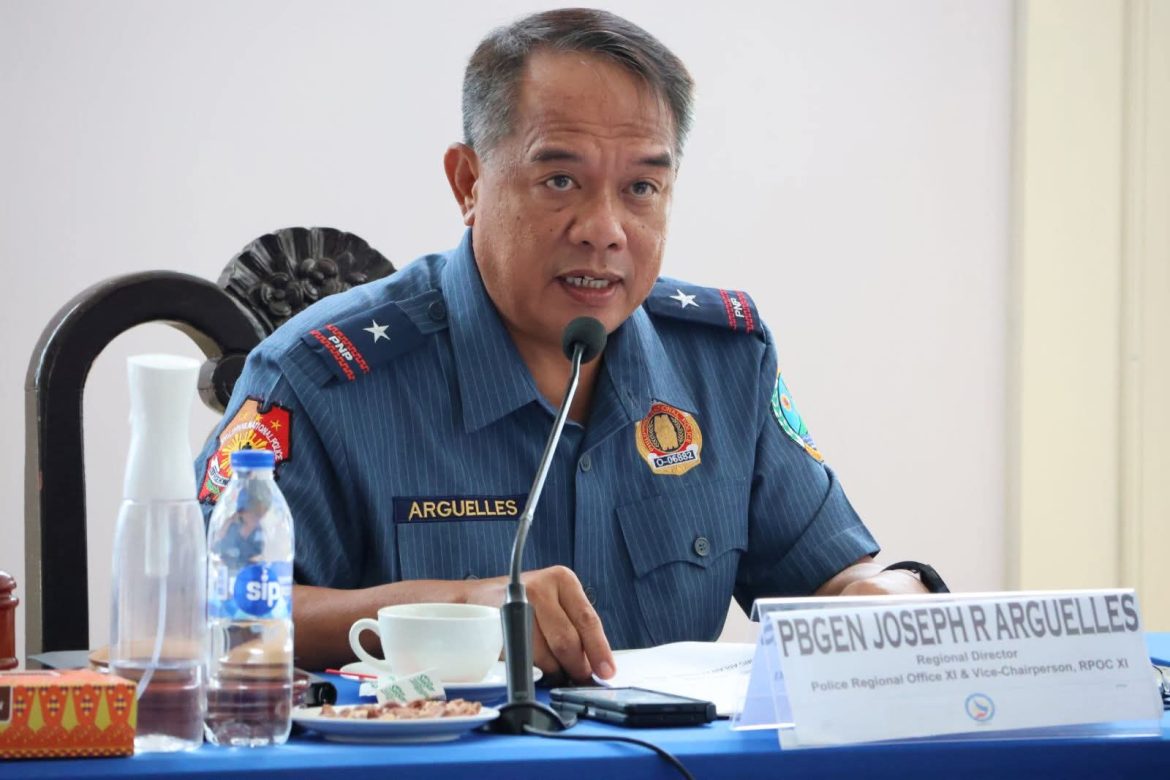
PRO XI regional director BGen Joseph R. Arguelles commended the operating units for their strategic efforts.
“This success clearly demonstrates the value of intelligence-based policing in ensuring the swift and lawful arrest of criminals who threaten public safety,” Arguelles said, underscoring the PNP’s commitment to intensifying the campaign against lawless elements.
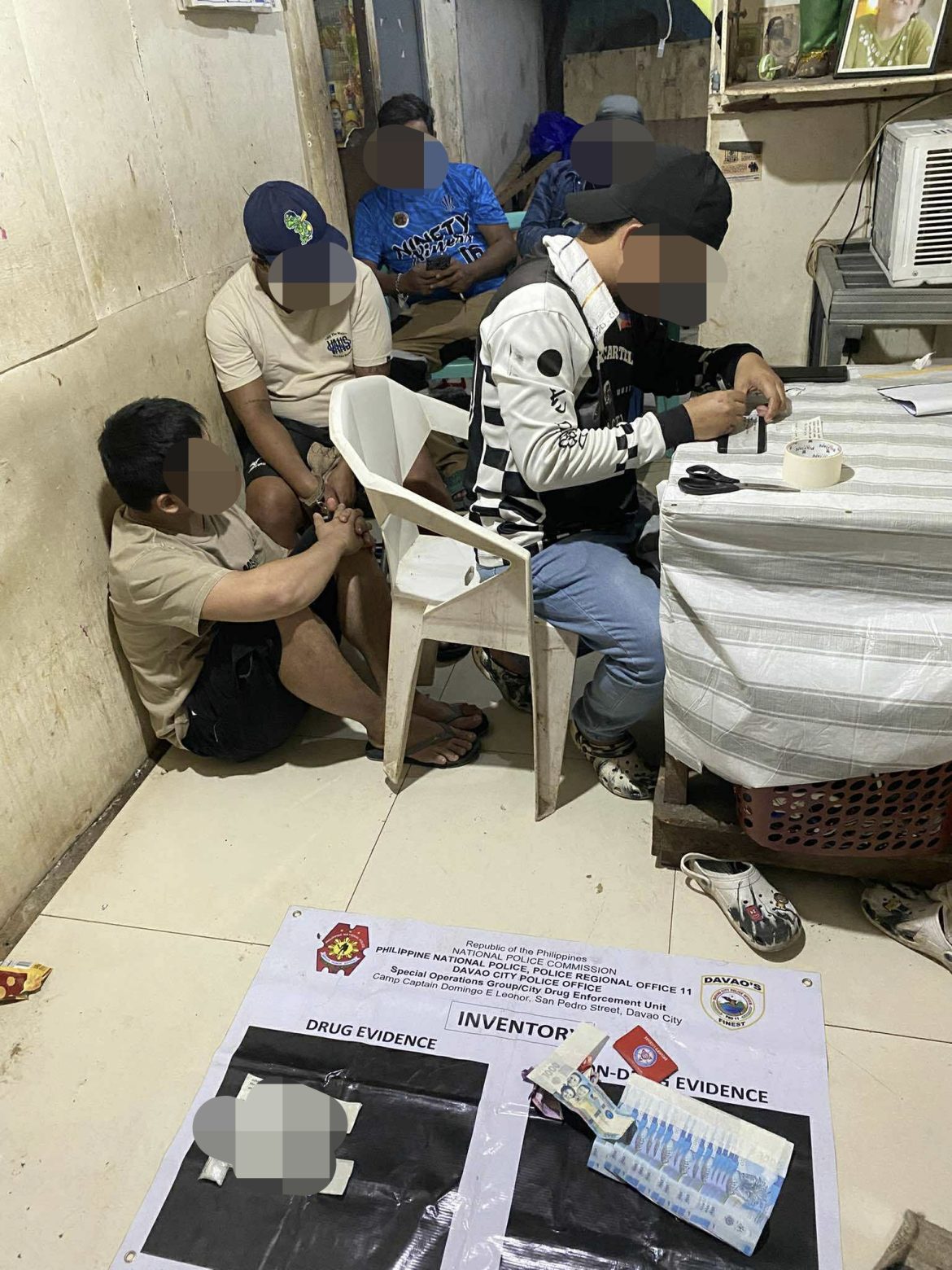
THE POLICE Regional Office XI launched 68 anti-illegal drug operations resulting in the arrest of 88 individuals from Nov. 3 to 9, 2025.
The operations comprised 51 buy-bust operations, 10 implementations of warrants of arrest, two services of search warrants, two checkpoint operations, and three police responses.
Among those apprehended were 22 high-value individuals and 66 street-level individuals.
The operations likewise led to the confiscation of 428.2074 grams of shabu (methamphetamine hydrochloride) valued at P2,911,810.32 and 29.81 grams of dried marijuana leaves valued at P3,577.20.
The total combined value of the seized illegal substances reached P2,915,387.52. Arguelles commended the relentless efforts of all operating units.
He noted that the consistent results of these intelligence-driven and well-coordinated operations demonstrate PROXI’s firm commitment to the directives of the acting PNP chief Lt Gen Jose Melencio C. Nartatez Jr., to sustain the campaign against illegal drugs and maintain a drug-free Davao Region.
“The consistent results of our operations show that PRO XI remains relentless and strategic in its approach to dismantling drug networks and protecting communities from the harmful effects of illegal drugs,” Arguelles said.
He further stressed that all operations were conducted with strict adherence to the rule of law and full respect for human rights, reinforcing the trust and confidence of the public in the continuing anti-illegal drug campaign of the Philippine National Police.

THE MINDANAO Alliance for Progress (MAP) has called on the Davao City Water District (DCWD) and Davao Light and Power Company (DLPC) to strengthen their disaster-preparedness systems and climate-proof their operations in the wake of the widespread service disruptions caused by Typhoon Tino in Cebu.
“Cebu’s experience is a stark warning to all urban centers, including Davao City,” MAP coordinator Mayet Valdez said in a statement. “While we are fortunate that Davao lies outside the usual typhoon path, our city has not been spared from the growing impact of climate change — from intense rainfall and flash floods to destructive windstorms. We need to act now to protect our vital services before the next disaster strikes.”
Media reports have shown that Typhoon Tino left large parts of Cebu without water and electricity for several days. The Metropolitan Cebu Water District managed to restore only around 64 percent of its water production as of November 7, while the Visayan Electric Company was still working to reconnect many of its customers. Landslides and blocked roads in mountain barangays also slowed down relief and restoration efforts.
Valdez said such scenes could easily happen in Davao if the city’s lifeline systems remain vulnerable. “Our water and power infrastructures are as exposed as anywhere else,” she said. “If heavy rains or landslides damage critical lines or pumping stations, large portions of Davao could be cut off for days. That’s not acceptable for a major city.”
MAP urged DCWD and DLPC to conduct comprehensive climate-risk audits of their facilities — including power lines, substations, treatment plants, and pumping stations — and to develop a ‘Climate-Proof Davao City’ plan. This plan, Valdez said, should outline infrastructure upgrades, redundancy systems, and pre-positioned response teams capable of restoring essential services quickly after extreme weather events.
“Preparedness is more than just emergency response,” she said. “It’s about building systems that can withstand stronger storms and heavier rains, which are becoming more frequent even here in Mindanao.”
The group also called for closer coordination among utilities, the city government, and barangay disaster offices to ensure that service restoration routes remain open during calamities. “Climate-proofing is everyone’s responsibility,” Valdez said. “But it starts with those who manage the lifelines — water and electricity — that sustain our homes, hospitals, and communities.”
Valdez added that Davao City’s relative safety from typhoons should not lead to complacency. “Being near the equator doesn’t shield us from climate change,” she said. “We may not face direct typhoon hits, but we are already feeling the effects — stronger rains, more frequent flooding, and unpredictable storms. Now is the time to prepare.”
CEBU, PHILIPPINES — When we first reported on Meta Earth’s “From E to Emergency” campaign, it was a fascinating question: could a Web3 project offer a new blueprint for philanthropy—fusing on-chain consensus with off-chain action?
Now, we have got an answer, a resounding yes.
But the story that unfolded was not a simple case study; it was a trial by fire.
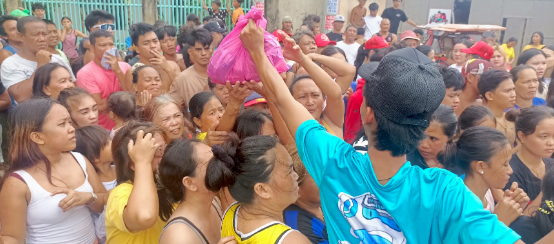
The Meta Earth team, along with its community “Navigators” and “Builders,” successfully delivered essential aid in Davao and Cebu this past week. They did so by navigating not just one, but two separate humanitarian crises: the devastating series of earthquakes in October, and a new, ferocious typhoon that struck the nation just days before their arrival.
A mission tested by fire
The team’s initial target was communities in southern Luzon and Mindanao, reeling from October’s earthquakes. But as the mission began, Typhoon Kalmaegi cut a devastating path across the Visayas region, triggering a national state of calamity.
Cebu, the team’s second stop, was among the hardest hit.
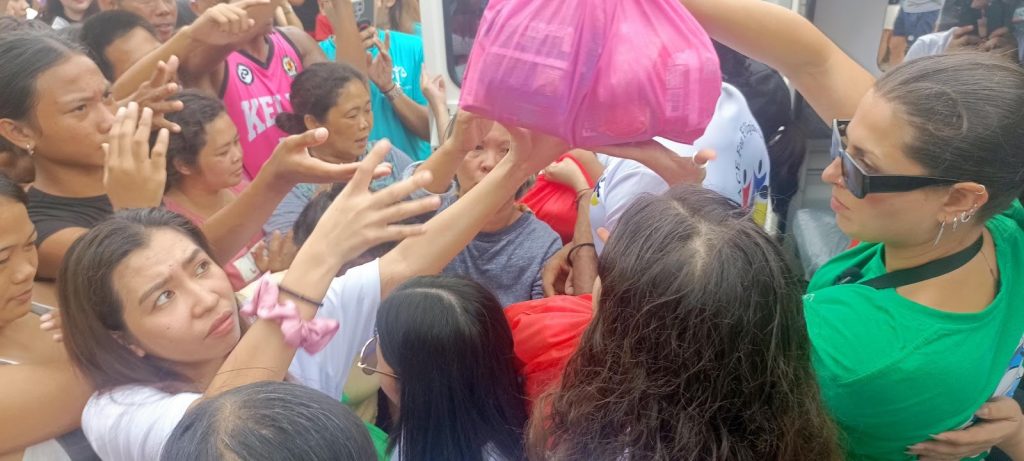
“We landed in scenes of total devastation,” said Irene Guarnieri, Meta Earth’s official representative, who took five flights in four days to complete the mission. “The roads from the airport were lined with the wreckage of homes. People were displaced, dazed, and had lost everything.”
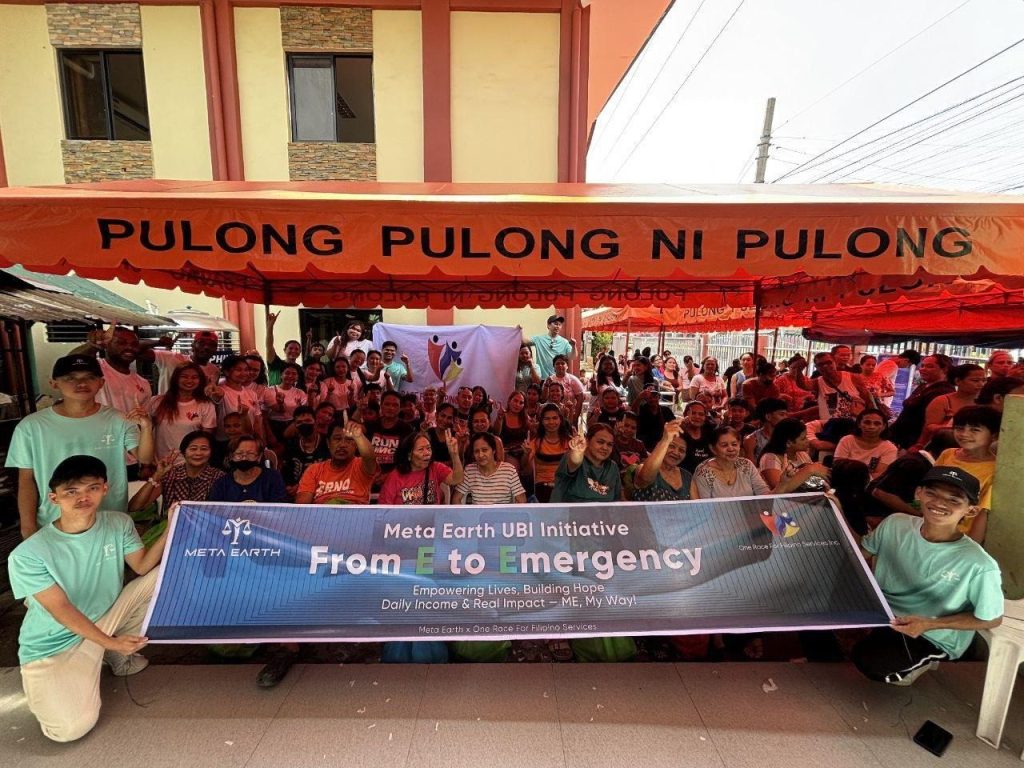
This is where the mission evolved from a logistical test into a testament of commitment. With Cebu’s infrastructure crippled, the team, alongside local NGO One Race For Filipino Services, worked to ensure the aid—supported by thousands of global “E” gestures—reached the families who needed it most.
For Guarnieri, the experience was profoundly grounding. “In three days, I cried, laughed, felt useless, grateful, and angry,” she shared. “Meeting people who had lost everything yet still managed a smile—it shifted something inside me. We chase comfort and success, forgetting that the real lesson is in connecting and realizing how privileged we are. This team, this community, showed up. I’ll carry that with me for a long time.”
A new model of global goodwill
The mission’s success was not only in its delivery but in its mobilization. The #ShowTheEforPH campaign proved the power of the “zero-barrier” model we reported on.
The call to action—a simple “E” gesture on social media—unlocked a global wave of empathy. Crucially, this wave came from everyone. We saw photos of “E” gestures posted from humble homes and modest workplaces around the world. It wasn’t a campaign of the wealthy donating to the poor; it was a horizontal, human-to-human connection.
Meta Earth’s Global UBI Initiative provided the rails for people who may not have the financial means to donate to still possess the power to send real, tangible aid to the other side of the planet.
From aid to empowerment: The blueprint evolves
As we wrote in our pre-event coverage, the true long-term promise of this “hybrid model” was its potential to evolve into a new “philanthropic operating system.”
With the emergency aid distribution complete, that evolution is now beginning.
Meta Earth has announced that its mission in the Philippines is transitioning from temporary aid to sustainable empowerment. The local Meta Earth node community will now select 200 of the most impacted families from Davao and Cebu to participate in a dedicated training initiative.
These families, serving as ‘seed users’ for their communities, will receive hands-on education on how to activate their digital identity (ME ID), begin collecting their daily, unconditional basic income, and explore methods to increase their earnings within the ecosystem.
This is the blueprint in action. It validates its most vital function: as a bridge to pull families from a state of crisis into a system of long-term, verifiable empowerment. The slogan of the Global UBI Initiative—”Empowering Lives, Building Hope”—is no longer just a mission statement. In the typhoon-hit villages of the Philippines, it is now a tangible, ongoing process.

WHEN TYPHOON Tino lashed through Cebu City, the images that flooded social media were heartbreaking. Families wading through waist-deep water, children clinging to plastic tubs, dogs swimming beside them or trapped on rooftops, eyes wide with fear. In the chaos of evacuation, many pets were left behind. Some owners had no choice. The evacuation centers did not allow animals. Others simply could not carry their pets with them. For those who did, shelters often turned them away.
In times of disaster, we often talk about saving lives, but rarely do we ask whose lives are we saving? For many Filipinos, pets are not just animals. They are family. They sleep beside us, greet us after a long day, and bring comfort in ways words cannot. Yet, when disaster strikes, our laws, systems, and even our communication strategies seem to forget them.
During typhoons, floods, and earthquakes, animals become the silent victims. They have no voice to cry for help, no way to understand the panic unfolding around them. Many perish not from the force of nature but from neglect and exclusion in disaster planning.
Government disaster protocols often focus on human evacuation, as they should. But it is equally important to recognize that animals, especially domesticated pets, depend entirely on human care for survival. The decision to leave them behind is not one of indifference; it is one of heartbreak. Imagine being told you must abandon a member of your family because there is no place for them in safety.
This is not just an issue of animal welfare. It is a communication failure. It shows that our disaster messaging, our preparedness plans, and even our social development goals overlook the emotional and social realities of Filipino families.
Evacuation centers across the Philippines are rarely designed with inclusivity in mind. Many still lack accessibility for persons with disabilities, gender-sensitive spaces, or privacy for mothers and children. And when it comes to animals, the exclusion is total.
This sends a troubling message: compassion has limits. It implies that some lives matter more than others, that animals are disposable once survival becomes inconvenient. But to many families, leaving a pet behind is like leaving behind a piece of themselves. Some refuse to evacuate altogether if they cannot bring their pets, endangering their own lives in the process.
This is why communication is critical. Disaster preparedness must include clear, compassionate information about what pet owners can do before, during, and after calamities. Authorities should coordinate with veterinary offices, animal welfare groups, and local communities to create pet-friendly evacuation policies. Compassion should not be conditional—it should be systemic.
Our pets teach us many things about humanity. They show us unconditional love, loyalty, and presence. They remind us that relationships are built not through words but through care. In disasters, they mirror our fear but also our resilience.
When families evacuate, children cry not only for the loss of their home but for the absence of their pets. Psychologists note that animals help reduce trauma during crises. The simple act of holding or seeing a pet can calm anxiety and provide emotional stability. Including animals in disaster management is, therefore, not only humane but also therapeutic. It helps families heal faster and rebuild stronger.
In 2013, the Philippines passed the Animal Welfare Act (Republic Act No. 1063), which recognizes animals as sentient beings capable of feeling pain and suffering. Yet disaster preparedness policies remain silent about them. This gap reflects how policy and compassion often fail to meet.
A humane disaster framework should include:
These are not grand reforms. They are acts of empathy that acknowledge animals as part of our social ecosystem. Including them in disaster communication strengthens community trust and participation. It tells citizens that their full reality, their homes, their families, and their pets are valued.
The media also plays a crucial role. After every disaster, viral images of stranded dogs and cats stir public outrage, but the attention fades once the storm does. Instead of waiting for heartbreak to trend online, the conversation must shift to prevention.
Journalists and content creators can highlight stories of successful animal rescues, local shelters doing good work, and policies that promote animal welfare. These stories remind us that kindness is not weakness; it is strength. It is how communities survive together. Social media can also become a space of coordination. During disasters, posts about missing or rescued pets become lifelines. With proper communication strategies, these networks can help reunite families with their furbabies faster.
Ultimately, how we communicate during crises reflects who we are as a nation. A government that includes animals in disaster preparedness shows a deep understanding of human emotion. It recognizes that empathy is not limited by species. When we plan for everyone, including the voiceless, we become more humane, more inclusive, and more prepared. Communication becomes not just about information but about connection. It is a way of saying: you are not alone, and neither are those you love.
In every evacuation center, every temporary shelter, and every flooded street, spaces speak. They reveal what we value as a society. A space that welcomes both people and their pets speaks of compassion and understanding. A space that turns them away speaks of hierarchy and indifference.
We can choose what our spaces say. They can either echo the same silence that follows every storm, or they can speak of kindness, foresight, and care for all living beings.
No tail should be left behind in any calamity. Because when we save our pets, we also save a part of our humanity.
—————————————————————————————————
Kethelle I. Sajonia is a college instructor at the University of Southeastern Philippines, Mintal Campus. She is currently in the final phase of her Doctor of Communication degree at the University of the Philippines. Her research interests include inclusivity, education, communication, and social development. She actively engages in scholarly research and community-based initiatives that advocate for inclusive and transformative communication practices.
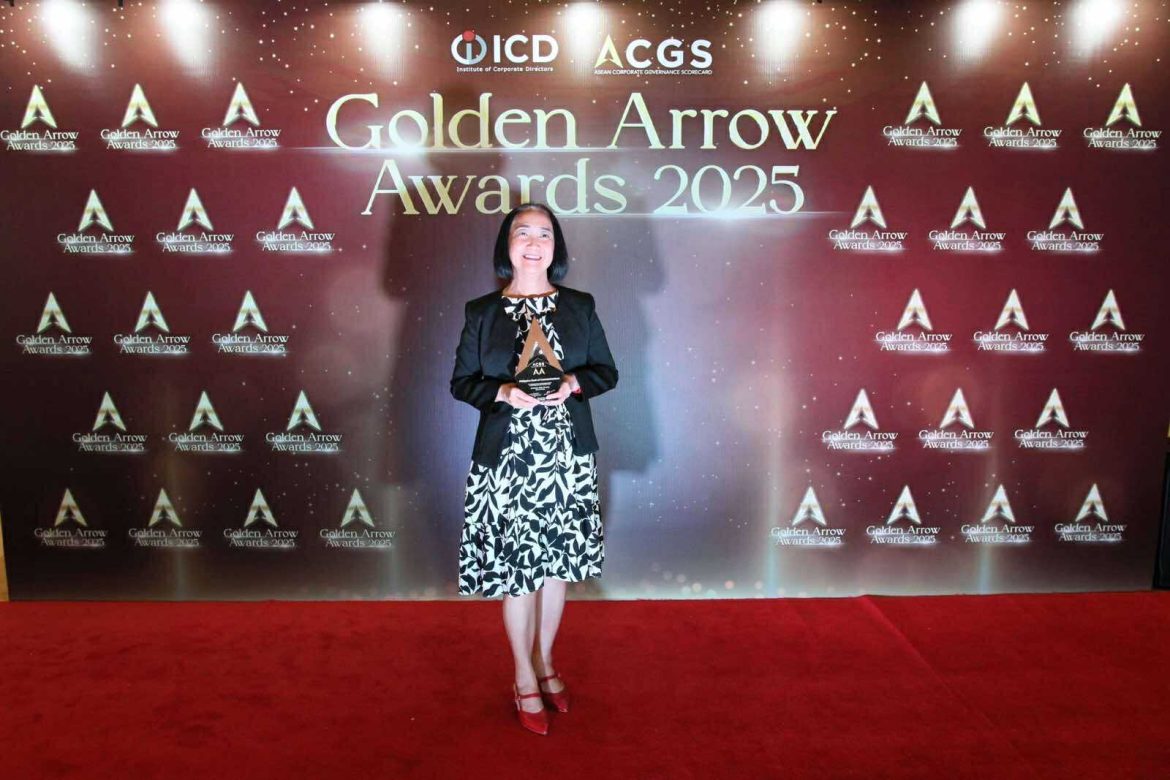
MAKATI CITY, Philippine — The Philippine Bank of Communications (PBCOM) is proud to announce that it has been honored with 2 Golden Arrows Award based on the 2024 assessment of Philippine Publicly Listed Companies (PLCs) under the revised ASEA Corporate Governance Scorecard (ACGS), affirming the Bank’s commitment to high standards of corporate governance, transparency, and accountability.
The Golden Arrow Awards, administered by the Institute of Corporate Directors (ICD), in partnership with SEC under the ASEAN Corporate Governance Scorecard (ACGS) framework, recognize publicly listed companies in the Philippines that meet rigorous benchmarks across shareholder rights, stakeholder relations, disclosure practices, and board oversight.
In receiving 2 Golden Arrows for 2024 ACGS, PBCOM demonstrates sustained excellence in corporate governance practices that bolster stakeholder confidence, strengthen its competitive positioning in the banking sector, and underpin long-term value creation for shareholders, customers and the broader community.
“We are deeply honored to receive these awards,” said Patricia May Siy, president & CEO of PBCOM. “This achievement reflects the collective efforts of our Board, senior leadership, employees, and partners who uphold the highest standards of integrity, transparency and accountability in everything we do. We view this recognition not as an endpoint, but as a baseline from which to elevate our performance further.”
The 4th consecutive year award reaffirms PBCOM’s strategy of embedding good governance into its business operations and decision-making framework, even as the bank deepens its focus on digital banking, customer service innovation, and sustainable growth.