


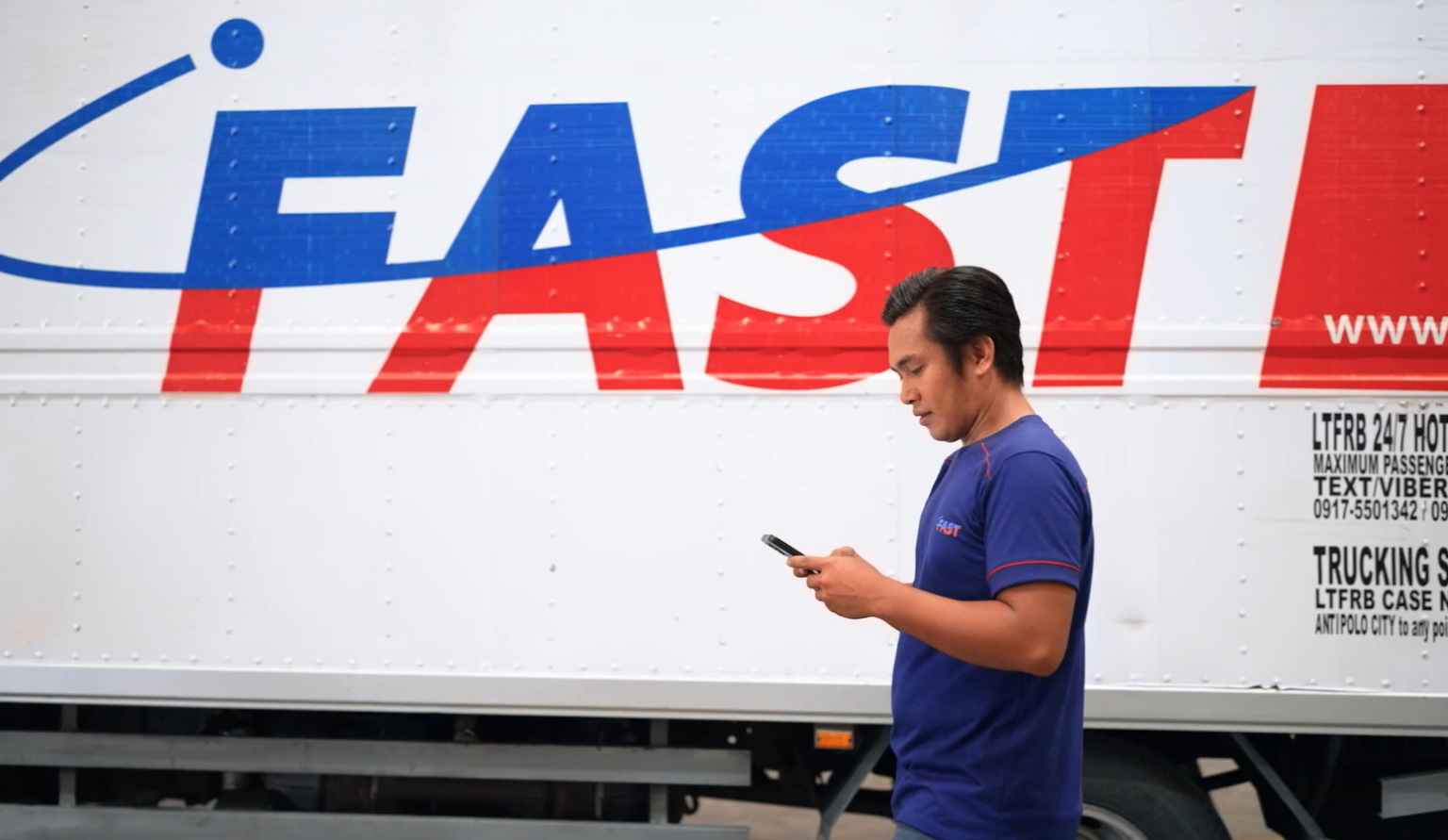
PHILIPPINE logistics firms and the government must accelerate end-to-end supply chain digitalization and prepare for wider blockchain adoption amid disruptions and growing customer demands, according to FAST Logistics Group.
Speaking at the digitalization segment of the Logistics Services Philippines (LSPH) Conference & Exhibit 2026 on Wednesday, May 6, FAST Chief Information Officer Leo Sacamos Jr. said fragmented and largely manual logistics systems continue to constrain efficiency across the country’s supply chain network.
He also emphasized that blockchain could play a critical role in improving transparency, traceability, and security in logistics, but said its adoption would require stronger government support, enabling policies, and the necessary digital infrastructure to help the private sector accelerate the shift.
“Digitalization is a major turning point for logistics. It enables agility and resiliency,” Sacamos said. “At FAST’s scale, with more than one million pallet positions across 160 hubs and over 3,100 transport assets nationwide, technology is what allows us to stay agile, responsive, and operationally synchronized.”
Sacamos joined Department of Information and Communications Technology Secretary Henry Aguda and Blockchain Council of the Philippines Founding President Donald Lim as resource speakers and panelists during discussions on logistics digitalization and emerging technologies.
Sacamos highlighted how automation, artificial intelligence, and data-driven systems can help address long-standing inefficiencies that continue to drive up transport and supply chain costs.
He noted that one of the industry’s persistent challenges is low truck utilization. Around 70% of trucks in the Philippines still return empty after completing deliveries, while several trucks delivering fast-moving consumer goods (FMCG) to retail stores operate at only 32% to 42% capacity.
“In logistics, inefficiency always translates into higher costs somewhere down the chain, and eventually consumers feel that impact,” he said. “When trucks run empty on return trips or operate below capacity, we are wasting fuel, time, and resources.”
He said digital tools and analytics can help logistics providers gain real-time visibility over fleet movements, identify backhaul opportunities, and improve demand aggregation across delivery networks.
“The future of logistics will be built on transparency, interoperability, and real-time data,” Sacamos added. “Eventually, the industry will not be able to get away from digital transformation. The question is how fast we can build the right ecosystem around it.”
While logistics companies are increasingly investing in technology, Sacamos said broader ecosystem transformation would require stronger policy and regulatory support from government agencies.
“Internally, we are modernizing our warehousing and transport solutions, but we cannot connect all the dots if the broader ecosystem remains largely manual,” he said. “For digitalization and blockchain to thrive end-to-end, there have to be enabling laws and stronger government support.”
According to Sacamos, technologies such as blockchain-enabled e-contracts and digital documentation could significantly improve supply chain visibility, traceability, and transaction security while reducing paperwork and administrative delays.

FAST, one of the country’s largest third-party logistics (3PL) providers, said it is accelerating its digital transformation initiatives as part of broader efforts to modernize supply chain operations nationwide.
The company is transitioning from its in-house Transport Management System to FarEye’s logistics technology platform designed to improve route optimization, shipment visibility, and customer experience across large-scale operations.
FAST is also expanding the use of AI-powered dashcams to improve road safety and operational efficiency by monitoring driver behavior, detecting distractions such as mobile phone use, and issuing real-time alerts.
The company is likewise deploying Warehouse Management Systems and Honeywell-powered Voice-Pick Technology to improve accuracy, efficiency, and safety across its warehouse operations.
“These capabilities are critical when managing complexity at scale,” Sacamos said, emphasizing the growing importance of predictability and visibility across the supply chain.
Despite increasing automation, Sacamos said digital transformation should complement rather than replace the workforce.
“Technology and AI should remove repetitive and manual work so people can focus on higher-value and more strategic decision-making,” he said.
The LSPH Conference & Exhibit 2026 gathered leaders from government, logistics, and supply chain sectors to discuss digitalization, infrastructure, trade facilitation, and sustainability initiatives shaping the future of logistics in the Philippines and Southeast Asia.
FAST was among the event’s major sponsors.