



THE DAVAO Light and Power Company (DLPC) outlined short- and long-term fixes after facing mounting complaints over rising electricity bills.
During the regular session on Tuesday, July 21, lawmakers pressed DLPC to explain the string of rate increases starting January 2026, reportedly surpassing the impact of the City Council’s resolution late last year opposing a supply cut from the Power Sector Assets and Liabilities Management Corporation (PSALM).
The resolution, approved after PSALM proposed trimming Davao Light’s contracted allocation, had projected only a roughly 50 centavos per kilowatt-hour, or about ₱100 added to the monthly bill of a residential customer consuming 200 kilowatt-hours.
Instead, Councilor Danilo Dayanghirang said the actual increase had climbed beyond that estimate over the following months.
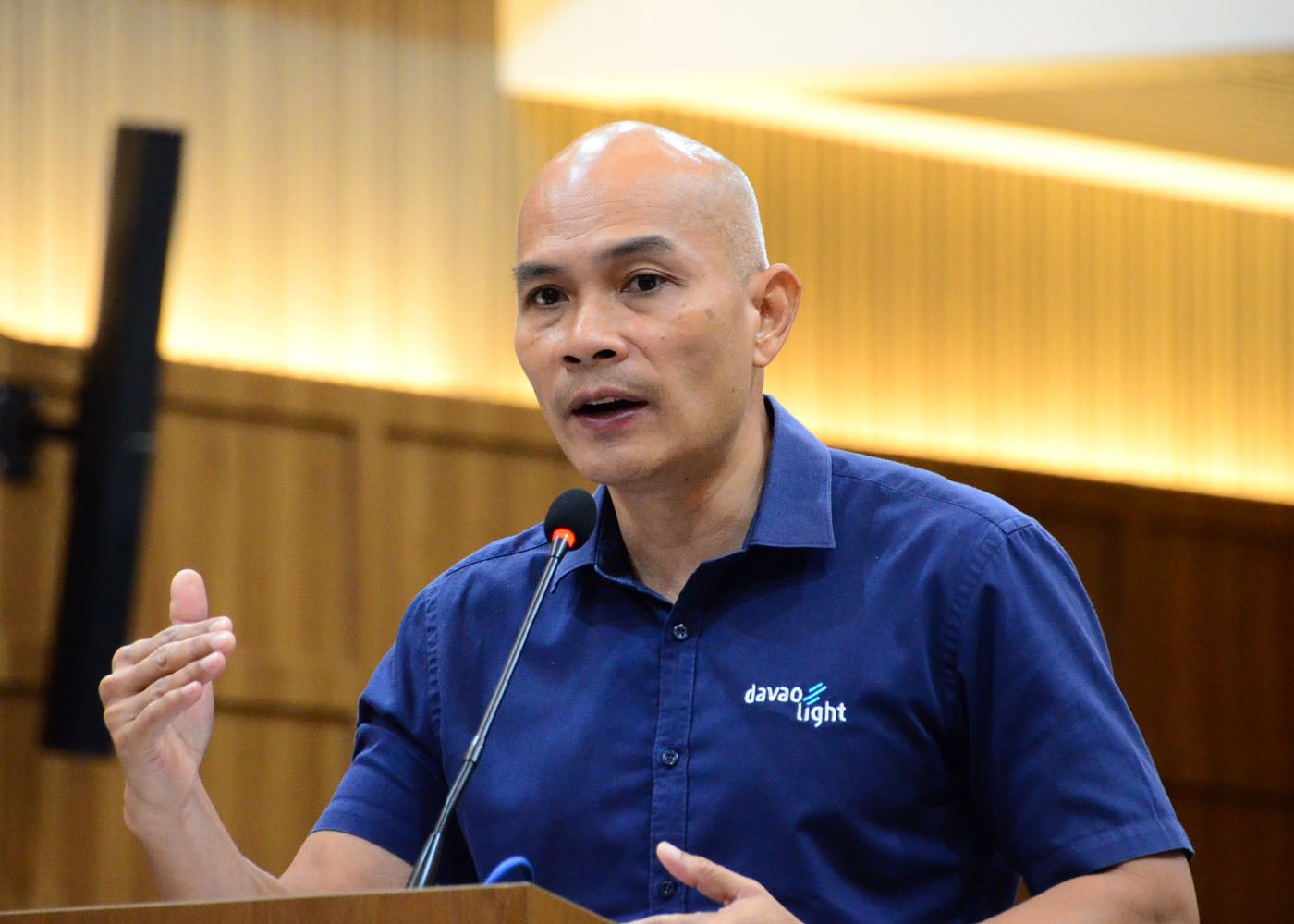
Henriczar Tia, DLPC president and chief operations officer, told lawmakers that the rate hikes were not primarily driven by the PSALM allocation cut but were caused by unplanned outages in power plants across Luzon, Visayas and Mindanao over the past two 2-3 months.
“In Mindanao, some generating facilities were also affected by the magnitude 7.8 earthquake that struck Southern Mindanao on June 8, 2026, while others were undergoing scheduled maintenance or experienced forced outages,” Tia said.
“These events reduced the available electricity supply while demand remained relatively high, resulting in tighter supply conditions and higher market prices,” he expressed.
Tia said short-term relief includes deferred payments, spreading the collection of higher generation charges over five months to cushion the impact on consumers, and the no disconnection policy.
Tia said it had already begun deferring generation charges, spreading the cost over five months rather than passing the full spike through immediately.
“Instead of collecting the full cost increase in a single billing cycle, which could have pushed rates beyond ₱14 per kilowatt-hour, we opted to spread the additional charges over five months to soften the blow to customers,” Tia said.
The company seeks to extend the same deferment scheme if prices rise further, subject to approval from the Energy Regulatory Commission (ERC), which has capped monthly increases in the generation charge at ₱1 per kilowatt-hour.
Meanwhile, Tia also confirmed that the ERC has extended its moratorium on disconnections for another three months, through October, after an initial three-month order was set to lapse this month.
He clarified, however, that the moratorium does not mean customers should stop paying their bills, and warned that unpaid balances will continue to accumulate.
“We have to pay on time on our bills,” he said, urging customers not to let arrears pile up despite the disconnection freeze.
Davao Light also pushed for fixed-price contracts to reduce its exposure to volatile spot-market prices.
Tia said it intends to expand its Power Supply Agreements (PSAs) from their current share of roughly 60 to 65 percent of total supply.
It is working to contract an additional 100 megawatts under new PSAs, a process it expects to take six to eight months due to required regulatory approvals.
Tia said the utility does not intend to abandon the spot market entirely, however, noting that prices there could ease once power plants under maintenance return to service, expected around September or October.
On plans to increase supply, Davao Light said Therma South, Inc. (TSI), which supplies the city from a coal plant built with a capacity of 300 megawatts, has plans to expand its capacity, though the company could not confirm a specific construction timeline.
Tia said the plan is to replicate the plant’s current 300-megawatt capacity with an additional 300 megawatts.
The council said it would invite Therma South for the next session to discuss expansion plans and timelines.
Lawmakers also floated the idea of inviting renewable energy investors for solar, wind, and hydropower to reduce the city’s reliance on a single major supplier. Davao Light said it welcomed the idea.
Davao Light currently serves more than 500,000 customers, a number expected to grow by around 200,000 in the coming months with its expansion into Davao del Norte.
The official denied that this expansion is contributing to the current rate increase, noting that the northern franchise area has not yet been factored into current demand figures.

