
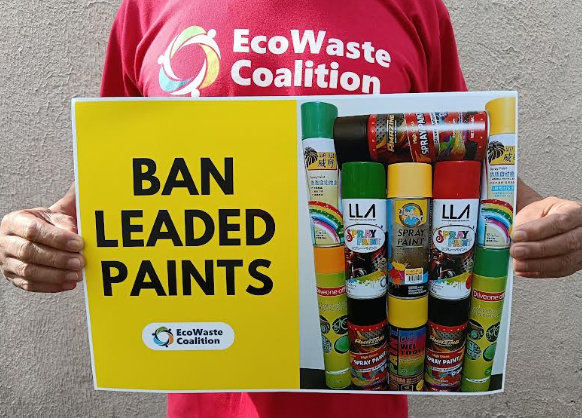
QUEZON CITY — Despite the existing Chemical Control Order (CCO) that outlaws lead in paints, harmful lead-laced paint products continue to be imported and distributed—an ongoing trend the EcoWaste Coalition has strongly deplored.
The group criticized the brazen breach of the lead paint ban as embodied in the CCO for Lead and Lead Compounds following its discovery of 11 more spray paints with lead content above the legal limit of 90 parts per million (ppm).
Issued by the Department of Environment and Natural Resources (DENR) in 2013, the CCO established a strict 90 ppm maximum limit for lead in all paints, including spray paints. The CCO further set phase-out deadlines for lead-containing decorative and industrial paints, which ended on December 31, 2016, and December 31, 2019, respectively.
As confirmed by SGS laboratory tests commissioned by the EcoWaste Coalition, the 11 paints representing six brands contained violative levels of lead, with eight products containing more than 10,000 ppm. The group purchased the paints from online sellers for P81 to P164 each.
Based on laboratory test reports, a medium yellow Herios Spray Paint manufactured in China in February 2025 had the highest lead concentration at 95,600 ppm.
The Jialing red, fresh green, and lemon yellow Amazing High Gloss Spray Paints contained 33,400 ppm, 20,200 ppm, and 714 ppm of lead, respectively.
The green and yellow Driveone Off Ultra Bright Night Light Spray Paint tested with 73,900 ppm and 69,900 ppm of lead, while the grass green and silver red LLA Spray Paints had 33,700 ppm and 5,140 ppm.
The green and yellow Wei Yue Spray Paint contained 48,100 ppm and 670 ppm of lead, and the canary yellow Wel Tools Paint had 27,900 ppm.
In January this year, the EcoWaste Coalition also released the laboratory test results of orange, beige, and green Nasmc Spray Paints, which were analyzed to contain 30,500 ppm, 10,000 ppm, and 7,460 ppm of lead, respectively.
The 14 lead-containing products mentioned above will be added to the “Public Notice on Lead-Containing Paints,” which currently includes 228 laboratory-tested spray paints with lead content. The said notice is co-published by the EcoWaste Coalition, International Pollutants Elimination Network (IPEN), and the Philippine Paint and Coatings Association, Inc. (PPCAI) to alert consumers and vendors to non-compliant paints containing lead, which are mostly imported from China and Thailand.
Lead-containing paints are a major source of lead exposure among children globally. “There is no level of exposure to lead that is known to be without harmful effects,” according to the World Health Organization (WHO), which has included lead among the ten chemicals or groups of chemicals of major public health concern.
Lead is a dangerous poison that can damage almost every part of the human body. It is especially harmful to babies and young children because their brains are still growing. When children are exposed to lead, it can cause lasting damage, including lower intelligence, trouble focusing, learning delays, and behavioral problems like aggression.
To stop leaded paints from illegally entering the Philippines, the EcoWaste Coalition is demanding tighter import restrictions. Key to this effort is adding lead chromates to the Rotterdam Convention’s list of hazardous chemicals to regulate the global trade of these toxic pigments.
July 22, 2026
MANILA, Philippines – Corruption has emerged as the single most important issue Filipinos want President Ferdinand Marcos Jr. to address, while concerns over household finances and the broader economy continue to shape public sentiment, according to the latest PAHAYAG national survey.
Nearly three in ten registered voters (29%) asserted that addressing corruption should be the administration’s top priority, far exceeding every other issue tested. Other concerns followed, including the Philippine economy at 7%, poverty, prices, and inflation at 6%. Education, wages, jobs, public healthcare, and peace and order each stood at 4%, while illegal drugs and rising petroleum prices trailed at 3%.
The same pattern is reflected at the household level. The leading concern heading into the next quarter is witnessing corrupt practices in local government offices and public agencies, cited by 18% of respondents.
This is followed by concerns over the slow recovery of the Philippine economy (10%) and the inability to purchase basic commodities because of rising prices, and not being able to afford basic needs at 9%. Other everyday financial anxieties also emerged: receiving insufficient pay, and the inability to access healthcare or hospitalization were at 7%, job loss and becoming a crime victim at 6%, and facing challenges in securing employment at 5%. Collectively, these interrelated worries indicate that household finances remain under sustained pressure, despite signs of improving economic expectations.
Economic outlook shows cautious optimism
While immediate concerns remain centered on corruption and household affordability, expectations for the months ahead have improved compared with the previous quarter. Twenty-nine percent of Filipinos believe the national economy will improve in the next quarter, while 46% expect their household financial condition to improve. Even so, a plurality of respondents remain cautious, with 41% expecting the national economy to worsen and 22% believing household finances will remain largely unchanged.
10 years ago: Economy lags, households fare better
Longer-term perceptions also reveal a contrast between national and personal assessments. Compared with ten years ago, two in three Filipinos believe the overall Philippine economy has deteriorated, with 63% saying it is somewhat or much worse today. In contrast, Filipinos are more optimistic about their own circumstances: 42% say their household’s financial condition is better today than it was in 2016, while 36% believe it has worsened.
In summary, corruption has become the nation’s primary public concern, surpassing all other challenges, even as daily life remains heavily influenced by different economic issues. While there is growing optimism among Filipinos on short-term national economic prospects and individual household finances, priorities remain affected by concerns on governance, financial security, and affordability.
PQ2-2026 is an independent, non-commissioned nationwide purposive sampling survey conducted from June 28-30, 2026, comprising 1,509 respondents who are registered Filipino voters, randomly selected from the market research panel of PureSpectrum, a US-based panel marketplace with global operations and a regional office in Singapore. The national margin of error is +/- 3%.
PAHAYAG is a CSR of PUBLiCUS Asia Inc., which has tracked key metrics since 2017, while Vox Opinion Research is its commissioned research arm since 2013.
For more information on the survey methodology and detailed results, please visit www.publicusasia.com/pahayag.
City Council presses Davao Light for rate relief, calls for more RE investors
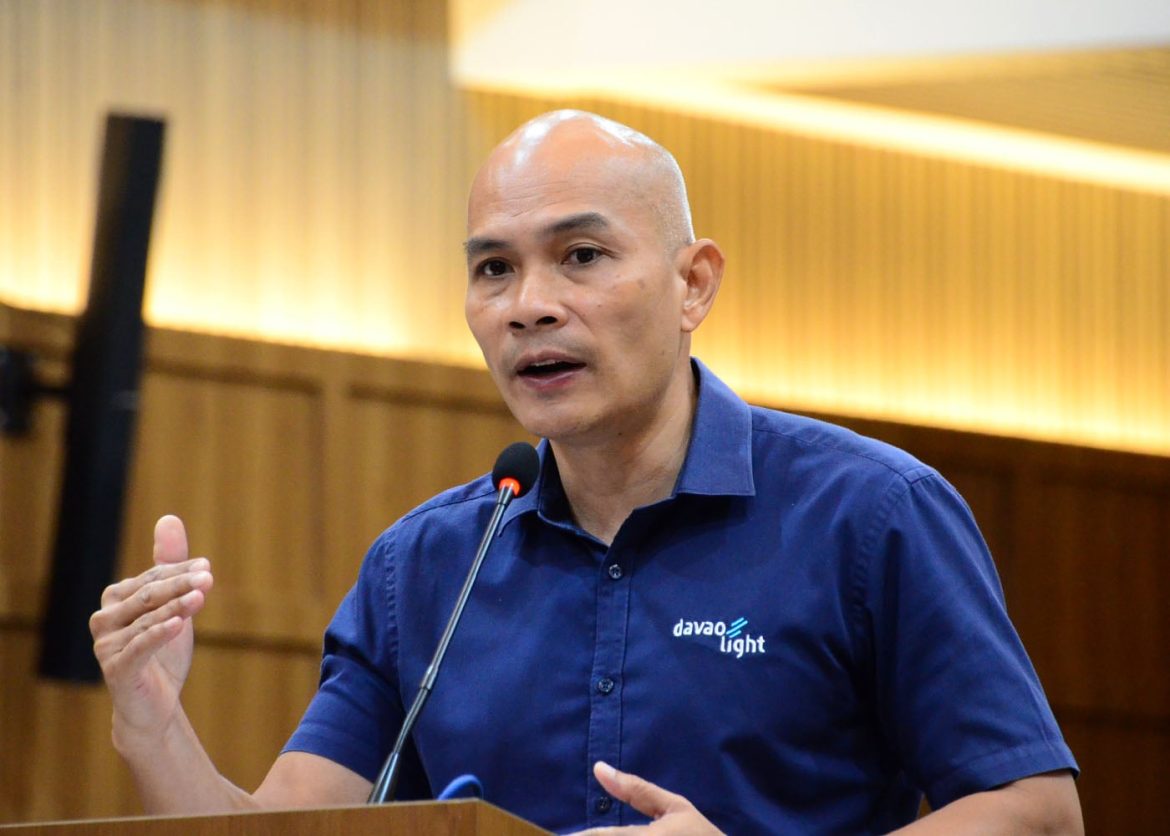
THE DAVAO Light and Power Company (DLPC) outlined short- and long-term fixes after facing mounting complaints over rising electricity bills.
During the regular session on Tuesday, July 21, lawmakers pressed DLPC to explain the string of rate increases starting January 2026, reportedly surpassing the impact of the City Council’s resolution late last year opposing a supply cut from the Power Sector Assets and Liabilities Management Corporation (PSALM).
The resolution, approved after PSALM proposed trimming Davao Light’s contracted allocation, had projected only a roughly 50 centavos per kilowatt-hour, or about ₱100 added to the monthly bill of a residential customer consuming 200 kilowatt-hours.
Instead, Councilor Danilo Dayanghirang said the actual increase had climbed beyond that estimate over the following months.
Henriczar Tia, DLPC president and chief operations officer, told lawmakers that the rate hikes were not primarily driven by the PSALM allocation cut but were caused by unplanned outages in power plants across Luzon, Visayas and Mindanao over the past two 2-3 months.
“In Mindanao, some generating facilities were also affected by the magnitude 7.8 earthquake that struck Southern Mindanao on June 8, 2026, while others were undergoing scheduled maintenance or experienced forced outages,” Tia said.
“These events reduced the available electricity supply while demand remained relatively high, resulting in tighter supply conditions and higher market prices,” he expressed.
Tia said short-term relief includes deferred payments, spreading the collection of higher generation charges over five months to cushion the impact on consumers, and the no disconnection policy.
Tia said it had already begun deferring generation charges, spreading the cost over five months rather than passing the full spike through immediately.
“Instead of collecting the full cost increase in a single billing cycle, which could have pushed rates beyond ₱14 per kilowatt-hour, we opted to spread the additional charges over five months to soften the blow to customers,” Tia said.
The company seeks to extend the same deferment scheme if prices rise further, subject to approval from the Energy Regulatory Commission (ERC), which has capped monthly increases in the generation charge at ₱1 per kilowatt-hour.
Meanwhile, Tia also confirmed that the ERC has extended its moratorium on disconnections for another three months, through October, after an initial three-month order was set to lapse this month.
He clarified, however, that the moratorium does not mean customers should stop paying their bills, and warned that unpaid balances will continue to accumulate.
“We have to pay on time on our bills,” he said, urging customers not to let arrears pile up despite the disconnection freeze.
Davao Light also pushed for fixed-price contracts to reduce its exposure to volatile spot-market prices.
Tia said it intends to expand its Power Supply Agreements (PSAs) from their current share of roughly 60 to 65 percent of total supply.
It is working to contract an additional 100 megawatts under new PSAs, a process it expects to take six to eight months due to required regulatory approvals.
Tia said the utility does not intend to abandon the spot market entirely, however, noting that prices there could ease once power plants under maintenance return to service, expected around September or October.
On plans to increase supply, Davao Light said Therma South, Inc. (TSI), which supplies the city from a coal plant built with a capacity of 300 megawatts, has plans to expand its capacity, though the company could not confirm a specific construction timeline.
Tia said the plan is to replicate the plant’s current 300-megawatt capacity with an additional 300 megawatts.
The council said it would invite Therma South for the next session to discuss expansion plans and timelines.
Lawmakers also floated the idea of inviting renewable energy investors for solar, wind, and hydropower to reduce the city’s reliance on a single major supplier. Davao Light said it welcomed the idea.
Davao Light currently serves more than 500,000 customers, a number expected to grow by around 200,000 in the coming months with its expansion into Davao del Norte.
The official denied that this expansion is contributing to the current rate increase, noting that the northern franchise area has not yet been factored into current demand figures.
Catch The Young announces first Latin America Tour, CATCH THE YOUNG LIVE EVOLVE
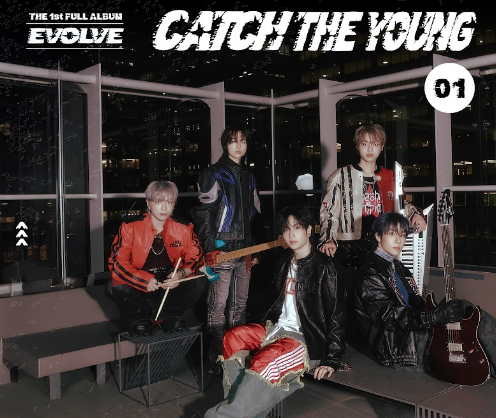
NEW YORK, NY — Korean alternative pop-rock band Catch The Young will embark on their first-ever Latin America tour, CATCH THE YOUNG LIVE EVOLVE : LATAM TOUR 2026, this September.
The band will be kicking off the tour in Buenos Aires, Argentina (The Roxy) on September 9th, then visit Santiago, Chile (Theatre Cousiño) on September 10th, Puerto Rico (venue to be announced later) on September 13th, and Mexico City, Mexico (Foro 1896) on September 15th. They also hinted that more stops could be added through their tour announcement poster.
“I believe music has the power to connect people’s hearts beyond language. Through this Latin America tour, I hope we can share Catch The Young’s music and our sincerity with even more people,” said Jungmo, member of Catch The Young.
The tour’s title, CATCH THE YOUNG LIVE EVOLVE, is an extension of their first full-length album, EVOLVE, released earlier this year, as well as the band’s solo concert, LIVE EVOLVE, held in Seoul on March 29th. Ahead of this tour, Catch The Young will participate in the Toronto Korean Festival, the annual event held at Mel Lastman Square in North Toronto, from August 21st to August 23rd.
Catch The Young’s festival performance in Toronto will mark their first time performing in a Western country since their debut, and now with a Latin America tour scheduled for this fall, the band hopes to visit and connect with more international fans around the world.
“From the moment I first heard about our Latin America tour, I was incredibly excited and honored. I sincerely want to thank all of our fans in Latin America for inviting us and waiting for us despite the distance. Just thinking about making eye contact with you on stage and sharing those moments together through music already fills me with excitement. We’re working hard to prepare performances that live up to all your love and support, so we hope you’ll look forward to it and continue cheering us on. We’ll see you in Latin America soon. Thank you, and we love you!” said Junyong, member of Catch The Young.
THE DEPARTMENT of Education (DepEd) is fast-tracking repair of affected educational facilities in the town of Jose Abad Santos, Davao Occidental to help restore normalcy for students and teachers.
Education Secretary Sonny Angara led an on-ground assessment of severely damaged schools in Davao Occidental on Monday, July 20.
“Napakalinaw ng direktiba ng ating Pangulong Bongbong Marcos: hindi pwedeng maghintay ang edukasyon, kaya dapat nating maibalik sa normal ang sitwasyon dito sa lalong madaling panahon,”Angara said in a statement.
“Nandito tayo para tiyakin na tuluy-tuloy ang pag-aaral ng mga bata sa kabila ng krisis,” he added.
The Cabinet officials’ visit follows a string of calamities in the region. A magnitude 7.8 earthquake centered in Maasim, Sarangani, struck on June 8, 2026, causing widespread damage across Mindanao, including Davao Occidental.
This was followed by flash floods and landslides in Jose Abad Santos on July 10 and 14, triggered by the southwest monsoon and Typhoon Inday, and another magnitude 6.5 earthquake struck again on July 14, disrupting school operations and prompting the evacuation of communities in Jose Abad Santos.
DepEd reported that at Emeliano S. Fontanares Sr. National High School in Barangay Sugal, the earthquake left eight classrooms totally damaged, six with major damage, and two with minor damage. The school’s gymnasium and concrete perimeter fencing also collapsed.
Meanwhile, no deaths were reported; one teacher and ten students were injured.
Barangay Sugal was also one of the ground zero areas of the flooding, washing away houses.
At Edna Guillermo Memorial National High School in Barangay Nuing, 31 classrooms were destroyed and three sustained major damage, affecting 780 students.
The Butulan Elementary School also sustained seven totally damaged and two minor-damaged classrooms and is currently serving as an evacuation center for displaced families.
In response, the DepEd has moved to release financial and logistical assistance to the affected schools.
The department released P3.51 million for immediate ground operations, comprising P2.061 million for clean-up and clearing operations and P1.449 million for minor repairs.
Davao Occidental has been included as a priority area for the installation of Learning Continuity Spaces (LCS) to prevent further disruption to education.
A total of 77 LCS units will be built across 23 target sites in the towns of Don Marcelino, Jose Abad Santos, Malita, Santa Maria, and Sarangani.
DepEd also launched Psychological First Aid (PFA) sessions last week for students and teachers at Edna Guillermo Memorial NHS to support their mental and emotional well-being.
The department said it continues to coordinate with local government units, the Department of the Interior and Local Government, and health authorities for ongoing relief assistance, engineering reviews, and the development of climate-resilient engineering standards for schools.
Angara was joined by Cabinet Secretary Benhur Abalos, Social Welfare and Development Secretary Rex Gatchalian, and Public Works and Highways Secretary Vince Dizon in inspecting affected educational facilities.