



BY ALEX ALAGON
BY ALEX ALAGON

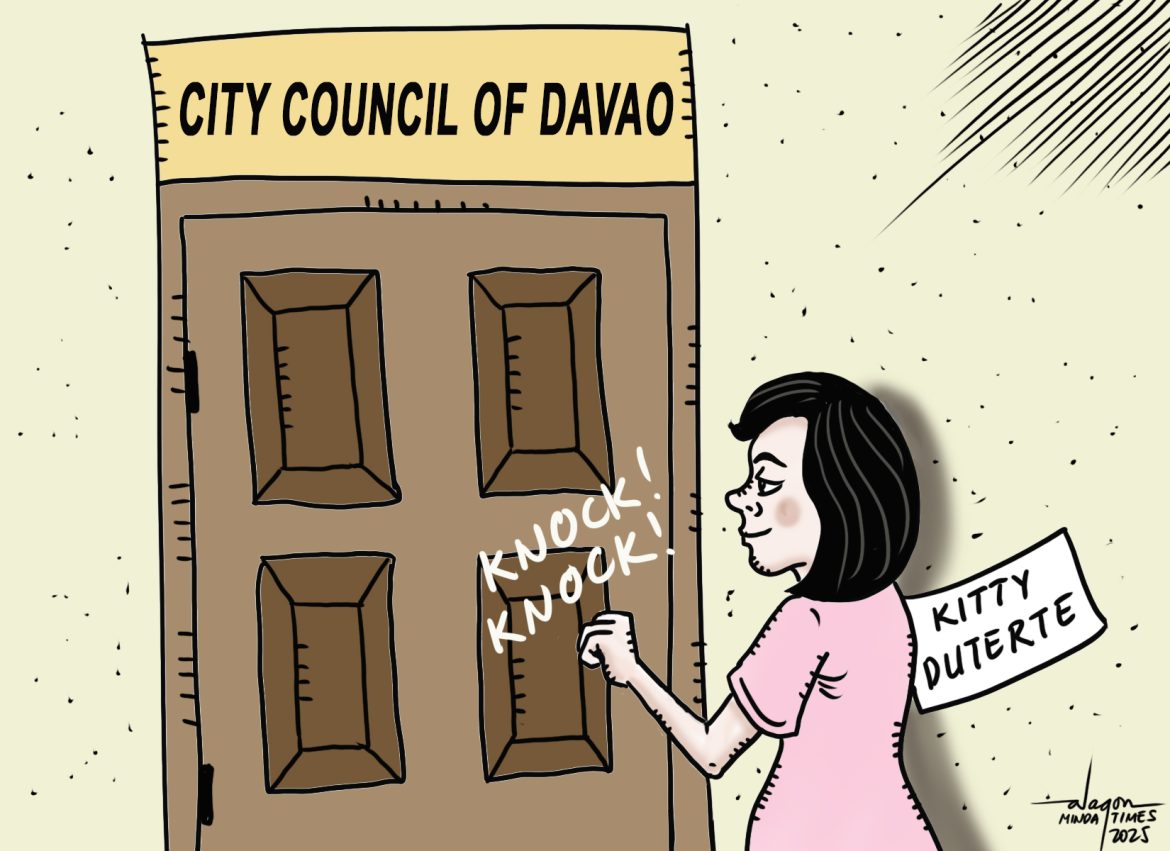
PRESIDENT Ferdinand R. Marcos, Jr. inspected the soon-to-be opened Bucana Bridge in Davao City. Prominent personalities with him were Department of Public Works and Highways (DPWH) Secretary Vince Dizon and, of course, the Chair of the Mindanao Development Authority (MinDA) Sec. Leo Magno.
We were not around, of course. However, conspicuously absent in the pictures posted on social media were officials of the local government of the city. We are certain that many among the local officials would have wanted to be present during the Presidential inspection. But most likely common sense dictates that they’d rather not be, or else…
Our take on their deliberate absence is that the act is more disrespectful than the one done by the people of Manay, Davao Oriental when the President visited the area after the disastrous earthquake devastated the municipality.
We could only imagine how our local officials feel if they visit villages run by people on the other side of the political fence who ignore their presence.
It is indeed very unfortunate that respect is relegated to the backburner due to the differences in political affiliation.
**********************************
Does the Independent Commission for Infrastructure (ICI) deputize men and women in areas with existing or non-existing projects like the ones on flood control subject for inspection or validation?
Yes, the ICI could have easily lightened its job if it deputized highly qualified persons coming from, say the academe, legitimate organizations of structural or civil engineers, and law enforcement groups like the police or the NBI.
We are asking the question because if there are ICI deputized investigators in Davao Region, we will urge those men or women to visit that concrete bridge that for the longest time we have been writing about in this space. We are referring to the unfinished bridge project that spans a deep creek separating barangays Catalunan Grande and Tacunan.
The concrete bridge is roughly 10-15 meters long, not including the approaches, yet until now the one on the Tacunan side has not been constructed. As far as we can remember, the short bridge was started shortly before the onset of the COVID-19 pandemic.
Seven years have passed and the project has not been completed. From knowledgeable sources we learned that the contractor of the bridge was already fully paid. But how come the span is not fully done?
Through this column we have been asking the DPWH what is happening to the project. We also suggested to the Davao City Council to have some of its members visit the location and from there initiate a probe, if only to surface the problem that prevented the bridge completion.
Apparently, the officials of the DPWH in the Davao Region or in the district that has jurisdiction of the project are not reading local papers and preferring instead seeing and reading social media posts.
Maybe, too, the DPWH people and the members of the local lawmaking body of Davao City have grown too callous that they may have been waiting for the existing one-lane steel bridge currently used to collapse and some lives lost before doing the needed action.
Meanwhile, herds of goats are enjoying their undisturbed nightly sleep on the span that has become their jump-off point before grazing the green pasture in the adjacent coconut farms.
Of course, there is certainty that aside from the contractor, several other people from concerned government agencies have already walked out of the banks with their pockets oozing with cash.
For now, we can say that we are not totally worried that the unfinished bridge project will become another of those “drained down to the canal of forgotten memories.”
Our friend and former media colleague, now the spokesperson of the DPWH, Dean Ortiz, may be able to find time to visit the project site so he could give a lowdown of its true state and proper interventions by concerned agencies be undertaken.
*******************************
Davao City’s First District Rep. Pulong Duterte officially rejected the invitation for him to appear before the Independent Commission on Infrastructure (ICI) as a resource person on the ongoing probe on the anomaly ridden flood control and other infrastructure projects?
The reason, according to the vongressman, is that the ICI is only created by the President as “pure political propaganda.”
He further added that the probe body has “no jurisdiction – only agenda” over Congress. Congressman Polong also cited that the ICI is created by Executive Order No. 94, “therefore it is part of the Executive Branch, and therefore it cannot compel a sitting member of the House, citing the constitutional doctrine of separation of powers.”
Now who can question that reason of the Davao lawmaker? Nevertheless, those who worded the Executive Order are also persons with no simple legal minds. We are certain they have ready arguments to refute the citations made by the Davao lawmaker’s lawyers.
So there is something to wait for all those interested in the progress of the ICI investigation. Let us see.
-30-

First and largest Filipino life insurer InLife highlighted the importance of building a financially secure Filipino workforce as it served as a principal sponsor and key participant at the 2025 People Management Association of the Philippines (PMAP) Annual Conference, held at the Nustar Resort and Casino, Cebu City.
Through its flagship corporate program InLife@Work, InLife led the conversation on retirement preparedness and financial wellness during a featured session titled “Unleashing Financial Freedom: A Roadmap to a Secure Filipino Workforce.” The session unveiled data from its 2024 Retirement Study, the largest of its kind conducted in the country.
The study revealed that less than 30% feel confident about their financial preparedness for retirement and just half are actively taking steps to prepare. These findings point to a growing challenge for HR leaders: financial anxiety is now a workforce performance issue.
“Presenteeism, turnover, and disengagement are often rooted in financial stress,” said InLife Chief Risk Officer and Head of InLife@Work Efren Caringal Jr., who delivered the interactive session. “We launched InLife@Work to help companies embed financial care into their employee value proposition. We equip companies with the tools, data, and support they need to empower their people with confidence, clarity, and real financial solutions.”
InLife@Work also hosted an interactive booth experience featuring its new FinWell Ladder, a self-assessment and coaching framework, along with gamified engagement tools to spark conversation around retirement planning.
InLife@Work is the workplace and group engagement platform of InLife, dedicated to helping Filipino workers and their families achieve financial security and wellness through their employers, associations, or organizations. It brings together financial wellness education through its FinWell programs, insurance solutions tailored to personal needs, and strategic partnerships to scale impact.
The 62nd PMAP Annual Conference gathered more than a thousand of the nation’s leading people managers, HR professionals, and business leaders for three days of learning, collaboration, and inspiration. During the conference, PMAP Trustee Jerry Bonifacio underscored the importance of financial wellness as an organizational strategy. “A workforce that is financially secure is more focused, more loyal, and more empowered to perform at their best.”
To know more about InLife’s Retirement white paper, please visit https://bit.ly/RetireWithoutWorries. You may also try InLife’s Retirement Readiness Index Calculator at www.inlife.com.ph/retire-assure/retirement-readiness-index. To see how you can prepare for life after retirement, visit InLife Retire Assure at www.inlife.com.ph/retire-assure. Interested parties may also email inlifeatwork@insular.com.ph or visit www.linkedin.com/company/inlife-work/.
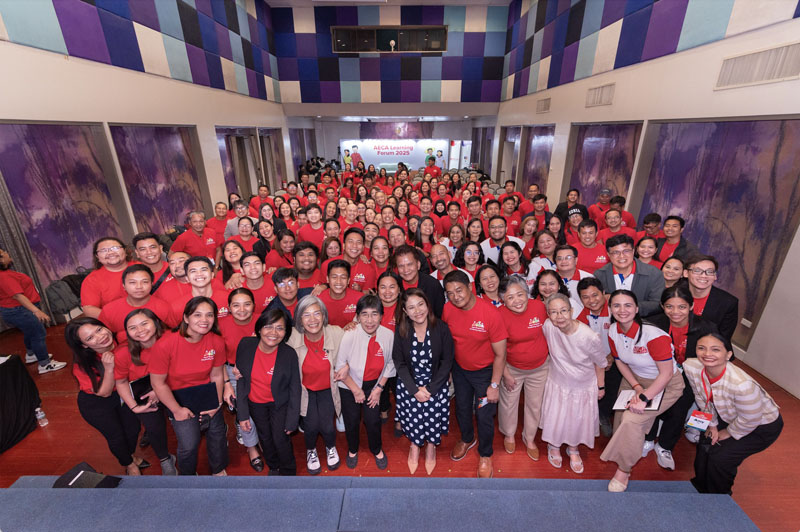
Manila, Philippines – For many Filipino farmers, success has long been measured by how well they can bring their harvests to the market. But across the country, a deeper shift is taking root: farmers are learning that progress becomes more attainable when they plan, decide, and grow together.

At the center of this transformation is the Agro-Enterprise Clustering Approach (AECA), a structured process that helps farmers organize themselves, develop leadership, and build agro-enterprises that can supply institutional markets reliably and competitively.
Clustering enables smallholder farmers to pool their produce, share resources, and make business decisions collectively. Instead of selling individually at low prices, clustered farmers operate as organized suppliers capable of meeting volume and quality requirements. This approach is a core component of the Agro-Enterprise for Inclusive Value Chains (AEIVC) Training Program developed by the Jollibee Group Foundation (JGF) in partnership with Xavier University (XU) – Ateneo de Cagayan in 2021.
Through the training, practitioners, agri-extension workers, and field partners gain the skills to guide farmer groups through the AECA process – from organizing members and studying markets to planning production and improving enterprise operations. By strengthening these AECA facilitators, more farmers are able to run their farms like business and pursue stable, long-term market partnerships.
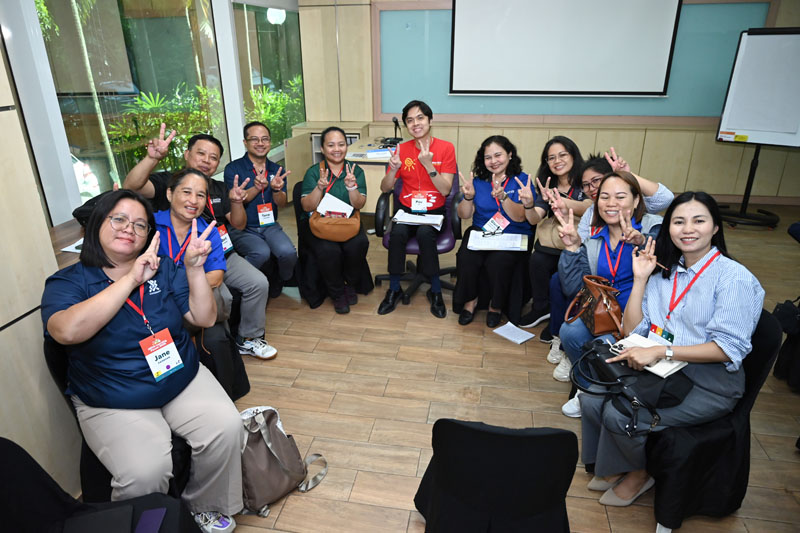
Since 2021, the AEIVC Training Program has capacitated more than 339 agri- extension workers and partners who now guide farmer groups in applying AECA on the ground.
A strong example of AECA’s impact is seen in the work of KAISAHAN, a non- government organization that supports and empowers smallholder farmers and farmworkers in claiming their land rights. Through their participation in AECA Training, KAISAHAN gained a clearer direction and practical tools to guide the farmers they assist, helping them organize effectively and train farmer groups in collective marketing.
Agri-extension facilitators have been instrumental in this transformation. By coaching farmer groups and reinforcing good enterprise practices, they help clusters become more market-oriented and confident in engaging formal buyers.
“Before the training, I thought AECA was mostly about grouping small farmers into clusters and planning production on a larger scale. But as I got more involved and shared AECA with our partner communities, I realized it’s much more than that. The training gave me practical tools and a clear approach to help farmers improve their management and business skills, helping them overcome complex issues so they can actively participate in the agriculture value chain,” said Jec Magbato, KAISAHAN AECA Officer, Negros Occidental.
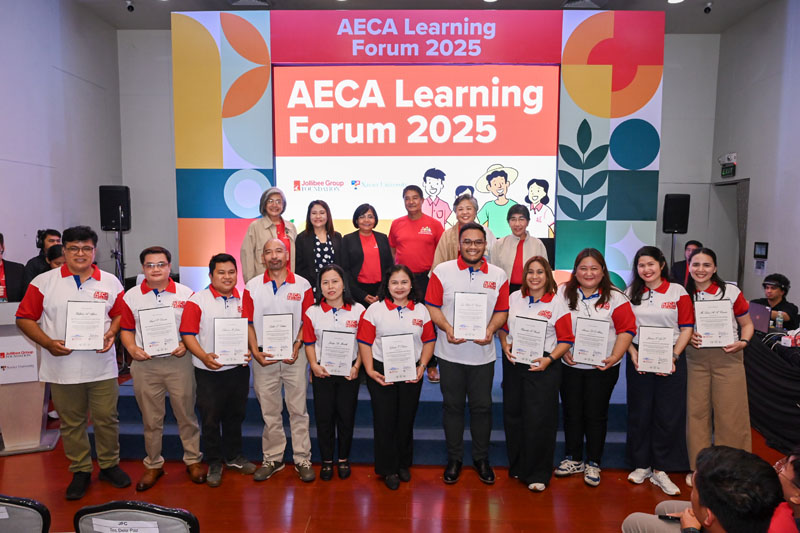
To support these practitioners, JGF and XU continue to provide platforms for collaboration and learning. One of these is the AECA Learning Forum, where trained implementers exchange field insights, share challenges, and strengthen their support for farmer groups nationwide.
Through AECA, smallholder farmers gain the confidence and capacity to plan production, negotiate prices, manage deliveries, and reinvest in their enterprises, thus making a shared, sustainable business out of farming. The approach embodies JGF’s commitment to promoting sustainable agriculture, contributing to food security, and helping communities achieve lasting progress.
When farmers work together and lead with purpose, the journey “beyond the farm” becomes one of dignity, resilience, and shared prosperity, contributing in meaningful ways to the country’s broader efforts towards Zero Hunger.

A TOTAL of P5.9 million in financial aid is extended to several local government units that declared a State of Calamity following Typhoon Tino.
The ordinance, authored by Councilor Danilo Dayanghirang, chairperson of the committee on finance and appropriations, was approved during the regular session on Tuesday, Dec. 2.
The City Government of Davao allocated P5.9 million in financial assistance to several local government units that have declared a state of calamity following the devastation of Typhoon Tino.
The ordinance authorizing the financial aid was approved by the 21st City Council on December 2, 2025.
The aid will be sourced from the 30% Quick Response Fund from the 5% Disaster Risk Reduction and Management Fund of the City Government of Davao for 2025.
The financial assistance covers the following:
Dayanghirang said this leaves the city with an available balance of P201,375,187.
To note, Cebu province, cities, and municipalities that declared a State of Calamity after the Magnitude 6.9 earthquake last Sept. 30, 2025, were also provided financial aid totaling P3.9 million.
Davao City also extended financial aid totaling P2.7 million to the Davao Oriental province, cities, and municipalities that declared a state of calamity after the Magnitude 7.4 and 6.9 earthquakes last Oct. 10, 2025.

THE MINDANAO Alliance for Progress (MAP) says that the statement of Department of Trade and Industry (DTI) Secretary Cristina Aldeguer Roque — claiming that a P500 budget is enough to prepare a Noche Buena for a family of four — reflects a deeper problem of persistent poverty in the country.
The social advocacy group asserts that the issue is not about what P500 can afford, but the everyday struggle of Filipino families to put food on the table.
“The real issue is not the Noche Buena itself. It is the fact that many Filipinos remain so poor for the rest of the year that even a modest Christmas meal becomes a benchmark for what is considered ‘acceptable,’” MAP coordinator Mayet Valdez said.
MAP noted that wages have long failed to keep up with inflation, and families are increasingly forced to stretch meager incomes just to cover basic needs. For them, the debate over P500 symbolizes a bigger question about the quality of life.
“When wages are not enough, when monthly budgets never catch up with rising prices, and when families are forced to make do with less day after day — how can we say that one night of food, no matter how simple, is enough?” Valdez said.
MAP is urging the government to reframe the discussion, saying the issue is not about whether P500 can buy ham, spaghetti, and bread for Christmas Eve, but whether Filipino households can truly celebrate the season without hardship.

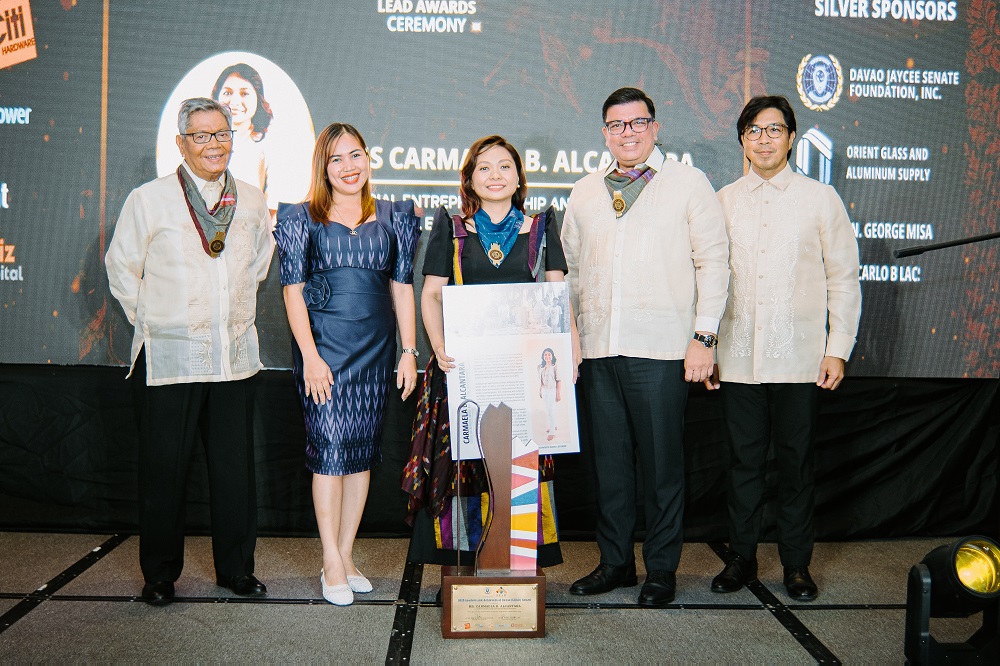
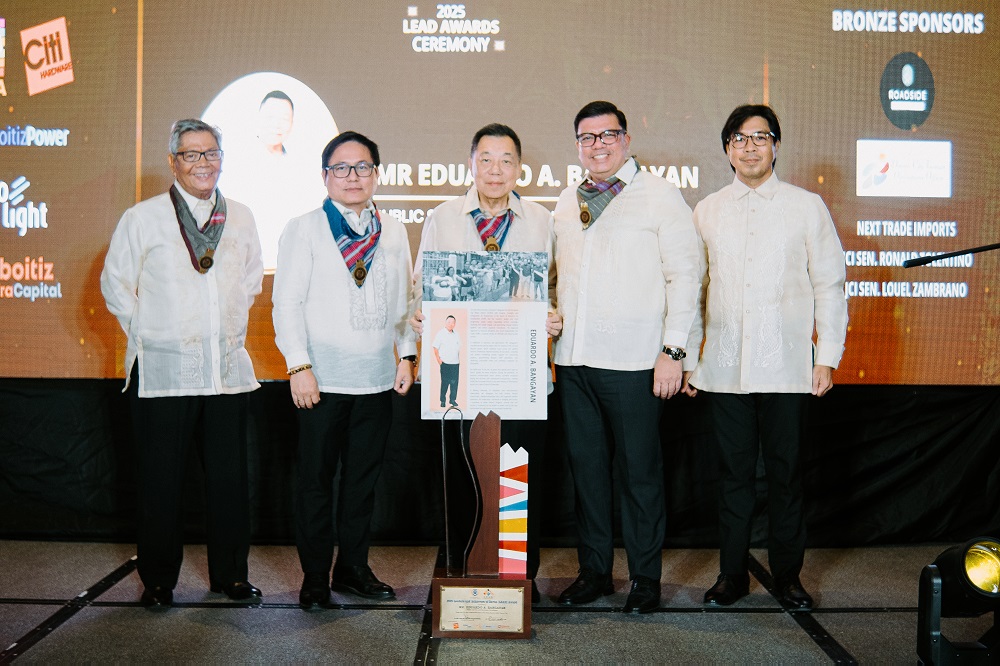
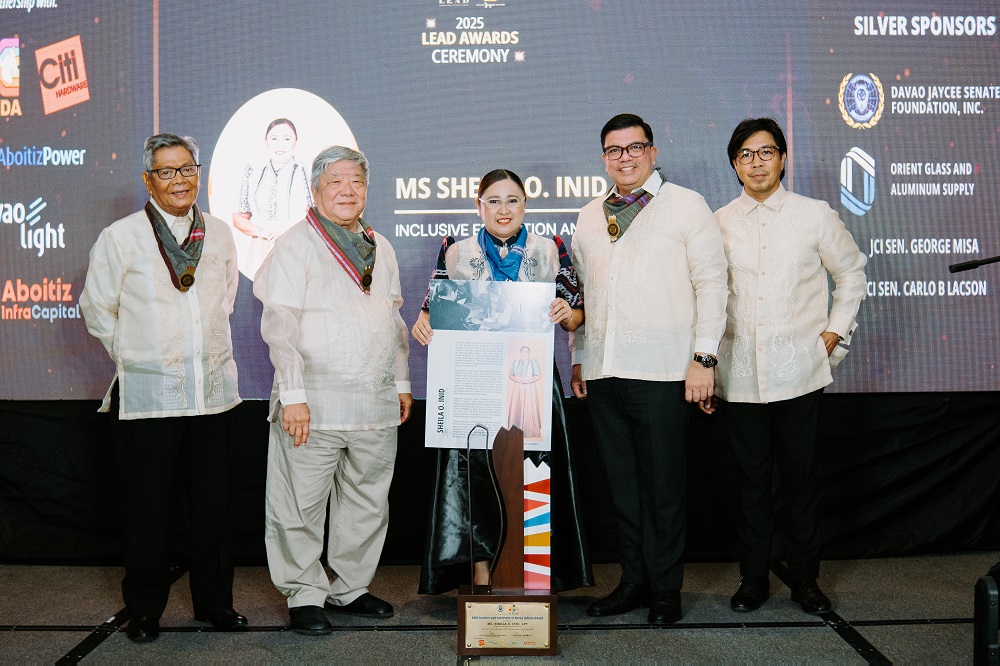
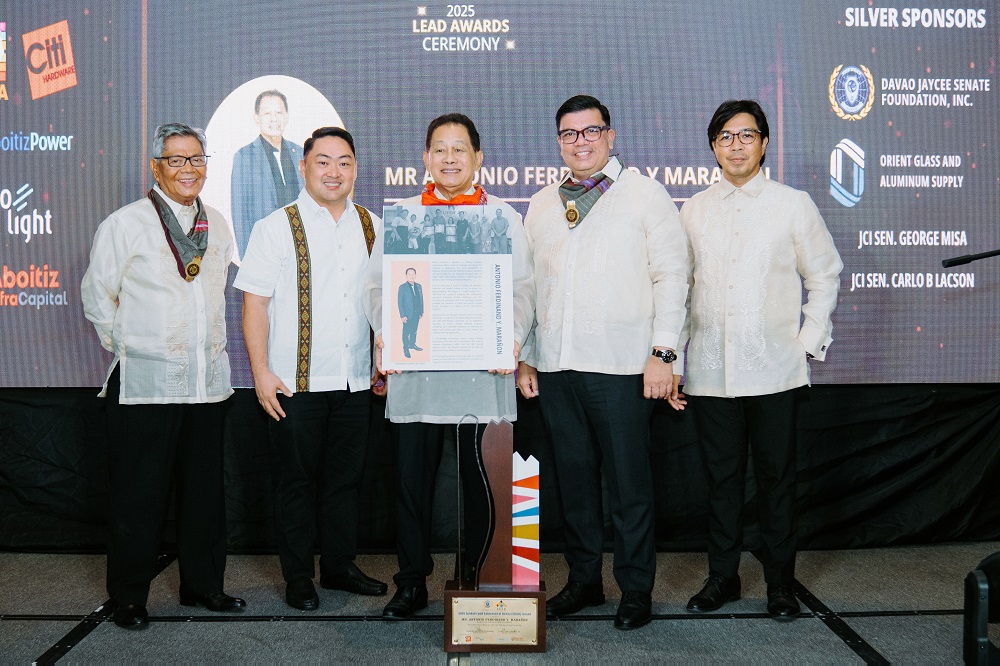
THE LEADERS and Achievers of Davao (LEAD), a flagship project of the Davao Jaycee Senate Inc., successfully held its 2025 Awarding Ceremony last November 21 at SEDA Hotel. The event gathered past honorees, institutional partners, and civic leaders, including esteemed Davao Jaycees members, in a celebration of leadership, service, and community impact.
The highlight of the evening was the recognition and awarding of this year’s five LEAD Honorees, whose exemplary achievements reflect the program’s theme, “Honoring Excellence, Inspiring Progress.” This year’s awardees are the following:
🏆 Carmaela B. Alcantara, Crystal Seas Inc. – Social Entrepreneurship and Cultural Empowerment
🏆 Eduardo A. Bangayan, Davao City Water District – Public Service and Business Excellence
🏆 Sheila O. Inid, Department of Education Davao City Division – Inclusive Education and Advocacy
🏆 Antonio Ferdinand Y. Marañon, SAGREX Inc – Agribusiness and Sustainable Development
🏆 Dr. Anthony C. Sales, HELP Davao Network – Science, Innovation, and Environmental Leadership
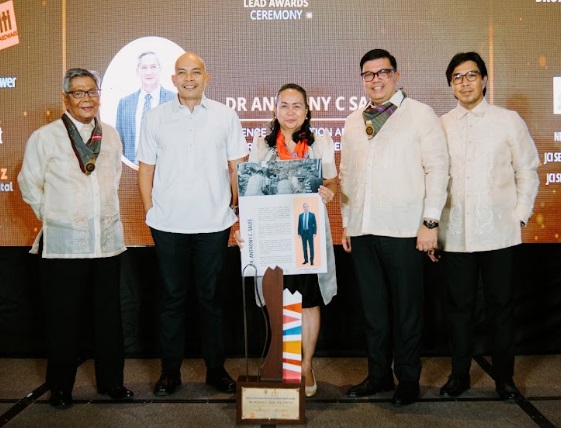
“Each honoree was celebrated for their outstanding leadership, integrity, and contributions that uplift their communities and professions”, said Jason C. Magnaye, 2025 president, Davao Jaycee Senate.
“The ceremony also reaffirmed the core objective of the LEAD program, which is to create a virtuous cycle of men and women who commit themselves to making Davao City a better place to live and work”, Magnaye added.
This year’s LEAD Awards was co-presented by the Mindanao Development Authority, Aboitiz Power Corporation, CitiHardware, Therma South, Inc., Aboitiz Infracapital, and Davao Light and Power Company.

THE 10TH Infantry Division (10th ID) reported major accomplishments against communist insurgency, even as it sustained insurgency-free areas and reduced illegal drugs from January 2025 to up to the present.
During the Davao Peace and Security Press Corps on Wednesday at The Royal Mandaya Hotel, Major Ruben Gadut, chief of the 10th ID Public Affairs Office, reported that the 10th ID conducted 60 combat operations, which resulted in direct encounters with the communist New People’s Army (NPA).
According to Gadut, these operations led to the neutralization of a total of 705 NPA personalities during the reporting period. The term “neutralized” typically includes surrenderees, captured combatants, and those killed in action.
In addition to military operations, the 10th ID—through its Task Force Davao—arrested 504 drug personalities at various entry points of Davao City between January and Dec. 2, 2025.
These law enforcement efforts resulted in the seizure of a significant amount of illegal drugs, totaling 2,488 grams of suspected shabu.

PRESIDENT Ferdinand “Bongbong” Marcos Jr. announced on Thursday that the new Bucana Bridge in Davao City will be opened to traffic on Dec. 15, 2025, just in time for the busy Christmas season.
Mr. Marcos made the announcement while inspecting the infrastructure project on Thursday morning, Dec. 4. Mindanao Development Authority Secretary Leo Magno, Department of Public Works and Highways (DPWH) Secretary Vince Dizon, Special Assistant to the President Antonio Lagdameo Jr., and Davao del Norte 2nd District Rep. Jose Manuel Lagdameo also joined the President during the inspection.
“Ang estimate natin na ang biyahe na dati halos dalawang oras ay mababawasan magiging mga 25 minutes, 20 minutes na lang. Kaya malaking ginhawa, lalong-lalo na ngayon na magpa-Pasko tayo (We estimate to cut the trip from two hours to just 25 minutes or 20 minutes. So, it’s a big help, especially now that we are approaching Christmas),” he said in a speech.
He also said that the entire stretch of the Davao City Coastal Road Project will open in December 2027.
Mr. Marcos also credited the Chinese contractor for adopting modern technology in building the bridge. “Marunong talaga silang magpatayo ng magandang tulay, magandang infrastructure na mabilis at nasa tamang gastos, nasa tamang presyo (They really know how to build a solid bridge, solid infrastructure that’s fast and cost-effective),” he added.
The Bucana Bridge project, funded by a ₱3.126 billion grant from China, spans 480 meters. It’s built by the China Road and Bridge Corporation, the same contractor for the Samal Island-Davao City Connector Bridge.
It is designed to ease traffic congestion in Davao City significantly and is expected to accommodate up to 35,000 vehicles daily. The bridge forms a crucial part of the larger Davao City bypass road network.
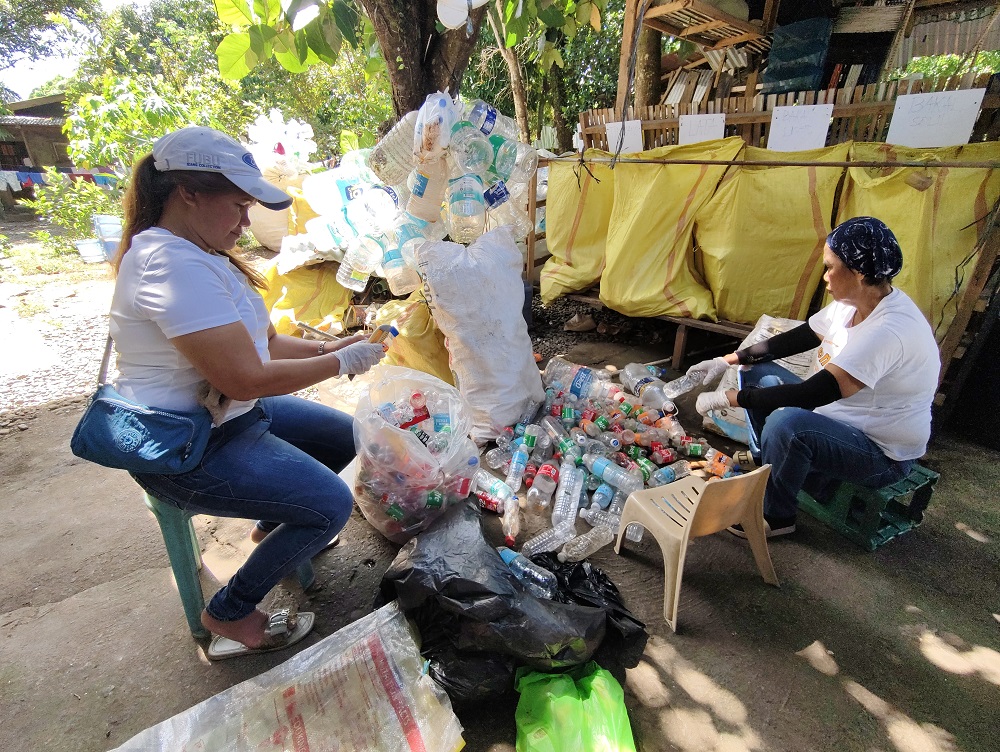
INTERFACING Development Interventions for Sustainability Inc. (IDIS) continues to promote waste reduction strategies through the Circular Economy 2025 to foster behavioral change in sustainable waste management and address climate change.
Circular Economy is an economic system that aims to keep resources for as long as possible throughout their lifecycle to sustain production and reduce waste and pollution. This circulation process involves the repair, reuse, refurbishing, and recycling of raw materials.
This initiative is implemented by the United Nations Development Programme (UNDP) and funded by the European Union (EU).

IDIS held a media tour on Dec 3 at key Lunhaw Awardee sites and drivers of the circular economy in Davao City that demonstrated sustainable waste management and resource recovery. The visited areas were the Toril Kalambuan Association (TKA), Mintal Resource Collectors’ Association (MiRCA), and Apo Natural Farms.
The activity was part of the Circular Economy project under the EU-Philippines Green Economy Partnership for Circular Economy Education and Behavioral Change.
TKA is a women-led community organization known for upcycling projects of transforming waste materials of plastic sachets and cartons into handicrafts (bags and accessories) that also provide income for the members, as well as promoting sustainable practices.
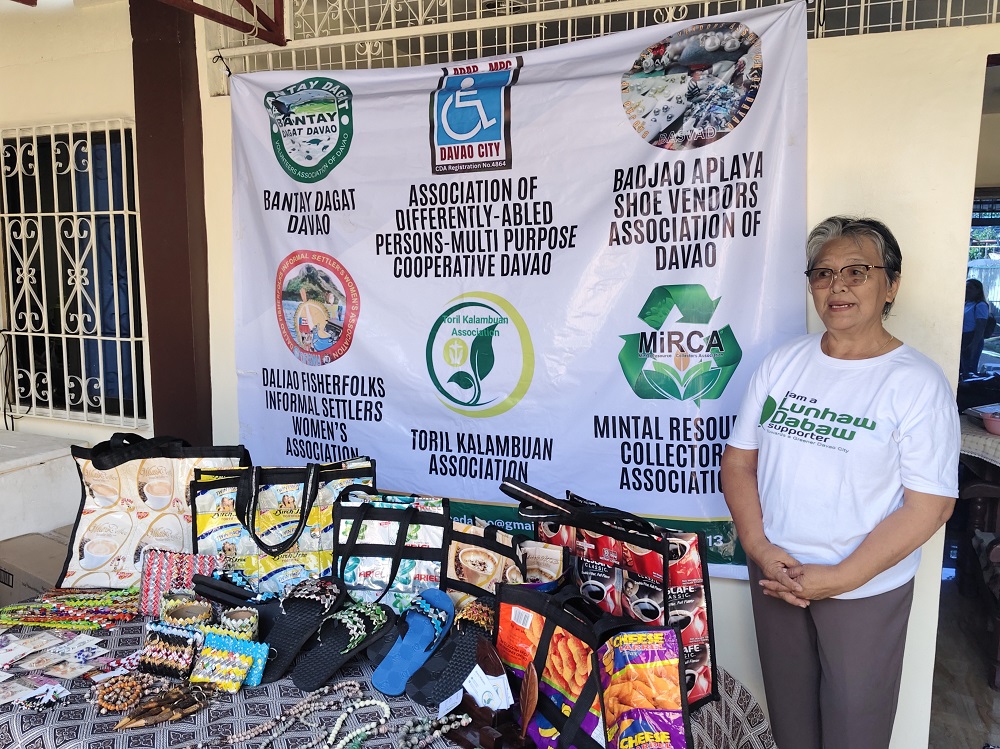
In 2014, the association partnered with the Department of Trade and Industry (DTI) Shared Service Facilities (SSF) program, where they were given sewing machines.
MiRCA, organized through the PHINLA Global program, collects recyclables in households in Barangay Mintal and has implemented an improved material collection and recovery system (MRS) along with an updated Barangay Ecological Solid Waste Management (BESWM) plan and programs.
The organization continued its information and education activities on proper waste segregation, leading to improved waste management awareness among communities.
Apo Natural Farms, situated in Barangay Tacunan, houses two black soldier fly (BSF) facilities where food wastes and dead animals are consumed by larvae instead of being dumped into the landfill in the city.

Davao City’s proposed waste-to-energy (WTE) project site (10-hectare property) is located in Barangay Biao Escuela and will still be pushed by the city government despite the delays and opposition. The project would provide a long-term solution to the city’s landfill crisis, according to the city councilors.
