



IN THE municipality of Maco, Davao de Oro, the steady hum of the washing machines is more than just background music. Without everyone realizing, they have become the residents’ bulletin board. Like clockwork, their sudden silence announces another lingering power outage.
For the owners and employees of Maco’s laundry industry, the Northern Davao Electric Cooperative (Nordeco) has become a pain point: visible only when it comes to collecting the hefty bills, and invisible when the machines need to spin.
Jay-ar’s hustle and struggle
At 21 years old, Jay-ar L. Oro is just starting his life with his 20-year-old wife. While he hasn’t had his degree yet, he has a masterclass in the art of hustling.
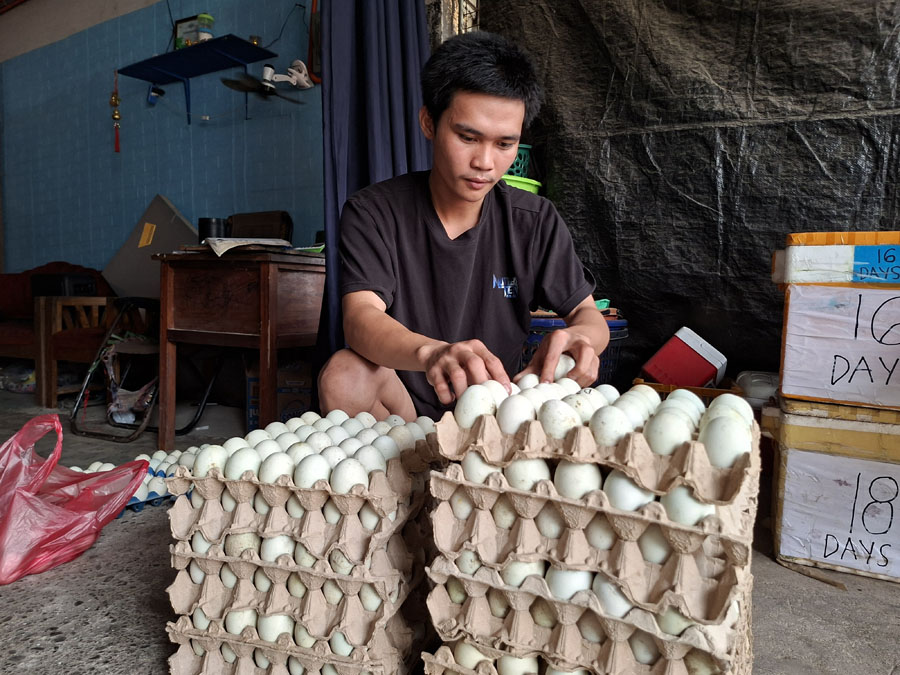
By day, he and his wife are the caretakers of the laundry business. By night, he sets up plastic tables and chairs in front of their store to sell balut. Unlike employees who have the luxury of a monthly paycheck, the couple’s income is strictly tied to how much the businesses earn.
If the machines don’t spin and the balut eggs are not sold, they don’t eat.
“We have eight machines and conservatively earn between P500 and 1,000 an hour,” he narrated. “I heard they will have another brownout this weekend for another 12 hours. So, I will just focus on selling the balut.
Typically, he sets up his makeshift stall at dusk. So, he relies on the light to attract passersby like a moth to a flame. He sells about 2,000 fertilized duck eggs at P18.00 apiece for the day. That income is cut in half if there’s a power outage.
“If the brownout extends, we have no income. On average, we have two lengthy brownouts each month. So, we have to check Nordeco’s Facebook page frequently because they don’t tell us,” he said.
They’ve learned to live with the lingering power disruptions and counted their blessings when these power cuts are announced. It’s the lack of notice that’s the problem.
“In a week, we have two to three brownouts. Although they last only minutes, we are worried that the electrical fluctuation will damage our machines,” he said.
There’s also the fact that when electricity dies mid-laundry, the clock restarts. Each washing and drying takes about 40 minutes. If power returns after 10 minutes, for example, the timer begins again at minute 1. “So, what happens is instead of nearly finishing and loading another batch, we have to wait another 40 minutes,” he explained.
“I don’t have a fixed wage. My pay depends on how many loads we finish. If Nordeco cuts the power for twelve hours, that’s twelve hours of me sitting here for nothing,” he added.
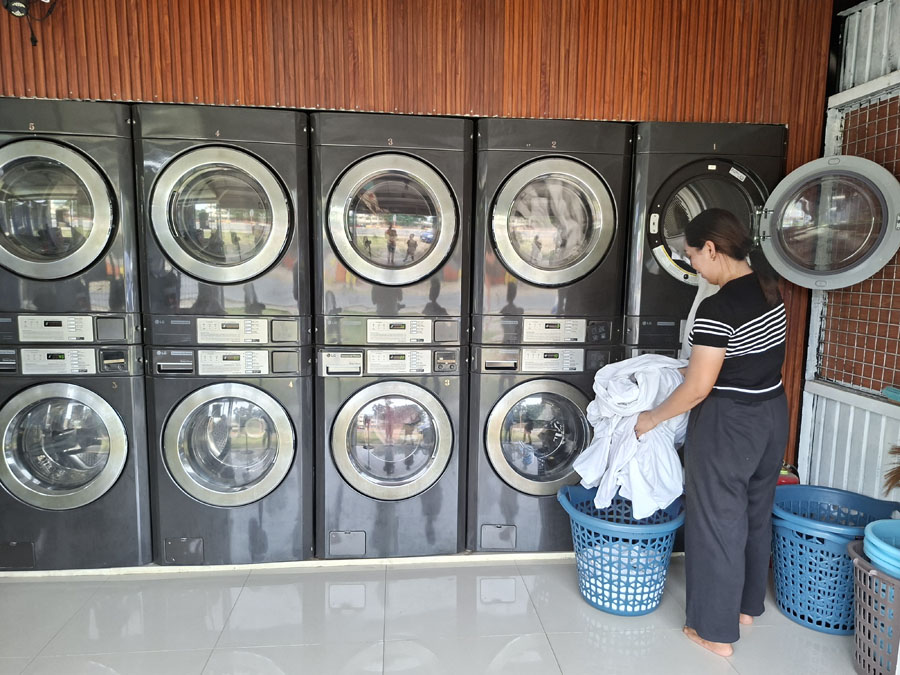
The Mathematical Loss: Rhea’s Vanishing Profits
When 33-year-old Rhea James heard about the 12-hour brownout scheduled for the weekend, she could only sigh in frustration.
“Yeah, I heard about it. Why do they schedule the long brownouts on a weekend when that’s usually when people bring their laundry to us because of no work?” she shared.
She manages a laundry shop owned by her sister. In exchange, she receives a portion of the daily profits.
On a good day, the shop is a whirlwind of humming and scent. On a day with no electricity, it is a graveyard of damp fabric.
For Rhea, the grievance against their power supplier isn’t just about the frequency of the outages, but the utter lack of communication.
“There is no notice,” Rhea said. “We sit there, and the machines just stop, and we don’t know for how long. On weekends, we have to turn away long-time customers or tell them to leave their clothes and hope the lights come back on. It’s embarrassing, and it’s bad for business.”
Rhea estimates that the shop generates at least ₱500 per hour when operating at full capacity. Every week, she said, they always experience a power disruption, with the shortest estimate lasting about three hours. Sometimes, when there’s no power, the tap water also shuts off.
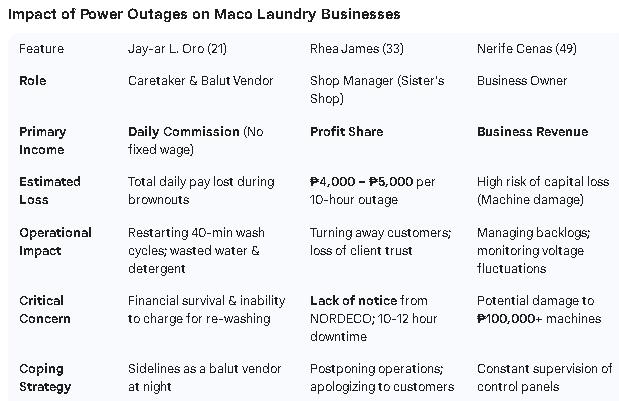
“Do the math,” she said. “We’ve had outages that last ten hours. That’s ₱4,000 to ₱5,000 in lost income in a single day. For a small business in Maco, that’s the difference between growing and just barely hanging on.”
She paused before adding, “Nordeco’s rates stay high, but the service is at an all-time low.”

Nerife’s nervous watch
“They just expect us to just smile and take it,” said 49-year-old laundy shop caretaker Nerife Cenas, talking about the persistent brownouts. “And they’re right. What can we do? We are not going anywhere. We are at their mercy.”
Just like the other laundry businesses in the town, the unannounced and extended power outages have gravely affected their shop’s income.
Having navigated the brownouts through various shifts, she describes the current state of Nordeco’s service as a “constant anxiety.”
“You never know when they will cut the electricity off. It could be minutes or hours. Sometimes, power returns after five minutes, then it dies again,” she said. “We have to wait a little longer before turning on the power breaker to prevent our machines from damage.”
She narrated that two Sundays back, they were never notified about a browout that lasted five hours. They had to turn away customers by the third hour because they didn’t know when power would return.
The laundry shop earns about P960 per hour if all machines are running, so a five-hour disruption is a huge loss.
Luckily, so far, not a single commercial washer—costing upwards of P100,000 each—has broken down due to the fluctuating electricity, but each laundry shop owner is playing a high-stakes game of chance every time power flickers.
“We heard that Davao Light is coming. If there’s another supplier that can provide us with better service and peace of mind, then we just want that choice,” Cenas said.
